
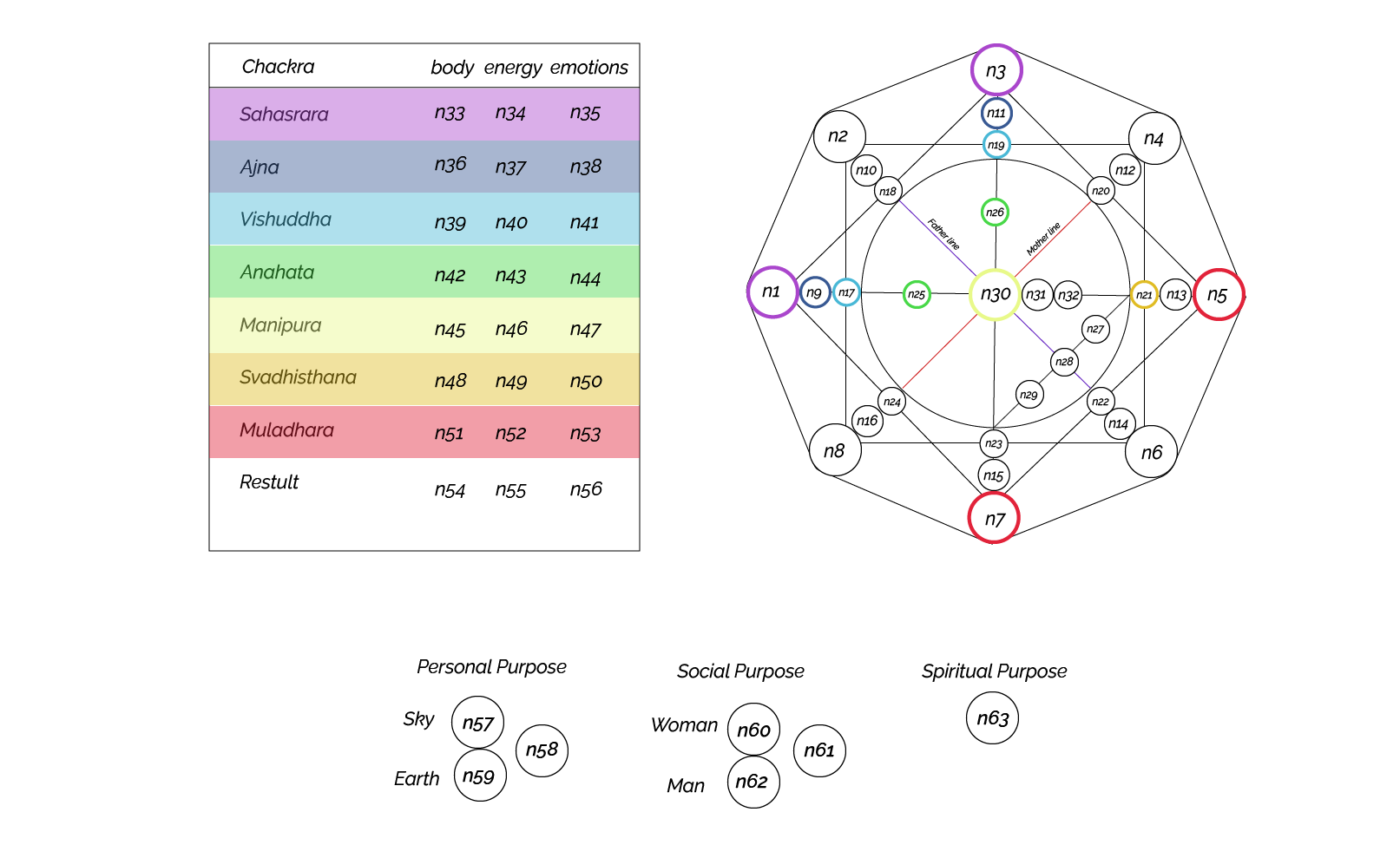
Karmik Tail n7, n15, n23
“Betrayal and Passion Within the Family” (15–5–8)
Specific Negative Manifestations of Each Energy:
15 — Temptations, addictions, manipulation, using others for personal benefit, abuse of power, impulsiveness, aggression.
5 — Legal issues, disruption of hierarchy, conflicts within the family.
8 — Violations of the law, imbalance in life, betrayal, deceit, breaking promises, difficulties with fair exchange and balance in giving and receiving.
In a Past Life:
- There may have been serious disharmony in relationships with a spouse or close loved ones.
- The family could have suffered because of the person’s addictions, impulsive behavior, or controlling tendencies.
- The person may have betrayed their family due to temptation, passion, or secret relationships.
- They could have broken the law, been involved in crime, gambling, or risky activities that harmed their family.
- There may have been experiences of vices, addictions, abuse, or a highly tense and unstable family environment.
- The individual might have lived a life marked by immorality, lack of responsibility, and disregard for rules and boundaries.
In This Life:
- Similar patterns may resurface, such as struggles with addictions or being drawn into tempting situations.
- People close to them—partners, parents, or family members—may struggle with addictions or destructive habits.
- Workaholism can become a major issue, causing emotional distance in the family or preventing the creation of a family altogether.
- High expectations toward oneself and others, along with rigid moral standards and principles.
- A strong intuitive sense for deception—entering relationships or business partnerships with unreliable people who later betray them, followed by thoughts like: “I knew this would happen.”
- Ongoing family issues, including emotional tension, abuse, addictions, or lack of emotional safety.
- Experiences of betrayal may occur—being deceived, financially exploited, or emotionally hurt. This can represent a karmic role reversal: if the person caused pain in a past life without considering others’ feelings, they may now be placed in the position of feeling that pain themselves.
- A tendency toward revenge driven by principle: “If they did this to me, I will do the same to them.”
- Suppressed emotions, excessive self-control, emotional numbness, and living life on autopilot.
- A strong and lasting influence from family or parents on life choices and emotional patterns.
Recommendations:
- Be honest with yourself about your emotions and feelings.
- Remain loyal to yourself, your values, and your family.
- Avoid betrayal, infidelity, and hidden double lives.
- Channel sexual and passionate energy into creativity, inspiration, and constructive expression.
- Respect the laws of family, society, ethics, and moral responsibility.
- Use your gift of insight, intuition, and perception for positive and ethical purposes.
- Transform weaknesses, temptations, and vulnerabilities into personal strengths.
- Strive to maintain balance in all areas of life—emotional, material, and spiritual.
- Learn to understand and forgive those who cause you pain; accept people as they are and consciously focus on their positive qualities, cultivating genuine compassion and love.
- Release dependencies and addictions in all their forms.
- Honor your promises, commitments, and agreements.
- Remember that the world operates through balance and fairness, even when it is not immediately visible.
“Physical Suffering” (18–3–12)
Specific Negative Manifestations of Each Energy:
18 — Fears, illusions, loneliness, addictions, depressive states, escapism from reality.
3 — Loneliness, emotional suppression, excessive control or dominance, difficulties with femininity, unresolved issues with women, the mother figure, or children.
12 — Personal suffering or causing suffering to others, searching for love externally, self-sacrifice, heightened sensitivity, resentment, and emotional victimhood.
In a Past Life:
- The person may have experienced a serious physical injury, possibly leading to disability, accompanied by deep loneliness or depression and an inability to accept their body or condition.
- Alternatively, they may have devoted their life entirely to their children, sacrificing personal desires, self-realization, or even their health.
- They could have been trapped in a toxic, dependent, or emotionally draining relationship.
- In some cases, the person may have caused physical suffering to a woman or to children.
In This Life:
- There may be a tendency to withdraw from the world through physical illness or psychosomatic symptoms.
- Disability is possible, either congenital or acquired later in life.
- A strong fear of illness, pain, or disease may be present—such as anxiety about infections or viruses, especially with age. These fears can be powerful, as imagined scenarios may eventually manifest into reality.
- There may be an excessive focus on the physical body—either through obsessive self-care while neglecting others’ needs, or, conversely, through physical neglect, overexertion, poor nutrition, and harmful habits such as smoking or alcohol use.
- A close family member or someone in the immediate environment may suffer from a serious illness or disability, requiring care and emotional involvement.
- There is a risk of entering abusive relationships that involve both physical and emotional suffering.
Recommendations:
- Inspire others through your own resilience, awareness, and personal example.
- Understand that physical limitations or disabilities are not a life sentence—you can still live a full, meaningful, and purposeful life. Realize this for yourself and help others see it as well.
- Support people in accepting their struggles and illnesses without losing hope; you may find fulfillment in working with those who are ill, vulnerable, or in need of care.
- Take care of your body with balance and mindfulness, avoiding extremes.
- Take full responsibility for your life, choices, and inner state.
- Learn to recognize and respect the needs and boundaries of others.
- Overcome a victim mentality—avoid self-pity, excessive self-sacrifice, or fixation on perceived injustice.
- If faced with a serious illness, practice acceptance; it may represent a phase of resolving karmic debt rather than punishment.
- Maintain harmony between physical well-being and spiritual development.
- Consider volunteer work or charitable activities to support those suffering from severe illnesses or physical challenges.
- Love and accept yourself fully, including your body, exactly as it is.
- The combination of 12 and 18 energies suggests a tendency to unconsciously create illness through fear-based thinking. Release negative thought patterns and avoid imagining problems that do not truly exist.
“The World of Passions and Fairy Tales” (9–15–6)
Specific Negative Manifestations of Each Energy:
9 — Loneliness, total rejection of certain life areas (such as relationships), pride, emotional withdrawal, reluctance to share knowledge or inner wisdom.
15 — Temptations, vices, intense desires, addictions, obsession with pleasure, material or emotional attachments.
6 — Poor or impulsive choices, disappointment in love, emotional dissatisfaction, heartbreak, idealization of partners or relationships.
In a Past Life:
The World of Passion:
In a past life, this person was faced with a decisive choice between love and passion—and chose passion. They once had a pure and sincere love, grounded in stability, peace, loyalty, and long-term commitment. This was likely a long-lasting marriage. However, over time, boredom set in, and the person perceived this stable life as monotonous or emotionally unfulfilling, ultimately abandoning it in search of stronger sensations.
The World of Illusions:
In another possible scenario, their dreams and plans never materialized, leading to deep inner suffering. Unable to cope with repeated disappointment, the person escaped into an inner fantasy world, creating an alternative reality as a way to avoid emotional pain.
This karmic pattern may also reflect the life of a monk or ascetic—someone who rejected love, pleasure, and worldly experiences, choosing solitude, isolation, and spiritual withdrawal instead.
In This Life:
- The person often possesses a rich imagination and may tend to live in illusions or fantasy rather than fully engaging with reality. They may escape into the digital world, dreams, or express themselves through artistic and creative pursuits.
- From childhood, there may have been signs such as vivid dreams, sleepwalking, a desire to stand out, heightened sensitivity, and strong creative potential.
- They tend to be emotionally sensitive and easily hurt, sometimes developing a habit of emotional suffering or romanticizing pain.
- There may be ongoing difficulties in understanding others and feeling understood, especially within the family, creating a sense of being an outsider both at home and in the world.
- A persistent sense of inner emptiness or unfulfillment may be present.
- The person may unconsciously repeat past-life patterns, making the same choices again—idealizing partners, pursuing intense but unstable lifestyles, or engaging in multiple romantic or sexual relationships in search of meaning.
- There is often a lack of balance between spiritual development and material realization, with one being prioritized at the expense of the other.
Recommendations:
- In relationships, take time to truly get to know your partner and allow trust to grow naturally as the foundation of love.
- Focus your sexual and emotional energy on one partner, deepening intimacy and discovering new dimensions of connection over time.
- Seek therapy or emotional support if needed—personal growth is a strength, not a weakness.
- Channel your imagination into creative expression: writing, poetry, illustration, painting, filmmaking, theater, design, or other artistic forms.
- Learn what it truly means to love deeply and consciously.
- Accept your partner as they are, without trying to change or “fix” them.
- Seek depth and emotional truth in relationships rather than surface-level excitement.
- When faced with important choices, follow your heart—choose love, loyalty, and commitment over fleeting pleasures, and stand by your decision without regret.
- Do not seek a new partner simply because challenges arise; instead, rediscover your loved one and allow love to be renewed.
- Learn to trust and open your heart. Emotional vulnerability allows love to grow; rejecting true love often leads to loneliness.
- Avoid idealizing people, relationships, or the world—see reality as it is, not as you wish it to be.
- Find yourself. Understand who you truly are and give yourself permission to live authentically.
- Share your unique knowledge and insights with others. Do not fear rejection or misunderstanding—your wisdom has value.
- Actively develop your creativity—your potential is vast, deep, and meant to be expressed.
“Wasted Talent” (6–17–11)
Specific Negative Manifestations of Each Energy:
6 — Poor or hesitant choices, disappointment in decisions, idealizing people, paths, or circumstances.
17 — Unrealized potential, unused talent, pride, a sense of superiority, inner dissatisfaction, and lack of fulfillment.
11 — Overwork, physical and emotional exhaustion, the belief that “no one can do it better than me,” excessive responsibility, and workaholism.
In a Past Life:
Rejecting Your Talent
In a past life, you were endowed with a special talent—one that had the potential to bring recognition, success, and material abundance. However, you ultimately turned away from it.
This may have happened for several reasons:
- You convinced yourself that your talent would not provide financial security and chose a more “practical” path based on family expectations or societal pressure.
- You encountered difficulties, criticism, or early failures while developing your talent and gave up, believing it was too challenging.
- You chose routine or physically demanding work instead of cultivating your true abilities.
- You may have suffered because of your talent—facing rejection, envy, or hardship—and decided to hide your gifts to protect yourself.
- You attempted to succeed, but one painful failure caused you to abandon your talent entirely.
- Or, in another scenario, you fully developed your talent but became arrogant, viewing yourself as superior to others.
In This Life:
- The person often works a stable, ordinary job and does not perceive themselves as particularly talented.
- They may feel bound by family responsibilities and a steady income, seeing no reason to take risks or believe in their creative potential.
- Limiting beliefs are common, such as “You can’t make a living from creativity” or “You need a serious profession—ideally for life.”
- They were raised to value hard work over self-expression, learning to be reliable and responsible rather than creative.
- Life may feel repetitive, dull, and uninspiring, as if trapped in an endless routine.
- There is often a fear of standing out, being judged, or ridiculed. Self-expression feels unsafe, so they remain invisible and restrained.
How It Starts:
- From early childhood, natural abilities or talents are visible.
- However, parents or authority figures may fail to nurture these gifts, placing greater emphasis on academic achievement and discipline.
- The family prioritizes stability over creativity, encouraging a “real job” instead of artistic or unconventional paths.
- In adulthood, the person builds a reliable career, learns quickly, and becomes a highly valued employee.
- Their competence is recognized—coworkers seek their support, and management appreciates their dedication.
- Eventually, however, boredom and inner emptiness arise, along with a longing for something more meaningful.
- Instead of change, the employer offers better pay, benefits, or promotions, reinforcing stagnation.
- This pattern can repeat for decades—sometimes 30 or 40 years in the same role—without ever unlocking true potential.
Later in Life:
- A strong urge to create or express oneself may appear, but there is confusion about where to begin or how to act.
- If the person has children, they may unconsciously try to live through them, pushing them toward creative success instead of pursuing their own calling.
- A fear of speaking up or being heard can develop, often accompanied by a sensation of suppression, like a “lump in the throat,” or a feeling of powerlessness.
Breaking the Cycle:
- If the person recognizes their uniqueness early and understands their true direction, they gain the opportunity to fulfill their purpose.
- By embracing their authentic path, they can achieve both professional success and a harmonious family life—this represents the positive resolution of this karmic lesson.
Recommendations:
- If you have talents or abilities, develop them openly—do not remain in the shadows.
- Keep moving forward through continuous learning, growth, and self-improvement.
- Release the fear of visibility—allow yourself to be seen, and learn to handle criticism with maturity.
- Stop trying to meet everyone else’s expectations or seeking constant approval.
- Bring originality, creativity, and fresh energy into everything you do.
“Warrior” (12–19–7)
Specific Negative Manifestations of Each Energy:
12 — Suffering, self-sacrifice, emotional martyrdom, suppressed anger, and a desire for revenge.
19 — Aggression, guilt, feelings of superiority, pressure or domination over others, and an obsessive drive to achieve goals.
7 — Combativeness, hostility, authoritarian behavior, vengefulness, and the tendency to achieve objectives at any cost.
In a Past Life:
- The person may have gone to war believing they were fighting for freedom and the well-being of humanity, only to later realize they were part of a political game. They chose a side, yet ended up taking the lives of innocent civilians. After the war, they struggled deeply with the awareness that they had been manipulated by politicians into committing acts that violated their conscience.
- They may have died suddenly in battle or been killed unexpectedly in a war-related incident. The death was abrupt and unprepared, leaving many plans, ambitions, and personal goals unfinished.
- A close loved one—such as a friend, brother, or son—may have died in the war, creating profound guilt and unresolved grief.
- A mother may have lost her son, blaming herself for failing to protect him.
- Two close friends may have fought side by side—one survived while the other died, leaving the survivor burdened with guilt for not being able to save them.
- The person may have never fully developed their individuality or potential in that lifetime.
- In another scenario, they may have fought aggressively for land, power, or dominance, driven by material ambition rather than genuine ideals.
In This Life:
In a Hyperactive State:
- A confrontational, aggressive attitude, especially during arguments or conflicts.
- A strong need to win, dominate, or compete, regardless of consequences.
- Stubbornness and black-and-white thinking—dividing people into “us” and “them,” with a very limited circle of trust.
- Experiences of betrayal, often linked to unresolved karmic ties from the past.
- Physical challenges, particularly involving the spine, legs, or musculoskeletal system.
- Constant rush and pressure, chasing goals without ethical or emotional limits.
In a Hypoactive State:
- Low energy levels, lack of inner resources, and emotional exhaustion.
- Fearfulness, indecision, and avoidance of responsibility or confrontation.
- Unrealized ambitions, stagnation, and lack of progress in life.
- A sedentary lifestyle, both physically and in terms of personal achievement.
- Absence of self-development, growth, or ambition.
- Suppressed aggression, which turns inward and creates resentment.
- Laziness, apathy, and lack of motivation.
- Absence of clear goals, resulting in a sense of aimlessness and inner emptiness.
Negativity, pessimism, scarcity thinking, excessive need for control, victim or tyrant mentalities, and uncontrolled aggression will direct this energy into a destructive pattern.
Karmic Patterns:
When analyzing the life paths of people carrying this karmic debt, recurring conflicts are often observed—especially with siblings. These conflicts frequently involve property, inheritance, territory, or division of assets.
Most likely, these karmic connections are a response from past lives, reflecting previous experiences of fighting over land, power, or betraying close ones during times of war.
Recommendations:
- Learn to resolve conflicts peacefully and consciously choose dialogue over confrontation.
- Trust your leadership qualities and take responsibility for guiding your own life rather than controlling others.
- Avoid self-sacrifice and emotional dependency in relationships. Instead, help others from a place of love, awareness, and purpose, discovering how you can genuinely serve the world.
- See people as allies and companions, not competitors. Release rivalry with partners, colleagues, and friends.
- Cultivate optimism, generosity, and an abundance mindset.
- Treat your children with love, patience, and care, and strive to maintain harmonious and respectful relationships with siblings.
“Lonely Woman” (9–12–3)
Specific Negative Manifestations of Each Energy:
9 — Emotional withdrawal, loneliness, a guarded heart, pride, emotional distance, and judgment of others.
12 — Victim mentality, loss, suffering, resentment, emotional dependency, and self-sacrifice.
3 — Difficulties with women or children, struggles with femininity and feminine expression, excessive control, strict or emotionally distant parenting, prioritizing career or material success over emotional connection.
In a Past Life:
- The person may have lost someone deeply important—a child or a partner—and was unable to accept the loss. As a result, they withdrew emotionally and chose a life of solitude.
- They may have fallen in love, but the relationship was prevented by parental disapproval—their own or their partner’s. The marriage never took place, and in their pain, they made an inner vow never to marry, which later became reality.
- If such a vow was formed, it may still be influencing the present life, unconsciously keeping the person alone. These vows can be released through spiritual work and inner healing practices.
- A beloved partner may have left for a distant place, possibly to war, and never returned.
- Out of deep loyalty and devotion, the person waited, never allowing themselves to build another relationship.
- In the present life, this pattern may appear as long-distance relationships, partners who are constantly traveling, or connections that never fully develop.
- The partner may have betrayed or abandoned them—leaving, forgetting them, or choosing another person.
- Unable to accept this reality, the person may have spent their life waiting and hoping for their return, remaining emotionally faithful.
- In this life, this can manifest as love triangles—being “the other woman” or repeatedly attracting partners who cheat.
- A woman may have been unable to have children, carrying deep grief and unfulfilled maternal longing.
- Or a child may have lost their mother, growing up with intense loneliness and a sense of abandonment.
Most likely, there was a profound trauma of loss, separation, or heartbreak that shaped the soul’s emotional imprint.
In This Life:
1) If the past life involved losing a mother:
- A strong need for closeness, approval, and emotional reliance on the mother.
- Choosing relationships that are destined for loneliness—online connections, long-distance partners, or people who are rarely present.
- A complex bond with the mother, combining resentment and dependency, creating inner emotional conflict.
2) If the past life was tied to a lost partner:
- Long periods of being single, remaining unconsciously loyal to “the one.”
- Idealizing partners, leading to emotional devastation after breakups.
- A closed heart, rejecting potential partners—even well-intentioned ones—out of fear of being hurt again.
- Constantly searching for the perfect partner, only to feel disappointed.
- Entering marriages without love, choosing stability or security over emotional connection.
- Experiencing love as attachment mixed with suffering, resulting in painful relationships and eventual isolation.
- Focusing on career and self-sufficiency instead of emotional intimacy, avoiding vulnerability.
3) If the past life was connected to children:
- Overattachment to children, with difficulty allowing them independence.
- Persistent anxiety and fear for their safety and future.
- Emotional distance or absence, unintentionally neglecting their emotional needs.
Because loneliness is deeply imprinted in the subconscious, the Universe reflects this inner belief, attracting people and situations that reinforce isolation or prevent deep, lasting emotional bonds.
Recommendations:
- Become a source of love, beginning with yourself.
- Avoid idolizing another person or making them the sole center of your life.
- Recognize your own value and worth, and learn to appreciate life in all its forms.
- Remain open to relationships, actively engage with others, and resist closing your heart to love.
- Learn to trust—yourself, others, and life itself.
“The Unborn Child” (3–22–19)
Specific Negative Manifestations of Each Energy:
3 — Resistance to motherhood or fatherhood, unwillingness to have or raise children.
22 — Fear of losing freedom, irresponsibility, avoidance of long-term commitments, inner chaos.
19 — Guilt, fixation on a single idea or goal, fear of poverty, despair, inner pressure.
In a Past Life:
- This karmic pattern may be connected to an unborn child—a soul that never fully incarnated.
- It may reflect an early death, possibly before the age of eight.
- It could also represent a woman who lost a child and carried deep guilt into the next incarnation—a soul that left life burdened by remorse.
- A less popular but common theme among people with this karmic debt is its connection to money, power, and freedom.
- The woman may have been financially trapped, lacking independence and choice.
- Or, conversely, she may have been wealthy, powerful, and controlling, using her position to restrict the freedom of others.
In This Life:
- Challenges related to pregnancy or childbirth, such as miscarriage, abortion, difficulty carrying a pregnancy, or fear surrounding motherhood or fatherhood.
- A strong desire to live solely for oneself, avoiding marriage or children.
- A general resistance to having children (though this is not always the case—many people with this karmic pattern actually love and connect deeply with children).
- Restlessness, especially in childhood—wanting to grow up quickly, prove oneself, demonstrate abilities, and move faster than peers. Often showing early development and impatience with limitations.
- The mother may have been emotionally cold, distant, or aggressive, leading to feelings of being unloved and unaccepted, followed by resentment.
- In adulthood, there may be joy in childlike experiences—toys, cartoons, animated films, games, and spending time with children—reclaiming a sense of pure, uncomplicated happiness.
- Life tests involving power, finances, career, authority, or family responsibilities.
- Possible immaturity, unresolved inner child wounds, or emotional instability.
- As a child, there may have been strong attachment to the mother, demanding attention and closeness. As an adult, this can manifest as seeking a mother figure in a partner, boss, mentor, or authority figure.
Recommendations:
- For women: Avoid abortions if possible, but recognize that the choice is ultimately yours and deeply personal.
- For men: Never pressure a woman into having an abortion.
- Understand that all difficulties are temporary. When this realization is truly integrated, many areas of life—relationships, finances, emotional well-being—begin to improve.
- Release judgment and forgive women who have had abortions, recognizing that each story carries its own pain and circumstances.
- Reconnect with your inner child. Spend time with children, help loved ones with their kids, work with or support children, and allow yourself to play, laugh, and experience joy again.
- Bring joy into your life and the lives of others. Celebrate small moments, treat yourself with kindness, and make loved ones happy.
- Let go of resentment toward your mother. Accept her as she is, even if she could not meet your emotional needs or expectations.
- If immaturity is a challenge, consciously take responsibility for your life and step into emotional adulthood.
- If you perceive children or marriage as a loss of freedom, remember that freedom is a state of mind. True freedom can exist anywhere—even within commitment, partnership, and parenthood.
- Practice generosity. Be kind to children, family, and yourself. Offer support, give gifts, share resources, and consider charity or community involvement.
- Learn to say “Yes” to life. Observe how often you say no—to new jobs, moves, relationships, businesses, or shared living. Open yourself to change and new experiences.
“The Oppressed Soul” (21–4–10)
Specific Negative Manifestations of Each Energy:
21 — Rigid thinking, judgment, inner limitations, repeated obstacles, and a sense of being blocked by circumstances.
4 — Despotism, indecision, fear of responsibility, excessive control, dominance, or submission to authority.
10 — Resistance to destiny, a difficult life path, dependence on others’ opinions, lack of independence, absence of clear goals, stagnation, and limited personal growth.
In a Past Life:
- The person may have spent much of their life feeling oppressed, dominated, or controlled by someone else—such as a powerful partner, ruler, or authority figure.
- They never found the inner strength to break free and lived without developing a strong sense of identity or personal will.
- Important life decisions were consistently made by others, not by the person themselves.
- As a result, they failed to develop independence, self-trust, and responsibility, allowing life to happen to them rather than actively shaping it.
In This Life:
- Someone significant in your life may consistently undermine you, push you into the background, or minimize your importance. It can feel as if nothing depends on you, while others control decisions and outcomes. You may find yourself constantly trying to prove your value.
- You may tolerate difficult or oppressive situations for a long time, rebelling only internally and living with ongoing inner conflict.
- There can be a deep fear of speaking up, expressing opinions, or making independent choices. You may seek protection—someone who will “take care of everything” for you.
- At the same time, you strongly resent pressure and control, reacting intensely when your boundaries are crossed.
- When faced with responsibility or major decisions, confusion arises. You may freeze, wait for guidance, or reject opportunities simply because choosing feels overwhelming.
- You might remain in the same environment, role, or lifestyle for many years, never fully expressing your potential.
- Long-term dependence or submissiveness in relationships or work situations is possible.
- A strong fear of failure may dominate your thinking: “I can’t do this. I won’t manage. I’m not capable.”
- A core inner belief may exist: “My entire life is a test of endurance.”
Recommendations:
- Accept your uniqueness and consciously strive for freedom in all areas of life—emotional, financial, and personal.
- Take full responsibility for your life, choices, and direction.
- Relate to others as equals, with mutual respect rather than submission or dominance.
- Step out from under someone else’s protection.
- For example: leave a rigid or traditional job, start a business, become a freelancer, or at least choose work with flexibility and autonomy.
- Stop relying on financial or emotional dependence on others.
- Stop waiting for permission, approval, or rescue.
- Make decisions independently.
- Learn to trust universal laws and life itself.
- Develop a positive and proactive mindset.
- Set realistic goals and move toward them step by step.
- Remain open to change and new possibilities.
- Take control of your life.
- Learn from experience rather than fearing it.
- Practice gratitude for progress, even small steps.
- Develop leadership and organizational skills.
- You have the potential to guide others.
- Learn how to build and lead teams rather than hide behind them.
- Learn to relax and release tension.
- Meditation, grounding practices, or quiet reflection can help.
- Believe in yourself, your life path, and your ability to succeed.
- Work through self-doubt.
- Identify its roots and consciously heal them.
- Express your own opinions instead of speaking through others or remaining silent.
- Keep taking consistent action.
- Do not stay frozen in fear or stagnation.
- Allow yourself to be seen as you truly are.
- Learn to trust the world and your place within it.
The key to success lies in self-reliance and belief in your own strength.
When you stop giving your power away and begin trusting yourself, you unlock the potential for great success, stability, and abundance.
“Emperor” (12–16–4)
Specific Negative Manifestations of Each Energy:
4 — The pursuit of power at any cost or, conversely, complete passivity; irresponsibility, weakness, submission, authoritarianism, and despotism.
16 — Destruction, sudden and disruptive changes, trauma, chaos, emotional or physical breakdowns, aggression.
12 — Victim mentality, suffering, abuse, oppression, and self-sacrifice.
In a Past Life:
In a past life, this person may have held authority, power, and influence (4). However, their leadership led to destruction and chaos (16). They dominated and controlled others (4), causing pain, suffering, and turning people into victims (12).
Who they were precisely is unclear:
- They may have been a ruler or emperor who abused power, governing without compassion or responsibility.
- They may have been a tyrant within their own family, controlling, oppressing, and emotionally or physically tormenting their partner, children, or parents.
- They could have been a victim of abuse, ultimately killed or driven to end their own life.
- They may have sought power at any cost, humiliating and suppressing others to feel strong.
- They may have been a man who failed to realize his potential, eventually destroying his own life through inner collapse or destructive behavior.
- They may have abused authority, mistreating those who depended on them.
In This Life:
Outwardly, this person often appears gentle, charming, sensitive, or delicate—especially if it is a woman—hardly resembling an “emperor.” Yet inwardly, they possess a strong, unshakable inner core.
They are frequently raised without a present father—he may be absent, constantly away (such as on business trips), or emotionally distant and unavailable. As a result, there is often a lack of a healthy masculine role model.
Instead, the mother becomes the dominant figure, carrying responsibility, making decisions, and controlling the family dynamic.
Relationship Imbalances:
- If a woman carries this karmic pattern, she may dominate her partner, assume the masculine role, and take on all responsibilities. Over time, the man in the relationship may become weaker, passive, or dependent.
Struggles with Decision-Making:
- There is a strong tendency to prioritize others’ comfort (12), adapt excessively to people and circumstances (4), and avoid decisive action or major changes (16).
- Decisions are delayed out of fear of harming others or disrupting stability—even though the outcome is unknown either way.
Karmic Repetition:
- The person may find themselves reliving the same power dynamics they once created, now placed under the authority of a “bad emperor”—such as a controlling boss, authoritarian system, or dominant parent.
- They clearly recognize injustice and abuse of power but feel helpless to act, believing their voice carries no weight and that resistance could cost them everything—job, stability, or their entire world.
Recommendations:
- Stop manipulating or controlling others. Learn to lead through respect, responsibility, and compassion.
- Heal your relationship with your father. Release resentment and avoid speaking negatively about him, even internally.
- Acknowledge your mistakes and take responsibility for correcting them.
- Release regret and let go of the past.
- Build healthy self-esteem grounded in self-respect, not dominance.
- Accept fair compensation for your work and contributions.
- Learn to manage aggression, both overt and passive.
- Focus on spiritual growth and inner values—avoid excessive attachment to material power or status.
- Stop playing the role of the victim. Learn to say “no” and protect your boundaries.
- Face challenges with dignity and accept change with gratitude, rather than fear or resistance.
For Men:
- Do not hide behind a woman or avoid responsibility.
- Do not suppress your partner—but also do not become weak, passive, or absent.
For Women:
- Stop carrying men’s responsibilities for them.
- Learn to trust men and allow them to take initiative.
- Embrace your femininity, softness, and receptivity without losing inner strength.
“Spiritual Priest” (21–10–16)
Specific Negative Manifestations of Each Energy:
21 — Difficulty accepting new ideas, rigid worldview, dogmatism, and self-imposed limitations.
10 — Distrust toward life, passivity, laziness, lack of motivation for growth, dependence on circumstances or other people.
16 — Aggression, fixation on material matters, lack of spiritual development, obsessions, trauma, suffering, destruction, addictive behaviors.
In a Past Life:
In a past life, this person may have persecuted others for their beliefs, particularly differences in ideology, religion, or spirituality—similar to the roles of inquisitors or crusaders. At the same time, they may also have been a victim of a rigid belief system, fully identifying with it and imposing it on others without compassion or flexibility.
Because of extreme actions and fanaticism, they may have experienced severe physical consequences, such as serious injuries, paralysis, or loss of control over their own body.
Possible past-life scenarios include:
- Possessing special or sacred knowledge and serving as a spiritual leader, priest, or teacher, but either failing to pass on this wisdom or using it destructively, harming others instead of guiding them.
- Negatively influencing people and society, spreading destruction—possibly through founding a cult, distributing drugs, or selling alcohol for profit.
- Becoming obsessed with material wealth, lacking faith in higher principles, and experiencing profound loss as a result.
In This Life:
- The person may be born into a family where they feel like an outsider. They long for freedom and a simple, balanced life, yet their family environment may be chaotic, marked by frequent conflicts or substance abuse.
- They may grow up in a broken family, such as experiencing parental divorce—symbolizing the destructive energy of 16 within the family structure.
- They may be surrounded by people of different nationalities or religions (21), pushing them to broaden their worldview and expand their understanding of life.
- There may be a tendency toward self-destructive habits, such as overeating, alcohol abuse, or other addictive behaviors.
- Trust issues are common—difficulty trusting people or life itself.
- They may strongly resist change, clinging to familiar beliefs and rejecting anything new or unfamiliar.
- A sense of being lost on their spiritual or personal path may persist, leading to long periods of searching for meaning or purpose.
- They can clearly see when something in their life is broken, outdated, or unhealthy, yet feel unable to fix it—resulting in stagnation or inaction.
- There may be inner conflicts related to faith, including changing religious views or undergoing tests of belief.
- They often hold strong personal principles and feel compelled to convince others to adopt the same worldview.
Recommendations:
- Learn from many sources and share your knowledge in a way that genuinely benefits others.
- Understand the unity of body, mind, and soul, and commit to developing all three equally.
- With the presence of 16 energy, practicing self-discipline or conscious asceticism can be especially helpful.
- Think beyond yourself—expand your worldview instead of retreating into inner isolation.
- Seek balance between material and spiritual life; neither should dominate the other.
- Travel, explore different cultures, and challenge limiting beliefs to gain broader perspective and wisdom.
- Analyze situations from multiple angles, remaining impartial and open-minded. Use accumulated knowledge to navigate moral and ethical questions wisely.
- Focus on creating, building, and healing, rather than destroying or condemning.
- If you share spiritual or personal knowledge, remember that you are only a guide. Release guilt or responsibility for how others choose to use the information.
- Awaken spiritually and support others on their path—not through force, but through example.
- Strengthen both body and spirit through meditation, spiritual practices, physical activity, and mindful living.
- Learn to trust people and the world, demonstrating openness and faith through your own actions.
- Use your knowledge professionally—find meaningful work where you can serve others and fulfill your life’s purpose.
“Disappointment of the Family” (6–8–20)
Specific Negative Manifestations of Each Energy:
6 — Difficulties in relationships, feelings of being unloved, emotional dissatisfaction, disappointment.
8 — Imbalance, breaking rules, irresponsibility, lack of accountability.
20 — Conflicts with parents and family, resentment toward relatives, judgment, rejection of one’s roots, ancestral disconnection.
In a Past Life:
- The person carried anger and resentment toward their parents or family.
- They may have rejected their parents, family system, or ancestral lineage.
- Spiritual pride or arrogance prevented them from forgiving close relatives.
- They failed to accept their role and place within the family structure.
- They may have chosen family over love, or abandoned family for love, creating inner conflict.
- They may have committed actions that brought shame or dishonor to the family name, causing emotional or financial damage and deep disappointment.
In This Life:
- The karmic pattern may begin even before birth—the pregnancy could have been highly anticipated, unexpected, stressful, out of wedlock, or emotionally complicated.
- The family often places very high expectations on a child carrying the karmic burden 6–8–20.
- There is a deep need for approval and praise, yet criticism is received more often than validation.
- Over time, resentment toward parents and relatives builds, leading to conflicts and emotional distance.
- Low self-esteem and a persistent feeling of being unloved or unworthy.
- A worldview shaped by injustice—feeling as if life is unfair and everything is working against them.
- Relationship difficulties, rooted in beliefs such as “I don’t deserve love.”
- Excessive self-sacrifice for family members, trying to earn approval and prove worth.
- The presence of family secrets—topics that are never openly discussed.
- Possible hereditary illnesses, physical defects, or disabilities within the family line.
- Estrangement from relatives, sometimes leading to complete separation from the family.
- Unconscious repetition of family patterns, driven by hidden loyalty to the lineage.
- Taking credit for others’ achievements as a way to feel valued.
- In the most negative expression: the person may disappoint their family, fail to meet expectations, or feel that they have brought shame upon the family name.
If the Karmic Burden 6–8–20 Is Expressed Positively:
- The person fully accepts themselves—their desires, ideas, personality, and worldview.
- They express their opinions openly, while respecting the perspectives of others.
- They develop their talents and follow their own path, sometimes continuing or transforming a family legacy or business.
- They achieve recognition and respect through their work, creativity, inventions, or accomplishments.
- They maintain harmonious relationships with relatives, including in-laws.
- They experience a deep sense of belonging in the world and feel free to be their authentic self.
Recommendations:
- Work consciously on family relationships and accept relatives as they are—including your partner’s family.
- Practice full self-acceptance and recognize your inherent worth.
- Choose your own life path, even if it differs from your parents’ expectations.
- Develop your talents and use them to achieve success, recognition, and personal fulfillment—bringing honor to your family through self-realization.
- If a child is born with a hereditary illness or condition, embrace them fully with love, care, and support.
- Focus on building your own life instead of trying to control others.
- Learn to see the world and people as they truly are, not only through personal beliefs or family projections.
- Honor your family by realizing your full potential and expressing your gifts.
- Live for yourself, not solely to gain approval or avoid criticism.
- Let go of the constant fight for justice—not every situation requires confrontation.
- Embrace your family and homeland. Be proud of your origins—you consciously chose this place and lineage.
- Do what you genuinely love, and love what you do.
- Elevate your family to a higher level of existence—not only materially, but emotionally, spiritually, and consciously.
“The Prisoner” (3–7–22)
Specific Negative Manifestations of Each Energy:
3 — Emotional immaturity, need for control, emotional detachment, difficulty communicating with women, unresolved issues with the mother, lack of romance or emotional warmth in relationships.
- For women: A tendency to dominate or suppress men.
- For men: Taking on a “motherly” role in relationships or becoming overly dominant.
7 — Lack of motivation, laziness, difficulty completing what was started, impatience for quick results, unfulfilled ambitions, imposing personal goals on others, excessive focus on material success.
22 — Any form of addiction or restriction, including loss of freedom; dark humor, sarcasm, and making fun of others as a defense mechanism.
In a Past Life:
- Lived as a woman in a “golden cage”—a life that appeared comfortable but was deeply restrictive.
- Experienced physical confinement, such as imprisonment, captivity, hospitalization, or illness that limited mobility.
- May have suffered an accident leading to partial or complete immobility, creating a strong sense of being trapped.
- Was a woman controlled by addictions—to substances, relationships, or dependence on a man, living entirely for someone else rather than herself.
- Lived under extreme parental control, following a life path chosen by parents instead of personal choice.
- Regularly violated others’ boundaries, unconsciously causing harm to those around them.
- Experienced limitations on physical freedom in one form or another.
- May have struggled with alcohol or drug addiction.
- Could have lived a purposeless or emotionally empty life, lacking meaning or direction.
There are many possible expressions of this karma, but the core theme remains the same: this soul lacked freedom.
In This Life:
- They may grow up with strict, controlling parents who dictate major life choices—education, career, lifestyle. As adulthood approaches, these restrictions often intensify rather than disappear.
- They may struggle with addictions (food, alcohol, medication), or, on the opposite extreme, follow a rigidly “healthy” lifestyle while judging or rejecting those with addictions.
- There may be recurring debt or financial obligations, as they subconsciously place themselves in situations where they feel indebted or trapped.
- Relationships with mother and children are often complicated or strained. There may also be an obsessive focus on material success and financial security.
- They can become irritable, combative, and controlling, imposing strict rules on family members or their environment.
- They may behave like a “spiky hedgehog”—refusing to let others make decisions for them, yet struggling deeply to make decisions independently.
- Emotional closeness is often avoided; it may take a long time to accept other people’s opinions or perspectives.
- There is often a strong attachment to routines or habits formed in childhood.
- For example, refusing to replace a favorite object, food, or routine.
- This pattern continues into adulthood—eating the same meals repeatedly, using only one type of clothing, cosmetics, or medication, and resisting change.
- A sense of inner emptiness or lack of identity may be present, leading to self-definition through rigid roles:
- “I am a wife—nothing else matters,” or defining oneself solely through career or duty.
- There is almost always something limiting their freedom—debt, controlling relatives, an oppressive job, serious illness, imprisonment, or the responsibility of caring full-time for someone else.
Recommendations:
- Travel often, change your environment, and allow yourself new experiences.
- Avoid becoming overly attached to one person, place, routine, or habit.
- Learn to feel free regardless of external circumstances.
- Explore ways to create passive or flexible income.
- Do not allow others to limit you—and do not trap yourself in self-imposed restrictions.
- Be an example of freedom for others; show that liberation is an inner state, not just an external condition.
- Face challenges without panic. If something is not working, change it—do not merely endure it. Growth always requires movement, even when it feels frightening.
- End relationships that bring only problems, stagnation, or suffering without growth.
- Practice inner freedom in every situation.
- Stop controlling others—release the urge to restrict or confine loved ones.
- Strive for a debt-free life, free from financial pressure and obligations.
“Overseer” (9–3–21)
Specific Negative Manifestations of Each Energy:
9 — Loneliness, emotional detachment, desire for isolation, a closed heart, pride, fear of intimacy, impulsive or reckless relationships, and judgment of others.
3 — Excessive control, obsession, desire for power, suppression of others, dominance over men, difficulties with women, femininity, children, the mother figure, and financial resources.
21 — Aggression, conflicts, combative behavior, narrow-minded thinking, rigidity, and self-imposed limitations.
In a Past Life:
- The person may have restricted or taken away other people’s freedom and even derived satisfaction from doing so.
- They may have held power, authority, or access to unlimited resources, using them to control, dominate, or limit others.
- Their occupation may have involved restricting freedom, such as serving as a prison guard, enforcer, or authority figure.
- They may have mistreated people openly or secretly, particularly those who were vulnerable, dependent, or physically limited.
- They viewed others as inferior—in status, intelligence, or personal development.
- Despite outward authority, they suffered from deep loneliness and feared standing out or expressing their true self.
- They may have physically or emotionally confined a woman, such as trapping a partner in a restrictive or oppressive relationship.
- Alternatively, they may have been on the opposite side—controlled by strict parents or a dominant partner, living under someone else’s authority and limited freedom.
In This Life:
- Childhood may have been restrictive—marked by controlling parents, financial hardship, or emotional limitations—creating a strong inner drive to escape or break free, sometimes through early marriage or drastic life choices.
- There may be contempt for poverty or for people who complain or ask for help. At the same time, the person may donate to charity, support shelters, or help the poor—not purely from compassion, but to maintain a positive self-image or distance themselves from scarcity.
- They are often drawn to careers associated with success, influence, or visibility, such as marketing, coaching, psychology, leadership roles, or luxury-related industries.
- They may struggle with manipulation, jealousy, arrogance, and a strong need to control others—issuing orders, setting rigid rules, or limiting people’s freedom.
- Internal limitations may exist in the form of rigid beliefs, self-doubt, or fear, as well as restrictive relationships—either self-imposed or caused by a controlling partner.
- Health challenges may arise, especially those that limit movement—such as disabilities, leg problems, nerve pain, or chronic conditions—leading to dependence on others.
- There is often a persistent feeling of being trapped, accompanied by an intense urge to break free from constraints.
- Life may involve caring for chronically ill or dependent family members, reinforcing feelings of attachment, obligation, and restriction.
- Anxiety, panic attacks, and fear of losing control may appear, particularly within relationships.
- Chronic stress, nervous exhaustion, emotional burnout, and depression are common.
- Heavy responsibilities drain energy and joy.
- There may be ongoing struggles with addiction or compulsive behaviors.
Recommendations:
- Break free from limiting beliefs and outdated inner programs.
- Learn to respect other people’s boundaries and freedom—avoid controlling, suppressing, or dominating them.
- Do not enter relationships merely to avoid loneliness. Choose partners based on shared values, mutual respect, and emotional compatibility.
- Take responsibility for raising your own children, rather than fully delegating this role to grandparents or caregivers.
- Release arrogance and consciously cultivate humility.
- Stay emotionally open to family and close relationships—do not isolate yourself.
- Avoid creating karmic or financial debt. Do not lend or borrow money unless absolutely necessary.
- Learn to ask for help and sincerely express gratitude when receiving support.
- Accept and integrate your shadow side to achieve inner wholeness and balance.
- Build equal partnerships, free from control, jealousy, and power struggles.
- Remain active, travel, and continuously expand your worldview.
- Avoid obsession with status, money, power, or material success.
- Do not enter relationships for personal gain—such as access to resources, influence, or social position.
- Help others only when asked, and avoid creating dependency. Do not place people in situations where they rely on you while you benefit from the sense of control.
- Remember that the Universe offers unlimited resources. Wealth and success do not make one person superior to another.
- Consciously break destructive behavioral patterns and rigid mental frameworks.
“Pride” (6–5–17)
Specific Negative Manifestations of Each Energy:
6 — Difficulty making decisions, dependence on others’ opinions, feeling unloved, emotional withdrawal, low self-esteem, insecurity, obsession with appearance, loneliness, and struggles with love and intimacy.
5 — Lack of self-belief, imposter syndrome, stagnation in spiritual growth, imposing personal views on others, arrogance rooted in feeling “special,” inner chaos, and inconsistency.
17 — Feeling invisible or unrecognized (“the grey mouse”) or, on the opposite extreme, inflated self-importance (“star syndrome”). Difficulty fully developing talents and realizing potential.
In a Past Life:
- At its simplest, the person may have struggled to feel loved or to love others (6), carried resentment (6), and frequently judged or criticized people (5). Over time, this fostered arrogance and a sense of superiority (17).
- Their ego and pride (17) may have been shaped by upbringing or belief systems (5) or by poor emotional choices (6). The soul learned to seek constant validation, trying to prove its worth and importance.
- They may have been physically attractive (6) and intellectually knowledgeable (5), leading them to see themselves as more beautiful, smarter, or more capable than others (17).
- They may have possessed wealth, talent, or status, but became overly attached to these advantages and looked down on others with arrogance (17).
In This Life:
- The person is often naturally gifted and holds strong potential for love, recognition, and success. However, they may lack the discipline or perseverance required to fully develop their talents and rarely bring anything to mastery.
- There is a desire for instant success—to rise quickly without sustained effort. Work is expected to be prestigious, or they may want to start immediately in a position of authority.
- They may inflate their own importance, internally belittle others, and devalue other people’s work or achievements—even if this attitude is not openly expressed.
- They can become obsessed with recognition and admiration, willing to pursue success at any cost.
- Spiritual development is often neglected, which further feeds ego-driven behavior and pride.
- In some cases, they may do the opposite—abandon self-development entirely, refusing to use their talents out of frustration or fear.
- There may be a strong fear of visibility, believing they lack the right image, presence, or confidence to be seen.
- At the same time, they can be excessively self-critical, constantly analyzing flaws and undermining themselves without objective reason.
Recommendations:
- Move toward your goals step by step, without expecting instant success.
- Showcase your talents and express yourself with confidence and authenticity.
- Avoid comparing yourself to others—your path is unique.
- Open your heart to love and emotional connection.
- Make decisions guided by your heart, and trust your choices without constant doubt or second-guessing.
- Avoid marriage or relationships motivated primarily by financial security or social status.
- Build success through your own effort, cultivating patience and consistency.
- Believe in yourself and your abilities—explore different directions, skills, and opportunities.
- Learn to collaborate with others. Replace criticism and lecturing with encouragement, guidance, and support.
- Support and help develop the talents of your partner or children, rather than competing with them.
- Consciously work on your values, ethics, and moral integrity.
- Remember that every person is unique and valuable in their own way.
- Never hide or suppress your talents—trust yourself, your gifts, and your potential.
“Death to Many Souls” (21–7–13)
Specific Negative Manifestations of Each Energy:
21 — Aggression, large-scale destruction, involvement in war, restrictions of freedom, narrow-minded or dogmatic thinking, and a strong need to control people or systems.
7 — Conflict, combativeness, pushing forward at any cost, obsession with winning, stagnation, immobility, and excessive pressure on oneself and others.
13 — Deep existential fears (fear of life and death), inner pressure, pessimism, destructive tendencies, and direct or symbolic experiences of death.
In a Past Life:
- This person may have been directly involved in war or violent conflicts in which many people died. For example, they could have fought in World War I or World War II, witnessing mass death and possibly taking lives themselves—forming a heavy karmic imprint.
- Alternatively, they may have lost many loved ones in a catastrophe (war, famine, epidemic, disaster) and carried profound grief and trauma.
- They may have been an inventor or engineer who created weapons of mass destruction.
- Or they may have developed technologies, substances, or systems that indirectly caused the deaths of many people.
- This could include inventing or contributing to atomic or hydrogen weapons, deadly viruses, toxic substances, or harmful drugs.
- In the most extreme expression, they may have been a serial killer or someone personally responsible for taking many lives.
In This Life:
- If many lives were taken in a past incarnation, the soul may now feel a strong pull toward saving, protecting, or healing others, often choosing professions related to medicine, therapy, emergency response, rescue, or spiritual healing—but this must come from genuine compassion, not guilt.
- They may not only save people but also feel driven to “give a second life” to things—restoring broken objects, repairing relationships, or reviving abandoned projects.
- This pattern can appear in both work and personal relationships, where they invest energy into trying to revive situations that are already “dead” or beyond renewal.
- Their life may involve constant transformation, including frequent changes in appearance, lifestyle, or even the physical body.
- Periods of stagnation may arise, with feelings of being stuck, blocked, or struggling with inertia and laziness.
- They may feel drawn to creative or artistic work, producing timeless creations that carry deep emotional or soul-healing power.
Recommendations:
- Dedicate yourself to helping others heal—physically, emotionally, or spiritually. Support people in recovery from illness, trauma, grief, and life crises.
- Act from compassion rather than guilt. Choose kindness, healing, and constructive action whenever possible.
- Avoid seeing the world in extremes. Do not divide people into “us versus them” based on nationality, race, religion, or ideology. Respect diversity and the value of all cultures.
- Travel, explore the world, and learn from different perspectives to expand your consciousness.
- Accept differing viewpoints and express your own opinions calmly, without aggression or the need to dominate.
- Choose a profession or life direction focused on renewal, restoration, and rebirth—bringing life back where it has been lost or damaged.
- Travel often, embrace change, and allow movement in your life.
- Avoid unnecessary risks, self-destructive behavior, and reckless choices.
- Regularly push yourself out of stagnation, but without violence toward yourself—growth should be conscious, not forced.
- Actively work on reducing aggression, anger, and inner conflict.
- Be mindful of your words—speech can heal or destroy. Choose language that does not harm.
- Support loved ones in their paths without controlling or directing their lives.
- Appreciate every opportunity life gives you to restore balance and transform past karma.
- Heal guilt and manage anxiety to create a peaceful, grounded, and meaningful life.
“Physical Aggression” (15–8–11)
Specific Negative Manifestations of Each Energy:
15 — Abuse of power, criminal behavior, addictions, illegal money, aggression, cruelty, manipulation, temptations, and moral corruption.
8 — Inner imbalance, violation of laws and rules, deception, rigidity of thinking, inability to maintain fairness or justice.
11 — Use of force, physical violence, pressure, domination over others, aggression as a means of control.
In a Past Life:
- The person may have been a warrior, gladiator, or fighter, deliberately inflicting physical pain on others.
- They may have been involved in criminal activity, using force, intimidation, or violence to take money or resources from people.
- They could have held power and authority and used it aggressively, causing suffering and destruction rather than protection.
- They may have abused power, breaking laws and rules, acting without regard for justice or human life.
- Deep inner pain may have hardened their heart, numbing them to the suffering of others and leading them to inflict pain without remorse.
- They acted unfairly and cruelly, intentionally using physical strength to dominate, harm, or humiliate others.
- They may have shown sadistic tendencies, taking advantage of the weak and even deriving satisfaction from others’ pain.
- They were likely driven by power, money, and control, pursuing wealth dishonestly and ruthlessly.
- Addictions, criminal behavior, and frequent violations of the law may have been part of their life path.
In This Life:
- They may experience aggression or physical intimidation from peers during childhood, mirroring past-life behavior.
- There can be a tendency to direct anger toward the weak, using them as an outlet for inner frustration.
- Emotions may swing between uncontrolled rage and deeply suppressed aggression, both equally destructive.
- A lack of empathy for others’ pain or emotional experiences may be present.
- There is often a strong imbalance between material ambition and spiritual development.
- Emotional release frequently occurs through physical expression—violence, harsh punishment, domination, or compulsive sexual behavior.
- They may be provoked into aggression by others, repeatedly drawn into confrontations or power struggles.
- There can be an idolization of physical strength and contempt for perceived weakness.
- Workaholism or obsessive activity may serve as another outlet for aggression.
- A weak sense of self-preservation, leading to risky or self-destructive behavior.
- Strong resistance to spiritual growth, introspection, or moral responsibility.
- Possible health issues, especially related to the heart, circulatory system, immune system, or kidneys.
- If the person possessed great physical strength in a past life, in this incarnation they may have a weaker, thinner, or more fragile body, reflecting karmic compensation.
Recommendations:
- Learn to regulate your emotions and inner state. Do not release anger or aggression onto others.
- Avoid becoming overly attached to material possessions, power, or status.
- Manage aggressive impulses through diplomacy, flexibility, and conscious self-control.
- Channel excess energy into constructive physical activities, such as sports or movement, rather than destructive behavior.
- Learn to accept people as they are, including their imperfections and weaknesses.
- Practice forgiveness and emotional acceptance, releasing resentment and hostility.
- Maintain a healthy balance between material goals and spiritual development.
- Study and understand universal laws, including cause and effect. Treat every life experience as a lesson for growth.
- Release the need to control, dominate, or impose your will on others—everyone follows their own path.
- Avoid workaholism. Create balance between work, rest, pleasure, and personal interests.
- Focus on spiritual growth and living in harmony with higher principles and values.
- Let go of destructive beliefs, addictions, and unhealthy attachments.
- Approach life’s challenges with gratitude, recognizing them as opportunities for transformation.
- Cultivate calmness and inner stability, and avoid creating unnecessary tension or conflict.
“Dark Mage” (18–6–15)
Specific Negative Manifestations of Each Energy:
18 — Fears, illusions, phobias, distorted perception of reality, fascination with dark or hidden forces, anxiety, and subconscious influence.
6 — Deep emotional wounds, disappointment in love, unrealistic expectations, heartbreak, loneliness, poor emotional choices, feeling unloved, fixation on appearance and attractiveness.
15 — Temptations, addictions, indulgence, manipulation, pursuit of power, lack of moral boundaries, and the misuse of influence or desire.
In a Past Life:
- The person may have been a dark magician or occult practitioner, using hidden or esoteric knowledge to harm others.
- They may have engaged in dark or demonic magic, possibly forming pacts with destructive or negative forces.
- Their life may have involved promiscuity and moral chaos—prostitution, love triangles, deception, manipulation, and countless temptations.
- They may have committed serious crimes, potentially even serial killings, sometimes justified or motivated by occult beliefs.
- Seduction, blackmail, and psychological manipulation may have been used as tools to control others for personal gain.
- They may have influenced people’s minds through hypnosis, suggestion, or subtle energetic control, causing harm without overt force.
In This Life:
- The person may possess unusual or magnetic abilities, such as a natural talent for attracting money, people, attention, or opportunities.
- There is often a strong fascination with magic, mysticism, or esoteric knowledge.
- A vulnerability to addictions, temptations, and personal weaknesses is common.
- A strong desire for power, wealth, control, or influence over others may exist.
- They often have a charismatic appearance, sexual magnetism, and intense emotional or passionate energy that naturally draws people in.
- There may be a tendency to interfere in other people’s lives, crossing boundaries by offering unsolicited advice or “help,” often positioning themselves as a savior or authority.
- Possible tendencies toward energy vampirism—emotionally or mentally draining others, consciously or unconsciously.
- An obsession with perfection may appear—in work, relationships, children, or self-image—driven by unrealistic ideals.
- Strong emotional swings are common: moments of feeling powerful, confident, and invincible, followed by disappointment, emotional crashes, depression, or exhaustion.
- A heightened belief in curses, negative energy, the evil eye, or being attacked energetically, sometimes reinforcing fear-based thinking.
Recommendations:
- Refrain from judging others for their flaws or perceived “dark sides.”
- Believe in yourself and your abilities—do not reject or diminish your potential.
- Face temptations with self-respect, awareness, and inner dignity.
- Communicate in a healthy and ethical way. Release envy, manipulation, and the urge to use others for personal advantage.
- Embrace your individuality and allow yourself to express who you truly are, without fear or shame.
- Commit to spiritual growth and avoid focusing solely on material success. Seek balance between inner and outer life.
- Accept both your light and shadow aspects, but consciously choose growth, responsibility, and positive transformation.
- Help and heal others only when your support is genuinely needed, without imposing yourself or creating dependency.
- Become a guide—first for yourself, then for others—by choosing clarity, honesty, and inner light.
- Use media, platforms, or public spaces to share your ideas with sincerity and integrity, never through fear, control, or manipulation.
- Actively explore and develop your creative potential, as creativity is a powerful and healthy channel for your energy.
- Release obsessive attachment to love or partners, as well as jealousy and unhealthy emotional dependence.
- Work consciously on healing arrogance and pride, replacing them with humility and self-awareness.
“Soul Sacrificed” (6–20–14)
Specific Negative Manifestations of Each Energy:
6 — Difficulties in relationships, challenges with love and acceptance, emotional wounds, disappointment, and poor emotional choices.
20 — Conflicts within the family system, unresolved ancestral issues, broken or painful family ties.
14 — Living out of alignment with one’s true self, lack of balance, inner harmony, peace, creativity, and emotional moderation.
In a Past Life:
- The person may have been a victim of a ritual or sacrificed for the “greater good.”
- They may have voluntarily given up their life for family members or a loved one.
- They may have abandoned their talents, dreams, or calling for the sake of family duty or love—making a choice that betrayed their true self.
- They may have acted in ways meant to earn love, approval, or recognition from their family, only to experience rejection or disappointment instead.
- Strong pressure from family traditions, society, or rigid systems may have forced them to suppress personal desires and individuality.
- There was a clear imbalance between material and spiritual life.
- They may have given up career ambitions to serve family needs, never allowing personal success to unfold.
- In some cases, they may have sacrificed themselves physically or emotionally for a cause, belief, ritual, or to draw attention to a larger issue.
In This Life:
- The person often finds it very difficult to ask for help, even when it is needed.
- At the same time, they may experience unexpected luck or protection, as if higher forces are quietly supporting them.
- There is a subconscious belief in needing to repay a debt or sacrifice oneself for others, which can lead to self-neglect, living out of obligation, or constantly trying to “save” people.
- Family-related struggles are common—conflicts, rejection, excessive expectations, or unresolved emotional pain.
- Creative potential remains unrealized, often due to self-doubt or childhood shame around creativity, frequently rooted in parental criticism or lack of encouragement.
- Emotional rigidity, guardedness, and fear of opening up to others.
- A tendency toward addictions, whether to alcohol, gaming, or unhealthy emotional attachment to a person. Letting go of someone—even after betrayal—can be extremely difficult.
- A lack of moderation and balance in various areas of life.
- Periods of laziness or low motivation, sometimes because things come too easily or without effort.
- A sense of entitlement, which may manifest as feeling that others “owe” them something, or as a constant desire for more, regardless of what they already receive.
Recommendations:
- Understand that you do not need to sacrifice yourself, your body, or your health to receive love, recognition, or support. Often, simply asking for help is enough.
- Practice gratitude—toward yourself, life, other people, and the unseen forces that support you.
- Cultivate balance and moderation in all areas of life—emotional, material, and spiritual.
- Find a life purpose that resonates with your soul and allows authentic self-expression.
- Develop your talents and abilities. Do not be afraid to talk about them, share them, or express them—regardless of criticism or judgment.
- Engage actively in creative work and consciously move beyond shame. People with this karmic path are often highly creative and capable of offering original, meaningful ideas.
- Learn to love and accept yourself, and extend that acceptance to others.
- Make decisions that are aligned with your heart, not guilt or obligation.
- Release resentment toward your parents. Accept them as they are and recognize that you chose this family for a reason.
- Be sincerely grateful for what you already have and for every opportunity life presents.
- Allow yourself to receive support and help when it is offered—without guilt or fear.
“Warrior of Faith” (21–10–7)
Specific Negative Manifestations of Each Energy:
21 — Aggression, a divisive worldview, strong will, rejection of different beliefs, religions, or knowledge systems, narrow-mindedness, and the tendency to impose restrictions on oneself or others.
10 — Lack of faith and trust in life, constant struggle, susceptibility to outside influence, resistance to the natural flow of events, and missed or wasted opportunities.
7 — Pursuing goals at any cost, excessive force or control, stepping over others to advance, creating conflicts and enemies, imposing personal ambitions on people, and ultimately facing disappointment.
In a Past Life:
- The person may have been a leader, commander, or warrior, fighting for a cause and using force to impose beliefs, ideologies, or religious views on others.
- They may have accumulated significant wealth through unethical means, profiting from exploitation, vice, or the suffering of others.
- They likely displayed hostility toward people of different faiths, cultures, or nationalities.
- They may have spread foreign or imposed ideologies, gaining recognition, titles, rewards, or fame through victories and conquests.
- Power and dominance may have been used to control loved ones, suppressing their freedom and individuality.
- In some cases, they may have led military or ideological campaigns, such as crusades—conquering territories, enforcing authority, and reshaping societies according to their beliefs.
In This Life:
- Past-life patterns may repeat, presenting similar challenges in new forms.
- The person often possesses strong charisma, influence, or talent, naturally impacting those around them.
- There is a tendency to impose personal beliefs, opinions, or values on others, often through pressure rather than dialogue.
- They may find themselves frequently involved in conflicts, debates, or arguments, sometimes unconsciously provoking them.
- A persistent feeling of being restricted or trapped may arise, accompanied by an inner struggle for freedom.
- They may reject alternative viewpoints, traditions, cultures, or belief systems that differ from their own.
- Boundaries—both emotional and psychological—are often disrespected, either intentionally or unconsciously.
- They may promote ideas that are not truly their own, hiding behind concepts like family, friendship, loyalty, or love without fully understanding or embodying them.
- Life may be filled with inner contradictions—projecting a certain image or moral stance that does not align with their authentic self.
- There is often a preference to associate only with successful, influential, or validating individuals, using them as mirrors for self-worth.
Recommendations:
- Respect the freedom and choices of others. Do not impose your beliefs, values, or ideas—especially through pressure or force.
- Practice flexibility in communication, allowing people to make their own decisions and learn from their mistakes.
- Avoid forcing your faith, ideology, or worldview onto anyone.
- Do not follow anything blindly or fall into fanaticism—maintain discernment and self-awareness.
- Expand your worldview by stepping outside your comfort zone.
- Travel, explore different cultures, learn new languages, and accept people of all backgrounds as they are.
- Set clear, realistic goals and move toward them step by step, breaking large ambitions into manageable actions while remaining open to new opportunities.
- Avoid unnecessary conflict. Address misunderstandings calmly, diplomatically, and with kindness.
- Believe in yourself, your plans, and your inner potential.
- Do not surrender your autonomy or fall under someone else’s influence—think independently.
- Practice gratitude toward yourself, your loved ones, and life itself.
- Maintain balance between work and rest. Stay open to the world, trust people, and most importantly, trust life and go with its natural flow.
- Learn to see multiple perspectives, offer choices rather than commands, and respect others’ freedom to choose.
- Do not pressure, judge, or look down on those who have not yet achieved visible success.
“Suicide” (3–13–10)
Specific Negative Manifestations of Each Energy:
3 — Difficulties with femininity, strained relationships with women, unresolved mother issues, challenges related to motherhood, children, and life resources.
13 — Reckless risk-taking, fixation on the past, pessimism, hopelessness, a sense that life is “cut short,” stagnation, lack of growth, and resistance to transformation.
10 — Wasting life potential, lack of close friendships, repeated hardships, obstacles and failures, falling under others’ influence, a sense of doom, and self-destructive habits.
In a Past Life:
- The person may have ended their life by suicide.
- They may have contributed to another person taking their own life, directly or indirectly.
- They may have failed to fulfill their soul’s purpose, remaining stuck, unable to grow or evolve, clinging to the past—especially after a loss—until life felt as though it had stopped.
- They may have taken reckless risks, played with death, undervalued life, or deliberately placed themselves in dangerous situations.
- Overwhelmed by life’s challenges, they may have felt powerless to regain control, seeing no solution other than giving up.
- They may have been unable to cope with the loss of a loved one, becoming trapped in grief and memories instead of moving forward.
- They struggled deeply with change and adaptation to new life circumstances.
In This Life:
- When facing difficult situations that require decisions, change, or risk, the person may fall into deep apathy, depression, or paralysis, struggling to move through life crises.
- There may be a sensation that life has stopped, accompanied by harmful behaviors toward the body—extreme dieting, overeating, neglect of health, overexertion, or substance use as a form of escape. This reflects a subconscious belief such as “no body, no problems.”
- Fear of bringing new life into the world may appear, especially if past experiences of life were associated with pain, loss, or struggle.
- Episodes of panic attacks, intense fear, or overwhelming anxiety may occur.
- Alternatively, the person may display complete fearlessness, engaging in extreme sports, risky behavior, or living constantly on the edge of danger.
- A perpetual search for meaning and purpose is common.
- Chronic procrastination, avoidance, and difficulty taking action.
- Heavy, intrusive thoughts that feel mentally and emotionally exhausting.
- Difficulty fully experiencing joy—happiness may come briefly and disappear suddenly.
- Ongoing anxiety, nervous tension, melancholy, and emotional heaviness.
Recommendations:
- Work consciously on healing fears and developing inner courage to face life’s challenges with resilience.
- Learn to value life in all its forms, understanding that spiritual growth often unfolds through difficulty and struggle.
- Remember that there is always a way forward—every situation has multiple solutions, even if they are not immediately visible.
- Support and encourage others who are going through difficult periods; shared strength creates meaning.
- Take consistent care of your physical and mental health.
- Avoid living exclusively within your comfort zone—growth requires movement.
- Learn to appreciate each moment of life, even small or imperfect ones.
- Practice constructive and realistic thinking, gently redirecting pessimism when it arises.
- Release attachment to the past and embrace change as a natural and necessary part of life.
- Avoid unnecessary risks taken purely for adrenaline or escape.
- Live life fully—do not “quit early.” If you were born, your life has purpose and meaning.
- Develop trust in higher forces, life itself, and the natural flow of existence.
“Dictator” (6–14–8)
Specific Negative Manifestations of Each Energy:
6 — Difficulties in relationships, poor emotional choices, lack of love, loneliness, and excessive focus on material security.
14 — Emotional coldness, blocked creativity, unrealized potential, inner emptiness, and suppressed pain.
8 — Inner imbalance, misunderstanding of karmic laws, difficulty grasping cause-and-effect, and struggles with fairness and responsibility.
In a Past Life:
- The person may have held significant power and influence, not only over individuals but over large groups or historical processes, affecting the fate of many.
- They may have struggled with addictions, either personally or within their close environment.
- They were likely raised or formed within a rigid system where emotions, love, and vulnerability were suppressed, while power, discipline, cold logic, and emotional detachment were encouraged.
- There was a strong imbalance between emotion and logic, with feelings viewed as weakness.
- The person may have suffered from an extreme or distorted sense of justice, becoming rigid, unforgiving, or punitive.
In This Life:
- The person often has strong leadership potential and influence, yet chooses to live a quiet, unremarkable life—almost as if hiding their true strength. They may avoid visibility and neglect their natural authority or talents.
- They usually possess great physical stamina and mental resilience.
- They may strongly reject alcohol or addictive behaviors and refuse to tolerate them in others. If a partner, parent, or child struggles with addiction, they may respond with judgment, criticism, or rejection rather than empathy or support.
- In relationships, they can appear emotionally distant, cold, or reserved, offering little warmth even when deeply loved by others.
- They often struggle to recognize cause-and-effect patterns in their own life and may blame others or circumstances for personal difficulties.
- There is a tendency toward authoritarian behavior and excessive control, even when not holding formal power.
Recommendations:
- Shift your focus from negative experiences to constructive and positive perspectives. Do not assume responsibility for every bad situation or internalize blame unnecessarily.
- Develop trust in higher forces, life, and the greater order of events.
- Recognize that love—not control or force—is the true source of strength.
- Strive for balance in all areas of life, especially in relationships and in fulfilling your soul’s deeper needs. Learn to listen to your inner voice.
- Strengthen inner stability and resilience without emotional suppression.
- Cultivate empathy—seek to understand people’s needs, motivations, and struggles, and learn how to serve others in meaningful ways.
- Avoid choosing a dull or overly routine life. Allow yourself to grow, evolve, and engage with the world, raising your social and personal impact consciously.
- Learn to clearly recognize cause-and-effect relationships in your life and take responsibility where it truly belongs.
- If given power or influence, use it wisely, gently, and with moderation, never through fear or domination.
- Reintroduce creativity into your life. Consider supporting or creating a creative space—artistic, educational, or innovative—where people can explore and express their potential.
- Stop overanalyzing others’ emotions or imagining problems that do not actually exist.
- Work on self-worth, releasing feelings of uselessness, emptiness, or inadequacy.
- Train your mind to focus on what is good and constructive, cultivating a stable positive outlook.
- Let go of pride, rigidity, and authoritarian tendencies—avoid imposing your will on others.
- Maintain a healthy balance between material achievement and spiritual development.
“The Wizard” (18–9–9)
Specific Negative Manifestations of Each Energy:
18 — Fear-based thinking, distrust, fascination with hidden or forbidden knowledge, illusions, misuse of mystical or subconscious forces.
9 — Isolation, asceticism, rejection of love and earthly pleasures, intellectual pride, excessive accumulation of knowledge without sharing it, withdrawal from society, celibacy, judgment of others, deep resentment, and lack of self-understanding.
In a Past Life:
- The person may have possessed scientific, metaphysical, or magical knowledge, yet chose not to pass it on, keeping wisdom hidden from others.
- They may have used knowledge destructively—through dark magic, false scientific conclusions, unethical experiments, or a failed healing attempt that caused harm.
- They may have renounced worldly life, retreating into a monastery, hermitage, or isolated spiritual path.
- They may have abandoned loved ones during illness or hardship, choosing solitude over emotional responsibility, which later resulted in deep loneliness.
- They may have taken vows of silence, celibacy, or extreme self-denial, practicing rigid asceticism that suppressed human needs and emotions.
In This Life:
- The person may be educated, professionally successful, and financially stable, yet feel an inner heaviness or dissatisfaction without understanding its cause—often because their deeper, innate wisdom remains unexpressed.
- There is often a fear of sharing knowledge, accompanied by thoughts such as “Who would care about what I have to say?”—even after years of study in fields like psychology, philosophy, science, or spirituality.
- They may hesitate to teach, mentor, or guide others, believing they are not “qualified enough,” despite having deep understanding and insight.
- Intellectual arrogance may appear—seeing oneself as highly intelligent while quietly judging or dismissing others.
- A strong impulse toward withdrawal and isolation, preferring solitude over social or emotional engagement.
- Difficulty asking for help, a tendency to handle everything alone, and resistance to vulnerability.
- An inability to fully enjoy life’s pleasures—joy, intimacy, comfort, or beauty—often rooted in subconscious vows of renunciation or self-denial.
- Emotional detachment in relationships, keeping thoughts, fears, and inner struggles hidden.
- Deep-seated insecurities and fears that are rarely acknowledged or consciously processed.
- A persistent search for purpose and professional meaning, often leading to cycles of confusion, stagnation, or feeling lost.
Recommendations:
- Make time for regular solitude, engaging in activities you truly enjoy. Only you know which knowledge needs to be unlocked—create the right inner and outer environment for this. Having a dedicated space for solitude is essential.
- Seek out like-minded people and communities that share your interests, so you can feel understood and openly discuss what truly matters to you.
- Learn to collaborate, co-create, and interact with others rather than isolating yourself completely.
- Do not fear the mystical, intuitive, or esoteric. Allow the unknown and the irrational to have a place in your life.
- Share your knowledge and apply it in ways that genuinely benefit others.
- Work on healing your fears and uncovering their true roots instead of suppressing or rationalizing them.
- Do not be afraid to express yourself publicly or step into visibility when the moment calls for it.
- Release illusions and unrealistic expectations—learn to see people and the world as they truly are.
- Acknowledge your wisdom and allow yourself to pass it on. Do not hesitate to share your insights, experiences, and understanding.
- Learn to truly listen—both to others and to your own inner voice and intuition.
- Establish a regular meditation practice to quiet the mind, strengthen awareness, and reconnect with your inner knowledge.
“The Wizard. Magical Knowledge” (9–9–18)
Specific Negative Manifestations of Each Energy:
9 — Isolation, extreme self-denial, withdrawal from society, losses, unrealized potential, hermit-like lifestyle, rejection of material well-being.
18 — Deep fears, phobias, addictions, illusions, mental struggles, detachment from reality, involvement in mystical or occult themes accompanied by anxiety or confusion.
In a Past Life:
The person possessed a unique ability to work with energy and had access to hidden or mystical knowledge. At some point, something went wrong—events spiraled out of control, or the result they sought turned out to be completely different from what they expected. This led to fear, shock, and disillusionment.
As a result, they distanced themselves from their abilities, consciously blocking their own gift, abandoning magical or energetic practices and halting further development in this area.
They were perceived as unusual, detached, and different, and their abilities made them fear exposure or rejection. To protect themselves, they chose isolation and complete withdrawal from anything related to magic or subtle knowledge.
Over time, they lost faith in themselves, their inner power, and their sense of direction, suppressing their true nature.
In This Life:
- A recurring tendency to deny or fear unusual abilities, rejecting anything mystical, hidden, or unexplained.
- Fear of revealing the true self or standing out as different.
- Anxiety or distrust toward magic, esotericism, intuition, or the unknown.
- Heightened levels of anxiety, fears, and phobias.
- Possible psychosomatic symptoms, where emotional tension manifests physically.
- An excessive focus on material security, fear of poverty or instability, creating imbalance between spiritual and material life.
- A strong preference for the familiar, predictable, and safe—in career, lifestyle, and daily choices.
- Fear of losing a maternal figure or emotional support system, leading to emotional dependency.
- At the same time, an unexplained attraction to magic, mystery, or the unknown may persist, even if approached with skepticism, fear, or inner resistance.
Recommendations:
- Remain open to new knowledge about the nature of reality. Do not resist insight or understanding when it enters your life.
- Explore self-discovery systems such as astrology, numerology, esoteric studies, psychology, or other symbolic languages that reveal hidden truths about yourself and the world.
- Learn to listen to your intuition, bodily signals, dreams, and subtle inner guidance.
- Engage in creative expression. Integrate creativity into your professional life and explore ways to turn it into a source of fulfillment and income.
- Follow your unique life path, even when it feels frightening, uncertain, or filled with doubt.
- Work deeply on healing fears at all levels, releasing limiting beliefs, unconscious anxieties, and inner blocks that prevent self-trust.
“Magic Sacrifice” (9–18–9)
Specific Negative Manifestations of Each Energy:
9 — Loneliness, reluctance to share knowledge, feeling overwhelmed or burdened by knowledge, possession of hidden or secret information, distrust of the world, loss of identity, withdrawal into oneself.
18 — Deep fears, illusions, escapism, dark or distorted use of magic, psychological trauma, suppressed resentment, lack of self-understanding, heightened suspicion and distrust.
In a Past Life:
- The person may have fallen under someone else’s influence, possibly through magical interference, coercion, or manipulation. They may have been forced into a mystical or energetic ritual without consent, becoming a victim of circumstances they could not control.
- They could have been a sacrificial victim in a ritual, losing autonomy and safety.
- They may have sought magical or spiritual help, trusting in it sincerely, but the outcome backfired—bringing loss, fear, or trauma instead of healing or benefit.
- In another scenario, they may have been subjected to scientific or experimental procedures, losing trust in external authorities or systems.
- The person may have possessed great magical or intuitive power, yet lived in isolation, dedicating their entire life to mystical pursuits instead of forming a family or close human bonds.
In This Life:
- Similar patterns may repeat, though in subtler psychological or emotional forms.
- There is often difficulty trusting others, leading to reliance solely on one’s own judgment and perspective.
- A tendency to reject or fear everything mystical, magical, unknown, or esoteric, even when there is inner curiosity.
- Persistent fear of being cursed, deceived, manipulated, or punished, often without a clear rational cause.
- A strong inclination toward withdrawal and isolation, limiting social interaction.
- Intense fear of falling under someone else’s influence, losing autonomy, or becoming a victim again.
- At the same time, the combination of 9 and 18 often grants powerful intuition or latent magical abilities. The soul may retain subconscious memories from past lives, making the person naturally sensitive to energy and capable of influencing reality—often without realizing it.
- Resistance to learning, growth, or new experiences may arise from a deep subconscious fear rooted in past trauma.
- Discomfort in social situations, especially with unfamiliar people.
- Heightened suspicion, vigilance, and caution in relationships and interactions.
Recommendations:
- Do not completely close yourself off from people, the world, new knowledge, or new experiences.
- Study what genuinely interests and resonates with you. Gather information, analyze deeply, and connect insights into a meaningful whole.
- Establish clear personal boundaries and create a safe inner and outer space where you can be alone when needed—without isolating completely.
- Remain alert and avoid manipulation, pressure, or external control.
- Seek out like-minded people, gradually rebuild trust in others and in life, and allow more social engagement at your own pace.
- Accept the existence of spiritual and subtle knowledge, even if you approach it carefully and consciously.
- Discover and follow your own unique calling, rather than living according to someone else’s path. At the same time, respect the experiences and wisdom of others.
- Learn to see life as a sequence of opportunities, not limitations or threats.
- Pay attention to moon cycles (especially significant for those with strong 18 energy), observing how emotions and intuition fluctuate.
- Focus clearly on what you wish to create and manifest in your life, and mindfully observe how intentions unfold into reality.
- Practice regular meditation to stabilize the mind and reconnect with inner guidance.
- Learn to live in the present moment, grounding yourself in the “here and now.”
- Strengthen your inner core so you can remain independent and protected against manipulation, pressure, or loss of autonomy.
“Rebel” (15–20–5)
Specific Negative Manifestations of Each Energy:
15 — Temptations, addictions of any kind, vices, intense desires, the shadow self, criminal or self-destructive behavior.
20 — Ancestral lineage, family ties, unresolved issues with ancestors, lack of spiritual values connected to one’s roots.
5 — Traditions, family rules, law and order, established norms, conservatism, stubbornness, moral rigidity, pride.
In a Past Life:
The person rebelled against their family lineage (20), rejected traditional family values (5), and chose a self-directed path driven by temptation and desire (15).
- They may have divorced, abandoned their family, or rejected their expected role within the lineage, choosing a reckless or pleasure-driven lifestyle instead. For example, they could have been born into a noble or respected family with strong traditions (5), but rebelled (15), disappointing not only their parents but the entire family line (20).
- They may have struggled with addictions—alcohol, drugs, gambling (15)—which deeply affected their family (5), eventually leading to rejection, shame, or being disowned (20).
- They could have been involved in criminal activity (15), bringing disgrace to the family name (5) and causing relatives to cut ties (20).
- They may have believed they were above rules and moral norms (15), constantly lecturing or dismissing the opinions of loved ones (5), which resulted in chronic conflicts with parents and relatives (20).
In This Life:
- From early childhood, they often stand out, resisting family traditions, expectations, and norms.
- They may feel like an outsider within their own family, as if they don’t belong—sometimes even feeling adopted or unwanted. Some may move abroad, change their religion, or fully reject their cultural background.
- They may struggle to ask for help from family, or actively refuse support when it is offered.
- They may come from a family where someone was excluded, disowned, or forgotten, carrying the emotional weight of that rejection.
- There is a tendency toward self-destructive behavior—alcohol or drug abuse, gambling, reckless spending, unstable lifestyles, or constant risk-taking.
- Multiple marriages are possible, often driven by dissatisfaction, criticism of partners, and attempts to impose personal views on relationships and family life.
- They may refuse to integrate into their partner’s family, avoiding in-laws and rejecting them as part of their life system.
- Resentment toward family members is common and often deeply rooted.
Such individuals frequently repeat past-life patterns: distancing themselves from family, experiencing broken family ties, or feeling disconnected from their lineage. Some may grow up without parents, raised instead by grandparents or other relatives. They rarely receive emotional or material support from their family, yet they themselves often help relatives in many ways.
Despite this, there is a deep inner feeling of being unappreciated—believing they give a lot but receive little in return. This inner frustration, combined with unresolved emotional pain, can lead to self-destruction through addiction or reckless behavior, reflecting the influence of 15 energy.
Recommendations:
- Learn to accept different opinions within the family without believing that only your perspective is correct.
- Practice receiving help from family with gratitude, and offer support when it is genuinely needed.
- If someone in the family was excluded, forgotten, or considered unworthy—whether alive or deceased—acknowledge their existence and symbolically restore their place in the family history. This does not require reconciliation, only acceptance.
- Consider creating a family tree to better understand, honor, and reconnect with your ancestral roots.
- Instead of resisting the family system, try to integrate with it consciously. Maintain respectful relationships with relatives—both your own and your partner’s—without losing your individuality.
“Love Magic” (18–6–6)
Specific Negative Manifestations of Each Energy:
18 — Magic, fears, addictions, loneliness, illusions, emotional confusion, escapism.
6 — Lack of love, excessive need for control in relationships, codependency, superficial attachments, loss of identity within a partnership.
In a Past Life:
- You deeply loved someone who did not return your feelings. In desperation, you—or someone acting on your behalf—used love magic to attract this person against their free will.
- You sacrificed everything in the name of love, placing it above your own well-being, purpose, and identity.
- Love magic was not limited to a single situation; it may have become a core practice, influencing the relationships of others through rituals, spells, or manipulation.
- You experienced toxic or abusive relationships, unable to form healthy bonds without deception, betrayal, emotional dependency, or suffering.
- In another version, you never experienced love at all. Unable to build close relationships, you lived in loneliness with a closed heart, never knowing the depth of genuine connection.
In This Life:
Karmic Lessons of This Incarnation:
- Love
- Relationships
- Conscious Choice
People with this karmic burden often face significant challenges in these areas. They may struggle to form deep emotional bonds, find it difficult to accept people as they are, or feel incapable of truly giving or receiving love—despite craving it intensely.
This frequently manifests as a constant search for love outside oneself: multiple relationships, affairs, or marriages in pursuit of the “perfect” partner and idealized love. For some, love becomes transactional, unconsciously equating affection with gifts, attention, or material proof.
A deep sense of emotional neglect often originates from past lives and childhood. There may be unresolved pain connected to not receiving enough love from parents—whether due to emotional distance, overcontrol, or an inability to model healthy love.
In adulthood, physical touch often becomes the primary way of feeling loved. There is an unconscious need for closeness—hugs, intimacy, presence, and bodily connection.
A recurring pattern may appear:
At the beginning of a relationship, everything feels fulfilling and intense. Over time, as work, children, routines, and personal interests take space, physical intimacy decreases. This triggers deep inner distress, often without conscious understanding. Anxiety, irritability, and emotional emptiness arise, leading to a renewed search for love elsewhere.
Thus, the cycle repeats:
A new partner is believed to be the solution. Yet no matter how much love is received, it never feels sufficient. Fulfillment fades, and the pattern begins again.
Recommendations:
- Learn to fill yourself with love from within. Seeking love externally will never fully satisfy you. Practice deep self-acceptance and self-love—embracing your flaws, habits, and imperfections.
- Build relationships where you give love, not only absorb it like a vacuum.
- Do not impose your will on others. Release jealousy, envy, control, and pride, replacing them with love, trust, and compassion. Practice unconditional love—for yourself and others.
- Appreciate your partner and the love you already have. Avoid chasing emotional excitement elsewhere.
- Stop blaming others for everything. Often, the root of pain lies within, not outside.
- Avoid becoming obsessed with relationships. When love becomes the sole focus, other life areas—especially finances and purpose—may suffer.
- Allow yourself healthy physical touch. Connection through touch matters—hugs, intimacy, body care, warmth.
- Avoid love magic, spells, rituals, or emotional manipulation in any form.
- Resist the urge to control or manipulate partners or relationships.
- Follow what truly resonates in your heart. Choose work that brings joy, not only money. Choose a partner you genuinely love—not just someone who looks ideal on paper.
- Strengthen your self-esteem and inner stability.
- Build deep, trusting relationships. See the best in your partner without idolizing them or trying to change them.
- Consider regular massages or body practices—physical relaxation helps release emotional tension.
- Do small, joyful things for yourself every day.
- Release fears of intimacy and long-term commitment.
- Channel emotional pain into creativity and self-growth. When you change internally, the world around you responds.
- Do not lose yourself in relationships. Avoid extremes—don’t dissolve into a partner, but also don’t expect unconditional love without giving it.
Make choices based on love—your true values, interests, and desires.
Do not live to please others or fit into expectations. Be yourself.
Only when you act from a place of genuine love does everything in life begin to align.
Programs
“Exclusive” (1-12-11) program
The program owner naturally feels drawn to what is out of the ordinary — everything that is unique, bold, and creative. There is a strong desire within them to be different, something that often shows in their style, appearance, or even in the way they present themselves to the world. The goal is clear: not to be like anyone else.
There is a deep connection with creativity and art. They seek experiences that evoke intense emotions and require sensitivity to detail. Their way of seeing the world is unique, which makes them be perceived as truly incomparable — someone who stands outside the norm.
This interest in art comes from a genuine desire to express their individuality. They want to share ideas, reveal their inner world, and build a bridge of understanding with others. This is what fuels their need to connect with authenticity and depth.
More than anything, they prefer to create rather than simply observe. This program drives them to be real, not just appear so — to produce, not merely watch. Their intense energy can sometimes manifest as a certain chaos around them, but this is part of the process. It is precisely in this environment that they feel at ease and are able to flourish.
Program 2-12-10: Living Two Lives
The owner of this program carries a naturally magnetic and somewhat mysterious presence. They tend to keep parts of their life out of sight, which can make it seem as though they are living in two separate worlds. What they show to others is only one side, while their true reality often remains hidden. This comes from a strong need to protect their personal space.
They instinctively avoid unnecessary attention and prefer to keep their inner life private. To do so, they may present a carefully shaped image to the outside world — a version of themselves that doesn’t fully reflect who they are. This isn’t about deception, but rather about maintaining boundaries and keeping intrusive or irrelevant people at a distance.
Because of this, others often see them as intriguing and hard to read. Their reserved nature sparks curiosity, making people want to understand them more deeply and uncover what lies beneath the surface.
When it comes to financial matters, a similar pattern can appear. They may choose to keep their income private or work in areas that are discreet, exclusive, or not easily accessible to the general public. Their financial life tends to mirror their personality — quiet, controlled, and intentionally kept out of the spotlight.
Program 2-10-8: Balancing Between Extremes
The owner of this program frequently experiences a pull between two opposite forces: the material world and the spiritual one. Their life becomes an ongoing effort to bring these sides into balance, though this isn’t always easy. At times, this inner tension can create a sense of conflict. Because they are naturally connected to both realms, they tend to shift their focus depending on which side feels neglected. In trying to restore harmony, they may sometimes overcompensate, swinging too far in the other direction.
One of their most notable strengths is a highly developed intuition, especially in financial matters. They have a natural ability to sense promising opportunities and understand effective ways to generate income. For this reason, trusting their instincts is crucial, as it often leads them toward success.
True growth with this program comes from learning to integrate both the material and the spiritual, rather than favoring one over the other or constantly moving between extremes. It requires conscious decisions about how each aspect will be expressed in their life. By setting clear boundaries and intentions, they can reduce inner chaos and create a more grounded sense of stability.
Ultimately, this program invites them to embrace both dimensions of life without neglecting either. When they approach this with awareness and purpose, they are able to unlock their potential and experience a deeper sense of fulfillment.
Program 3-18-15: Magnetism
This program carries a powerful, almost game-changing energy — one that feels like a true jackpot. It radiates a strong, captivating presence that naturally draws people in, especially those of the opposite sex, leaving a deep and lasting impression.
People often find themselves wondering what exactly attracts them so strongly: “Why do I feel this pull? What is it about this person?” It goes beyond simple attraction — it feels more like a magnetic force. The owner of this energy doesn’t need to make an effort; their presence alone creates trust, intrigue, and influence. They can enter someone’s space with ease and leave a significant impact, often shaping others’ reactions without consciously trying. Even when people become aware of this influence, they may still go along with it, unable to resist its intensity.
This energy is not only appealing — it is powerful. It opens opportunities, reduces loneliness, and naturally brings a variety of relationship options. There is an ability to lead, guide, or subtly influence others that gives them a clear advantage in reaching their goals. The effect can feel almost hypnotic, and with awareness, this quality can be developed and strengthened even further.
Another remarkable aspect of this energy is its connection to relationships. When they focus on a specific person, circumstances can align in a way that brings that individual closer into their life. However, this magnetism is not selective — it attracts all kinds of people. Alongside stable and desirable partners, it can also draw in more unpredictable or chaotic personalities. Because of this, learning to set clear boundaries and make conscious choices becomes essential.
This energy is a rare gift — one that has the potential to influence paths, attract attention, and create meaningful connections. At the same time, it requires responsibility. When used with awareness and intention, it can lead to powerful opportunities, deep relationships, and a strong sense of personal influence.
Program 4-14-10: A Step Above
The owner of this program is naturally driven to grow beyond their current position, always aiming for something higher. At its best, this ambition becomes a strong source of motivation. However, on a lower level, it can show up as arrogance or excessive criticism — directed both at themselves and at others. This may result in behavior that feels forced or inauthentic, like an impressive exterior that lacks real depth.
Their desire for progress often centers on how things appear on the outside, but real development has to begin internally. No matter how refined the image may be, a lack of sincerity is always noticeable. When they focus on inner growth, their outward presence naturally becomes more genuine and meaningful.
They have a natural sense of elegance and an instinct for what feels appropriate. It’s easy for them to spot what seems excessive or out of place. At the same time, this sensitivity can lead them to judge others too harshly when those standards aren’t met, creating unnecessary distance. It’s important for them to accept that not everything — or everyone — will fit into their idea of perfection.
Growth for them involves loosening rigid expectations and allowing more flexibility in how they see the world. People express themselves in different ways, and not everything needs to align with a polished ideal. What truly matters is authenticity, not just appearance.
By turning their attention inward and releasing strict judgments, they can find a healthier balance. This shift not only elevates their own development but also improves their relationships with others. Real transformation begins when authenticity takes priority over image.
Program 4-17-13: "Encapsulation"
This program reflects a highly energetic, driven individual who is constantly moving toward new goals. They thrive on activity, challenges, and exploration, rarely staying still for long. There is a natural curiosity toward the unknown, the hidden, and even the forbidden — whether that means restricted information or specialized areas like IT or esoteric knowledge. Their boldness and appetite for risk make them dynamic and ambitious, though they must learn to navigate high-stakes situations with care.
A distinctive ability within this program is the talent for preserving value — knowing what to hold onto and when to use it. Like creating a time capsule, they can recognize ideas, opportunities, or resources that should be protected until the right moment. However, if they act too quickly or neglect this process, they risk losing potential or negatively affecting others. Their growth depends on patience, timing, and the ability to safeguard what truly matters.
How this program shows up in relationships
On the challenging side, a fear of being alone can lead them to choose partners who are not right for them, resulting in relationships that feel limiting or unfulfilling. Over time, they may begin to see this as normal. In some cases, they may encounter controlling partners who restrict their self-expression, affecting their confidence and sense of identity. There is also a risk of ending up in environments or relationships that limit their freedom.
On the positive side, the right partner can have a transformative effect. With support and encouragement, their confidence grows, and their energy becomes more vibrant and attractive. A healthy relationship can provide stability, reduce pressure, and allow them to focus on what truly excites them. In such connections, they feel accepted, free to be themselves, and open to new experiences.
How this program shows up in work
On the negative side, they may underestimate the value of their own discoveries, trading long-term potential for short-term recognition. They can also hold limiting beliefs about certain types of work, dismissing opportunities they consider beneath them and remaining stuck while waiting for something ideal. Additionally, they may become involved in restrictive or unfavorable work conditions, which can limit growth and lead to frustration.
On the positive side, they have the capacity to create highly valuable outcomes, sometimes through a single breakthrough that delivers significant impact. They may excel in areas requiring precision and responsibility, such as logistics, handling sensitive materials, or ensuring safe storage and transport. They can also contribute meaningfully in environments that require care and emotional presence, offering support and structure during important or challenging moments.
Overall, this program describes a bold and capable individual with strong potential for success and transformation. Their willingness to take risks and pursue growth is a major strength, but it must be balanced with awareness and discipline. By learning to manage their impulses, protect what is valuable, and act with intention, they can unlock meaningful achievements in both personal and professional areas of life.
Program 5-14-19: The Millionaire's Code
You carry a strong potential for prosperity and achievement, with real opportunities to reach high levels of success in business or even receive financial support or inheritance from your family. This sense of abundance can appear in different areas of life — financial growth, meaningful relationships, and a strong family foundation — either all at once or in different phases. For example, a period of emotional fulfillment in relationships may later be followed by financial expansion. There is also the potential to build a family environment that nurtures intelligent and attractive children.
To fully unlock this potential, it’s important to develop a light, relaxed, and positive atmosphere in your relationships. Joy and emotional ease play a key role in your overall success.
5th Energy – The Energy of the Teacher and Student, Order, and Knowledge Transfer
For this energy to express itself positively, structure and discipline are essential. Respecting rules, understanding hierarchy, and maintaining order in your life create the foundation for growth. When you live with balance and consistency, this energy supports learning, teaching, and steady progress.
14th Energy – The Energy of a Mature Soul and Talent
To activate this energy, your work must bring a sense of satisfaction and enjoyment. Even with strong financial potential, forcing yourself into work you dislike can block your progress. Genuine interest and passion are key. Creative outlets, hobbies, and activities that inspire you can also help unlock and strengthen this energy.
19th Energy – The Energy of the Sun and the Inner Child
For this energy to fully develop and support your success, it’s important to reconnect with your inner child. Allow yourself to experience joy, curiosity, and appreciation for simple moments. Live with balance, without placing excessive pressure on yourself. At the same time, don’t hold yourself back or reject success out of guilt or comparison with others. Give yourself permission to live well, embrace happiness, and accept prosperity without hesitation.
Program 5-17-12: Public Disgrace
The owner of this program places great importance on their public image and how others perceive them. They aim to be seen as confident, respectable, and authoritative, often avoiding situations that could lead to embarrassment or loss of status. This sensitivity can make them hesitant to step into the spotlight, especially in settings like public speaking or highly visible roles where they feel exposed to judgment.
Paradoxically, the stronger this fear becomes, the more they seem to encounter situations that challenge it. This can create a pattern of avoidance, where opportunities for visibility and growth are declined. At the same time, there is a deep inner need for social recognition and connection, which keeps pulling them back toward public interaction despite their resistance.
At their core, they aspire to be admired — to stand before others and hold their attention through their presence, voice, and energy. Unlocking this potential requires confronting the fear of embarrassment rather than avoiding it. Growth begins when they are willing to step into discomfort and accept imperfection as part of the process.
Positive traits:
They are capable of achieving a great deal, with a natural sense of tact and persistence in pursuing their goals. They value respect and recognition, and they know how to present themselves well. However, when they begin to gain visibility, their progress can slow due to hesitation. Their tendency to avoid uncomfortable situations may also create a sense of distance, making them appear less approachable than they truly are.
Challenging traits:
Many of their insecurities are rooted in the fear of criticism or ridicule. This can lead to overly cautious choices, where they only pursue safe, predictable paths. In doing so, they may hold back their true desires, worried that mistakes could lead to public judgment. Yet, it is precisely through facing these fears that their strongest qualities — including a powerful and captivating charisma — begin to emerge.
Recommendations:
Breaking this cycle requires intentionally facing situations that trigger their fear of public exposure. Experiences that feel uncomfortable or even embarrassing can become turning points for growth. Speaking in front of others, sharing personal insights, or engaging with larger audiences are all valuable steps in this direction.
Each time they confront what once felt intimidating, their confidence grows, their world expands, and new opportunities appear. Over time, what once seemed like a threat becomes a source of strength. By embracing vulnerability and allowing themselves to be seen, they can transform fear into confidence and unlock a higher level of personal and social success.
Program 6-22-16: Joke/Seriousness
Positive Traits:
This individual possesses a quick intellect, a natural sense of humor, and a strong ability to connect with people. They thrive in social environments, easily building rapport and leaving a memorable impression. In relationships, they are supportive and attentive, helping their partner feel secure and valued. Their awareness of details — especially those related to safety and well-being — makes them a reliable and caring companion. They also bring spontaneity into their relationships, creating moments of joy through surprises and unplanned experiences. Living in the present comes naturally to them, and they know how to enjoy life as it unfolds.
In a professional setting, they are creative and driven to produce ideas that stand out. Their work often carries a distinct “wow” factor, capturing attention and exceeding expectations. They are capable of developing memorable products and impactful campaigns that truly resonate with audiences. They may also be drawn to working with or investing in companies focused on innovation, sustainability, and efficiency. High standards, strong reputations, and a commitment to quality are important factors in the environments they choose.
Challenging Traits:
When expressed negatively, their humor can become problematic. They may make jokes that are poorly timed, repetitive, or unintentionally offensive, which can push people away. At times, humor becomes a shield, used to avoid deeper emotions or insecurities. However, this can weaken trust and make it difficult to build sincere, lasting relationships, as others may feel misunderstood or dismissed.
In business, inconsistency and a lack of seriousness can create real setbacks. They may act impulsively, launching ideas or campaigns without proper planning or coordination, which can damage credibility. Overconfidence may lead them to take unnecessary risks with important resources, resulting in losses. Coworkers and partners might see them as unreliable if they fail to follow through on commitments.
At a more extreme level, their behavior can come across as immature, driven more by impulse than thoughtful decision-making. They may avoid responsibility, resist addressing important matters, or overlook the bigger picture. In leadership roles, this can translate into poor decisions — from implementing ineffective strategies to creating products that are misaligned with broader market needs. In some cases, lack of attention to detail can even lead to flawed execution, disappointing customers and harming the overall outcome.
Recommendations:
To fully realize their potential, developing self-awareness and discipline is essential. They need to learn how to balance their playful nature with moments that require focus and responsibility. Recognizing when humor is appropriate — and when it isn’t — will help them strengthen both personal and professional relationships.
In their career, their creativity becomes far more powerful when supported by structure and collaboration. Seeking input from others and carefully planning execution can prevent costly mistakes and improve results. This program carries significant potential, but it requires conscious direction. When properly managed, it allows this individual to combine creativity, charisma, and originality in a way that leads to success while positively influencing those around them.
Program 7-6-17: Parallel Love
Positive Energy
This individual radiates strong, lively energy, paired with natural charisma and a dynamic presence. Their wide range of interests allows them to combine ideas in creative ways, often leading to something original or even trend-setting. They easily capture attention and have a talent for inspiring those around them, making a noticeable impact in any social environment.
Challenging Energy
One of the more complex areas of their life tends to be relationships, especially when it comes to emotional or romantic triangles. There can be a pattern of feeling drawn to more than one person at a time — whether consciously or not — which creates complications in their love life. What may begin as an emotional connection outside the relationship can gradually escalate, leading to deeper involvement or hidden dynamics.
In some cases, these patterns can trigger similar behavior from a partner, creating cycles of mistrust, emotional tension, and conflict. Situations may become complicated and painful, especially when important truths come to light. Because of this, it becomes essential for the individual to approach relationships with honesty and awareness, recognizing these tendencies and actively working to create balance.
If such situations lead to deeper responsibilities — particularly involving children — avoiding or denying the reality only intensifies the emotional impact. Taking responsibility, maintaining open communication, and staying present are key steps toward handling these challenges with maturity.
By understanding and addressing these patterns, the individual has the opportunity to break the cycle and move toward more stable, honest, and fulfilling relationships built on trust and mutual respect.
Program 7-21-14: Torture / The Martyr
This individual may appear emotionally distant or reserved, sometimes even tough on the surface. They tend to hold back their true feelings, as they often associate emotional openness with vulnerability or loss of control. Expressing emotions—especially in front of others—can feel uncomfortable, which makes it difficult for them to share what they truly feel.
Because of this, they may come across as closed off, making it harder for loved ones to connect with them on a deeper level. They might also react critically when others express strong emotions, viewing it as unnecessary or excessive. While their intention may be to encourage resilience, their approach can be perceived as harsh, leading to misunderstandings or hurt feelings.
Beneath this exterior, however, lies a deeply sensitive and perceptive nature. They feel emotions intensely, both their own and those of others, but fear exposing this inner world. At the same time, they possess strong intuition and are often highly aware of what others are going through.
Your strengths:
At your core, you are empathetic and emotionally aware, even if you don’t always show it. You have the ability to understand both your own experiences and the feelings of others on a deep level. You are also capable of honest self-reflection, seeing yourself clearly without unrealistic expectations. Your natural discipline and inner strength help you handle challenges effectively.
Possible challenges:
You may hide your vulnerability so well that others perceive you as cold or overly critical. Expressing care can become difficult, and instead of showing warmth directly, you might default to criticism, believing it helps others grow stronger. You often apply the same strict standards to yourself, leaving little room for rest, joy, or self-compassion. There can be a tendency to mentally or emotionally “punish” yourself for perceived flaws or weaknesses.
Over time, this internal pressure may build up and manifest in physical or emotional strain, especially when paired with a constant expectation that something negative will follow positive experiences.
Recommendations:
It’s important to allow yourself to experience joy without expecting it to be taken away. Start by noticing moments when you are overly critical—either toward yourself or others—and gently shift that response. Let yourself enjoy achievements, relationships, and simple pleasures without guilt.
Learning that happiness does not need to be balanced by suffering is key. Positive moments are not signs of weakness; they are a natural and necessary part of life. By allowing yourself to feel and express them more freely, you create space for a more balanced, fulfilling experience of both strength and connection.
Program 8-7-17: Exclusive / One of a Kind
This program reflects a strong sense of individuality and originality. The person who carries it naturally stands apart from others and has little interest in blending in or following common trends. They are drawn to what is different, often rejecting anything that feels too mainstream. Even in subtle ways, they give off an energy that sets them apart.
They are typically seen as creative and unconventional, with a way of thinking that doesn’t follow standard patterns. It’s common for them to be involved in creative industries or to bring a fresh perspective into whatever field they choose. Rather than copying what already exists, they are driven to reshape, reinvent, and introduce something new.
Their purpose is closely tied to creating originality in the world. Whatever they do, they tend to add a unique signature. For example, if they run a business, they will look for ways to make it distinctive and memorable, offering something that cannot easily be replicated. They are especially skilled at building exclusive experiences or products that stand out from the rest.
When this energy is connected to finances, it encourages them to rely on innovation and authenticity. Their originality becomes their greatest asset, naturally attracting attention and recognition.
Positive manifestation
They come across as fascinating and original, with ideas and creations that feel truly unique. Their perspective on the world is different, and they express this through their work, style, and choices. When aligned, their actions contribute positively to others, allowing them to inspire through creativity and fresh thinking.
Challenging expression
In the pursuit of being different, they may develop an inflated sense of self-importance. This can create inner tension and disconnect them from others. At times when they don’t have the chance to express their uniqueness, they may begin to doubt themselves, losing confidence and direction. This can lead to periods of stagnation where their potential is not fully used.
Recommendations
It’s important for them to fully accept and use their individuality rather than suppress it. Environments that demand conformity are unlikely to suit them. Instead, they should focus on paths that allow creative freedom and self-expression. By staying aligned with their unique vision and channeling it into something meaningful, they can achieve both personal satisfaction and a positive impact on others.
Program 8-13-5: Displacement / Wrong Place
People with this energy often experience a persistent feeling of being out of place, as if they don’t quite belong in their current situation. This can show up in different areas of life — at work, in social settings, or in everyday circumstances — where they sense they are in the wrong role or environment. Even when this awareness is clear, they tend to remain where they are, choosing to tolerate discomfort or imagine alternatives rather than take action.
Even if they recognize that someone else might be better suited for their position, they rarely initiate change. This hesitation is rooted in a fear of the unknown — the thought that things could turn out worse. As a result, they often cling to familiar routines, preferring an uncomfortable certainty over uncertain possibilities. Over time, this creates a sense of stagnation, where both their life and perspective begin to feel fixed and unchanging.
This pattern can appear even in small situations. For example, they may stay at an event where they feel uncomfortable simply because they were invited, rather than allowing themselves to leave and seek a more suitable environment.
Recommendations:
It’s important for this individual to embrace movement and be open to change, rather than fearing it. Feeling out of place is often a clear signal that something needs to shift. Learning to recognize and act on this signal can help release the sense of being stuck.
They should actively challenge themselves to try new experiences and step beyond their привычный comfort zone. Experimentation is key — it helps break rigid patterns and builds confidence in handling change. Understanding that not everything is meant to fit them allows for a more natural and flexible approach to life.
Being open to change should extend to all areas — career, surroundings, and relationships. Developing adaptability and a willingness to explore different paths can create new opportunities and perspectives. It’s also important to allow others the same freedom, without imposing limitations or expectations.
Letting go of rigid habits and conservative thinking is essential, especially when current circumstances feel unsatisfying. By widening their perspective and giving themselves permission to adjust, experiment, and redefine their role, life can become more dynamic and engaging.
Surrounding themselves with people who embrace change and creativity can also help shift this mindset. These influences bring fresh energy and encourage growth. Most importantly, they should not tolerate ongoing discomfort out of fear. By taking small but consistent steps toward what feels more aligned, they can move out of stagnation and gradually discover where they truly belong.
Program 9-16-7: Silence
The “Silence” program centers strongly around communication and the power of words. It often shows up as hesitation to speak, driven by a fear of saying the wrong thing or revealing too much. Learning to overcome this fear and express oneself with confidence is a key part of personal growth. At the same time, this program carries a hidden strength — the ability to influence others deeply through speech.
People with this energy are highly sensitive to language. They notice subtle details in conversations, easily picking up on inconsistencies, underlying meanings, or poorly chosen words. Because of this, communication becomes especially significant in their life, both in how they speak and how they listen.
There is often a sense of selectiveness tied to this program, which can appear as pride. They may be very careful about who they interact with and equally cautious about what they say. Intellectual confidence can also play a role, sometimes making it difficult for them to fully accept or absorb other viewpoints. Even when they are open and sociable, they remain discerning, choosing their words and connections with intention.
To fully develop this energy, it’s important to embrace open and honest communication. Speaking freely, without overanalyzing every word, helps release the fear tied to self-expression. Recognizing the impact of their voice allows them to use it not to withdraw or critique, but to connect and inspire. At the same time, cultivating humility and learning to truly listen creates balance.
Strengths:
This individual carries a quiet but powerful ability for communication that may not be immediately visible. They are composed, logical, and able to remain steady in different situations. Others often perceive them as strong and self-assured, even if they are reserved. They are good listeners, capable of hearing others without judgment or the need to impose their opinions. They rarely complain or openly discuss personal struggles, maintaining a sense of inner control.
Potential challenges:
They may find it difficult to open up or clearly express their thoughts and emotions. Their silence can lead to misunderstandings, as they often suppress what they truly feel. Even when something is wrong, they might choose to say everything is fine. This tendency to withdraw can limit opportunities and prevent meaningful connections. Over time, staying in this comfort zone can weaken their natural gift for communication.
Recommendations:
Growth comes through practice — by speaking more openly and regularly. Starting with small steps, such as sharing personal thoughts or emotions, helps build confidence. It’s important to stop holding everything inside and instead communicate what truly matters.
As they begin to express themselves more, their natural ability for storytelling, influence, and meaningful communication will start to unfold. True balance comes from using their voice, not avoiding it. When they embrace this, they can create positive change in their life and in the lives of others. If not, life itself may push them into situations that force expression, often in more difficult ways.
Program 9-6-15: Fairy Tale
The “Fairy Tale” program reflects a deep inner need for imagination and emotional intensity. This individual tends to romanticize life, especially when it comes to love, often viewing it through the lens of struggle, sacrifice, and overcoming obstacles — much like in classic fairy tales. Early influences shape this pattern, where love is often portrayed as something that must endure hardship. As a result, they may unconsciously recreate similar dynamics in their own life, sometimes idealizing difficult or even unhealthy situations, seeing them through a softened, dreamlike perspective.
They experience life almost as if it were a story unfolding — filled with emotional highs and lows that they fully immerse themselves in. These intense feelings are not accidental; they are essential for them to feel truly alive. This is why such energy is often found in creative fields like film, music, or storytelling, where emotions and imagination are central. In many ways, they are natural creators of narratives, shaping their world through images, meaning, and feeling.
Your strength:
This individual has a powerful creative mind, capable of generating original ideas from unexpected places. Their imagination is rich and active, allowing them to think beyond conventional limits. This is the same quality that defines great storytellers, artists, and creators. They often bring a unique perspective into everything they do. They also tend to connect easily with children, who are naturally drawn to their playful and imaginative energy. It’s as if they can access a deeper source of inspiration where ideas flow freely and vividly.
Potential challenges:
Difficulties may arise when others expect them to follow a more traditional or practical path. Their way of thinking can seem unusual or unrealistic to those around them, leading to criticism or misunderstanding. They may struggle to find the right audience or support system for their ideas, especially since their visions often require time, effort, and refinement to fully develop.
If their creative nature is ignored or suppressed, it can lead to emotional distress and a sense of disconnection. They may feel lost or unfulfilled when they are unable to express themselves. There is also a risk of escaping into unhealthy coping mechanisms if their inner world remains unchanneled and unsupported.
Recommendations:
It is essential for them to actively express their creativity and trust their unique vision. Writing down ideas, exploring different forms of creative work, and sharing their perspective with others can help bring their inner world to life. Isolation should be avoided — connection with like-minded people is important.
Their path may include storytelling, writing, filmmaking, design, or involvement in imaginative and unconventional projects. The key is to allow their ideas to take shape without suppressing them. By embracing their creative flow and giving it direction, they can turn their inner “fairy tale” into something real, meaningful, and fulfilling.
Program 10-5-22: The Inquisitor
This program, 10–5–22, is often associated with individuals who achieve high levels of financial success. It appears frequently in the profiles of influential figures such as Donald Trump and Bill Gates, reflecting a strong, decisive, and self-directed energy.
To understand its deeper nature, one can look at the historical idea of the Inquisition. This reference highlights themes of strict judgment, control, and the enforcement of personal or ideological standards. At its core, this program carries an intense drive to define what is right or true, often rejecting external authority or imposed rules.
At a lower expression, this energy can become rigid and authoritarian. The individual may act in a cold or uncompromising way when pursuing their goals, showing little tolerance for opposing viewpoints. There can be a tendency to dismiss or suppress perspectives that conflict with their own, insisting on their version of truth and, at times, trying to impose it on others.
They are also highly private, preferring to keep their personal life and intentions hidden. Their mindset is difficult to influence, as they have strong preferences and a clearly defined internal direction. Persuading or surprising them is not easy.
At a higher level, however, this same energy becomes a source of strength and independence. Instead of trying to control others, they focus on standing firmly in their own beliefs. They are not easily manipulated and remain true to their path regardless of external pressure. Their confidence and inner stability make them resilient, calm under pressure, and difficult to destabilize.
Ultimately, this program represents determination, self-reliance, and unwavering conviction. When balanced, it creates a powerful presence — someone who moves forward with clarity and purpose, earning respect not through force, but through consistency and inner strength.
Program 10-11-19: Burnout
This individual tends to operate in bursts of intense energy. When something captures their interest, they dive in with full intensity, focusing completely on their goal. In those moments, nothing else seems to matter. However, this energy is often short-lived. The initial spark fades quickly, leading to exhaustion and a sudden drop in motivation — sometimes before the task is fully completed.
After these bursts, they typically enter a period of rest or inactivity, using the time to recover before the cycle starts again. This pattern of highs and lows can feel frustrating, leaving many projects unfinished. They ignite quickly but can burn out just as fast.
Symbolically, this energy is connected to fire — representing intensity, heat, and rapid transformation. In some cases, this may even manifest in real-life situations involving fire, reflecting their inner dynamic.
What’s important:
Breaking this cycle requires balance and deliberate effort. They need to commit to finishing what they start, even when initial motivation wanes. Not every spark of inspiration requires immediate action; pacing themselves and allowing ideas to develop naturally leads to more lasting results.
Strengths:
They absorb new information quickly and grasp its essence with ease. Their wide-ranging interests fuel creativity and generate innovative ideas. Their enthusiasm is contagious, inspiring those around them. This dynamic, action-oriented nature makes them stand out as a force of energy and inspiration.
Potential challenges:
Without balance, their intensity can lead to impulsiveness and inconsistency. They may abandon projects mid-course, leaving ideas incomplete. Physically and emotionally, the cycle of burning out and recovering can be taxing.
Recommendations:
Patience and focus are key. Instead of abandoning projects when motivation drops, they should continue and give themselves time — the initial spark may reignite later. Channeling energy into structured, fire-aligned activities or careers, such as firefighting, rescue work, or cooking, can provide productive outlets. By combining passion with persistence and discipline, they can transform bursts of inspiration into meaningful and lasting achievements.
Program 11-16-5: Devaluation
Individuals with the “Devaluation” program (11-16-5) often display narcissistic tendencies, which stem from a deeply rooted negative self-image and a critical perspective toward others. This mindset affects their actions, appearance, communication, and goals, fostering distorted beliefs such as “I’m not good enough” or “I’m not as capable as others.”
This sense of inferiority drives a constant need to evaluate others. To protect their self-image, they focus on others’ flaws, temporarily feeling superior. When confronted with someone seemingly perfect, envy arises, and they seek imperfections to restore balance. Over time, this cycle of idealization and devaluation becomes a recurring behavioral pattern.
These tendencies may appear as dismissing others’ opinions, criticizing achievements or appearances, and seeking constant external validation. Their fragile self-image makes it difficult to appreciate others’ strengths, enjoy life fully, or relax.
Strengths:
You have a deep appreciation for life and value strong family bonds. You maintain meaningful relationships and excel at revitalizing projects, bringing new energy and creativity to endeavors.
Possible Challenges:
You may have experienced situations where you felt like an outsider—at school, work, or even within your family. Your contributions might have been overlooked, your projects taken, or your significance questioned.
Sometimes, you may contribute to devaluation yourself, such as distancing from family, undervaluing resources, or not keeping promises. Challenges with self-esteem are common, and this program can also manifest physically through health issues, such as the loss or removal of vital organs.
Recommendations:
Recognize the value of every link in the chain of life. Appreciate each person and every stage of your journey, acknowledging contributions and praising those who perform well.
Learn from past injustices and apply that wisdom to future projects. Ensure you value every contributor, building a solid foundation for success and long-term achievement.
Program 12-11-17: The Protector of the Familiar
Strengths:
This individual is a loyal and dependable friend, always seeing the best in those they care about. They approach life with curiosity and a sense of adventure, unafraid to explore new horizons. Whether traveling to unfamiliar countries or trying unique foods, they embrace the unknown with confidence and optimism, moving forward with trust and enthusiasm.
Potential Challenges:
They tend to divide people into “their own” and “outsiders,” often remaining within the perceived safety of their inner circle. This preference for familiar environments can lead to resistance to change and emotional insularity. Over time, such behavior may strain relationships, causing distance, conflict, or tension. Loved ones who were once warm and supportive may withdraw, leaving this individual feeling hurt and puzzled, sometimes unaware of their contribution to the dynamic.
Continued isolation can result in a life shaped by fear, distrust, and loneliness. Growth and healthy relationships require opening up and welcoming new connections.
Recommendations:
To overcome these challenges, they should practice openness and give new relationships the chance to develop. Learning to trust others and accept love is essential. They should also avoid idealizing people, recognizing that everyone has both strengths and flaws. By adopting this balanced approach, they can cultivate deeper, more meaningful connections and foster a more fulfilling social life.
Program 12-7-22: Separation
Individuals with this energy often gravitate toward the principle of separation. This tendency can appear as early as childhood, when they may feel a strong need for solitude. They might distance themselves from their parents early on or develop a natural sense of independence, relying little on others.
This drive for autonomy remains a core theme throughout their life, especially in relationships. They struggle with dependency and strive to maintain personal freedom. However, when they fall in love, this dynamic can shift dramatically: separation transforms into fusion, leading them to fully romanticize and become deeply absorbed in their partner’s life. Their awareness of these extremes often reinforces their desire to preserve personal liberty.
They have a heightened sensitivity to personal boundaries, respecting others’ limits and expecting the same in return. At lower levels of awareness, however, this energy—linked to the 22nd archetype—can sometimes manifest as unintentional disregard for others’ boundaries. They may frequently encounter challenges that test their own freedom, prompting them to learn how to assert and defend it.
This individual possesses a profound understanding of freedom and actively seeks to protect it. Their personal space is sacred—a private realm that they guard fiercely. This respect for individuality often draws them to psychology or related fields, and they may choose careers like counseling or therapy, helping others break free from limiting beliefs, thoughts, or prejudices.
At their core, they identify as a “free bird,” driven not only to preserve their own liberation but also to inspire others to embrace the same sense of freedom.
Program 14-22-8: Frugality
This program represents an individual who is frugal, especially with emotions. They tend to keep their feelings private, rarely sharing them openly. Their communication style is similarly measured—they avoid oversharing or revealing too much at once. This can give the impression of being cold or reserved, but it stems from a thoughtful and calculated nature, guided by a rational mindset that evaluates situations based on “benefit versus cost.”
Frugality is the most materially oriented program. These individuals think carefully and cautiously about money—a trait that works in their favor, particularly in financial matters. Their frugality manifests as careful planning, allowing them to allocate resources wisely. Rather than spending impulsively, they prefer to invest strategically to grow wealth. This rational approach often explains why this program is linked to ambition and financial success. By leaning into their pragmatic side, they excel at multiplying assets and achieving prosperity.
Positive Traits:
You are capable of generosity and can spend on yourself or loved ones when the situation calls for it. At the same time, you maintain financial responsibility, saving wisely without neglecting essentials. Beneath your composed exterior lies a kind and emotional heart, even if you prefer to keep your feelings private.
Challenges:
Extremes can appear in both financial and emotional areas. You may swing between excessive frugality—saving obsessively or avoiding necessary purchases—and impulsive, extravagant spending once you accumulate enough wealth. These patterns often extend to relationships, particularly with family or children. At times, you may shower loved ones with affection, only to shift suddenly to emotional distance or coldness. Such fluctuations can leave those closest to you feeling confused or unsettled.
Recommendations:
Balance is key. Financially, establish a safety net through regular saving and a clear monthly plan. Set aside a small portion for occasional indulgences to satisfy your spontaneous side. In relationships, be mindful of emotional swings and strive to express your feelings openly and consistently. By cultivating both financial prudence and emotional reliability, you can create stability and security for yourself and those you care about.
Program 14-5-9: Revenge
Individuals with this program have an exceptionally sharp memory, especially for negative experiences. They tend to hold onto grievances, particularly when hurt by those closest to them. Processing these emotions can be challenging, and a strong inclination toward revenge often emerges—viewed as a “dish best served cold.” They are patient, waiting for the right moment to ensure the person who wronged them faces consequences, sometimes even accepting personal loss to achieve it. Their focus is on what they perceive as justice.
These individuals often attract criticism or negativity. Initially, this may feel overwhelming, but over time, they adapt, learning to transform these experiences into strengths. These challenges build resilience and fortitude.
At their highest level, the tendency toward revenge becomes constructive. Instead of dwelling on negativity, they develop emotional balance, recognizing that indifference is often the most powerful response. By releasing grudges and old wounds, they live more harmoniously and focus their energy on growth rather than retaliation.
Revenge often originates from unprocessed childhood resentments. If ignored, these emotions accumulate, trapping the individual in a cycle of “proving and punishing,” leaving little room for joy or progress. It is crucial to process and release old grievances, channeling energy into personal growth. Practicing forgiveness and indifference frees one from negativity, creating clarity, peace, and a more fulfilling life. Ultimately, the best “revenge” is building a strong, content life that no negativity can shake.
Strengths:
- Strong sense of integrity and honesty in both actions and words.
- Deeply rational approach to life, guided by high standards for self and others.
- Exceptional focus, persistence, and discipline in achieving goals.
Potential Challenges:
- Past hurts may linger, replaying in the mind and fostering a desire for retaliation.
- Obsessing over revenge can consume time, energy, and emotional resources, overshadowing other areas of life.
- This pattern can drain emotionally and physically, making it hard to focus on personal growth or happiness.
Recommendations:
- Recognize that holding onto resentment is harmful and limits your potential.
- Forgive not to excuse the behavior, but to free yourself from negativity and reclaim peace of mind.
- Channel your energy into constructive pursuits that enrich your life and foster growth, success, and inner harmony.
Program 15-21-6: Indulgence
The “Indulgence” program is dynamic and multi-layered, with a natural ability to attract others, particularly potential partners. Individuals with this energy often lead vibrant, eventful personal lives, ensuring that life is rarely dull.
At its most literal, “Indulgence” manifests in social activity—partying, engaging with groups, enjoying entertainment, and rarely shying away from excitement. The emotional spectrum is broad; they experience feelings intensely and often find themselves amidst constant emotional events, particularly in relationships. This energy can sometimes stir drama, intentionally or not.
Potential Challenges:
- Personal relationships can become chaotic. It’s not uncommon for individuals to juggle multiple partners or connections simultaneously, creating messy dynamics.
- Impulsiveness can dominate decision-making, with choices guided by immediate emotions rather than long-term consequences. The mindset may lean toward, “We’ll deal with it later,” reflecting a strong focus on the present moment.
- Childhood experiences of hurt, neglect, or lack of appreciation can contribute to a compensatory need for social and romantic engagement, sometimes prioritizing quantity over quality in connections. This can lead to fleeting romances, superficial friendships, or risky behaviors, including indulgence in gambling, alcohol, or chaotic relationships.
Strengths:
- Vibrant life energy and generosity, living boldly and fully.
- Capacity for deep love, risk-taking, and grand gestures.
- Potential to achieve great heights when energy is channeled into meaningful projects.
Recommendations:
- Cultivate mindfulness and self-awareness to prevent imbalance and chaos.
- Focus on quality over quantity in relationships and experiences. Build deep, meaningful connections rather than chasing fleeting pleasures.
- Step back from cycles of excess and reflect honestly on life choices. Dedicate yourself to one person or project at a time.
- By embracing purpose, depth, and balance, you unlock the highest potential of this program—bringing stability, recognition, wealth, and fulfillment.
When harnessed thoughtfully, the “Indulgence” energy can transform from impulsive excitement into a life rich with meaning, joy, and lasting accomplishments.
Program 16-8-6: Boastfulness
This individual often has a tendency to present wishful thinking as reality. They may embellish stories or achievements to appear more impressive in social circles. Yet this program also drives genuine accomplishment—they can proudly showcase their real successes and strive to achieve independently. Recognition is deeply important; they need to feel valued, appreciated, and respected within their social hierarchy.
A strong trigger for them is when their hard work goes unnoticed, even without a simple acknowledgment. Praise and recognition motivate them profoundly, though they may not openly show their need for it. Their greatest fear is becoming invisible—blending into the crowd with no distinctive presence. This program pushes them to climb toward success and stand out, and receiving recognition often feels like mission accomplished.
Strengths:
- Remarkable storytelling ability that captivates others.
- Natural persuasion skills and a talent for highlighting their strengths.
- Diligence and goal-oriented drive that propel them toward achievement.
Potential Challenges:
- Tendency to idealize the present, portraying what they wish were true as reality.
- Impulsive spending or showy gestures to impress others, which may mislead if overdone.
- Risk of losing trust if promises or commitments aren’t realistically managed or fulfilled.
Recommendations:
- Avoid exaggeration or boasting; focus on authentic accomplishments.
- Evaluate commitments carefully before promising anything to ensure you can follow through.
- Inspire admiration through results rather than appearances or words alone. Delivering genuine achievements is far more rewarding and sustainable than relying on embellishments or empty claims.
Program 17-22-5: Academic Knowledge
Individuals with the “Academic Knowledge” program thrive on information, transforming knowledge into power. From a young age, they are naturally attuned to learning, absorbing details, and decoding complexities with remarkable ease. Their hunger for understanding is insatiable—they don’t just learn, they master.
Key Traits:
- Passion for the rare, hidden, or exclusive knowledge; ordinary information is never enough.
- Sharp intellectual discernment, often evaluating others based on their mental acuity.
- Natural ability to transform information into innovative ideas or concepts, creating new paradigms.
- Lifelong learners, continuously seeking and applying knowledge in meaningful ways.
- Ability to inspire trust and admiration due to their analytical depth and reliability.
Strengths:
- Depth, precision, and clarity in thought.
- Strong educational foundation and dependable nature, making them trusted pillars in any group.
- Ability to organize complexity into structured systems, providing stability and insight.
- Creative potential to transform abstract ideas into widely impactful concepts.
Potential Challenges:
- Rigid convictions and attachment to personal interpretations of truth, which can limit flexibility.
- Resistance to alternative viewpoints or innovation due to adherence to tradition and widely accepted doctrines.
- Difficulty collaborating with others when overly focused on personal frameworks or academic structures.
Recommendations:
- Balance respect for established knowledge with openness to innovation and change.
- Embrace creativity and experimentation, even when it challenges conventional approaches.
- Stay aware of societal and scientific advancements to remain at the forefront of your field.
- Apply your knowledge actively—don’t just acquire information; transform it into something meaningful.
Those with this program are not here merely to follow the conversation—they are here to lead it. By combining a strong foundation with flexibility and creative thinking, they can make a significant, transformative impact in any domain.
Program 17-20-3: Secret Love
Strengths:
- Deep empathy and understanding of both men and women.
- Strong creative thinking and appreciation for beauty.
- Compassionate and intuitive, able to connect easily with a wide variety of people.
- Comfortable in social settings, often with a large circle of friends.
Potential Challenges:
- Possible hidden or overt attraction to people of the same gender, which may cause confusion or self-blame.
- Inner conflict can sometimes manifest as outward aggression or struggle with forbidden desires.
- Suppressing your true nature may create unnecessary difficulties in personal life and relationships.
Recommendations:
- Accept and embrace yourself fully as you are.
- Seek connections with others who share similar experiences for support and understanding.
- Channel your empathy and insight into helping others—especially teenagers or individuals navigating gender identity issues.
- Use your experiences to provide guidance, fostering a meaningful and impactful path forward.
Program 18-6-12: Comfort
Strengths:
- Naturally social and comfortable around others.
- Skilled at connecting and building relationships.
- Diplomatic, romantic, and empathetic.
- Highly attentive to detail, with strong standards for themselves and others.
- Energetic multitasker who thrives in constant motion.
Potential Challenges:
- Tendency to please everyone and over-conform to expectations.
- Idealization of others can lead to disappointment or half-hearted effort in relationships.
- Over-busy lifestyle, taking on too much and leaving projects incomplete.
- Difficulty relaxing, equating constant activity with normalcy.
Recommendations:
- Express your own needs openly to create balanced, healthy relationships.
- Delegate responsibilities and allow tasks to unfold naturally.
- Take time for reflection, comfort, and self-care without guilt.
- Focus your energy on meaningful work and personal growth rather than unnecessary hustle.
Program 18-5-5: Idealization
Strengths:
- Strong magical or extraordinary abilities, often inherited through family lineage.
- Thoughtful, deliberate, and serious in actions—avoiding empty promises or impulsive decisions.
- Deeply devoted to family, taking household matters to heart.
- Capable of planning carefully and acting with intention.
Potential Challenges:
- Tendency to idealize people, situations, and life itself, which can delay finding a partner or creating a family.
- High expectations may lead to dissatisfaction when reality doesn’t match the “perfect” vision.
- Reluctance to embrace or develop unique gifts, postponing personal growth and harmony.
- Overly serious approach to minor issues, which can hinder flexibility in relationships.
Recommendations:
- Accept imperfection in life, people, and circumstances—balance dreams with reality.
- Take responsibility in both personal and spiritual life, rather than avoiding challenges.
- Engage in spiritual, energetic, or healing practices that resonate with you.
- Develop and apply your extraordinary abilities to enhance personal growth, family harmony, and overall balance.
Program 19-8-7: Trap
Strengths:
- Highly independent, capable of making decisions without relying on others.
- Confronts challenges directly and takes full responsibility for actions.
- Confident and decisive, able to take control of situations effectively.
Potential Issues:
- May experience feelings of hopelessness, seeing no clear way forward.
- Temptation to give up can be strong, leading to prolonged frustration.
- Deep fear of being controlled or influenced by others, which can limit help-seeking.
- Possible fear of confined spaces, reflecting an internal sense of being trapped.
Recommendations:
- Understand that no situation is truly hopeless; solutions always exist.
- Avoid giving up—take action, even if small or imperfect.
- Explore opportunities for progress, even if they involve some personal or financial sacrifice.
- Recognize that every challenge carries lessons and growth opportunities; trust that “everything happens for the best.”
Program 20-3-10: Deception by Women / Issues with Mother
Strengths:
- Faces challenges directly with resilience and determination.
- Takes marriage, family, and parenthood seriously.
- Logical, organized, and practical, with a thorough and thoughtful approach.
- Highly self-reliant, planning ahead to navigate difficulties independently.
Potential Challenges:
- May encounter conflicts or difficulties with women, particularly in professional settings.
- Women in their circle may deceive, manipulate, or let them down at critical moments.
- Personal challenges may involve fears or hesitations around pregnancy, childbirth, or parenthood due to family-related issues.
Recommendations:
- Approach family and lineage challenges with maturity and emotional readiness.
- In personal life, develop full emotional maturity before pursuing relationships or parenthood.
- In professional or financial interactions, exercise caution and base decisions on expertise rather than personal connections.
- Keep personal and business matters separate to minimize conflicts or losses.
- Cultivate discernment, balance, and self-awareness to foster healthier relationships and a fulfilling life.
Program 20-7-5: Exiled from the System
Strengths:
- Highly empathetic toward those who feel rejected or overlooked.
- Recognizes hidden potential in others who have faced struggles similar to their own.
- Naturally serves as a guide or advocate for marginalized or underestimated individuals.
- Stands out as unique, original, and independent, often forging their own path in life and career.
Potential Challenges:
- May feel like an outsider or “black sheep,” struggling with acceptance in social or professional settings.
- Efforts and contributions may go unnoticed, leading to feelings of invisibility or exclusion.
- Unconventional career paths may attract criticism or societal disapproval, creating additional pressure.
Recommendations:
- Embrace your uniqueness and use it as a source of strength.
- Focus on helping and mentoring others who have been marginalized or overlooked.
- Pursue career and life paths that align with your individuality, even if they diverge from mainstream expectations.
- Cultivate self-recognition and celebrate your own achievements to counter feelings of exclusion.
Program 21-8-5: Violation of Hierarchy
Program Overview:
The 21-8-5 program manifests through abrupt changes in a person’s social, financial, or hierarchical position. These shifts are sudden and dramatic—rises or falls can happen quickly, rather than gradually. Examples include Frane Selak, who won €800,000 in the lottery, and Josephine, Napoleon’s love, who became an empress shortly after being released from prison. Such events reflect the unpredictable, dynamic nature of this energy.
Positive Energy:
- Values traditional family principles and respects elders while supporting younger members.
- Thrives in clear hierarchical structures where roles and responsibilities are well-defined.
- Often drawn to professions that address systemic issues, such as rehabilitation therapy, osteopathy, or kinesiology, helping others restore balance.
Negative Energy:
- Family dynamics may be unconventional or disrupted (e.g., role reversals, favoritism, communication avoidance).
- Struggles with delegation or working without clear assignments, leading to confusion or inefficiency.
- May experience health issues tied to systemic disruptions, including circulatory or nervous system problems.
Recommendations:
- Identify obstacles preventing proper distribution of roles in the family and avoid imposing personal expectations on children.
- Pursue professional roles involving organization, systematization, or hierarchical management.
- For systemic health concerns, seek specialists who address root causes rather than just symptoms.
- Embrace flexibility and patience during sudden shifts in social or financial position.
Program 21-9-6: Adoption
Program Overview:
Individuals with this energy may be drawn to appropriating others’ achievements, resources, or projects for personal gain. This can manifest as intellectual theft, claiming authorship of work they didn’t create, or “adopting” a project while erasing its true origin. At lower levels, this tendency can stem from selfish motives, but at higher levels, the possessor can take on significant responsibility, manage projects or crises effectively, and even revive struggling ventures, all while acting ethically.
Strengths:
- Skilled crisis manager, capable of stepping in where others cannot.
- Selfless support: invests deeply in work, helping others succeed.
- Motivates teams and contributes professional expertise in challenging situations.
- Capable of taking over dormant projects or inheriting responsibilities successfully.
Potential Problems:
- Belief that you can do tasks better than others may lead to arrogance.
- Acting from selfish motives, you may take credit for others’ work or intervene in projects/family matters without genuine intent to help.
- Risk of devaluing others’ achievements and creating tension in personal or professional relationships.
Recommendations:
- Avoid arrogance and respect the work of others.
- Offer help selflessly, without claiming ownership of someone else’s creation.
- Acknowledge the original creator whenever you benefit from their work.
- Focus on improving your professional competence and personal growth.
- Let go of grudges and cultivate integrity in all interactions.
Program 22-4-9: Lack of Freedom
Strengths:
- Remarkable patience and resilience, enduring hardships with composure.
- Deep need for freedom—both spiritual and physical—which fuels happiness and inner harmony.
- Thrives when experiencing a sense of limitless possibilities, able to go wherever life takes them.
- Caring and supportive, especially when feeling free and at peace.
Possible Challenges:
- Restrictions on freedom, whether physical (illness, disability, imprisonment) or life circumstances (controlling relationships, motherhood, “golden cage” situations).
- Financial constraints, debt, or lack of resources can intensify feelings of being trapped.
- Social isolation, such as moving to a new city without support, may lead to disconnection and frustration.
Recommendations:
- Avoid commitments that limit your freedom, such as restrictive financial obligations.
- Pursue careers that protect or expand freedom, like human rights advocacy, law, or roles in which you can empower others.
- Work on breaking free from dependencies or harmful habits to open doors for personal growth.
- Challenge old patterns and routines; recognize that many limitations are mental rather than real.
- Seek flexibility in work and life, travel, explore new places, and maintain movement to preserve your sense of freedom and fulfillment.
Program 22-10-6: Love of Freedom
Core Traits:
- Values freedom above all—action, self-expression, and personal beliefs.
- Deeply independent, unwilling to compromise their autonomy.
- Sees the world as a canvas of limitless opportunities, though sometimes imposes self-restrictions that create a sense of limitation.
Challenges:
- Tendency to rely too heavily on fate, adopting a passive approach and waiting for “destiny” to act instead of taking initiative.
- Risk of feeling constrained by self-imposed boundaries and fear of leaving toxic or unsupportive relationships.
- Susceptible to external influences, which can hinder growth if surrounded by negative or limiting individuals.
Strengths & Opportunities:
- Lives are often marked by meaningful coincidences and serendipitous events that favor positive outcomes.
- Highly adaptable to supportive environments, quickly aligning with beneficial behaviors and attitudes.
- When actively participating in life and surrounding themselves with uplifting people, they can achieve significant success and fulfillment.
Recommendations:
- Break free from self-imposed mental limits to rediscover true freedom.
- Balance faith in fate with decisive, consistent action—success requires both alignment and effort.
- Build relationships with positive, supportive individuals who encourage growth and well-being.
- Recognize when effort is required and take ownership of life circumstances rather than attributing outcomes solely to destiny.
Main Energy n30
Energy 3 for Male
This energy embodies luxury, comfort, abundance, and prosperity. Achieving success in all areas of life—whether family or career—is fundamental. You should strive for a high social position, which requires setting ambitious goals and aspirations.
You possess refined taste and a natural talent for generating wealth. Recognition and validation are essential to your self-esteem. Therefore, you are likely to find fulfillment in leadership roles, thriving especially in environments that involve collaboration with women.
Your appearance is always impeccable; you have an excellent sense of style, radiating attraction, confidence, vitality, and energy that tend to attract both women and men. You appreciate domestic life and excel in household tasks. Your culinary skills are remarkable, and you have a keen eye for interior decoration. However, you may find it challenging to excel in professions that require great physical strength, discipline, and endurance, such as mining, military service, or athletic training. On the other hand, you are likely to do very well in areas such as interior design, beauty, health, or the entertainment industry, including modeling and acting.
Although you are not limited to being a hairdresser, your path depends on your level of consciousness. You could successfully manage a beauty salon, women’s and/or children’s clothing stores, or any business focused on women or children. Additionally, your creativity allows you to physically transform others. Roles such as manager, beauty salon director, or image consultant are aligned with your feminine energy.
In relationships, it is essential to adopt a more responsible and proactive attitude. Make an effort to make independent decisions without being overly influenced by your mother or partner. A lack of professional fulfillment may lead you to project dissatisfaction onto loved ones, manifesting as authoritarianism, despotism, and intolerance toward others’ mistakes. You may develop an obsession with material wealth, becoming greedy, jealous, and selfish, especially toward your partner.
This desire for attention may intensify during periods of excess energy. Conversely, during periods of low energy, you may exhibit passivity, weakness, and impatience. Therefore, establishing balance is crucial to being responsible and realizing your full potential in both personal and professional life.
Energy 3 Female
You are a feminine and sensual woman with a natural ability to generate economic abundance effortlessly. You have the capacity to earn, manage, and invest money wisely. Your creativity and elegance shine through your excellent sense of style and your talent for creating warm, welcoming environments.
You are calm and patient, with a natural maternal instinct. You stand out for being organized in all aspects of your life, both at home and at work, and you are recognized as a good cook. Your strong relationship with your mother and with women in general is very important to you.
You have the ability to delegate responsibilities and manage your own business in a loving, respectful, and empathetic way. Your leadership skills are innate, and you are disciplined, polite, generous, and affectionate. You value beauty and comfort, aspiring to a luxurious and comfortable life.
You enjoy caring for others and receive gifts and compliments with gratitude. Your family is your top priority, and you have a good sense of fashion. Your professional focus lies in women’s and children’s sectors, and you stand out for your elegance, distinctive presence, attentiveness to others’ needs, and good appearance.
You are an entrepreneur who successfully balances your professional career and personal life. Your skills allow you to excel on the path to success, always maintaining elegance and empathy in everything you do.
Your Shadows and What to Avoid to Stay Centered
As you embark on your journey toward balance, it is essential to keep certain guidelines in mind to help you stay centered and manage your shadows. Avoid obsessing over money and do not marry for convenience. Reflect on your desires regarding motherhood and avoid being overprotective of your children. Work through financial issues and avoid being authoritarian or selfish. Do not let jealousy and possessiveness dominate your relationships; give men space and strive to be kind rather than harsh.
Control your need for control, work on having healthy relationships with women, and embrace your sexuality without taboos. Seek stability in your relationships and keep your life organized. Dedicate time to self-care and commit more deeply to your relationships, avoiding isolation. Embrace your femininity, motivate yourself to be active, and cultivate your personal tastes.
Find satisfaction in your current life, avoid greed and obsession with attention. Reflect on topics such as abortion and work to reduce conflicts by being less demanding. Keep your environment tidy, avoid obsessing over your appearance, and eliminate envy through gratitude and joy. Your balance and well-being are a priority.
To balance your energy, it is important to respect others and lead with respect and courtesy. Be fairer and more objective in your decisions. Try to keep everything organized without being controlling and fully embrace your feminine side. Support and inspire your partner, seek professional fulfillment, and dedicate more time to creative activities. Do not forget to take physical care of yourself through massages or spa treatments, and avoid using imperative tones in relationships.
Work on having a healthy relationship with your mother through forgiveness and understanding. If you are a mother, be generous and help others. Seek balance between your personal and professional life, learn to delegate responsibilities, and surround yourself with plants to connect with the earth—ideally having a garden or vegetable patch. Try to avoid abortions whenever possible.
Energy 4 Male
This energy radiates power and energy. You possess an innate talent for leadership and entrepreneurship, making crucial decisions with determination. Your organizational skills set you apart as a proactive and visionary leader. You are defined by strength, confidence, and a focus on achieving success. You are active and work tirelessly to ensure the well-being of your loved ones, providing stability and protection. Your sense of responsibility and commitment conveys security to your partner, although excessive demands may sometimes lead to control or overprotection.
Be mindful, as excessive responsibility can result in hypercontrol and tyranny. Obsession with material possessions may lead you toward corruption and an excessive pursuit of power. Avoid passivity and dependency, as your true essence is leadership and responsibility. Cultivate a healthy balance between determination and flexibility, as well as between ambition and generosity.
Recognize your value as the leader and master of your life, capable of assuming responsibilities with firmness and discipline. Strive to be fair, noble, and protective, generating prosperity around you. Develop your willpower to face challenges with courage and logic, strengthening your success and stability. Accept your mistakes and seek continuous growth, both personally and professionally. Work on strengthening your relationship with your father through forgiveness and respect.
Support others, seek harmony in your interactions, and free yourself from aggression. Be a positive example and an unconditional support for your family, taking responsibility for your actions and fostering an environment of mutual growth. Practice independence, self-sufficiency, and humility, avoiding emotional rigidity and excessive pursuit of power. Direct your energy toward collective well-being, maintaining a balance between ambition and compassion.
Energy 4 Female
You are active and possess leadership skills. You have the ability to build solid businesses and create large-scale ventures. Your energy is dynamic, and you are skilled at earning and managing money. Unlike other energies, your leadership tends to be more assertive and rigorous. You do not like to depend financially on anyone. Your main challenge is balancing the feminine and masculine aspects within yourself. While your determination and focus on achievement are admirable, it is also important to value your femininity.
You demonstrate great independence and self-sufficiency. Often, you take on traditionally masculine roles within the household, which can create challenges. Your organizational skills and logical thinking are remarkable. You are courageous, ambitious, strong, and fair. You value order and discipline. In addition, you appreciate motherhood and stand out as a leader.
Shadow Aspect:
If this energy is not balanced, you may become controlling, hostile toward men, and inflexible in relationships, leading to conflicts and emotional distance due to aggression.
Positive Aspects:
- Maintain a good relationship with your father and men in general
- Achieve social and entrepreneurial fulfillment
- Lead without exerting pressure
- Demonstrate calmness and tolerance
- Enjoy motherhood
- Are organized, strong, ambitious, and capable of setting high goals
- Work well with men
- Possess self-confidence and ease in generating financial abundance
Negative Aspects:
- May become overly controlling and destructive
- Tend to be emotionally closed off and critical of loved ones
- May be prone to conflict and authoritarianism, resulting in loneliness or tense relationships with men
- May hold resentment toward your father or men in general
- May display greed and irresponsibility at work
- May experience professional stagnation and economic or emotional dependency
- May seek power at any cost, show immaturity, and depend excessively on others’ opinions
- Risk appearing cold and distant toward children
How to Balance This Energy:
- Dare to grow professionally and take on leadership roles
- Set ambitious goals and engage in charitable causes
- Be honest with yourself and value your femininity
- Respect men and cultivate a positive relationship with your father
- Practice gratitude and develop emotional flexibility
- Avoid imposing your ideas and be less demanding
- Take care of your physical and spiritual well-being
- Be active, responsible, and affectionate with your family
Energy 5
Knowledge is one of the most important aspects of your life. You are a great disseminator of knowledge and cultural traditions. Your life mission is to multiply what you know and share it with the world. You are a true guardian of knowledge.
Your energy is among the most spiritual within the Matrix of Destiny. You have a strong desire to understand universal laws, connect with the Divine, and know yourself deeply. Like a sponge, you quickly absorb knowledge that interests you. Beyond absorbing large amounts of information, you can structure and share it in an engaging and accessible way. However, at times, you may impose your knowledge on others, believing they are obligated to learn it.
You are an eternal student and must constantly educate yourself. This is part of your survival instinct: you believe that if you do not fully master a subject, you may be left behind and unable to fulfill your purpose. Your greatest need is to feel useful and serve others through your words.
You may feel contempt toward people you consider ignorant, superficial, or uncultured. Their lack of knowledge triggers your need to teach. Remember that you must continually update your own knowledge and share it to remain balanced. Whenever you read a book or take a course, you feel compelled to share it. You have the potential to write a book, lead a workshop, or create a course based on your learning.
Spirituality is also fundamental to you. Believing in something is essential for your well-being. Faith in God, the universe, or angels helps you find inner peace. You respect family traditions, follow laws, and act according to system principles, while also being able to create your own traditions and rituals.
To balance your energy, remain open to learning and sharing knowledge. Be flexible and tolerant, cultivate optimism, develop communication skills, honor your roots, and understand your ancestry. Do not accumulate new knowledge without sharing the old, and allow yourself moments of mental rest to reconnect with your essence.
Energy 6
The energy 6 represents love, communication, beauty, and decision-making. You have a deep need to love and be loved. This energy is the most common within the Matrix of Destiny, yet also the hardest to heal. Romantic issues often bring challenges related to self-esteem, self-love, and dignity. Your most important goal is to learn to love yourself first, and only then share love with the world.
You are charming, attractive, sensual, elegant, and sociable, with refined taste and strong communication skills. You are diplomatic, peaceful, affectionate, and strive to create harmony. However, excess energy may lead to arrogance or withdrawal, while lack of energy may cause jealousy, emotional dependence, and depression.
You have the ability to rise like a phoenix once you realize that all the love you need already exists within you. Learn to decide with your heart, not your mind, and avoid idealizing partners. Beauty, art, fashion, and aesthetics deeply inspire you.
To balance your energy, cultivate self-love, make confident decisions, stop seeking validation from others, create beautiful spaces, nurture friendships, and embrace love without trying to change your partner.
Energy 7
People with energy 7 are very agile and capable of achieving their goals in a short time. They are always ten steps ahead of others. This energy symbolizes movement and speed, and you do not tolerate slow people. However, it is important to understand that everyone has their own rhythm; not everyone has your energy to fly like an arrow and hit the target.
You have a fast mind, absorb information easily, and act without hesitation. You are highly competitive and do whatever it takes to finish first. You set high and ambitious goals, have sharp reasoning, and know exactly what you want. However, be careful not to become obsessed with your goals; evaluate situations properly to maintain objectivity.
You are strong, resilient, and possess great physical and mental endurance. You can overcome any obstacle to achieve your goals. Having goals is essential for you; without them, you feel empty or even aggressive. Your focus is always on the present and on your objective. You may often have difficulties in relationships with those around you due to your speed and high demands.
You need to set very high goals and avoid wasting your energy on trivial matters. You also need a team and must learn to delegate tasks to avoid burnout. You love speed and all types of transportation. Movement gives you energy, so it is recommended that you drive any type of vehicle and remain constantly in motion, avoiding being confined to closed environments.
You have phobias and fears that need to be healed quickly so your energy can flow freely. Challenges, risks, and obstacles are your essence. To balance your energy, maintain clear and detailed goals without imposing them on others — trust your team. Overcome laziness, inspire and motivate those around you, and remember that life is not a constant battle.
Develop your leadership skills and grow spiritually. Practice sports, dance, and stay active to balance your energy.
Energy 8
The energy you represent is that of law, karma, order, balance, and justice. You carry a “Karmic Scale,” and it is essential to understand that the world is unstable, unpredictable, and constantly changing. In a relative universe, it is often difficult to distinguish between good and evil. With a sharp sense of justice, if you begin to fight for it without objectivity, you may unbalance the scale and lose your center. You understand the law of cause and effect; you are ethical, honest, consistent, and a good analyst. You always seek formality in your actions and relationships.
You are an excellent advisor, loyal to your principles and committed. It is important for you to avoid making promises with absolute certainty, as this may interfere with your plans. You are responsible, precise, and clear, always striving for quality and systematization in your work. You are a diligent, loyal, and fair worker with great self-control.
However, like all energies, you also have negative aspects. In excess, you may become overly responsible and sacrifice your well-being. On the other hand, a lack of energy may lead to irresponsibility and passivity.
Energy 8 represents justice and the law of karma. Understanding that the world is fair and balanced is fundamental. Situations we consider unjust may be effects of unknown causes. In its positive aspect, you have the ability to see beyond and believe in the law of karma.
When reading your Matrix of Destiny, interesting aspects of your personality are revealed. You are noble and honest, calm and serene, coherent and systematic. You are impartial and objective, responsible and consistent. Your loyalty and reliability stand out, as well as your work ethic and productivity. You are characterized as fair, self-confident, and conservative, with a diplomatic approach and logical thinking.
You are also faithful to your principles, emotionally stable, sensible, and perceptive, with good judgment. As a good advisor, you are willing to help without expecting rewards, demonstrating courage and intelligence. Your education and analytical mind allow you to understand the laws of cause and effect, freeing you from limiting beliefs. Open to new learning, you value comfort and respect the law, showing commitment and firmness in your actions.
On the other hand, you may fall into hyper-responsibility or irresponsibility, repeating the same mistakes and justifying yourself excessively. You may be self-critical, judge others, hold grudges, or act impulsively. You should avoid situations involving lawsuits or disputes, as well as manipulation and lies. Be attentive to vengeful tendencies, abuse of power, and violations of the law, as these behaviors can lead to negative consequences.
To balance your energy, it is crucial to stop judging and categorizing the world as good or bad. Trust in divine justice and seek inner balance through meditation, breathing exercises, or mindfulness. Study the laws of karma and reflect on how to improve and avoid repeating conflicting situations. Practice honesty, respect the law, and fulfill promises at the right time. As you mature and apply your learnings, you will be able to reach a more neutral and balanced state in your life.
Energy 9
You are an old soul, characterized by being highly intelligent, wise, self-sufficient, and deep. You always seek to get to the core of what interests you, prefer solitude, and find meaning in everything around you. You are cautious, analyzing the pros and cons before acting, and you are interested in understanding how things work in detail.
At times, you may feel overwhelmed by pride and arrogance, disillusioned with the superficiality of others, and believe that you possess a superior understanding of the mysteries of the universe.
You prefer to share your knowledge with a select circle of people, believing that few can truly understand the essence of your reflections and discoveries. Your independence and maturity stand out, as you live in your own inner world, where time passes more slowly. You are meticulous in your actions, dedicating time to personal and spiritual growth throughout your life.
In terms of positive aspects, you are deep, wise, self-sufficient, mature, and true to yourself. You also stand out for your ability to analyze and share knowledge, as well as for your spiritual and material balance. However, you need to be careful with negative aspects, such as fear of emotional openness, fear of loneliness, a tendency toward pessimism, lack of emotional expression, and dependence on others’ opinions.
To balance your energy, it is important to dive even deeper into your interests, surround yourself with equally deep people, open yourself emotionally, practice forgiveness, enjoy your own company, and distance yourself from intellectual pride. Remain faithful to yourself, develop your intuition, and avoid judging others. Remember to be self-sufficient and maintain balance between your inner and outer worlds.
Energy 10
Your true essence is directly connected to luck and fortune. Your main task is to relax, go with the flow of life, and trust it. You must understand that there are aspects beyond your control and have faith that life will grant you its precious gifts. Your direct connection to the Universe allows you to receive brilliant ideas and materialize them with ease. Stay calm and do not worry, as life is cyclical, with its highs and lows.
Your life is like a zebra, with the ability to choose the color of its stripes. Stop resisting circumstances and flow with gratitude, accepting detours as part of a journey filled with adventures. Learn to be grateful and trust your intuition to achieve success.
In your positive aspects, your optimism and joy stand out; you flow with life and are lucky in money management. Your adventurous spirit makes you generous, and you receive opportunities easily. You appreciate ups and downs with gratitude and trust your intuition. You generate original ideas and maintain balance between the spiritual and the material, while also participating in charitable causes.
In terms of negative aspects to work on, there is a noticeable sense of fatalism and excessive worry about money, as well as passivity and laziness. You may resist change and tend to let others influence you, displaying an excessive need for control and stubbornness. Additionally, there may be the presence of addictions and bad habits, along with irresponsible behaviors.
To balance your energy, avoid stagnation and laziness; travel and meet new people. Relax, let go of control, and practice mindfulness and positivity. Study finances and personal planning, discover your true desires, and follow them. Be grateful for your blessings and lessons, trust higher forces and the signs of the Universe, live fully, and stop worrying about controlling everything.
Energy 11
You possess an immense amount of energy and strength, which may be physical, mental, or emotional. There are no limits when it comes to achieving what you desire in life, as you are capable of anything; however, it is crucial that you learn to control this force and direct it in a positive way. It is essential that you work hard and apply maximum effort to achieve your goals. Your energy is highly versatile, allowing you to engage in several activities at the same time; however, you must be careful not to become destructive with this force.
People like you are often motivated by challenging obstacles and thrive in spacious and comfortable environments. Valuing comfort and convenience comes naturally to you. Your energy is ambitious and powerful, enabling you to make history and dare to do what most people would not, as long as this strength is used constructively.
Unfortunately, in its negative aspect, you may use this strength to cause harm, whether physically or emotionally. You may release aggression or bad moods onto loved ones, pressuring, demanding, or even mistreating them. It is crucial that you learn to channel this energy positively rather than destructively.
Your energy is vital and active in all areas of your life, including your sexuality. To maintain proper balance, you must ensure that you use this energy constructively by practicing regular physical exercise, getting adequate rest, and managing your aggression. Recognizing your weaknesses and respecting others will also help balance your energy in a healthy way.
Practice self-control, respect for others, and seek harmony in your relationships. With awareness and effort, you will be able to balance your energy and effectively achieve your most important goals.
Energy 12
Energy 12 is considered the most unstable within the Matrix of Destiny. The bipolarity of this energy can bring many difficulties, making them hard to overcome without professional help if you lose your center. It represents voluntary or involuntary sacrifice. With this energy, you tend to live in the past or the future, struggling to remain present and dealing with anxiety.
In its shadow aspect, energy 12 constantly suffers, believing that suffering and sacrifice are necessary to achieve goals. Empathy, altruism, and understanding are strong within you, often expressed by sacrificing your own interests for the interests of others. However, sometimes you are not aware of your own suffering, feeling pity for others without recognizing your own situation. The role of the victim and emotional dependency are common in your life.
You feel inspired when helping others, filling yourself with energy by being useful. However, you may fall into victimization, feeling like a victim of external circumstances and constantly seeking others’ approval.
You are sensitive, kind, and always willing to help, but you may also display selfish and self-pitying behaviors.
In terms of health, this energy tends to be hypochondriacal and complaining, excessively concerned with minor injuries. You are prone to depression caused by placing others’ needs above your own.
Professionally, you stand out for your creativity and ability to see things in a unique way. To improve your self-esteem, it is crucial that you stop tying your self-worth to others’ expectations, learn to distinguish helping from self-sacrifice, and value yourself without seeking external recognition. It is important to trust your inner voice, analyze yourself honestly, and forgive yourself and others. Freeing yourself from the savior syndrome and surrounding yourself with positive people are also key steps on your path to self-realization.
You have many strengths that shine when your essence is balanced. In its positive aspect, you are a very spiritual person with a rich and deep inner life. Your empathy and understanding of others are remarkable, and you are sensitive and willing to help and serve those in need. You are characterized by patience and acceptance of others as they are, without judgment. Your diplomatic and tactful approach distinguishes you, as you always act calmly and thoughtfully. In addition, you possess extrasensory abilities and exceptional creativity.
You know how to set boundaries and say no when necessary, without sacrificing your own interests. Your courage drives you to create global projects aimed at serving others. You also stand out in music or artistic fields and know how to defend your interests with determination.
However, it is essential to work on your self-esteem, avoid falling into debt, and distance yourself from complaints and judgments. Do not seek rewards; instead, focus on serving and helping without sacrificing your well-being. Avoid living in the past or future and learn to set boundaries when needed.
To balance your energy, strengthen your creative activities, learn to say no without taking on others’ responsibilities, and work on your self-esteem and confidence. Remember to be generous with yourself, breaking patterns of victimization while maintaining your identity in relationships. Help those in need, participate in charitable campaigns, and avoid complaining. It is important to continue helping and serving, but without neglecting yourself. Do not hesitate to ask for help when you need it, before finding yourself in complicated situations.
Energy 13
Energy 13 represents transformation and change in your life. This energy dissolves the false, the artificial, and the unnecessary, renewing your being. Death does not destroy; it resurrects, providing opportunities for a new beginning. To grow and be highly productive, you must say goodbye to the past and let go of what is no longer relevant in your life.
Your essence, in its positive aspect, does not tolerate stagnation or monotony; it feels overwhelmed by a static life. You long to step out of your comfort zone, meet new people, and explore new experiences. Attachment to the past disconnects you from your essence; it is necessary to release and let go of what no longer serves you. New beginnings are favorable for your growth and renewal.
You are unique in the way you dress, think, and act, admired by many. You must understand that nothing truly belongs to you and that losses are necessary for your evolution. You do not feel comfortable with complacency, seeking to expand your horizons and live a minimalist life.
You need to overcome the fear of change and learn to let go, understanding that emptying your hands allows you to receive something better. You are a transformative agent, capable of impacting the lives of those around you. Your essence has chosen a life full of events and significant changes.
In its positive aspect, you are courageous and active, adapting quickly to new situations. However, excess energy may lead you to take unnecessary risks in search of adrenaline. Your sincerity and ability to inspire others are remarkable, but in your negative aspect, you may be aggressive and harsh in your words.
You are characterized by adaptability in extreme situations and by determination to burn bridges and start over. You possess remarkable willpower and the ability to influence others, as well as mystical and psychological abilities that allow you to understand universal laws and live consciously.
However, at certain times, you may appear indifferent, aggressive, or cruel, lacking empathy in some situations. You may fear change and uncertainty, which can lead you to accumulate disorder, both physical and emotional. Your tendency toward pessimism and self-destruction can become dangerous and conflictive, affecting your well-being and that of those around you.
To balance your energy, it is important to carry out deep cleans regularly in your home and focus on completing your projects. Live in the present and seek the positive in every situation, avoiding obsession with the health of your loved ones and accepting changes with gratitude. Step out of your comfort zone, practice meditation and yoga to find balance and harmony in your life.
It is essential to love life above all else, leave the past behind, and live intensely. The Indigenous saying, “When you discover you are riding a dead horse, the best thing to do is dismount,” resonates with your essence. Recognize when it is time to let go of what no longer works and embrace transformation.
Energy 14
Your energy is calm, stable, and peaceful, representing harmony, compromise, and common sense. You are cultured, well-mannered, modest, tactful, and sensitive. You stand out for your patience, endurance, peaceful nature, and inner calm. Other people may sometimes perceive you as cold or arrogant, but you simply know how to keep your emotions under control. You value material comfort and tend to prefer quality over quantity.
You should look for solutions that benefit everyone and maintain a healthy balance between your income and expenses. Keep a neutral attitude and manage your impulses and emotions in order to preserve harmony. Avoid losing your patience, as this can make it harder to reach compromises that are beneficial to everyone involved.
Maintaining a good reputation and nurturing your artistic sensitivity are especially important for you. Make time for cultural activities and self-discovery. Before making decisions, carefully weigh the advantages and disadvantages, and avoid forcing situations. Be mindful of excesses, especially when it comes to food, and do not allow unhealthy habits or addictions to take control.
To balance your energy, avoid extreme sports, manage your impulses, and work on harmful habits. Dedicate time to meditation, artistic activities, and cleansing practices involving water. Spend time in nature, especially near rivers, lakes, or the sea, and develop your creative talents.
Energy 14 carries an angelic essence and symbolizes a deep connection with the soul. You have the ability to sense the emotions of others and support them in their process of self-discovery.
Listen to your inner voice and trust your feelings and bodily sensations when making decisions. Accept uncertainty as a natural part of life, and avoid disconnecting from your soul. Cultivate inner peace and emotional stability so that you can move through life with greater harmony and ease.
Energy 16
You often navigate the most significant lessons of your life through challenges, losses, and difficult situations. Your energy is characterized by intense events such as changes of residence, wars, revolutions, catastrophes, and earthquakes; although you do not actively participate in them, you are an observer. Your essence embodies destruction and the ability to triumph over adversity with dignity.
Each crisis strengthens you, making you more resilient and capable of succeeding in any situation. You are like a dormant volcano, ready to awaken and initiate change, challenging your comfort zone and dismantling outdated stereotypes. Your mission is to free others from mental or sociocultural limitations, transforming the world and building something authentic.
By maintaining mental flexibility, you can avoid falling into imbalances that lead to the loss of what you value. It is vital not to cling blindly to plans, but to remain adaptable. If you stray from your path, you may find yourself in complicated situations, but life will guide you back. You must face challenges with dignity, learning from every blow and avoiding resistance.
Your ability to recover quickly from setbacks, your courage to make radical changes, and your resilience in the face of adversity are your greatest strengths. However, you must be careful not to slip into lack of motivation, obsession with money, fatalism, aggressiveness, or rigidity.
To balance your energy, it is essential to live consciously, grow spiritually, embrace challenges as opportunities for growth, and release aggression. Practicing austerity, taking care of your physical body, and trusting others are also key aspects of maintaining balance. Keep moving forward, valuing the journey and maintaining hope, even amid difficulties.
Energy 18
This energy is the most enigmatic and ambiguous within the Matrix of Destiny. You possess a remarkable power to materialize your thoughts quickly. You are capable of manifesting both your desires and your fears. It is essential to be aware that everything you feel and think will be reflected in the physical world.
You were born with inherited magical powers. You have the ability to perceive what others cannot, along with strong intuition, prophetic dreams, and a vibrant imagination. You are emotional, sensitive, attractive, and romantic. Representing the Moon, you embody a magnetic and mysterious energy. You generally thrive at night, with your cognitive abilities peaking during these hours. The night brings inspiration, and you feel more active during this time. However, you may also fall into addictions and temptations, such as alcohol and drugs. Your tendency to inhabit an illusory world may lead you down a dark path.
On a mental level, your emotional stability may be fragile, making you prone to depression, mental health issues, and addictions.
You are introverted, have difficulty trusting others, and possess a rich inner life. It is important to accept your extrasensory abilities and not fear them. Every person has a unique and special gift, and yours is the sixth sense, which you must embrace in order to help others.
This energy embodies feminine, Yin energy and is associated with water. Spending time in aquatic environments, participating in water-related rituals, and staying well hydrated are recommended to help you achieve emotional balance.
In its positive aspect, you are sensitive, creative, romantic, and highly intuitive. However, you may also fall into the traps of false illusions, self-deception, and dependencies. To balance your energy, you must confront your fears, focus on your goals, develop your intuition, and maintain a positive attitude. Avoid black magic and manipulation, and trust your unique abilities.
Energy 20
You came into this incarnation to heal the karma of your ancestors and, by doing so, save your lineage. You possess not only a physical body, but also mental, emotional, and spiritual bodies. Your feelings, thoughts, reactions, fears, and actions resonate within your energetic bodies, reflecting ancestral information, including beliefs, fears, abilities, and talents. You inherit not only physical traits, but also ways of being, character, and family customs.
Your challenge is to heal your family lineage by overcoming conflicts and resolving negative patterns. Recognize the importance of honoring your family and your homeland without carrying guilt or resentment. Your mission is to elevate both your energy and that of your ancestors, transforming unresolved lessons and creating a positive legacy.
In its positive aspect, you possess strong family bonds, diverse talents, and a deep connection with your roots. You have the ability to resolve conflicts, honor family traditions, and support your loved ones. Your integrity, philosophy of life, and ability to positively influence others lead you to success and mental stability.
To balance your energy, you need to strengthen family bonds, forgive and accept your family as they are, break outdated patterns, and honor your ancestors. Dedicate time to creative activities, spiritual growth, and the development of your extrasensory gifts. By bringing harmony to your family and honoring your roots, you will remain true to yourself and to your spiritual evolution.
How others see you n1
Energy 1
You project the image of a pioneer and an innovator, always in search of new ideas and unconventional ways to bring them to life. Your essence is that of someone who wants to be first in everything, and your soul reflects the maturity gained through the experiences of the previous 21 energys. You came into this world with the purpose of fully accomplishing what you have learned and acting as a leader for others. Your main mission is to overcome limitations, invent, and transform the impossible into possible.
You are aware of your multiple skills, abilities, and talents, and it is essential that you recognize the power and potential you possess. You enjoy taking risks, and it is precisely in challenging moments that you achieve your greatest successes. You have the ability to transcend boundaries and overcome any limitation. This energy strengthens the entire Matrix of Destiny. Those around you perceive you as a strong, energetic, and courageous person who fears nothing and no one, although internally you may feel insecurity or fear of failure. Even if you have not fully realized yourself professionally, others see you as a powerful person full of strength.
You are active, self-confident, and you value yourself. Regardless of age, you feel young and aspire to surround yourself with people who have the same energy. It is crucial that you follow the path of professional self-realization, turning your ideas into reality. If resources are limited, you will seek investors or partners to make your projects happen. You are not here to live a monotonous, gray life; your purpose is to stand out and be a great leader.
Your communication skills are remarkable; you have the gift of convincing others. In addition, this energy is related to esotericism, and you can achieve great accomplishments if you dedicate yourself to magic, the occult sciences, and the metaphysical world.
Energy 1 is, without a doubt, one of the most powerful. To reach your full potential, it is essential that:
- You recognize your talents and abilities so you do not go unnoticed.
- You firmly believe in your capabilities; you must be confident that whatever you decide to do is destined for success.
- You remember that you are a natural leader and use your leadership skills in everyday life.
When you decide to act, multiple opportunities arise for you, and the universe conspires in your favor. It is essential that you seek to stand out by creating something unique and special. Your agile mind generates brilliant ideas, and since you are sociable and communicative, personal and professional growth is vital for you. Often, you will be forced to change environments when you realize that those around you do not share your level of consciousness; you should not feel guilty about this, because your soul seeks growth and expansion.
In moments of imbalance, you may manifest negative aspects such as insecurity, lack of self-confidence, or a tendency to take advantage of other people’s ideas. When the energy is excessive, you may become selfish, authoritarian, and manipulate those around you. On the other hand, if the energy is lacking, you may become invisible, unable to stand out because you do not believe in your own abilities.
Do not be a lion acting like a chicken; it is crucial that you recognize your true nature. Despite circumstances, a lion always maintains its strength. In the same way, energy 1 must understand that your ideas are valuable and extraordinary. Personal freedom is fundamental to you; you feel fulfilled only when you can act without restrictions. What seems impossible to others is a challenge you are willing to face.
To balance your energy, it is essential that you:
- Achieve professional fulfillment, expressing your leadership skills to the fullest.
- Set clear goals and work constantly to achieve them.
- Write down all ideas, no matter how unlikely they seem, and look for ways to make them real.
- Make decisions independently and take responsibility for your actions.
- Believe in yourself and develop your talents to the maximum.
- Act with courage and perseverance, learning and growing despite obstacles.
In the end, your journey is a constant search for self-knowledge and self-discovery, where every step you take brings you closer to realizing your true potential.
Energy 2
You project an image of mystery and harmony, a reflection of the deep intuition and wisdom you possess. As a representative of energy 2, you are a true guardian of the enigma. Your ability to connect with the mystery of the universe and the deepest secrets of those around you sets you apart. People perceive you as a mysterious person whose way of thinking and acting is often difficult to predict. You are a sensitive and empathetic being, capable of resolving conflicts with delicacy and understanding.
Your energy, predominantly feminine, is introspective and receptive. Those born on the 2nd day of any month are seen as attentive, understanding, and caring individuals, with a rich inner world and a deep connection with nature. Spirituality holds a central place in your life, and you seek to find balance between the material and spiritual worlds, often prioritizing the latter.
Your way of being may sometimes seem distant and cold, as you immerse yourself in deep reflection and analysis. You often choose lifestyles that reflect your values, such as vegetarianism and the use of ecological products, preferring comfort and what is natural. You feel more alive in nature, where you can nourish yourself with its energy.
You are observant and reserved, with an inclination toward research and discovering the mysteries of the world, from history to archaeology. Although you do not seek to lead, you prefer to support those in positions of authority from the shadows, guiding with your wisdom and compassion. Your intelligence and intuition are remarkable, and many consider you an excellent tarot reader or a professional in areas such as psychology and alternative medicine.
However, you also project shadows. At times, you find yourself trapped in the duality of your nature, with a tendency to be inauthentic and even manipulative. The search for recognition may lead you to form relationships for personal interest, and you may lose sight of your own identity when influenced by others. This discomfort may manifest as neglecting yourself, both in your physical and emotional health.
On your path toward balance, it is essential that you cultivate your intuition and learn to make decisions based on it. Physical exercises such as yoga will help connect body and mind. Spending time in nature and choosing sustainable products will strengthen your connection with the world around you.
In addition, caring for your health and well-being must be a priority. Establishing healthy and sincere relationships, avoiding gossip and rumors, and being honest with yourself and others are essential steps to project an authentic and balanced image. By learning to share your knowledge and experiences, you can contribute to an environment where people feel valued and understood.
Remember that your sexuality is an important part of your being; embracing it and expressing it in a healthy way will improve your emotional well-being. In the end, the key is to find balance between the mystery that surrounds you and the light you carry within.
Energy 3 Male
You project the image of an impeccable man, seeking success in all aspects of life, from family to professional career. Your aspiration for high social status translates into clear goals and ambitions, which gives you good taste and a natural talent for generating income. Recognition is fundamental to you, which leads you to seek leadership positions, where you would feel even more fulfilled working in environments predominantly occupied by women.
Your personal style is enviable; you present yourself well dressed, radiating confidence and vitality, which draws attention from both women and men. You enjoy creating a welcoming environment at home and often stand out in cooking and decoration. Professions that require physical strength or strict discipline are not usually your strongest point, but you excel in areas such as interior design, beauty and health, as well as in the entertainment world.
Your creativity allows you to transform other people’s appearance, whether as a manager of a beauty salon, director of a fashion-related business, or as an image consultant. In your personal life, it is essential that you take responsibility and initiative, making decisions for yourself without depending on your mother or partner.
When you are unable to satisfy your professional ambitions, it is common for you to pour your dissatisfaction onto your loved ones, which may lead you to become authoritarian and intolerant. In these situations, you may feel overwhelmed, trying to take on multiple projects without tangible results, which makes you blame yourself and try even harder. This pressure may manifest as an arrogant attitude, where you feel superior to those around you, while obsession with money and material goods can make you jealous and selfish, especially in relationships.
On the other hand, in situations where Energy 3 manifests in its negative and hypoactive aspect, you tend to be passive and anxious, facing difficulties in your sex life and feeling that you live only to satisfy basic needs. In those moments, you may avoid taking responsibility and resist giving, preferring only to receive. This can affect your relationships, especially with women, where dependent behavior or lack of confidence may sometimes appear.
Despite these challenges, you also have valuable qualities: you are sensitive and emotional, creative and artistic, and you can be a good father and husband. You maintain good relationships with women and have refined taste, which contributes to your professional success and leadership abilities.
To balance your energy, it is essential that you take on greater responsibilities and seek professional fulfillment. Cultivate healthy relationships with women by respecting them and facing any fears you may have in relation to them. Strengthen your confidence and courage, showing generosity and avoiding excessive dependence on your mother. It is crucial that you strive to be more masculine and reliable, making decisions independently. Practicing sports or martial arts can help you develop the necessary strength. In addition, focus on being a present and active father, which will allow you to feel more complete and satisfied in your personal life.
Energy 3 Female
You project the image of a woman who embodies the most feminine essence, tenderness, and delicacy, reflecting a deep connection with motherhood and beauty. Healthy relationships with maternal figures, grandmothers, sisters, and friends are fundamental to your well-being. If you have ever felt resentment toward your mother, it is crucial to recognize that this burden can harm your happiness, because rejecting your feminine side—regardless of your gender—limits your fulfillment.
Your desire to be a mother or a father is a natural expression of your soul, which longs for the experience of caring, full of love and affection. If circumstances do not allow you to be a biological mother, you can find satisfaction by working with children or through adoption, because caring for others brings deep joy.
Femininity is an aspect you must cultivate by paying attention to your appearance and health. Investing time in beauty-related activities such as art, fashion, or dance can enrich your life. Social fulfillment and status are important to you, which leads you to take care of your image. You are successful and attract attention, radiating confidence, authenticity, and joy.
Self-acceptance and self-love are vital; when you feel satisfied with yourself, your happiness radiates outward, uplifting and inspiring those around you. You came into this life to experience the fullness of unconditional love, as many women feel during pregnancy.
If you decide not to have children, it is essential that you examine the reasons behind that decision. Reflect on your family history and your emotions. Some women with a high level of consciousness choose not to be mothers, but they find ways to contribute to other people’s lives through projects that benefit children or women.
In your search for balance, motherhood can awaken creativity and positive emotions in you. In addition, the energy you have gives you leadership skills, allowing you to achieve professional success with empathy and flexibility. You are able to inspire others and foster an environment of trust.
Finding a balance between your personal and professional life is essential; you not only stand out at work, but you also maintain a welcoming home. You aspire to a life filled with luxuries and comforts, with a good sense of style and an innate talent for managing your financial resources.
However, it is important to take care of your physical and emotional well-being. Obsession with appearance or excessive control can lead you to unhealthy extremes. Seek a middle ground, focusing on a balanced diet and an active lifestyle that promotes your well-being.
Regarding motherhood, balance is essential: avoid overprotection and find ways to provide a safe and loving environment for your children. Professional dissatisfaction can lead to frustration; however, your leadership ability positions you to achieve your goals.
Recognizing and healing any unbalanced relationship with maternal figures is crucial for your personal development. Accepting your history and working on forgiveness will allow you to move forward and create positive circumstances in your life.
By letting go of resentment, you open yourself to new opportunities and continuous growth.
Cultivating generosity and support for others, as well as seeking balance in all areas of your life, will help you flourish and live a full and authentic life.
Energy 4 Male
You project the image of a powerful and energetic man, with an innate talent for holding executive positions and creating successful businesses. You have an entrepreneurial spirit that allows you to make crucial decisions, and your ability to manage a considerable workload positions you to reach the top of your professional career. You stand out for your organizational skills and, as a leader, you display proactivity, reliability, consideration, clarity, and vision.
You are strong and self-assured, always oriented toward success, which allows you to negotiate and reach agreements that benefit everyone. Your ambition is evident, and you strive to provide security and stability for your loved ones. You are a responsible partner who fulfills your duties, although you do not always express your feelings verbally or affectionately; you prefer to demonstrate your love through concrete actions.
However, in its negative aspect, this responsibility may turn into excessive control, overprotection, and even tyranny toward those around you. Your obsession with material possessions may lead you to abuse power, corruption, and ultimately legal problems.
At the opposite extreme, you may fall into weakness and passivity. Although there is always a leader within you, factors such as laziness, fear, or inadequate upbringing in childhood may prevent you from taking on that role. Under these circumstances, you may behave irresponsibly, depend on your partner or mother, and lack the ability to protect your family or generate income.
Throughout your life, it is essential that you work on your relationship with your father, seeking forgiveness and respect, and accepting his help when necessary. Supporting those who need it most and respecting other people’s preferences are also important steps for your personal growth. It is fundamental that you stop trying to control every aspect of your environment and begin to release any aggression you may carry. Become a role model and an unconditional support for your family, taking responsibility for your actions and recognizing your mistakes in order to correct them. The key to being a good leader is not to pressure your subordinates, and participating in sports will help maintain a healthy balance.
Work on your independence and self-sufficiency, and do not be afraid to give up executive positions or promotions if that means continued growth in your professional development.
Energy 4 Female
You project the image of a woman who has remarkable masculine energy, characterized by dynamism and leadership skills. You are active, capable of building large businesses and managing finances skillfully. Your focus is more direct and often less feminine. Your main challenge lies in balancing the feminine and masculine within you; it is essential that you recognize the importance of emphasizing your femininity, even while being so oriented toward achieving goals.
Your personal style may reflect this independence, often opting for pants and short haircuts. Although you do not need to change the way you dress, incorporating a few accessories such as earrings or necklaces can complement your image. You are self-sufficient and, on many occasions, take on responsibilities traditionally considered masculine, which can lead to emotional exhaustion.
Your organizational skills and logical reasoning are exceptional traits. You are courageous, ambitious, and fair, and although you are competitive, you do not step on others to reach your goals.
However, this strength may also become a weakness, as you may become controlling and hostile, especially in your relationships with men and with your father, which limits your flexibility and can create conflicts.
It is common for you to find yourself trapped in beliefs that affect your relationships. You may think that “there are no real men anymore,” which leads you to attract weaker partners, since you take the dominant role in the relationship. This dynamic can make you feel frustrated when you do not receive the support you expect. You may also experience the feeling of “I married a man and now he is a different person,” where your dominant behavior may cancel your partner’s initiative.
The perception that “my personal life is a battlefield” may arise when you unconsciously compete with your partner for leadership in the relationship, which can intensify if you both share Energy 4. If an environment of love and respect is not established, tensions are likely to arise and may lead to separation.
On the other hand, you may see men only as friends, which can result in a disconnection from your feminine side. This behavior may make you feel lonely and long for a romantic connection, but the men around you may not perceive you as a potential partner.
You are capable of establishing healthy relationships and achieving social fulfillment, holding executive positions or opening your own business. You have a strong and ambitious personality and feel comfortable working in masculine environments. However, you may also face challenges such as excessive control, which can be destructive, and a tendency to criticize others, which may create conflicts.
To balance your energy, it is important that you stop controlling others and allow others to take on responsibilities. Do not be afraid to advance in your career and set ambitious goals. Participating in charitable causes can enrich your life and help you become more flexible and respectful toward men. Practice gratitude and do not suppress your emotions. Taking care of yourself—physically and spiritually—will allow you to be more active and responsible within your family, creating a harmonious and healthy environment.
Energy 5
You project the image of a person deeply connected to knowledge, with a mission to disseminate wisdom and share what you have learned. Energy 5 is associated with an unceasing pursuit of learning and a desire to teach and share that knowledge with others, whether through books, workshops, or courses.
A person who has this energy also seeks a deep and spiritual meaning in life, respecting family and spiritual traditions and believing in something greater, whether God, the universe, or higher forces. The search for truth and wisdom is central to this energy, but it is also important to question ideas and avoid fanaticism or imposing personal beliefs on others.
Energy 5 emphasizes the importance of balance, flexibility, and tolerance, as well as ethics and respect for diversity of opinions. It is also essential for this person to keep an open mind and avoid limiting or obsolete ideas, balancing the desire to teach with the practice of listening and accepting others.
On a personal level, Energy 5 may also influence life choices such as health care and eating habits, emphasizing the importance of maintaining an organized and balanced life while respecting other people’s space and development.
The recommendation is to share what you learn, be flexible and positive, and above all, respect each person’s individuality, without impositions or pressure.
Energy 6
You project the image of a person associated with love, communication, and a deep desire to be loved and to love others. A person with this energy is sociable, charming, and attractive, projecting an image of kindness and diplomacy that creates a peaceful environment around them. However, when this energy becomes excessive, it can turn into arrogance and superficiality. The person may close themselves off in their own world and become capricious and possessive, believing that love must be constantly provided by others, which can lead to frustration and depression.
The personal path of this energy involves recognizing that the love being sought is already within oneself. The person needs to learn to accept themselves as they are, with their qualities and shadows. Honesty with oneself is essential, as there is a tendency to create unrealistic expectations, especially in romantic relationships, which can result in disappointment when expectations are not met.
Decision-making is also an important aspect of this energy. The person needs to learn to make decisions with the heart, rather than being guided only by logic. Sometimes, difficulty making decisions can lead to procrastination. In addition, there is a strong appreciation for beauty and comfort, with an attraction to art and elegant design. However, excessive concern about other people’s opinions and sensitivity to criticism can create comparisons that, instead of motivating, may generate envy and frustration.
To balance Energy 6, it is essential to learn to love oneself without depending on external love. It is important to work on decision-making, accept the world and people as they are, and create harmonious spaces around oneself. The person should seek happiness from the inside out, without relying on external validation. In addition, it is vital to let go of false illusions and take care of oneself, enjoying moments with friends and doing activities that bring joy. Making a list of things that fulfill you and committing to follow it can help strengthen self-love and focus on self-knowledge.
In relationships, it is essential not to try to change your partner, respecting each person’s freedom to be who they are.
Energy 7
You project the image of a dynamic, fast person who is always ahead of others. You are seen as someone who symbolizes movement and agility, capable of reaching goals quickly. Your sharp mind allows you to absorb information easily and act with confidence. A person with this energy is competitive by nature, seeks to be first in everything they do, and sets ambitious goals that motivate them to move forward.
However, this ambition can turn into obsession, which harms judgment and makes it difficult to evaluate situations objectively. The person considers themselves strong and resilient, able to overcome any obstacle, but without clear goals they may feel empty or even aggressive. Their focus on achieving goals can create tension in relationships, because not everyone can keep up with their accelerated pace. This focus on objectives can harm harmonious connections with those around them.
To balance this energy, it is important to find a middle ground between pursuing ambitions and considering other people’s needs. With flexibility and empathy, the person can inspire others to join them on the journey instead of leaving them behind. Learning to delegate and work as a team is also essential, because trying to do everything alone can lead to burnout.
Affinity with speed is reflected in a passion for movement and transportation, from elegant bicycles to spaceships. This fascination with speed and motion is a central part of their identity, fueling dynamism and the desire to explore new horizons. Constant activity is the source of their energy, and for that reason it is recommended that they keep moving—whether running, dancing, or practicing sports.
In its positive aspect, a person with Energy 7 is success-oriented, with leadership skills and excellent communication. They make quick and effective decisions and have great willpower and determination. Curiosity drives them to generate ideas and plan effectively. However, in the negative aspect, they may fall into laziness and apathy, drifting away from their goals. Sometimes, they may not feel socially fulfilled and prioritize material things over what truly matters. They may struggle to finish projects and become aggressive or controlling, which affects relationships.
To balance this energy, it is fundamental to establish clear goals and a detailed plan to achieve them. The person must learn to delegate and trust others, overcome laziness, and motivate those around them. Traveling can open their mind and help them use their potential in a positive way. Recognizing that life has nuances and that not everything is a struggle can help develop leadership skills with respect for others. In addition, it is important to listen to your inner voice and trust your instincts. Meditation can be a valuable tool to calm the mind, while active vacations and sports practice will help keep the person dynamic in daily life.
Energy 8
You project the image of a fair and balanced person, with a strong sense of law and justice. This person understands the complexity of the world and recognizes that life is unstable and always changing. Their deep sense of justice drives them to act with honesty and consistency, always seeking to do what is right. They make an effort to formalize their relationships and activities, ensuring that everything has an official character.
They are responsible and committed, known for giving good advice and keeping their promises. However, the desire to maintain order and structure can lead them to become overly rigid, sacrificing their well-being in order to meet obligations. When energy is lacking, the person may become passive and irresponsible, which affects emotional balance.
A person with this energy has a clear understanding of the law of cause and effect, and although they may sometimes feel frustrated by injustices they observe, their ability to see beyond the surface allows them to understand that every action has consequences. They believe that the world, in essence, is not chaotic, but fair—even when certain events seem unfair from a human perspective. This view helps them remain calm in difficult situations, seeking to learn from each experience.
This person is noble and serene, with an analytical mind and a systematic approach to life. Impartiality, objectivity, and loyalty to principles and values are defining characteristics. However, they can fall into the trap of judging others, which may lead them to become resentful or seek revenge instead of forgiving.
Statistically, people with Energy 8 find it easier to become multimillionaires, achieving this success thanks to remarkable effort and perseverance.
To balance this energy, it is essential for the person to stop classifying the world in terms of right and wrong. They must trust divine justice and seek inner balance through meditation and reflection. Studying karma and asking what lessons can be learned from each situation can be very beneficial. Remaining honest and committed, respecting the law, and keeping promises on time are important actions. Emotional maturity and applying what has been learned before sharing it with others are also essential. Cultivating a more neutral attitude will help maintain harmony in life and relationships.
Energy 9
You project the image of a deep and wise person, with a remarkable ability to dive deeply into the subjects that interest you. Others see you as self-sufficient and intelligent, constantly seeking to understand the meaning of your surroundings. This person prefers to spend time alone, dedicating effort to personal and spiritual growth. Their prudence leads them to carefully analyze each situation before acting, weighing the pros and cons well.
However, pride—and sometimes arrogance—can cloud this person’s perception of others, leading them to feel disillusioned with what they consider superficiality in the people around them. Often, they believe they are superior and think that only they are capable of unraveling the mysteries of the universe.
Their independence shows in their ability to act without seeking others’ approval, giving them a maturity that goes beyond their age. Solitude does not bother them; they enjoy it and allow themselves to immerse in their inner world, where time seems to pass differently.
However, it can be difficult for this person to open up emotionally, which can create fears and complexes, such as fear of forming closer relationships. Despite their ability to be an excellent teacher and mentor, they may be reluctant to share knowledge, which generates frustration both in them and in those who wish to learn from them. Their reflective nature and tendency toward perfectionism can lead to moments of pessimism and melancholy, as well as distancing from the realities of the material world.
To balance this energy, it is essential for them to go deeper into the themes that spark their interest and surround themselves with equally deep people to share experiences and wisdom. Opening up emotionally and letting go of resentment will allow them to enjoy their own company and cultivate more meaningful relationships. Spending time in nature can inspire and renew them, while staying true to themselves will help avoid superficial friendships. Developing intuition and letting go of intellectual pride will allow continuous growth, learning not to judge others and to be truly self-sufficient.
Energy 10
You project the image of a fortunate and optimistic person who flows with life and trusts that the universe offers the right opportunities. Others see you as someone who knows how to enjoy each moment, maintaining a positive attitude through life’s highs and lows. You understand that luck is part of your path and you have the ability to manage your resources wisely, which allows you to live enriching and exciting experiences.
Your connection to the universe is remarkable; you have well-developed intuition that helps you interpret the signs around you. Brilliant ideas often arise from this connection, making it easier to materialize your projects. However, this person can also go through life cycles in which they sometimes feel on top and, at other times, at the bottom. The challenge is to remain calm in moments of uncertainty, knowing that having savings and good financial planning will help navigate these periods more smoothly.
This is a dynamic person who loves to travel and discover new cultures, which allows them to live far from their homeland and enrich life with diverse experiences. They value generosity and gratitude, understanding that each detour on the path can be an opportunity to learn and grow. They are not afraid to take risks, and their adventurous spirit leads them to live an intense life full of opportunities.
However, it is important to avoid falling into negative patterns. In moments of stagnation, they may feel frustrated and stuck, and it is essential not to fall into passivity. In addition, they may worry excessively about money, which can lead them to act irresponsibly, even accumulating debt. Life is not always easy, and it is vital to overcome the fear of change so as not to get stuck in outdated stereotypes or in other people’s opinions.
To balance this energy, it is essential to avoid stagnation and work to overcome laziness. Traveling and meeting new people will help you stay active and open to new experiences. Practicing relaxation and mindfulness, as well as studying finance to manage resources correctly, are important steps. Listening to your inner voice and identifying your true desires, seeking ways to fulfill them without depending on others, are also fundamental. Learning not to postpone actions that can be done today and being grateful for the blessings and lessons life offers will help attract even more good things. Trusting higher forces and living fully—letting go of worry—are ways to live in a more balanced manner.
Energy 11
You project the image of a powerful and energetic person, capable of achieving anything you set your mind to in life. Others see you as someone who does not give up in the face of challenges, with the determination needed to overcome any obstacle. Your energy is versatile, and although you have impressive potential, it is essential that you learn to control and direct this force in a constructive way. Even though you are capable of carrying out several tasks at the same time, it is crucial that you focus to prevent your energy from becoming destructive.
The ambition that characterizes you leads you to pursue complex goals, and the more difficult they are, the more motivated you feel to achieve them. You feel comfortable in large spaces and value comfort, which often shows in your lifestyle and in the choices you make regarding possessions. However, it is important that you do not allow your strength to turn into aggression; if not managed well, it can manifest in behaviors that harm others.
If you do not use your energy effectively, you may face health issues such as weight gain as a result of inactivity. Your ability to influence others is remarkable, and you can lead large groups to success. However, despite your strengths, you face challenges. In moments of indecision or weakness, you may become rude or aggressive, which can push people away. Impatience and irritability toward those you perceive as slow can harm your relationships. It is essential that you learn to manage these emotions and do not resort to physical force to resolve conflicts.
To balance your energy, it is fundamental to use your strength for constructive purposes, practicing physical activities that allow you to channel your energy positively. Sports that involve endurance and strength will help maintain a healthy balance. In addition, it is important to take short breaks and avoid an imperative tone when communicating with others. Learning to express your potential without placing excessive demands on those around you is essential to foster more harmonious relationships.
Spending time in nature to recharge and accepting that achieving your goals requires effort and dedication are important. Accepting others as they are, without judging them, and learning to give in during debates and discussions—avoiding the use of physical force—will help create a more positive environment not only for you, but also for those around you.
Energy 12
You project the image of a deeply empathetic and understanding person who feels the need to help others. Others see you as someone who lives with an intense emotional connection and who often feels overwhelmed by life’s circumstances—either because of a past that is hard to let go of or an uncertain future that worries you. You struggle to find peace in the present, which often translates into anxiety. Even in moments when everything seems to be going well, you have difficulty disconnecting from your emotions and may feel that suffering is an inevitable part of your existence.
Your altruistic nature leads you to dedicate your life to serving others, sometimes forgetting your own needs. You give up what you have to help those who suffer, feeling deep compassion for them, without recognizing your own pain. This sacrifice can become a burden, and you often find yourself trapped in a cycle of victimization, feeling that bad luck follows you and that circumstances are unfair.
Despite your big heart, you may fall into patterns of self-pity, feeling used or undervalued. The search for recognition for your efforts can lead to frustration when you do not receive the gratitude you expect.
To improve your self-esteem, it is essential that you work on the way you perceive yourself. Reflect on how you speak to yourself and how you treat yourself. Being your own friend and offering yourself the same compassion and generosity you would offer a loved one is a good start. Trusting your inner voice and making decisions that resonate with it, instead of letting others decide for you, is fundamental. Conducting an honest analysis of your experiences, talents, and desires; stopping the habit of conditioning your self-worth on others’ expectations; and learning to set boundaries are essential steps.
When you feel that you are sacrificing yourself instead of helping, you should begin to prioritize your own needs. Observing your inner dialogue and transforming negative statements into empowering messages will support your healing process.
Forgiving yourself and forgiving those who have hurt you is important, understanding that we are all human and that mistakes are part of growth. Valuing your time and surrounding yourself with people who uplift and enrich your life—carefully avoiding those who devalue or diminish you—is also crucial. Finally, releasing impostor syndrome and recognizing your worth, as well as your abilities, will allow you to help others from a place of strength and authenticity.
Energy 13
You project the image of a person in constant transformation—someone who embodies the essence of death and renewal. Others see you as a unique being, capable of leaving behind the old and the unnecessary to make room for new opportunities. Your nature is marked by the need for change, and you understand that, in order to grow, it is vital to leave the past behind and embrace the unknown. Often, this process of transformation can be painful, but you recognize that it is essential in order to move forward in your life.
You feel aversion to monotony and stagnation. The idea of staying in one place or being surrounded by the same people oppresses you. You are constantly seeking new experiences and connections that allow you to expand your horizons. If you cling to the past, you may lose sight of your true purpose and disconnect from your essence. Freedom is fundamental to you, and you understand that letting go does not mean losing—it means opening yourself to the new.
People who carry this energy are often seen as enigmatic and charismatic, standing out in the way they dress, think, and act. Despite criticism, your authenticity makes you admired by many. You understand that nothing in this life belongs to you absolutely and that losses, in the end, are necessary for your personal evolution.
You are a natural transformer, capable of impacting the lives of those around you. Your ability to inspire others to step out of their comfort zone and embark on new paths is remarkable. You adapt quickly to new situations and are able to learn with ease. Your life is full of events, and although you enjoy the adrenaline of extreme sports, you are also aware of the risks involved.
However, in your negative aspect, you may fall into a cycle of aggression and coldness, where your sincerity becomes harshness. At times, you may feel stuck and disorganized, unable to leave relationships or situations that no longer serve you. This stagnation can create anxiety and a sense of emptiness.
To balance your energy, it is important to perform regular “cleanings” in your life, both physically and emotionally. This includes getting rid of unnecessary objects and focusing on one project at a time. Live in the present and learn to accept life’s cycles with gratitude. Do not let fear of change paralyze you; instead, seek the positive even in difficult moments. Practicing meditation and yoga can help you find the balance you need. By doing so, you will allow yourself to live a life full of meaning and transformation, always moving toward the new with courage and determination.
Energy 14
You project the image of a balanced and peaceful person who radiates harmony and common sense. Others see you as polite and modest, with great dignity and good manners. Your elegant posture and natural grace inspire admiration, although some may perceive you as cold or distant. However, behind this controlled appearance, you have deep sensitivity and a desire to understand the world around you.
Your calm nature is one of your greatest strengths, but you also recognize that it can become a challenge. You value material things, preferring quality over quantity, and you feel satisfied with little—as long as it is comfortable and durable. Often, you face the challenge of finding solutions that benefit everyone, seeking compromises that allow balance between your interests and those of others.
You are aware that changes in your life tend to be gradual; the energy you carry moves slowly, and patience is fundamental for you. When you lose calmness or patience, you disconnect from your essence and enter a negative aspect that closes doors and opportunities.
Maintaining a neutral attitude and controlling your emotions is essential for your well-being. For you, tranquility and stability are fundamental for recharging your energy. Reputation is something you value deeply; a stain on your image can be difficult to clean. You are a creative person with remarkable artistic sensitivity and an interest in other people’s inner world. You have a gift for seeing beauty in each person and enjoy activities that nourish your soul, such as visiting museums and art galleries.
Your connection with water is significant, and any practice related to this element is invigorating for you. You possess natural wisdom that could lead you to become a spiritual guru, guiding others with your unique view of the world. However, it is crucial that you accept that uncertainty is part of life.
In moments of imbalance, you may become insensitive and materialistic, disconnecting from your true self and allowing yourself to be carried by other people’s opinions. This can lead you to live a life imposed by others, filled with resentment and frustration. Recognizing this disconnection is essential in order to return to your essence.
To balance your energy, it is important to avoid risky situations and not force events. Controlling your impulses—especially when it comes to food and alcohol consumption—will help you stay on the right path. Do not repress your emotions; instead, work on the habits that drain your vitality.
Meditation and art—whether through music, literature, or theater—are valuable tools for you. Body cleanses, especially using water rituals, will provide physical and emotional relief. Spending time in nature, especially near water, will recharge your energy. Do not hesitate to monetize your creative talents; if you enjoy cooking, consider opening a restaurant, or if you like painting, sell your artwork.
Listening to your inner voice and trusting your feelings will guide your decisions. Developing your intuition through exercises will allow you to connect more deeply with yourself. By doing so, you will be able to live a life rich in experiences and in harmony with yourself and with others.
Energy 15
You project the image of a charismatic and charming person, with an intensity and magnetism that attracts others. People see you as perceptive and intuitive, capable of seeing beyond the masks people wear. You have a special gift for creating connections and relationships, and your proposals are often irresistible. However, you also carry an energy that can be dark and contradictory, placing you in a constant tug-of-war between good and evil.
Your life is marked by an inner struggle, as if you always carry a battle between two forces. On one side, the light, which represents joy, peace, and goodness; on the other, the darkness, which manifests as anger, envy, and selfishness. This duality makes you unique, but it also presents significant challenges. Often, you need to hit rock bottom in order to rise toward the light, and life tests you frequently.
Despite the temptations and addictions that may surround you, you have the ability to rise above them. The key is not to allow these addictions to dominate you, but to maintain control over your mind.
Life invites you to learn to accept your shadows and use them as a source of power rather than running from them. Your sensitivity allows you to be a natural healer, capable of helping others face their own struggles.
Although, in your negative aspect, you may fall into manipulation, jealousy, and possessiveness, it is essential that you work on these areas in order to achieve balance. Instead of judging others, learning to see the light in them will allow you to cultivate empathy and understanding. Aggression and sarcasm are aspects you can transform into compassion and forgiveness, which will, in turn, enrich your relationships.
Spiritual practice, such as meditation and mindfulness, will help you stay centered and connected with yourself. Caring for your physical well-being is also essential, as is learning to spend your time and money with gratitude rather than obsessively focusing on them. By doing so, you will be able to live a more satisfying and balanced life, where both light and darkness coexist in harmony within you.
Energy 16
You project the image of a resilient and dynamic person, capable of facing adversity with dignity and determination. Others see you as someone who has learned valuable lessons through painful and challenging experiences. Your life is marked by intense and significant events, from changes to historical situations, which have made you a witness to transformation and destruction.
This energy is known for its ability to rise again after every fall, demonstrating remarkable mental strength and an innate ability to adapt to change. The idea of destroying what is obsolete to make room for the new resonates deeply with you, and you feel a strong inclination toward renewal and creation. Although you may experience devastating losses, these situations have taught you to value life and seek spiritual growth.
You are an architect of life, constantly building and rebuilding—whether in your relationships, projects, or even your environment. However, attachment to a rigid plan can lead to instability; losing mental flexibility can be costly. You recognize that every crisis is, in fact, an opportunity to grow stronger and gain wisdom, and that every blow in life represents a lesson that brings you closer to your true self.
You tend to act calmly amid chaos, which allows you to make quick and effective decisions. Your ability to survive extreme situations is remarkable, and you are not afraid to take risks. However, it is essential that you learn to accept adversity as part of your path, without allowing it to pull you into a dark side.
As you move forward, it is essential that you work through limiting beliefs and adopt a more minimalist lifestyle. Freeing yourself from aggressiveness and taking care of your physical well-being through regular exercise will help maintain balance. Gratitude for change and the pursuit of spiritual growth are fundamental on your journey.
Your life is a constant cycle of destruction and creation, and as long as there is life, there will always be new opportunities. By valuing the process rather than the result, you will be able to move forward without fear of failure. Trusting yourself and others will allow you to open up to new experiences, remembering that every ending is a new beginning.
Energy 17
You project the image of a creative and lively person, capable of monetizing your talents and shining in everything you do. Others see you as an optimistic and positive person who trusts your abilities and always seeks opportunities to grow and improve. Your life is marked by intense and meaningful experiences, which makes you sociable and friendly, capable of connecting with others in an authentic way.
This energy is characterized by dedication to professional growth and commitment to excellence. You know that talent must be refined and perfected, and for that reason you constantly strive to offer the best version of yourself. Creativity is one of your main tools, and you feel deep satisfaction in being able to share your abilities with the world. Your generosity and altruism are evident, because you enjoy helping others discover and express their own talents.
However, at times you feel insecure and tend to compare yourself to others, which can lead to self-criticism and dissatisfaction. You experience moments of melancholy and doubts about your abilities, which can cause you to procrastinate and miss valuable opportunities. Despite the desire to live an intense life, you may sometimes find yourself stuck in routine, feeling that your life lacks meaning.
It is essential that you work on your self-esteem and self-love, accepting your uniqueness and allowing yourself to shine. By opening yourself to new experiences and friendships, you can enrich your life and overcome the tendency toward insecurity. Avoiding vanity and arrogance will help you stay connected to your essence. Recognizing that fame and recognition are part of your journey—but should not define you—is fundamental for your growth.
As you continue to refine your talents and develop your intuition, you will become more confident in yourself and capable of facing any challenge that arises. The path to success and personal satisfaction is filled with opportunities, and as long as you keep an open mind and a willing heart, you will always find a way to shine and leave a positive mark on the world.
Energy 18
You project the image of an enigmatic and powerful person, capable of materializing your thoughts and desires with surprising speed. Others see you as intuitive and sensitive, with a deep connection to the emotional and spiritual world. This energy allows you to glimpse realities that others cannot perceive, and your overflowing imagination makes you a creative and romantic being.
Your extrasensory abilities are remarkable, and although they can sometimes be overwhelming, they are a gift that sets you apart. While it is true that you may be prone to emotional vulnerability, you also possess admirable courage that allows you to face your fears and transform them into opportunities for growth. The night, with its mystery and tranquility, is your ally, and it is during these hours that you feel more inspired and mentally agile.
However, this connection with the night can also lead you to face temptations and addictions that test your stability. It is essential that you recognize the power of your thoughts, because what you think and feel can manifest quickly in your life.
The key is to focus on the positive and on your goals, avoiding self-deception and illusions that can lead you off your path. You often feel more at ease in nature, especially near water, where you can recharge your energy and find peace. It is vital that you practice rituals related to this element and maintain a balanced and healthy life. By accepting your abilities and not fearing your gifts, you will be able to share your light with others and help them in their own healing process.
Your inner life is rich and deep, full of premonitory dreams and signs that guide you. It is important that you develop your intuition and trust it, opening yourself to new experiences and relationships. By doing so, you will be able to overcome the obstacles that arise on your path and live a full and meaningful existence.
Energy 19
You project the image of a vibrant and charismatic person, full of energy and optimism, capable of attracting the attention and admiration of those around you. Others see you as someone who radiates joy and wealth—not only in material terms, but also in the quality of your interactions and your willingness to enjoy life. You are an example to be followed, and your generous nature inspires others to do the same.
Your connection to the energy of the sun gives you a special power to materialize your desires and aspirations. However, you are also aware that this same energy can manifest fears and negative thoughts if they are not managed properly. Therefore, it is vital that you maintain a positive and generous focus in your daily life, because your material well-being depends largely on your mental state. Choosing to be optimistic and generous not only benefits you, but also creates a favorable environment for others to thrive around you.
Balance is the key in your life, and to achieve it, you must take care of yourself. This means allowing yourself to enjoy good things, from inspiring vacations to small daily pleasures. At the same time, it is essential that you avoid falling into the trap of appearances or seeking discounts that may devalue what you want. Instead, choose quality in your decisions, both in your clothing and in your experiences.
Your desire to lead and stand out manifests in your life, which can make you a beacon of light for others, guiding them toward their own personal and spiritual development. However, this same energy can become destructive if it is not managed properly. It is essential that you avoid being dragged down by sadness or limiting thoughts about money and success.
Recognizing that every obstacle is an opportunity to learn is crucial for your growth. Although you face difficulties and failures, it is important that you persist in your goals and do not give up. Maintaining a positive mindset and opening yourself to new experiences will allow you to move forward and achieve a prosperous and rich life in every sense.
At the end of the day, your radiant essence and your ability to influence the world are gifts you must value and share. By doing so, you will not only illuminate your own path, but also guide others toward the light.
Energy 20
You project the image of a person committed to healing and to the well-being of your lineage. Others see you as someone who came into this world with a special mission: to heal the karma of your ancestors and ensure the continuity of your family. You are aware that you do not have only a physical body, but also a mental and emotional body and a soul, which collects and reflects the feelings, thoughts, and experiences of your ancestors. This connection gives you deep wisdom, because you carry in your DNA the beliefs, fears, and talents of those who came before you.
Your life is marked by the responsibility of transforming family patterns that may have led to the decline of your lineage. You recognize that this process often involves making peace with your family and not blaming them for their shortcomings. You understand that your life story is intertwined with that of your ancestors, and that healing these ties is essential for your personal evolution. By doing so, you not only honor your family, but also free yourself from burdens that could have affected past generations.
You often feel rebellious and in conflict with your environment, but it is crucial that you find peace and acceptance within yourself before trying to change the world around you. Although it is natural to want to distance yourself from difficult family situations, it is essential to recognize that even toxic dynamics can offer valuable lessons. By facing these challenges, you have the opportunity to be an agent of change—not only in your life, but also in the lives of others.
Your connection to your country and your roots is equally important. You adopt a patriotic stance and feel deep respect for the traditions that were passed down to you. Although you may feel frustrated by injustices in your environment, it is essential that you find constructive ways to contribute to improving it, without falling into destructive criticism. By honoring your roots and maintaining an attitude of gratitude toward your country, you open yourself to new opportunities that will allow your growth and advancement on your path.
In its positive aspect, you are a natural leader, capable of inspiring and guiding others. Your intelligence and depth of thought allow you to approach problems with clarity and stability. You have a big heart and care about others’ well-being, which makes you a pillar of support for your family and community. By working to heal the karma of your ancestors, you also allow yourself to shine and achieve success, transforming not only your life, but also the lives of the people around you.
To balance your energy, it is essential that you cultivate healthy and harmonious relationships with your family. Forgiving and accepting your loved ones as they are will help break harmful patterns. Studying your family history and honoring your ancestors will allow you to better understand your roots and the path you must follow. By dedicating yourself to creative activities and seeking spiritual growth, you will strengthen your extrasensory abilities and connect more deeply with your essence. Accepting death as a bridge to eternity will allow you to release attachments and move forward toward a future full of possibilities. By doing so, you will remain true to yourself, to your family, and to your country, thus ensuring a positive legacy for future generations.
Energy 21
You project the image of a positive and peaceful person whose presence has a calming effect on those around you. Others see you as someone who has the ability to rise above circumstances, observing events from a broader and more understanding perspective. This energy drives you to overcome limitations and free yourself from outdated beliefs, allowing you to be more objective in your thoughts and actions.
Your energy is linked to mental expansion and globalization, which leads you to explore other cultures, languages, and experiences. You feel the need to step out of your comfort zone and transform limiting beliefs that prevent you from growing. Throughout your life, you face surprising and often inexplicable situations that—even when they seem to have no solution—tend to resolve in a positive way.
People of energy 21 are intrinsically curious and adventurous. You are not interested in small projects; you aspire to leave a significant mark on the world, promoting peace and caring for the environment.
However, you recognize that this pursuit of expansion can also lead to moments of indecision and fear. At times, it is difficult for you to step outside your mental “box,” which can manifest as impatience and frustration due to the lack of immediate results.
Your desire to live and learn leads you to seek new opportunities, but it is essential that you understand that every process requires time and dedication. If you live in a constant state of worry, it can be difficult to build harmonious relationships or travel to other countries. The energy you carry within invites you to be a natural traveler, but you often face inner resistance that makes progress difficult.
In its positive aspect, you are an open and tolerant person, willing to explore new experiences and cultures. Your intellectual curiosity and your desire to learn are defining traits, and they make you a good teacher and leader when you choose to take on that role. You value friendship and the people around you, which allows you to build meaningful connections.
However, it is important that you work on your limiting beliefs and avoid falling into the trap of laziness or passivity. Balance in your life comes from the ability to transform negative thoughts and open your mind to new possibilities. By doing so, you will be able to live in peace and harmony, contributing positively to the world around you and leaving an inspiring legacy for future generations.
Energy 22
Energy 22 represents kindness, gentleness, sincerity, joy, and freedom. You seek fun, enjoyment of life, and spreading positive energy around you. People often perceive your innocence and purity as something out of the ordinary. Your main message is simple yet profound:
“Enjoy life as it is, with its ups and downs, and don’t take anything too seriously.”
You are spontaneous, optimistic, the life of the party, with a great sense of humor that lights up any environment. Your infinite curiosity and openness to new experiences keep you constantly in motion, without taking life too seriously. However, you must be careful not to put yourself in risky situations due to excessive trust and difficulty recognizing malice in others.
In your negative aspects, you may become impatient and irresponsible, with a tendency toward addictions and impulsive behavior.
You constantly seek freedom and strongly dislike limitations, which can lead you to break away from situations or relationships that restrict you—even if that means starting over repeatedly.
To balance your energy, it is crucial to identify what or who is limiting your freedom and work on reducing those barriers. Embrace new experiences, have fun, travel, and stay connected to your creative and innovative side. Trust higher forces and plant the seed of being the creator of your own life. Remember that the key lies in enjoying the present moment, without clinging to material things, and allowing life to surprise you with its magic.
Hidden Talents n3
Energy 1
Your divine talent sets you apart as a true magician in all aspects of life, especially in the art of communication. Your supernatural ability to connect with others and convey your thoughts clearly and effectively makes you a genuine master of words.
In addition, your leadership abilities are exceptional. You have a quick and alert mind, always ready to face new challenges and discover creative solutions. You are a true innovator, capable of generating unique ideas that surprise and inspire those around you. Your extrasensory abilities allow you to perceive and understand the world in a deep and special way, giving you an undeniable advantage in any situation.
Thanks to these abilities and your intuition, you will be able to express yourself fully in the realms of esotericism and the occult sciences.
To further enhance your innate talent, it is crucial that you believe in yourself with all your heart. Confidence in your abilities and in your potential is the foundation upon which you will build your success. Taking responsibility is another fundamental step on your journey toward the full development of your gifts. By owning your actions and decisions, you empower yourself to reach your goals with determination and confidence. Finally, do not hesitate to take risks. The courage to face the unknown and venture into the new will open doors you never imagined were possible.
Energy 2
Your divine talent grants you the unique ability to read tarot and oracles with impressive skill and accuracy. Your gift allows you to unveil hidden mysteries and reveal truths that are deeply rooted in the cards.
With exceptional diplomatic skills, sharp intuition, an objective and perceptive mind, as well as unmatched sensitivity and empathy, you stand out in the fascinating world of esotericism. You possess extrasensory abilities and experience lucid and prophetic dreams.
You are a spiritual guide on the path of those who seek answers and wish to connect with their inner essence and the peace they long for. Your ability to live in harmony with yourself and with others makes you a guiding light for those who seek direction in moments of darkness.
To maximize your talent, it is essential that you remain honest with yourself and with others at all times. Transparency and authenticity are the pillars upon which your wonderful ability is built. You must overcome laziness and passivity, being diligent and consistent in your practice in order to reach new levels in your work as a tarot and oracle reader.
Listening to your intuition is the key to unlocking your full potential. Trust that inner voice that guides you in every consultation and reading, because true wisdom lies within it—allowing you to shine in all your splendor in the esoteric realm and in the world of mystery.
Always remember that your gift is a sacred blessing that you must honor and cultivate with every card you reveal and every mystery you resolve.
Energy 3 Male
Your entrepreneurial spirit drives you to run your own business, demonstrating your exceptional ability to balance personal life and professional career.
Your good taste in creating spaces is reflected in every environment you design, highlighting your natural elegance and style. You know how to connect with the earth and respect its energy, which gives you a special bond with the nature around you.
Caring for others with love is an invaluable quality you possess. Your ability to offer support, comfort, and attention to those around you is truly special. In every gesture and word, the love and dedication you invest in caring for others shines through, creating a welcoming and warm atmosphere.
Your culinary skills are genuinely exceptional. You may not have discovered them yet, but when you do, you will realize they are one of your gifts. Through your culinary creations, you delight the senses and nourish the bodies and souls of those privileged to taste your dishes.
Each recipe is a masterpiece, prepared with care and passion, capable of awakening unique sensations and emotions with every bite.
Abundance, in all its forms, seems to flow into your life—as long as Energy 3 is not blocked. Your positive attitude, gratitude, and perseverance allow you to attract a wealth that goes beyond the material. You embrace fullness in every aspect, valuing each experience, each relationship, and every moment of happiness that life offers you.
Empowering women is one of your gifts, and you do it naturally and authentically. Through your example, encouraging words, and unconditional support, you inspire other women to believe in themselves, rise up, and fight for their dreams and rights.
Your commitment to equality and justice serves as a beacon of hope in a world that still faces challenges in this area.
To enhance your talent, it is essential to be active and engaged in every aspect of your life. Developing masculine qualities such as strength, determination, and courage will help you achieve your goals successfully. Taking responsibility and caring for the women around you will contribute to your personal growth and to building strong and healthy interpersonal relationships.
Energy 3 Female
Your creativity shines in activities such as drawing, dance, singing, theater, design, and cooking. Your hands-on ability allows you to create unique and original pieces. In addition, your entrepreneurial spirit drives you to run your own business, where you demonstrate an exceptional ability to balance personal life and professional career.
Your good taste in creating spaces is evident in every environment you design, reflecting your innate elegance and style. You have a special connection with the earth and respect its energy, which strengthens your bond with the natural world.
Caring for others with love is an invaluable quality you possess. Your ability to offer support, comfort, and attention to those around you is truly special. In every gesture and word, the love and dedication you devote to caring for others shines through, creating a welcoming and warm atmosphere.
Your culinary skills are genuinely exceptional. You may not have discovered them yet, but when you do, you will see that they are one of your gifts. Through your culinary creations, you delight the senses and nourish the bodies and souls of those privileged to taste your dishes. Each recipe is a masterpiece, prepared with care and passion, capable of awakening unique sensations and emotions with every bite.
Abundance, in all its forms, seems to flow into your life—as long as Energy 3 is not blocked. Your positive attitude, gratitude, and perseverance allow you to attract a wealth that goes beyond the material. You embrace fullness in every aspect, valuing each experience, each relationship, and every moment of joy that life offers you.
Empowering women is one of your gifts, and you do it naturally and authentically. Through your example, encouraging words, and unconditional support, you inspire other women to believe in themselves, rise up, and fight for their dreams and rights.
Your commitment to equality and justice serves as a beacon of hope in a world that still faces challenges in this area.
To enhance your talent, it is important to learn to let go of control and trust your instincts more. Highlighting your femininity will allow you to shine with your own light and connect more deeply with your essence. In addition, it is fundamental to respect your partners and allow them to be who they truly are, without limiting their growth and development.
Energy 4 Male
Your divine talent manifests in your innate ability to generate wealth and create prosperous companies. You are a natural leader, endowed with exceptional skills in the art of negotiation and a strategic mind that sets you apart in the business world.
Your determination and commanding presence earn the respect of those around you, while your sharp intelligence and resilience allow you to stand firm in the face of any challenge. Your wisdom in leadership enables you to use your instinct for money effectively, ensuring consistent success in every venture you undertake.
You have a very keen sense for making high-yield investments.
To amplify your divine talent, it is essential to take on leadership positions without fear. You must trust your abilities and lead with determination to achieve your goals successfully. Having your own business will provide you with independence and freedom to fully express your entrepreneurial vision. In addition, being an unconditional support for your family will remind you of the importance of maintaining a healthy balance between your professional and personal life.
Energy 4 Female
Your divine talent is evident in your innate ability to generate wealth and create prosperous businesses. You are a natural leader, equipped with exceptional skills in the art of negotiation and a strategic mind that sets you apart in the business world.
Your determination and striking presence earn the respect of those around you, while your sharp intelligence and resilience allow you to face any challenge with firmness. Your wisdom in leadership enables you to use your instinct for financial success effectively, consistently achieving favorable results in every venture you undertake. You have a keen eye for making high-return investments.
To enhance your talent, it is essential to develop your leadership skills. Learning to inspire, motivate, and guide other people will elevate you to new levels of excellence. In addition, taking on new projects will allow you to explore your creativity and take your skills to the next level. Being more flexible and learning to trust the men around you will open new opportunities and help build solid relationships in the workplace.
Energy 5
Your divine and spiritual talent is truly exceptional. You are a natural teacher, endowed with wisdom that transcends the earthly plane, guided by a logical mind that allows you to deeply understand and analyze every situation you encounter. Your ability as a speaker and lecturer is remarkable, because you can convey your teachings in a clear and captivating way to all who have the privilege of hearing you.
In addition, your capacity to absorb large amounts of information and structure it coherently is impressive. You are a true specialist in organizing and sharing knowledge in an accessible and engaging way, becoming a brilliant mentor and coach for those who seek your guidance and advice.
To maximize your talent, it is essential to share your knowledge generously, offering light and direction to those who wish to learn from you. In addition, the continuous pursuit of learning and education is fundamental to enrich your wisdom and skills, keeping you updated and prepared to face new challenges.
Discipline and order are your allies on the path to excellence. Respecting both divine and earthly laws will help maintain harmony and balance in all your actions, ensuring that your talent develops fully and benefits everyone around you.
Energy 6
Your divine and spiritual talent shines through your ability to create beauty around you. Whether in interior design, architecture, fashion, or any other creative medium, your capacity to beautify the world is innate. Wherever you go, your touch of elegance and harmony does not go unnoticed. From the clothes you design to the spaces you create, everything becomes a manifestation of your art.
Beyond your creative abilities, your gift for human relationships is exceptional. You are a master at creating harmonious bonds and cultivating meaningful connections with others. Your ability to help people develop healthy relationships is a true treasure. Imagine using this skill as a family psychologist, where your work could transform lives and strengthen families.
You also have a natural talent for communication. Your ability to express yourself clearly and connect with others effectively is truly remarkable. Consider all the opportunities this gift can open for you.
Becoming a presenter, for example, would allow you to convey your ideas powerfully, captivating your audience with your charisma and persuasion. As an actor, you would have the ability to bring diverse and moving characters to life, taking viewers on a journey through your authentic and passionate performances.
In addition, the digital and influencer world could be the perfect stage for you, where your effective communication would allow you to connect with an even larger audience. Your talent for expressing yourself and inspiring others could impact thousands of people, motivating them through your words and messages.
Imagine the positive impact you could have on the world with your gift for communication. Whether captivating an audience on stage, portraying unforgettable characters on screen, or inspiring your followers on social media, your talent is a powerful tool that can lead you to extraordinary achievements.
To maximize your talents, it is essential to follow your heart without becoming attached to external opinions. Trust your intuition and your unique vision to guide your creative and emotional path. Learn to love and accept yourself as you are, recognizing that your authenticity is your greatest strength. Do not be afraid to make mistakes along the way, because every stumble is an opportunity for learning and growth.
With courage and self-confidence, you can unlock your full divine and spiritual potential to enrich your life and the lives of those around you.
Energy 7
Your divine and spiritual talent manifests through your entrepreneurial spirit—an invaluable quality that drives you to set ambitious goals and work tirelessly to achieve them in record time. You are naturally optimistic, which allows you to maintain a positive attitude in the face of any challenge that arises on your path. Your determination and speed to act set you apart; you overcome obstacles with elegance and face any problem with courage. Your thirst for victory and your competitive spirit motivate you to give your best in every situation.
Another divine talent you possess is the ability to motivate and inspire others, which is truly special. With your energy and positivity, you illuminate the path for those around you, guiding them toward greatness and success. Your ability to encourage others to achieve their goals and dreams is an invaluable gift that positively impacts their lives. Cultivate this unique ability and continue being a source of inspiration to everyone around you.
To further amplify your talents, it is essential never to give up, no matter how difficult the situation becomes. Perseverance is your ally, and you must remember that even in the most challenging moments, moving forward is always worth it. In addition, traveling and practicing sports regularly can provide you with a broader perspective and renewed energy to face challenges with vigor.
Equally important is learning to manage your emotions and control any aggressiveness, because maintaining emotional balance will allow you to make better decisions and face setbacks with serenity. Delegating tasks to other people is also essential to optimize your time and energy, allowing you to focus on activities that truly elevate your entrepreneurial talent.
Your entrepreneurial spirit is a powerful virtue that drives you toward greatness and success. By cultivating these practices, you will certainly see your potential grow even stronger, leading you to reach new levels of fulfillment.
Energy 8
Your divine and spiritual talent manifests in your ability to analyze life objectively, recognizing the underlying connections and causes in every situation. Your clear and organized mind allows you to systematize a large amount of information, making you stand out in fields such as Law, the Humanities, and Social Sciences.
In addition, your special gift lies in helping others in their personal growth through tools related to karma, such as the Matrix of Destiny and karmic astrology. Your ability to guide people on their journey of self-discovery and evolution is invaluable.
You also have a remarkable talent for generating wealth. Your dedication, effort, and perseverance position you to achieve financial prosperity. You understand the importance of hard work and discipline for success and are not afraid to strive to accomplish your goals. Your strategic thinking and your ability to identify profitable opportunities further expand your potential for financial abundance.
To enhance your talent even more, it is important to remember a few essential aspects. First, avoid judging others, maintaining a compassionate and empathetic attitude at all times. Honesty—both with yourself and with others—is fundamental to building strong relationships based on trust.
In addition, cultivate inner balance, seeking harmony in your emotional, mental, and spiritual life. This balance will allow you to connect more deeply with your intuition and inner wisdom, improving your ability to help others effectively.
Finally, always remember to respect the laws—both human and universal—that govern cosmic order. By acting with integrity and respecting established rules, you will strengthen your connection with the divine and open yourself to higher levels of wisdom and understanding.
Energy 9
Your divine and spiritual talent lies in your exceptional ability to teach and share knowledge. You are like a lighthouse of wisdom, capable of illuminating the path for others with your vast reservoir of information and your ability to explain even the most complex concepts in a simple and understandable way.
Beyond your gift for teaching, you have a deep investigative ability that allows you to explore any topic in detail. Your insatiable curiosity drives you to uncover the deepest mysteries, going beyond the surface and discovering hidden truths and unexpected connections.
Although you are wise and experienced, you may also have a solitary nature that leads you to keep a discreet profile and avoid seeking other people’s attention. However, this trait can be a strength, because it allows you to focus fully on your work and move forward on your path without unnecessary distractions.
To maximize your divine and spiritual talent, it is important to allow yourself to share your knowledge and experiences with others. Although it may be challenging to trust others, opening up and letting people benefit from your wisdom is necessary.
In addition, finding a balance between the material and spiritual aspects of your life is fundamental. Do not let the pursuit of professional success distance you from your true spiritual essence. Remember that your talent transcends worldly achievements and lies in the deep connection you have with universal knowledge and wisdom. By trusting yourself and your potential, you can reach great heights in your career as a specialist physician, researcher, writer, mentor, or teacher—continuing to inspire others with your inner light.
Energy 10
Your divine and spiritual talent manifests in a unique and powerful way. You have the ability to generate brilliant ideas that can bring abundance and fortune in surprising amounts, all with minimal effort on your part. Your intuition serves as your guide, and your connection with the universe allows you to read the signs that lead you along the path of success. Your greatest talent lies in your ability to channel information from beyond and in the influence you have over other people’s destinies.
Your projects are as original as you are, and through them you can reach goals that many would consider unattainable. You are communicative, able to inspire trust in those around you; your optimism is contagious, and your adventurous spirit drives you to explore new horizons without fear of failure. You flow with life, adapting to every challenge with grace and determination.
To further enhance your talent, it is important to remember that life is cyclical, with its highs and lows, and to recognize that in every phase there are lessons to learn and opportunities to seize. Trust the higher forces guiding your path, and the wisdom of the universe around you. Do not let anyone divert you from your path; remain firm in your convictions and in your inner power.
Energy 11
Your spiritual nature grants you incomparable strength, making you the most resilient and hardworking energy. Your consistency leads you to the highest levels of success, demonstrating a strong capacity for concentration and focus in everything you undertake. You possess numerous leadership abilities and are an inexhaustible source of energy and potential, capable of inspiring others with your enthusiasm and determination. Your ability to motivate and uplift those around you is invaluable, helping them discover their true potential and believe in themselves so they can act with strength and confidence.
In addition, your gift of healing through the energy of your hands—whether through practices such as Reiki or massage—gives you the ability to relieve suffering and restore harmony in those who need it.
However, to fully maximize your talent, it is important to learn how to overcome obstacles that may arise along your path, as well as to find moments of rest and disconnection to recharge your energy. Always direct your energy toward the well-being of others, using your abilities to build and heal rather than to destroy.
Energy 12
Your ability to see the world from a unique perspective and to think beyond established limits is truly admirable. Your overflowing imagination and innovative nature make you a natural creator, capable of impressing others with your creativity in every area of your life.
Creative activities and your capacity for innovation can bring you significant financial prosperity. In addition, your voice carries a captivating beauty that enchants those who are fortunate enough to hear it. You could pursue a career as a singer or even start a podcast. Beyond that, you possess a generous heart and genuine empathy, which drive you to seek ways to help others. Through your desire to be of service, you not only positively impact those around you, but also enrich your own being.
To maximize your talent, it is essential to heal any feelings of victimization that may be present in your life. Freeing yourself from this burden will allow your creativity to rise to new levels and help you reach a state of fulfillment in which you can shine brightly.
Hidden Talents n11, n19
Energy 1
With Energy 1, you’re wired to lead, innovate, and shape outcomes. You don’t just generate ideas—you see possibilities before others do, and your concepts often carry real momentum toward success. People naturally gravitate toward you because your confidence, vision, and drive are hard to ignore.
You have a rare ability to anticipate what’s coming and influence the direction it takes. Through your decisions and actions, you pull the future closer and create impact. Your charisma and persuasive communication help you gain support and bring people into your vision.
You’re brave enough to explore what hasn’t been explored, and you’re motivated by the desire to make a meaningful difference. You also have a strong mentoring streak—you genuinely want others to rise, grow, and succeed. Keep sharing your ideas and leading with passion and integrity: your vision can shape a better future.
Energy 2
People with Energy 2 carry a quiet, powerful gift: a deep bond with nature, strong diplomacy, and an instinctive understanding of people and their motivations. They can soothe tension effortlessly and bring calm to chaotic situations. There’s something almost wild and intuitive about them—they connect with the natural world in a way that feels beyond ordinary, often finding clarity, comfort, and wisdom in its presence.
They navigate social dynamics with ease because they sense what isn’t being said. Their sensitivity to subtle energies makes them drawn to the unseen—elements, symbolism, and spiritual mysteries. Many also have sharp hearing (both physical and intuitive), a pleasant voice, and a natural way of transmitting information. They can reconcile opposing sides, adapt quickly, and deeply empathize—often feeling other people’s pain as their own and helping to heal it.
Because they influence others through insight and compassion, they’re natural diplomats and quiet leaders. To unlock their full potential, they must avoid dishonesty, gossip, and unnecessary conflict—especially with women or with their mother.
Energy 3
Energy 3 brings refined taste, strong aesthetic sense, and a natural ability to build beauty and harmony in the world. People with this energy notice what others miss—they see value, potential, and elegance in details. They thrive in nurturing roles (children, plants, communities) and can also excel in business and large-scale projects.
They tend to plan carefully, thinking long-term and building step by step with strategy and depth. Creativity comes easily, and inspiration can appear in many fields. This energy often shows talent with flowers, plants, design, and creating a comfortable, beautiful environment.
Because of their strong sense of style, structure, and vision, they often do well managing or building their own businesses. Regardless of gender, Energy 3 people find fulfillment in nurturing others, contributing to meaningful projects, and turning ideas into real results.
Energy 4
Energy 4 is the talent of leadership, structure, and execution. These people are born organizers—able to manage teams, guide direction, and bring big projects to life. Others trust them because they appear steady, authoritative, and capable of making decisions under pressure.
They move decisively, push through obstacles, and can find resources even when circumstances look impossible. This makes them strong entrepreneurs who can succeed in almost any field. Their thinking is strategic, and they tend to make grounded, informed choices.
They’re comfortable taking risks when necessary and often have a strong intuitive sense of what people want and where the market is heading. They spot opportunities where others see problems, using their influence and leadership to build success.
Energy 5
Energy 5 carries a powerful hunger for knowledge and the ability to absorb information quickly. People with this energy naturally learn, master skills, and then feel called to teach and share what they know. They can become experts in many areas and communicate complex ideas in a clear, accessible way.
They often have a special gift for teaching—able to spark curiosity and understanding even in young children, which means they can guide many different age groups. Their drive for growth is constant: they always want to improve, expand, and apply knowledge in real life.
Because they learn fast and teach well, they become valuable contributors to education, science, business, and any space where knowledge needs to be translated into practical results.
Energy 6
Energy 6 is the gift of warmth, connection, and emotional intelligence. People with this energy radiate kindness and bring a sense of joy to those around them. Their courage, sincerity, and steady determination earn trust easily.
They communicate naturally and can connect with people from any background, making others feel seen and included. Wherever they go, they strengthen community—creating belonging, harmony, and positivity. Their care for people leaves a lasting impression, because it’s genuine, consistent, and deeply human.
Energy 7
Energy 7 is built for achievement and momentum. These individuals set goals quickly, move decisively, and often reach results faster than others. Their drive is strong, and their energy stays high as long as they keep moving forward—stagnation is what drains them.
They naturally inspire action in others. Their presence pushes people out of inertia and into growth. They lead transformation through willpower, speed, and a relentless commitment to progress.
Their talent goes beyond personal success: they serve as catalysts for change, motivating others to take steps toward their fullest potential.
Energy 8
Energy 8 is the gift of truth, objectivity, and integrity. People with this energy tend to value honesty so deeply that lying feels difficult or even impossible. Justice matters to them—they prefer fairness, clarity, and direct communication.
Because they strive to see all sides, they make decisions based on facts rather than bias. In complex situations, they remain composed and balanced, responding with calm logic and mature judgment.
Their consistency and integrity make them highly respected and trusted in society.
Energy 9
Energy 9 carries wisdom beyond age. These individuals are independent, introspective, and focused on inner growth. They seek depth, meaning, and mastery—always trying to become the best version of themselves.
They enjoy study, reflection, and philosophical thinking, and they usually dislike shallow conversations. Large groups can feel draining, and solitude often becomes their strength.
Throughout life, they analyze themselves deeply, refining their understanding of who they are and what truly matters.
Energy 10
Energy 10 is more than luck—it’s intuitive timing and social intelligence. People with this energy sense the “currents” of life: trends, shifts, opportunities, and the right moment to act. This insight often extends to finances, giving them a natural ability to manage money and recognize profitable openings.
They’re also naturally magnetic in relationships. Their charm helps them build connections that open doors and create new paths. When they release tension and stop overthinking, things tend to fall into place smoothly.
They navigate life with flexibility and confidence, often attracting success with an almost effortless flow.
Energy 11
Energy 11 is the talent of endurance and strength—physically, emotionally, and morally. These people can carry a lot, handle multiple responsibilities at once, and keep going under pressure.
They tend to understand themselves well—their strengths and weaknesses—and know how to use what they have effectively. Their resilience and adaptability help them face challenges with grit and determination.
They see obstacles as growth opportunities, and that mindset makes them capable of remarkable achievement in many areas.
Energy 12
Energy 12 carries deep spiritual intelligence and the gift of mercy. These individuals often understand energy practices, relaxation, meditation, and inner balance—making them natural mentors in healing and emotional clarity.
They absorb complex ideas and see the world differently, often finding creative solutions where others feel stuck. They can get to the root of problems and bring harmony into chaotic situations. Because they’re unique, they may be misunderstood or underestimated.
Their gift is service: sincere, selfless support that helps others find their path. Many have strong psychological insight, can guide others into spirituality, and may discover musical or artistic abilities. To fully realize their talent, they need to balance their inner world with real-life responsibilities and serve from authenticity—not from sacrifice.
Energy 13
Energy 13 is the gift of transformation. These individuals are built to initiate change—especially when change is necessary for growth. In critical moments, they stay calm, move fast, and are willing to take risks.
Their curiosity drives them to explore multiple paths at once, learning diverse skills and expanding their ability to adapt. They intuitively understand that evolution is essential—personally and collectively—and they often become catalysts for breakthroughs in themselves and others.
Their strength is their composure in uncertainty: they can handle endings, pivots, and reinventions with confidence and resilience.
Energy 14
Energy 14 is diplomacy, balance, and harmony. These individuals can find the “golden mean” and calm conflict even in highly tense situations. They’re empathetic and naturally able to connect with different personalities, which helps them create peace around them.
They also carry strong creative potential—art, writing, music, design—expressing emotion and meaning in ways that deeply move others. They feel the soul’s desires and need to choose what truly fits them: work, partner, and environment. Through creativity, they help others reconnect with their own inner truth.
Their gifts open most when they are calm, alone, and fully trusting higher forces. Some also have clairvoyant tendencies and can awaken the best qualities in others. Healing through herbs and water may appear as part of their path. Patience is a natural blessing for them—but if they become impatient, ungrateful, or insatiable, their gifts can block. Gratitude is essential for their self-realization.
Energy 15
Energy 15 is the gift of depth—especially emotional and psychological depth. These individuals can sense what’s happening inside people and understand the state of the human soul. Their charisma is powerful, and their presence and words can strongly influence others.
They see through masks and defenses, recognizing what people truly feel—even when those feelings are hidden. This makes them natural healers of emotional wounds, helping others accept their contradictions, talents, and flaws.
They can excel as psychologists, therapists, mentors, leaders, or guides—supporting others in growth and helping them reach high goals through insight, truth, and transformation.
Energy 16
Energy 16 brings a rare perspective on life. These individuals notice what others overlook and often discover deeper meanings in events. They tend to challenge unnecessary limitations and seek freedom, self-expression, and growth.
This energy is strongly connected to spirituality and “bigger picture” thinking. Many also have organizational ability and can guide others through wisdom and intuition.
Their talents may show through creativity, philosophy, or leadership—often leaving a meaningful impact on society through insight and truth.
Energy 17
Energy 17 carries the gift of visibility and creative presence. These individuals naturally attract attention and create a distinct atmosphere wherever they go. Their talent often expresses itself through creativity—art, music, writing, speaking, or performing.
They stand out through more than appearance: intellect, humor, emotional depth, and a broad worldview make them captivating. They often have knowledge in many areas and can inspire others simply by being themselves.
Because they’re comfortable being seen and sharing their gifts, they can become strong influencers, leaders, and sources of motivation for others.
Energy 18
Energy 18 is lunar, mystical energy. These individuals sense signs, connect with the hidden world, and often walk their path even when they must do it alone. Their gifts include vivid imagination, clairvoyance, dreaming, and strong intuition.
They manifest through images—visions can become real, but they must be cautious, because fears can also materialize. Their creativity is often highly artistic, and if they’ve worked through their fears, they can help heal fear in others.
They may also be gifted craftspeople, excelling in design, cooking, or handmade arts. Unresolved fears, however, can weaken or block their potential.
Energy 19
Energy 19 is leadership through light. These individuals are naturally charismatic, open, and noticeable in public spaces. They often carry childlike optimism and spontaneity that energize others and create enthusiasm for new beginnings.
They uplift people through joy, positivity, and the ability to inspire hope even during difficult times. Their leadership feels authentic, and people trust them because they connect on a human level.
Their gift is to lead with warmth, resilience, and unwavering optimism—helping others keep going and believe in better outcomes.
Energy 20
Energy 20 brings influence through voice and vision. These individuals can captivate audiences with public speaking and communicate in a way that moves people. They also have a rare ability to build structures and systems from nothing—bringing order, strategy, and innovation where there was chaos.
They combine empathy with strong analytical thinking, which allows them to navigate complex situations with clarity. Family often becomes central to their purpose, and at their peak, they may elevate their family’s reputation and legacy to a much larger scale—even globally.
Energy 21
Energy 21 is global connection. These individuals often have talent for languages, cultural understanding, and building bridges between different worlds. They communicate easily with people from many backgrounds, learn quickly, and help others adapt—especially through translation, guidance, or support in new environments.
They also tend to speak well in public and can influence people through communication—useful for charity work, human rights causes, or entertainment. Their tolerance and open mind make them adaptable in any group, and they naturally create harmony wherever they go.
Their mix of intelligence, communication, and cultural awareness gives them the power to make a meaningful impact on the world.
Energy 22
Energy 22 is joy, spontaneity, and creative unpredictability. These people naturally spread good energy and create an atmosphere of fun wherever they go. They communicate with ease and honesty, free from rigid conventions—and because of that, they connect quickly with all kinds of people.
One of their greatest gifts is turning something complicated into something exciting. They often find unconventional solutions and surprise others with results that feel almost magical. Their optimism is contagious, and they motivate people to move forward, explore, and take action.
They’re inspiring companions in any project, journey, or adventure—because they bring lightness, courage, and possibility.
Social purpose n61
Energy 3
The social purpose of this energy is to bring prosperity, beauty, and abundance into the world—not only for yourself, but for others as well. It is about creating a life where people feel safe, fulfilled, and connected to the richness of the Earth. Your role is to help others recognize the value of material well-being, teach them how to build a strong foundation, and inspire gratitude for the resources of the world.
For men, this means leading by example—showing what it means to be responsible, strong, and supportive. It is about helping others grow, whether by sharing knowledge, offering guidance, or simply being a steady presence in their lives. It may also mean helping women embrace their own beauty and strength through understanding, support, and wisdom.
At its core, this energy is about creation—building something meaningful, whether a home, a career, a community, or a sense of belonging. It is about taking responsibility, ensuring that what you create has a positive impact, and helping others find their own path to abundance. Above all, it is about gratitude—appreciating what we have, honoring those who support us, and giving back in ways that make life richer for everyone.
Energy 4
The social purpose of this energy is to lead by example, guiding others toward stability, responsibility, and success. It represents the foundation of society—the ability to build, protect, and support both individuals and communities. Those who carry this energy are meant to inspire confidence in others, showing them how to take control of their lives, set goals, and achieve them.
For men, this means embodying the qualities of a true leader and protector. It is about teaching responsibility, demonstrating strength through action, and guiding others in how to earn, build businesses, and create long-term security. A man with this energy serves as a role model, proving that integrity, dedication, and resilience lead to success.
At its core, this energy is about structure and perseverance. It encourages people to take responsibility not only for themselves, but also for those around them. It teaches that success is not only about personal gain—it is about creating opportunities, offering guidance, and ensuring that the next generation has the tools to thrive. This is the energy of builders, mentors, and protectors—those who shape the world by leading with strength and purpose.
Energy 5
The social purpose of this energy is to enlighten, educate, and guide others by sharing knowledge and bringing people together through learning. Those who carry this energy are natural teachers—not only in traditional settings, but in any environment where they can help others grow. Whether through formal education, workshops, training sessions, mentorship, or everyday conversations, their role is to inspire curiosity and encourage continuous development.
In today’s world, teaching extends far beyond the classroom. It can take the form of coaching, leading seminars, writing educational content, creating online courses, or simply guiding colleagues and loved ones toward new perspectives. The key is to be a source of wisdom and encouragement, helping others build confidence in their abilities and expand their understanding of the world.
At its core, this energy serves as a bridge between knowledge and those who seek it. It fosters a world where people are empowered through education, connected through shared understanding, and motivated to expand their horizons. By embracing this purpose, individuals can create lasting impact—helping others unlock their potential and shaping a more enlightened society.
Energy 6
The social purpose of this energy is to make the world a more beautiful, welcoming, and warm place. It is about helping people feel good about themselves—through personal style, emotional well-being, or the environments they create. Those who carry this energy naturally bring people together, making everyday life more joyful and meaningful.
At its core, this energy is about relationships—helping others navigate love, friendships, and social connections with honesty and kindness. Whether through deep conversations, organizing gatherings, or offering emotional support, it is about creating spaces where people feel seen, valued, and understood.
More than anything, this energy teaches that true beauty is not only about appearance—it is about how we treat others, how we express ourselves, and how we create an atmosphere of love and connection in everything we do.
Energy 7
The social purpose of this energy is to help people believe in themselves and reach their full potential. It is about being a mentor, motivator, and leader—not by pushing others, but by inspiring them to take action and pursue their dreams with confidence.
This energy thrives on motivation and progress. It creates a world where people do not merely dream—they act. Where doubt is replaced with determination, and where everyone has the inspiration and support they need to move forward.
Energy 8
The social purpose of this energy is to help people understand the deeper meaning behind life events, guiding them to recognize cause and effect in their experiences. It serves as a beacon of wisdom, integrity, and fairness, teaching others to face challenges with humility and clarity.
At its core, this energy is about truth, balance, and moral responsibility. It promotes a world where honesty and justice prevail—not only in legal matters, but in the spiritual sense of harmony and alignment.
Energy 9
The social purpose of this energy is to take everything you have learned—your experiences, lessons, and insights—and share them with others in ways that help them grow. Whether through teaching, writing, mentoring, or healing, your role is to pass on wisdom in a meaningful and transformative way.
This energy reminds us that wisdom grows when it is shared. Its greatest impact comes when you step out of isolation and allow your knowledge to serve others.
Energy 10
The social purpose of this energy is to bring lightness, joy, and trust into the world—showing others that life does not have to be a constant struggle. It inspires people to follow the flow, trust their intuition, and remain open to opportunities.
At its core, this energy teaches that joy is not a reward—it is a way of living. Through connection, optimism, and openness, it allows life to unfold in its most harmonious way.
Energy 11
The social purpose of this energy is to help people discover their inner strength and believe in themselves. Those who carry this energy naturally inspire others, reminding them that true strength lies in resilience, balance, and self-awareness.
At its core, this energy is about courage and empowerment—showing others that they are capable of far more than they believe and that real power comes from within.
Energy 12
The social purpose of this energy is to bring kindness, creativity, and innovation into the world. People with this energy have a unique ability to see beyond the ordinary, offering new ideas, innovative solutions, and creative perspectives that inspire and help others. Whether through mentorship, humanitarian work, or innovative artistic and inventive projects, their role is to illuminate the world with their vision and generosity.
Many individuals with this energy find fulfillment in creative fields, often transitioning into roles such as producers, writers, artists, directors, designers, or inventors. Their work is not only about self-expression—it is about making a difference, provoking change, and leaving a meaningful impact on society.
However, their greatest challenge is learning to balance their generous nature with self-care. They must avoid losing themselves in helping others, while also avoiding selfishness. By finding this balance, they can truly thrive—offering support, wisdom, and creativity to the world while ensuring their own well-being and continued inspiration.
Energy 13
People with Energy 13 are those who provoke change— in the best possible way. They do not merely adapt to change; they embrace it, create it, and help others navigate through it. Their purpose is to show people that nothing in life is permanent, and that this impermanence is precisely what makes life beautiful.
They are the kind of people who encourage a friend to take a bold career leap, reassure someone going through a difficult transition, or inspire an entire community to think differently. They instinctively know when something is outdated—whether a way of thinking, a business model, or even a social norm—and they fearlessly push for innovation.
Their gift is helping others not only survive change, but thrive within it. They can guide someone to start a new business, help a struggling team pivot toward success, or act as the driving force behind meaningful social change. Their energy is about moving forward, showing others that every ending is simply the beginning of something new.
At their core, people with Energy 13 are builders of the future. They do not cling to the past; they teach others how to let go and embrace what lies ahead. Whether mentoring entrepreneurs, leading social movements, or simply encouraging friends to take risks, their impact is felt through the transformations they generate around them.
Energy 14
People with Energy 14 are those friends who remind us to slow down, take a deep breath, and reconnect with what truly makes us happy. They have learned—sometimes the hard way—that peace does not come from chasing extremes, but from finding balance in everything. Their purpose is to help others heal by sharing their own journey of self-discovery and creative expression.
They understand that life can feel chaotic, that emotions can pull us in opposite directions, and that attachments—whether to people, habits, or past experiences—can weigh us down. But they also know that healing is possible. They show others how to let go of what no longer serves them, cleanse their minds and souls, and reconnect with what truly matters.
For many with Energy 14, creativity is their therapy. Whether painting, writing, making music, or even doing something unexpected like blending fragrances or experimenting in the kitchen, they find joy in bringing ideas together and creating something beautiful. And they do not keep this talent to themselves—they teach others how to use creativity as a tool for inner peace.
More than anything, they want people to feel whole. They encourage others to find an activity that calms their soul, a passion that makes them feel truly alive. Whether guiding someone through emotional struggles, helping break harmful patterns, or simply being a supportive presence, people with Energy 14 are here to help others find their own sense of calm in a noisy world.
Energy 15
People with Energy 15 possess a rare gift—they can see both the darkness and the light within others. They do not shy away from flaws, weaknesses, or hidden fears; instead, they help people confront them, transform them into strengths, and reach their full potential. Their role in society is to guide others toward self-discovery, showing them that their struggles do not define them, but can become the foundation of their growth.
They are the ones who help people see the truth—about themselves, about others, and about the world. With their deep understanding of human nature, they can reveal hidden motivations, destructive patterns, and untapped abilities. They push others toward self-awareness and inner power, helping them overcome limitations and build confidence.
This energy is also deeply connected to wealth and success. Those with Energy 15 know how to transform talents into financial abundance and can teach others how to do the same. Whether through mentorship, coaching, or business guidance, they inspire people to recognize their own value, claim their power, and create a life of both financial and personal fulfillment.
At their core, people with this energy are challengers and protectors. They hold up a mirror, showing people both their strengths and their shadows, while guiding them toward their highest potential. They help others turn pain into wisdom, struggles into strength, and fears into confidence—all while helping them build a life of success and purpose.
Energy 16
People with Energy 16 are those who can see the bigger picture—not only in their own lives, but also in the lives of those around them. They have endured hardships, faced losses, and learned that sometimes life takes things away not as a punishment, but as a way to clear the path for something better. Because of this, they possess an incredible gift: they can help others find meaning in their own challenges and guide them toward something greater.
They are the kind of people who listen deeply, who see beyond the surface, and who can sense when someone is clinging to something that needs to be released—whether it is a toxic relationship, a limiting belief, or an old version of themselves that no longer fits. They help others let go peacefully, teaching that what is truly meant for us will always remain, and what leaves was never truly ours.
More than anything, people with this energy are mentors at heart. They do not just give advice—they lead by example. They inspire others to rise above their struggles, embrace change, and trust that life is always guiding them in the right direction. They bring people together, creating communities of support and transformation, reminding everyone that no one has to walk alone.
At their core, they are spiritual guides, helping others see their own strength, their own light, and their own potential. They show people that every challenge carries a lesson, and with the right mindset, every ending is truly just a new beginning.
Energy 17
People with Energy 17 are natural stars—not only because they stand out, but because they help others do the same. They possess a magnetic presence, a talent for attracting attention, and the ability to turn dreams into reality—both for themselves and for those around them.
They are leaders, mentors, and connectors, guiding people toward success and recognition. They understand that talent alone is not always enough; sometimes people need encouragement, confidence, or the right opportunity to truly reach their potential. People with Energy 17 are the ones who open doors, encourage self-expression, and help others overcome fear so they can be seen and appreciated.
Popularity often follows them naturally. Whether they are in the spotlight themselves or helping others get there, they carry an energy that draws people in. They understand how visibility works—whether in social circles, creative industries, or business—and they use this knowledge to help others gain the recognition they deserve.
Some take this even further, serving as spiritual guides or healers, using their intuition and wisdom to help others align with their highest path. But no matter how they express their energy, their purpose remains the same: to inspire, uplift, and ensure that no talent goes unnoticed.
At their core, people with Energy 17 remind the world that success and recognition are not reserved for a chosen few—they are available to everyone who has the courage to step into the light.
Energy 18
People with Energy 18 are dreamers, healers, and visionaries, possessing a rare combination of courage, creativity, and deep intuition. They do not only see the world as it is—they see what it could be. Their purpose is to help others believe in the impossible, guiding them toward bold goals and showing that no dream is out of reach.
This energy carries the power of magic and transformation. People with Energy 18 have the ability to see through illusions, helping others free themselves from self-criticism, fear, or limiting beliefs. Many of them are natural psychologists, spiritual guides, or creative mentors, using their wisdom and talents to bring healing and enlightenment. They help others find clarity amid confusion and offer a guiding light in times of darkness.
Because they themselves have often overcome deep personal challenges, they possess a unique ability to lead others out of difficult emotional states. Whether helping someone escape toxic patterns, recover from emotional wounds, or break free from addictions, they serve as beacons of hope. They remind people that no matter how dark things may seem, there is always a path forward.
At their core, people with Energy 18 are light bearers. Through their creativity, intuition, and fearless pursuit of transformation, they inspire others to believe in themselves, empower themselves, and embrace a life of magic, healing, and infinite possibilities.
Energy 19
People with Energy 19 are like a bright sun in the lives of those around them. They have the ability to bring people together, making them feel seen, valued, and motivated to reach their full potential. Whether they are aware of it or not, they are natural leaders, constantly inspiring others to grow, dream bigger, and believe in themselves.
They thrive when helping others move forward—whether by encouraging someone to pursue their goals, supporting others’ personal or financial growth, or simply being the person who spreads warmth and optimism. They do not seek success only for themselves; they want everyone around them to succeed as well.
People with this energy also have a powerful ability to see strengths in others—sometimes even before those people recognize them themselves. They help others recognize their potential, find their inner power, and take bold steps toward their dreams. And because their energy is so expansive, their influence is destined to reach many people. The more they share their wisdom, motivation, and leadership, the more they fulfill their purpose.
But with such a great mission, they must also remember that they do not have to carry everything alone. It is okay to forgive themselves for past mistakes, release what weighs them down, and take time to recharge. After all, the Sun does not stop shining just because it sets for a while—it always rises again, ready to illuminate the world once more.
Energy 20
People with Energy 20 are messengers of transformation, bringing new knowledge, perspectives, and awareness into the world. They have a unique ability to see beyond the present, envisioning a future that others may not yet recognize. Their role is to share this vision, guiding people through transitions, connecting different cultures and communities, and helping others find their place in an ever-evolving world.
This energy carries a deep connection to family and lineage. Those with Energy 20 are often the ones who break generational patterns, heal old wounds, and elevate their family to a new level. They understand that personal growth is never only about the individual—it has the power to uplift entire generations. By transforming their own lives, they create a ripple effect that helps ancestors, relatives, and future generations move forward.
Their purpose is also expansive and global. They are not meant to remain in one place—physically, mentally, or spiritually. They are here to connect worlds, bringing people from different backgrounds together, sharing wisdom with diverse audiences, and helping humanity step into a new era of understanding. They act as guides, healers, and storytellers, spreading knowledge that can inspire collective growth.
At their core, people with Energy 20 are pioneers, showing others how to navigate change, embrace new ideas, and honor the past while building a brighter future. Their impact reaches far beyond their immediate circle, touching lives across borders and generations, uniting people under a shared vision of progress and healing.
Energy 21
People with Energy 21 are builders of a better world—not only for themselves, but for everyone around them. They are those who bring people together, encourage growth, and inspire expansion in every area of life. Whether through education, mentorship, or spiritual guidance, their purpose is to help others see new possibilities, think more broadly, and take bold steps forward.
This energy is deeply connected to openness and peace. Those with Energy 21 have a natural ability to bridge gaps between cultures, ideas, and people, helping others break free from narrow thinking and embrace a more expansive, global perspective. They are often involved in spiritual awakening, personal growth, or humanitarian efforts, guiding people toward a more enlightened and connected world.
They also play an important role in physical and emotional expansion—helping people relocate, explore new places, or embrace new experiences. Whether supporting someone in moving to a new city, traveling to broaden perspective, or simply learning something new, they encourage freedom, movement, and progress.
On a larger scale, their mission is to heal the planet—not only spiritually, but physically. They feel a deep responsibility for the environment, global unity, and sustainability, understanding that even the smallest positive action contributes to a better future.
At their core, people with Energy 21 are guides to a limitless world. They show others how to break barriers, embrace diversity, and expand their potential—always promoting harmony, peace, and a deep respect for the world we share.
Energy 22
People with Energy 22 are carriers of lightness, adventure, and transformation. Their purpose is to help others embrace life with joy, curiosity, and a sense of limitless possibility. They show people that starting over is not something to fear—it is an opportunity to create something new, exciting, and deeply fulfilling.
This energy is entirely about freedom—mental, emotional, and physical. Those with Energy 22 inspire others to break free from limitations, whether outdated beliefs, fears, or routines that no longer serve them. They teach people to live fully, enjoy the present moment, and experience life as an adventure rather than a burden.
They often become spiritual guides, mentors, or teachers, helping others awaken to their true potential and find their own path to happiness. This can manifest in many ways—through humor, storytelling, entertainment, or simply encouraging travel and exploration. They help people see that the world is vast, full of opportunities, and that true joy comes from embracing it with an open heart.
Some with this energy also help people start over in new places, guiding them through major life changes such as moving to a new city or country. They show that freedom is not just about location—it is a state of mind.
At their core, people with Energy 22 are messengers of joy and transformation. They help others leap into the unknown with confidence, release fear, and live life with laughter, adventure, and a deep sense of inner freedom.
Personal purpose n58
Energy 3
Your mission is centered on nurturing kindness and abundance. This may involve continuing your legacy (self-discovery through parenthood) or creating a meaningful project. This concept is closely linked to fertility. Maintaining a healthy relationship with your mother is also essential.
For women, it is important to work on accepting the feminine principle, while men should express care and tenderness without adopting the negative traits often associated with distorted feminine behavior, instead becoming a strong source of support for their families.
Helpful actions to embrace the 3rd Energy: caring for children, flowers, and animals; nurturing someone; discovering your passion; learning about investments; creating passive income; focusing on self-care; planning a day filled with pleasurable activities.
Energy 4
For individuals with the number 4 as their personal life purpose, it is essential to learn altruism, resilience, and to cultivate strength of character while developing leadership skills.
If you are a woman, you should remember your natural feminine energy and avoid competing aggressively with men.
If you are a man, it is important to embody true masculinity—being an example of reliability, courage, and all the qualities traditionally associated with masculine strength.
The 4th Energy emphasizes protecting loved ones and building a solid foundation for yourself and those around you. Finding fulfillment in work or in your chosen passion is fundamental. This energy is linked to responsibility, and this sense of responsibility must never be lost.
According to sociological studies, people with the 4th Energy in their life purpose often aspire to start their own business—and in 99% of cases, they succeed.
Helpful actions to embrace the 4th Energy: writing down your most ambitious goals; reflecting on what supports you as an individual; conducting a personal SWOT analysis—listing strengths and weaknesses and finding ways to transform weaknesses into strengths, among other strategies.
Energy 5
Expand and deepen your knowledge; avoid becoming trapped in familiar systems. Stay flexible and curious. Do not interfere in other people’s lives or involve third parties in your personal or family relationships. Instead, focus on creating your own values, traditions, and patterns of behavior.
Commit to lifelong learning. Discover subjects that truly fascinate you, read widely, and seek new insights. Rather than imposing your opinions, teach in a simple and accessible way. It is essential to value other perspectives, even when you believe you know the best approach.
Your mission is to share the vast knowledge you have acquired with the world. Connect with different people and provide the information they are seeking. Your goal is to transmit what they need to know clearly and gently.
Helpful actions to embrace the 5th Energy: organizing and simplifying your space; enrolling in an interesting course; reading a book that stimulates your mind.
Energy 6
Learn to place yourself as a priority in your own life; avoid demanding love from others. Be an example of stable self-love and self-worth. Accept the world in its imperfect state and do not punish yourself for past mistakes. Keep your heart open to love and connection. With this energy, it is essential to cultivate self-love and always choose the path that truly matters to you. This energy is linked to love, partnerships, determination, and emotional depth.
Finding your place in society is essential—connect with others and bring people together. Make decisions with your heart and do not fear the consequences; view challenges as opportunities for growth. When expressed positively, the 6th Energy can manifest as a marriage based on unconditional love rather than material interests.
Engage with a variety of people, learn from them, and create your own alliances and communities. It is also important to cultivate a warm and comfortable environment, as this energy thrives on emotional well-being.
Your mission: to unite different individuals, create meaningful connections, and always follow your heart in the decisions you make.
Helpful actions to embrace the 6th Energy: writing down what you love unconditionally about yourself and your loved ones; purchasing items that bring more comfort to your home; enrolling in an interesting course; connecting with people who share your values.
Energy 7
If you are waiting for someone to guide you to success—congratulations, that person is you. Set clear goals, believe in your abilities, and let nothing stand in your way. Embrace challenges and become the protagonist of your own life. Stay in constant motion, but also remember to rest and choose peaceful methods to achieve your dreams. This energy focuses on goal achievement and the journey toward success.
It is essential to define your life goals and understand what you are fighting for. Create plans to reach those goals and take concrete action. You are the main character of your story, the director of your own destiny. Leadership is fundamental—you must guide yourself and others forward.
This energy has a strong collaborative aspect, highlighting the importance of managing your own life while helping others achieve their goals. Find a group of like-minded people and lead them, without neglecting your own desires. Take the lead and be a positive example through your actions.
Helpful actions to embrace the 7th Energy: writing a realistic one-year plan (considering the sacrifices required to achieve your goals); traveling; learning how to use different modes of transportation.
Energy 8
Stop fighting windmills and endlessly seeking justice. Learn to recognize the connections between the events in your life, cultivating humility and acceptance. Treat each challenge as a lesson and ask yourself: “What is this teaching me?” and “What can I learn from this experience?” Seek balance in all areas of life and avoid falling into the roles of victim or judge.
This energy revolves around achieving balance. It is essential to find your own center, establish structure in everything you do, and be fair and honest with yourself. Take time to understand yourself, recognize your place in the world, and cultivate inner peace regardless of external chaos. Life’s challenges are teachers: situations often repeat—when you act negatively, negativity may return; when you help others, unexpected help may come to you. Observe these patterns and remain honest with yourself.
Seek balance in all aspects of life. Avoid extremes; develop each area gradually, step by step. Instead of lamenting life’s difficulties, learn to see the good within the bad and the bad within the good—this duality is symbolized by Yin and Yang. Understand and accept the greater order of the universe.
Helpful actions to embrace the 8th Energy: choosing one complex moral issue per week and analyzing it from different perspectives, putting yourself in others’ shoes and avoiding premature judgments.
Energy 9
You may struggle with social interaction while simultaneously fearing loneliness. The challenge is to balance enjoyment of your own company with openness to the world around you. Enjoy material comfort without neglecting your spiritual side. Use logic, but also trust your strong intuition. Avoid holding grudges and keep your heart open to others.
Seek deep knowledge by filtering your experiences and sharing what you learn with the world. Your journey is strongly shaped by self-discovery and the search for your true purpose. This energy represents the wisdom of the masters, and it is essential to balance social interaction—sharing your insights with others—with time alone for self-knowledge. Solitude is necessary for growth, but complete isolation may cause you to miss the opportunity to pass on your wisdom.
An important mission for you is to find your community, your circle of affinity, and a life partner. Share your reflections in the way that feels most natural—the flow of life will guide you.
Dedicate yourself to self-discovery and view solitude not as an escape, but as an opportunity to connect with the most important person in your life: yourself. Understand your habits and what truly resonates with your essence. Finding like-minded people is also essential, and knowing yourself deeply is the first step.
Helpful actions to embrace the 9th Energy: spending time alone; journaling your thoughts; writing down brilliant ideas as they arise; attempting to write a book; meeting friends for deep conversations; creating a cozy home
Energy 10
Abandon the habit of swimming against the current—you do not need to fight for happiness, but rather learn how to feel it. Listen to your soul—what is it trying to tell you? Cultivate your connection with the Divine and trust the Universe. Do not fear making decisions based on intuition instead of others’ opinions. Move forward, seek inspiration, create, and luck will surely be on your side. Your challenge is to let go of skepticism and the belief that only exhausting effort produces results.
Those with the 10th Energy are naturally fortunate and aligned with higher forces—stress and overwork will not bring the desired outcomes. Maintaining an active social life is essential, as the Universe sends signs and the right people through interactions with the world. Opportunities arise when you free yourself from conventional thinking.
Connect with many different people—they may hold the keys to your dreams. Genuine ambition is essential for those who carry this energy.
This is one of the most magical energies, so it is vital to believe in the support of higher forces in every situation—yes, in all of them.
Helpful actions to embrace the 10th Energy: keeping a gratitude journal; visiting places that recharge your energy; meeting new people through friends; exploring hobbies, even if they seem unusual or impractical to others.
Energy 11
You are capable of working tirelessly without exhaustion—but are you directing your energy toward the right path? It is essential to identify your true interests and goals; otherwise, even after achieving success, you may feel unfulfilled. With great strength comes great responsibility—learn to manage it. Control aggression, avoid the need to dominate, take time to rest, and focus on developing your sensuality.
Understanding yourself and your inner strength—your “wild instinct”—is fundamental. Know what you are capable of and use your power wisely and moderately. Observe how you express yourself, avoiding excessive aggression or imposing your will on others. You have the courage to pursue what your soul desires, so follow your passions and accept challenges others might fear.
Use your strength to positively impact others’ lives and to grow personally and professionally. Be an example. Do not fear your own power—acknowledge your strengths, face your inner fears, and learn to control them, channeling this energy for your benefit and the benefit of those around you.
Helpful actions to embrace the 11th Energy: exercising regularly; going to the gym; spending more time with animals; being outdoors frequently; writing down your strengths and listing the aspects of yourself that you fear.
Energy 12
Before helping others, begin by helping yourself. In your desire to be useful and supportive, you often neglect your own happiness, draining your energy without replenishing it. You may feel that saying “no” is a luxury you cannot afford, but it is essential to understand that if your energy is depleted, you cannot effectively help others. Prioritize your own needs first.
Value yourself and love who you are. Accept any “different” thoughts that arise—embrace your uniqueness and use it for good without fear of judgment. For those with the 12th Energy, setting clear personal boundaries is essential. Communicate when you are tired, bored, or uncomfortable—do so immediately, or you risk burnout.
Learning to love yourself as much as—or more than—you love others is vital. Pay attention to your inner voice and creative impulses and integrate them into your life, as you carry highly creative energy. Embrace what feels unconventional to you.
Connect with the world by exploring new and unusual interests. Do not listen to those who dismiss your passions as strange—any knowledge can inspire you, so make the most of the extraordinary in your life.
Remember: you must put yourself first. From this place of self-acceptance, you will truly be able to help others.
Helpful actions to embrace the 12th Energy: visiting a shelter; focusing on self-care; setting personal boundaries for a week or a month and intentionally communicating them; keeping a journal of bold ideas; writing down visions for future inventions.
Energy 13
Do not try to revive what is already gone. If you have been clinging to fleeting moments of happiness while facing life’s challenges, stop holding onto false hopes of a brighter future based on the past. By doing so, you invite situations that will force you to let go. Do not fear change—embrace it. Transform yourself and your surroundings, but do so wisely. Act quickly and decisively, leaving no room for attachment to what no longer serves you.
This is the energy of liberation and transformation. It is essential to fear nothing—neither life nor death—and to cut away what is unnecessary. Believe in yourself and stand firm in your dreams. Learn to calmly release what no longer has purpose, whether relationships or hobbies that no longer excite you. It is also crucial to confront and overcome limiting beliefs.
Remove from your life what no longer supports you. Keep only what truly contributes to your well-being. Constant change is your natural companion—if something is not right, change it immediately.
Helpful actions to embrace the 13th Energy: riding roller coasters at amusement parks; taking a spontaneous trip; decluttering unnecessary items from your home; changing something about your appearance, your home, or your attitude toward a problem to bring fresh energy into your life.
Energy 14
You are a deeply emotional and sensitive person who needs spiritual growth and opportunities to express creative abilities. Vulnerable individuals often experience intense emotions such as anger, resentment, and misunderstanding. During these times, it is important to express your feelings through physical activity—music, dance, drawing—or practices such as yoga, meditation, or stretching. Seek harmony, celebrate every success, and work to overcome destructive habits and attachment to material things.
This energy is known as Alchemy, Temperance, and the Angel. It calls for calmness and inner balance, encouraging observation and inner work rather than reaction. It is about understanding problems deeply and refusing to respond to provocations that do not deserve your attention. Your deepest mission is to find yourself through work, creativity, and healing—not only for yourself, but for others, through your peace.
The essence of Alchemy lies in blending different activities and interests with moderation. The central focus of this energy is the process, not the result.
Create new things, explore different paths toward your goals, and allow each step to take the time it needs as you move toward your dreams. The best way to express this energy is through creation, artistic work, and complete immersion in doing something for others. You can create what truly interests you, and this will not only bring you joy, but also benefit those around you.
Helpful actions to embrace the 14th Energy: learning how to enter a flow state; calming yourself and observing the world during the creative process; fully immersing yourself in what interests you, losing track of time and forgetting the world for a few hours.
Energy 15
The pursuit of perfection, the judgment of human weakness, and surrendering to temptation must not consume you. You have the ability to see deeply into people, which can sometimes lead to frustration. This is one of your challenges: learning to accept your shadow side. Allow yourself to be authentic, let go of the “obedient” mask, and embrace your darker aspects. Resist temptation and avoid becoming it—things like easy money, indulgent lifestyles, or dependence on substances or people. Learn when to stop, pursue your ambitions honestly, and stay constantly connected to your spiritual self.
You have an impressive ability to read people like an X-ray, seeing all their weaknesses and flaws. It is important to develop your psychological skills, but also to avoid using other people’s vulnerabilities for manipulation. Never give in to destructive habits—anger, violence, hatred, infidelity, and so on. Everything in life must be balanced, and your moral compass must remain aligned.
This is a powerful energy that allows you to reach your full potential in every area of life, but it requires that you achieve success in an honest and fair way—not through “dark deeds.”
Although you can see the imperfections of the world, you must learn to accept them as they are. You may use them, but—let me emphasize this—never to harm others.
Helpful actions to embrace the 15th Energy: replacing negative habits with positive ones, going out with friends to new places, lighting candles, and engaging in reading and writing.
Energy 16
As long as you cling to material comforts, life will continue teaching you to let go and to seek something greater than the constant desire for wealth or sensory pleasure. Do not let your life become absurd by living in fear of money, life, or people, or you may risk losing everything. Set high spiritual goals, leave the past behind, transform your present, recognize your inner potential, and learn to control it. This is the energy of the builder, the revolutionary, and the spiritual leader. It often represents a path filled with change, deep inner transformation, growth, and inspiring others through your example. It signifies a shift in mindset—from inherited beliefs to your own understanding of the world, shaped especially by life’s challenges. These are people who are ready to change and not cling to anything material.
Teach others to move forward, no matter the obstacles. Through your own journey, create a formula for living and share it with others.
This energy is entirely about spiritual growth, and you carry the most “spiritual” energy of all. It is crucial to continue improving inwardly, remain committed to your unique path, and learn not to become attached to anything.
Helpful actions to embrace the 16th Energy: writing down what has strengthened your character, starting a journal for self-discovery, and recording one positive event each day.
Energy 17
Your task is to discover and develop as many talents as possible and display them without fear. Let go of anxiety about being seen and allow people to witness who you truly are. Do not hide your flaws—often it is through feelings of shame or fear of judgment that you discover your true potential and realize that “this is also okay.” Let your light shine!
With the 17th Energy, it is important not to push yourself into the background. Be creative and inspire those around you. Embrace being bold and vibrant—be a beacon of light and a role model. It is essential to value and respect others without letting success go to your head. Find a balance between radiance and humility.
Your creativity and talents were meant to help the world, and that is your mission. You are a natural source of inspiration for others. Use your gifts openly and share your life experiences, because they can heal others. Always support yourself and your abilities, but do so without overshadowing the people around you. You have the power to lift others up to your level without losing yourself in the process.
Helpful actions to embrace the 17th Energy: starting a blog, pursuing your favorite hobbies, developing your talents, and sharing them with the world.
Energy 18
Learn to “filter” your inner dialogue. The habit of creating negative scenarios—even when there is no reason—only strengthens your fears. Instead, redirect your imagination productively: visualize, create talismans, and express yourself creatively. Focus on the positive, take small steps to face your fears, and uncover the mystery behind your doubts.
Everything you think can become reality. As a magical energy, the 18th Energy gives you the power to manifest any thought—whether positive or negative. Your life task is to stop thinking negatively and clear your mind of limiting beliefs such as “I can’t do this,” “This is impossible,” or “The world is terrible.” When you replace fear with belief, everything will fall into place. Trust your instincts, because they are always right. Engaging in creative activities such as crafts is especially helpful, since the 18th Energy strengthens both magical abilities and visual creativity—whether through drawing, photography, or filming.
You need to work to eliminate your fears and clear mental blocks. Once you do, everything you desire will become reality. Seriously. The core message of the 18th Energy is: think, and I will make it happen.
Helpful actions to embrace the 18th Energy: exploring subliminal messages, seeing a therapist, imagining something you have always wanted as if you already have it (with vivid details and emotions). Write your fears in one column and, in another, list your boldest dreams and desires.
Energy 19
You have an immense amount of energy, which can sometimes manifest as aggressiveness, rigidity, or high expectations. Release control and stop blaming yourself or blaming others. Focus on what excites you and direct your energy toward growth, creation, and helping others. Pay attention to children—learn from their ability to detach from negativity, their joy in the present moment, and their mindset. Become a source of light, not bitterness. Only by embracing independent joy will you attract the blessings you are seeking.
This energy is incredibly powerful, deeply connected to children and openness to the world. It is important to lead by example, help those around you through your actions, and keep shining intensely. Never stop growing, especially in the areas that ignite your passion, because this will allow you to impact the greatest number of people (which is why this energy often resonates with influencers who have millions of followers). Build a network of like-minded people to support one another through challenges. A key part of your journey is to stop blaming yourself for anything—you cannot withhold love and warmth from yourself, nor should you carry guilt for everything.
Communication is essential for you, because you have the ability to form many valuable connections. People are naturally drawn to you. It is also crucial for you to find fulfillment in your career or business—do not hesitate to invest in yourself and in your work, because this energy thrives in abundance.
Learn to love yourself unconditionally, stay open to new experiences, and keep moving forward no matter what happens. Do not listen to those who try to make you responsible for other people’s problems—that is their responsibility, not yours. Write down what is your responsibility and what is not. Better yet, take that list to a therapist to help you understand what you can control and what you cannot.
Helpful actions to embrace the 19th Energy: treating yourself like a child, spending time in the sun, sharing your joy with others, and being with friends.
Energy 20
Your success in life is closely tied to your relationship with your family, including its secrets, mistakes, and weaknesses. Pay attention to the talents within your family, because you may discover something new about yourself. Acknowledge the experiences that were passed down to you, even if they were unpleasant, and allow yourself to act differently, breaking the negative influence they may have had. The key is not to love your family unconditionally, but to stop blaming it for your shortcomings based on how you were treated.
Create a solid foundation by building your own family, with your values, traditions, and desired dynamics. Your main task is to cultivate strong relationships within your family, take responsibility for your lineage, and become the one who heals it in your own way. Use the strengths and talents passed down to you to revive traditions and develop what you inherited.
Ground yourself by finding a meaningful role within any system, becoming a leader and creating a “family” in the workplace. You have the potential to be an excellent manager. It is also important to stay connected to your own family and not neglect it.
Work on healing family wounds and consider seeking a therapist to help resolve these issues. Find common ground with your family and build your life based on the lessons and wisdom passed down by your ancestors. Avoid repeating past mistakes and focus on healing your family’s history.
Helpful actions to embrace the 20th Energy: spending an evening with your family, connecting with like-minded people, finding common ground with family members, and looking through a family photo album.
Energy 21
Open yourself to the world and its people; any place on Earth, with its people, can become your home. Let go of aggression and prejudice toward people of different races, religions, and nationalities. Expand your thinking, dream big, and move toward your goals, remembering to celebrate even the smallest victories along the way. You are a global citizen, and it is important not to become a source of hostility, judgment, or conservatism. Seek inspiration and wisdom in global cultures, authors, and experiences.
Focus on understanding and accepting others as they are. It is essential to explore the world and the people who live in it—travel is especially valuable. This is the energy of peace, so learn from everyone—not by writing everything down, but by observing, recognizing what resonates with you and what does not, and accepting both.
Work with people from diverse backgrounds, build teams, and create ambitious plans, because these are meant to succeed. It is also important to care for the environment.
Be open to everything and everyone; you cannot remain narrow-minded and expect growth. In this life, growth only happens by embracing new experiences. This energy is about unity, so let go of barriers—intolerance has no place here.
Helpful actions to embrace the 21st Energy: traveling, meeting new people, taking photographs, and exploring different cultures and languages.
Energy 22
Give yourself as much freedom as possible in every area of your life, but always respect other people’s boundaries and honor the agreements you have made. Do not follow other people’s opinions if you do not want to regret how you spent your time. Act based on your own will and leave behind any hesitation that holds you back.
Your love for adventure, travel, movement, and exploration must never turn into an addiction or a financial obsession. Remember that any situation that feels like a “cage” is simply a reminder to live according to your desires, not out of fear of the unknown.
There may be self-imposed limits that are preventing you from growing. It is important to challenge and overcome the beliefs others have imposed on you so that you can free yourself from their negative influence and find your true passion, even if it seems unconventional. It is essential to be free both internally and externally. Avoid attaching yourself to anything and keep moving forward no matter what lies ahead.
Embrace travel and adopt a light approach to life. Your path may lead you into entertainment or similar fields. Pay attention when others recognize your qualities, and use them more often.
As mentioned, leave behind any limiting beliefs or patterns that keep you trapped. Reconnect with your childhood dreams and forget society’s judgment.
Helpful actions to embrace the 22nd Energy: walking through the city and letting your feet guide you; regularly exploring new places; never attaching yourself to one single thing; enjoying humor and comedy shows; and engaging with the entertainment industry, which is a perfect field for this energy.
Spiritual purpose n63
Energy 3
The essence of this energy in the position of spiritual purpose is to create abundance and fill the world with kindness, gentleness, care, and attention. It is about becoming a true feminine muse—an inspiration who nurtures and uplifts. This path calls for deep understanding and connection with other women, healing relationships within the maternal lineage, and the ability to embrace both motherhood and leadership with wisdom and grace.
Walking this path means thriving, expanding, and living with freedom, without unnecessary attachments, worries, or excessive responsibility for others. It requires learning to let go of the past, releasing control, and allowing those around you to follow their own journey. The world is at your feet, filled with endless possibilities and abundance. You are here to create boldly, step into leadership, and avoid becoming entangled in mundane routines that drain your spirit.
Love should be shared from a place of wholeness and happiness. Seeing every person as an equal and recognizing their unique soul essence is essential. Let go of commands, criticism, and indignation, replacing them with compassion and understanding. True power lies in being an example rather than imposing authority. Becoming a source of inspiration for others means embodying confidence, warmth, and wisdom.
In relationships, it is important to release grown children with love, allowing them to navigate their own path. A romantic partner should not be “parented” like a child, but met as an equal. Parents must be honored as they are, without the need to change them, for they too are on their own soul journey. Gratitude for the life they have given is a path to inner harmony.
Caring for external beauty is an extension of inner balance and self-love. Strengthening feminine energy requires healing connections with the maternal lineage—mother, grandmother, daughter. The deeper the connection to one’s roots, the stronger the feminine essence becomes.
Nature holds immense power for this energy, offering strength, nourishment, and wisdom. A deep relationship with the Earth allows for grounding and renewal. Spending time in nature, caring for it, and respecting its cycles brings harmony and a sense of belonging to the greater whole.
This is the path of spiritual sovereignty, abundance, and feminine mastery—a journey of embracing the divine creator within you.
Energy 6
Your journey in this world is deeply connected to love, relationships, and creativity. You thrive when you actively engage with people, share your energy, and bring beauty into the world through your unique gifts. But your creativity is not only for personal enjoyment or material success—it is a powerful force meant to inspire, heal, and uplift others. If you do not use it with purpose or try to push it aggressively only for gain, you may find your creative flow blocked. Instead, when you align your talents with something greater than yourself, you become a source of joy and transformation for others.
You have a natural gift for creating an atmosphere of warmth and celebration in everyday life. The way you see and experience the world makes the people around you feel lighter, more hopeful, and more connected. But to truly step into this, you need to begin with yourself. Loving and accepting yourself is the foundation of everything. Others will always reflect the way you treat yourself; so when you embrace your own worth, the world responds in the same way. Be honest with yourself, align your thoughts, words, and actions, and let go of the fear of expressing what you truly feel. Journaling or simply taking time to understand your emotions can help you open up and build deeper, more meaningful connections.
One of your greatest lessons is learning to release judgment—of yourself, of others, and of life. The world is not only black and white, good or bad. There is beauty even in the things that seem imperfect. The more you focus on what is good, what is inspiring, and what is possible, the more you will attract those same things into your life. Studying the deeper workings of the universe, such as the laws of karma, can help you detach from negativity and approach life with more understanding. Unconditional love does not mean ignoring reality—it means seeing beyond the surface and recognizing the deeper truth in people and experiences.
At the same time, it is important to release the need for constant approval and perfection. You do not have to be everything to everyone. You do not need to hold yourself to impossible standards. Letting go of resentment, forgiving yourself and others, and allowing life to unfold naturally will bring you much more peace. Holding onto negativity will only weigh you down; acceptance will set you free. Perfection is an illusion—what is ideal for one person is not for another. The more you embrace the present moment without unrealistic expectations, the more joy you will find. And do not place anyone on a pedestal—every soul is on its own journey, including you.
Your greatest purpose is to bring lightness, laughter, and beauty to the world. You have a way of reminding people of life’s magic, of helping them believe again in joy and possibility. When you share this energy, you inspire others to do the same. And when you change, when you grow, the people around you change too.
Love is at the heart of everything for you. Every experience of love that enters your life carries a lesson—something to teach you, something to help you evolve. Instead of fearing love or questioning it, welcome it with gratitude. True love always moves us forward. And when you give love freely, without expecting anything in return, you naturally attract the kind of people who will recognize and appreciate your energy. The more you embrace love as something to give rather than something to chase, the more you will receive in return—often in ways you never expected.
Your presence in the world is meant to create beauty, harmony, and joy. When you live with an open heart, you do not only change your own life—you bring light into the lives of countless others.
Energy 9
The universe has gifted you with profound wisdom. Perhaps you, too, are surprised by the depth of insight within you. Consider yourself fortunate—your wisdom is not a coincidence. Use this gift with care and purpose. People will seek your guidance; do not withdraw and do not dismiss their pain. Listen with an open heart, share your experiences, and choose your words with intention, offering exactly what each person needs. Be compassionate.
Your strength lies in your words. Through them, you heal souls. Speak with awareness—let your words uplift, inspire, and bring hope rather than wound. Encourage faith, nurture love for all living beings, and be a voice of light in times of doubt.
Do not be afraid to share your knowledge and wisdom. The more you give, the more you receive. Knowledge flows like an endless river—when you allow it to pass through you, it only deepens.
Your power also lies in solitude, a sacred space where you recharge and reconnect with the divine. Embrace it without guilt; solitude is not selfishness—it is a source of renewal. Still, do not isolate yourself for too long. Seek kindred spirits, those who resonate with your depth. Engage in self-discovery and personal growth. If emotions overwhelm you, do not hesitate to seek support. Even the wisest need guidance. Every healer has a mentor, every psychologist has a therapist. Remember this when you feel weighed down by emotions too heavy to carry alone.
Recognize the power of your mind. Cultivate rational, yet positive thinking. Be present in the here and now. Strengthen your intuition—meditation will bring clarity and calmness to your thoughts. All of this will enhance your ability to help others, deepening your wisdom.
Take responsibility for your life. You are capable of achieving anything. Master your craft with diligence and depth, and always share what you learn.
Find strength in your self-sufficiency and in communion with nature. Unlock your ability to heal both the souls and bodies of others.
Heal your heart from the fears of relationships, from past wounds, and from lingering sorrows.
See life as an open horizon of possibilities, not as a series of limitations.
Your higher purpose is to seek wisdom, embody it, and pass it on. You are a spiritual guide, a bridge between knowledge and those who seek it. Whether through teaching, writing, psychology, or any intellectual pursuit, your mission remains the same: to illuminate the path for others.
Energy 12
You are gifted with two profound abilities: the ability to understand people deeply and a unique way of seeing the world beyond the ordinary.
Your purpose is to help and guide others, but it is essential to distinguish between service and self-sacrifice. Support others from a place of strength, not exhaustion. Share warmth and care only when you are in harmony with yourself. If you feel drained, step back—there is a risk of being taken advantage of. Just as airplane safety instructions remind us to put on our own oxygen mask before assisting others, you too must first restore balance in your life before helping those in need. Never impose help—offer it only when truly asked.
Remember that life was meant to be a joyful experience, not a path of suffering.
You are called to rise above stagnation and inertia. Activities such as yoga, physical training, adventure, and travel can help you maintain energy and flow. You may feel drawn to the mystical and the unknown, and it will be very helpful to attend seminars and workshops focused on spiritual growth, inner strength, and intuition development.
You have a natural ability to communicate extraordinary ideas, bringing new perspectives to the world. You are suited to roles such as guide, mentor, spiritual teacher, or healer—someone who nurtures both the soul and the body. You deeply understand the pain of others and are compassionate and responsive, always ready to support those in need.
Through you, the Universe speaks. You are a channel for healing and transformation on this planet. Open yourself to this channel through meditation, and you will receive unique methods and opportunities to fulfill your mission.
Share joy, inspire others, and release old grievances. Accept the world as a divine creation, and help illuminate the light of the Creator within every soul. Your role is to introduce people to a new way of seeing, to a new era of consciousness. By doing so, you fulfill your true purpose—the mission of service.
Learn to look at ordinary things from a fresh perspective. Reframe challenges as opportunities for growth, extracting wisdom from every experience. Shift your focus away from life’s difficulties and toward its blessings. Develop the strength to say “no” when needed. Recognize the value of your work and receive fair compensation for your contributions. Strengthen your self-worth and confidence.
Give yourself gifts, embrace life for yourself as much as for others. Continuously seek new knowledge and share it with the world. Find your own path of service. Master the art of letting go of the past and embracing new beginnings.
Your journey is one of enlightenment, transformation, and guiding others toward a brighter future.
Energy 15
People who walk the path of “The Devil” have a profound spiritual purpose tied to the mastery of power, influence, and free will. Their energy is potent, granting strong intuition, clairvoyant abilities, and an innate talent for persuasion. They are natural leaders, capable of managing people, situations, and events with ease. Whether in business, friendships, or love, they have the ability to build long-lasting and impactful connections. Their charisma allows them to negotiate with anyone and reach seemingly impossible agreements. They see through illusions, recognize the root of any problem, and can offer transformative advice.
However, the main challenge of this path lies in how they use their immense energy. The greatest obstacle is the ego, which, if unchecked, can lead to control, manipulation, and destructive behaviors. Life tests them with issues related to various addictions, inner aggression, and the temptation to dominate those around them. Envy, greed, deceit, and the pursuit of personal gain at any cost can lead them down a dark path, including involvement in harmful esoteric practices. A lack of spiritual awareness can amplify their struggles, making the journey even more turbulent.
The Spiritual Choice: Light or Shadow?
The core of this destiny is choice—the choice between light and shadow. Those who walk this path must cultivate willpower and spiritual resilience, learning to direct their vast energy toward creation rather than destruction. Their mission is to master desires, purify thoughts, and use their influence for higher purposes. When aligned with the light, they become powerful agents of change, guiding others with wisdom and strength. But this requires deep self-awareness, discipline, and commitment to spiritual growth.
Ultimately, their purpose is to transform raw power into divine wisdom, to lead not through control, but through inspiration. By choosing the path of light, they unlock their highest potential, turning their immense energy into a force for good.
Energy 18
Your purpose is to learn how to properly use the power of thought. Remember: you were gifted with the energy of the Moon, which materializes your thoughts with ease. That is why it is crucial to control your mind carefully. Work through your fears to avoid attracting negative experiences. Develop positive thinking and learn to recognize the signs of light and guidance around you. Meditation will help you overcome low vibrations and negative thoughts.
Your mission is to demonstrate how easily everything can manifest in life. First, master this ability for yourself. Then, share your wisdom with others. Study the power of gratitude.
Every day, visualize yourself as if you had already achieved your dreams and goals.
Keep in mind: everything that emanates from you returns to you magnified, following the law of energy conservation. Deepen your understanding of energetic principles and focus on spiritual growth.
Learn to let go and free yourself from attachments to the material world.
Call upon Higher Forces in your plans and actions, and always express gratitude for their guidance. Learn to communicate with the Divine through signs along your path. Master the practice of intuitive vision—perhaps lucid dreaming will resonate with you. Keep a dream journal, and soon you will understand the language of your dreams.
Plant seeds of kindness—wherever you go, wish others well, celebrate their success, and sincerely wish prosperity upon everyone. Do this from the heart, and it will return to you many times over. This is not easy, but it is your sacred purpose and the main lesson of the 18th energy.
Treat yourself with love. Nourish your physical body, strengthen it, and make it resilient and beautiful.
Align yourself with the Moon’s cycles.
Focus on what you want to receive from life rather than being stuck in the past.
Learn to live in the present moment, in the “here and now.” Discover how to distinguish what is truly important from what is secondary.
Energy 21
Your purpose is to reveal the vastness and multidimensional nature of the world—first for yourself, then to help others embrace it. You are here to teach acceptance—of people, their perspectives, and diverse cultural expressions. Recognize that all religions have value and all people are equal.
On a greater scale, your mission is to plant seeds of goodness in the world, spreading light, joy, and positive energy. By doing so, you help make the world a kinder, purer, and more harmonious place.
You are here to unite the spiritual and the progressive, bringing people together through your creativity. Whenever faced with a choice between conflict and peace—always choose peace.
Offer love and inspiration to others.
Embrace your role as a peacemaker on Earth. Overcome any fear of expansion or of becoming involved in global projects. Strengthen your connection with the Divine and ensure that your plans are always aligned with higher spiritual purposes. Understand that your strength, talent, and energy are meant to serve many.
Let go of isolation and self-imposed limitations. Allow yourself to dream big and think on a grand scale. Reflect on the sustainability of your lifestyle. Purify your body, stay active, and overcome inertia or apathy.
Accept the world as it is, and people as they are. Where you see division, bring unity. Stand for peace everywhere. Proclaim the philosophy of reconciliation. Travel, explore new lands and cultures, and build global initiatives that spread light across the world. Think expansively.
Your relationship with money n5
Energy 2
It is essential to find balance between the spiritual and material aspects of life. You are a keeper of secrets. Avoid gossip at work, as information spreads quickly and can harm your reputation.
When the Energy Is Positive:
- Developing intuition and applying psychological insights in interactions with others
- Advancing professionally
- Establishing a source of passive income
When the Energy Is Negative:
- Fear of making decisions
- Dishonesty and wearing masks, hiding your true self
- Manipulating others and instigating conflicts in the workplace
Karmic Tasks:
- Commit to continuous learning and trust your intuition
- Maintain calmness and composure
- Engage in physical activities and work toward building sources of passive income
- Abandon gossip, laziness, and irresponsibility
- Listen attentively to others, learn from them, and embrace your authenticity
Energy 3
This energy brings abundance to a person. Financial success often comes through areas oriented toward the female audience, such as businesses related to women (beauty salons, women’s fashion, art) or leadership positions in predominantly female teams. This energy is synonymous with “fertility,” and to unlock its greatest potential, it is recommended to have children and manage one’s own business (to “reap the fruits” of one’s efforts).
When the Energy Is Positive:
- Female partners show respect and support
- Success in services or activities related to women or children
- Achieving leadership positions or success in entrepreneurship
- Strong ability to delegate and distribute responsibilities effectively
When the Energy Is Negative:
- A tendency to want to control everything and everyone, often neglecting one’s own work while monitoring every detail of others
- Lack of femininity or softness
- Work addiction and involvement in exhausting tasks that bring no joy
- A clear sign: difficulty maintaining harmonious relationships with women, leading to frequent arguments and workplace conflicts
- Stinginess and a constant need to prove one’s worth to others
Other challenges include:
- Applying excessive pressure on people and being overly rigid
- Obsession with material possessions
- Inability to accept passive income, gifts, or gratitude
- Neglect of personal appearance or beauty
- A tendency to live at someone else’s expense
Karmic Tasks:
- Embrace the feminine side (this also applies to men) and avoid conflicts with women
- Seek abundance while supporting those in need
- Stop being overly frugal with yourself and raise your standard of living
- Work to eliminate cruelty, temper issues, and aggressiveness
- Allow others to make their own mistakes
Energy 4
This is the energy of a leader. Financial success usually comes through male-dominated fields. A common expression of this energy is running one’s own business with a clear structure. It is essential to avoid envy and learn how to delegate. Men should focus on controlling aggressive impulses, while women should work on accepting men as they are and avoiding conflicts with them.
When the Energy Is Positive:
- Strives to achieve and maintain leadership positions
- Demonstrates responsibility with money and life in general, maintaining composure and calm
- Builds successful business partnerships with men and cultivates good relationships with father figures
- Possesses strong negotiation and compromise skills
- Develops business intelligence, leadership qualities, and the ability to take responsibility for decisions
When the Energy Is Negative:
- Experiences difficulties in relationships with the father
- Adopts the mindset that “the ends justify the means”
- Displays loneliness and aggressive behavior
- Oppresses those around them with despotic tendencies
- Excessive criticism; nothing is ever “right” (perfectionism)
- Within the family, compensates for mistakes with money, being present only financially
Karmic Tasks:
- If something does not work out, keep trying
- Heal relationships with the father and with men in general, learning to give in and find compromises
- Release cruelty, irritability, and aggression
- Spend more time with loved ones and reduce the need to control everything around you—control may be necessary, but not at the extreme level you apply
- For every criticism, find two positive points in the situation, even if they seem trivial
- Cultivate gratitude toward the Universe
Energy 5
Money comes exclusively through lawful activities and through acquiring or sharing knowledge (anything related to numbers, analysis, or mentorship). This energy aligns well with business consulting. It is crucial to find a balance between teaching others and imposing your knowledge on them. People with this energy can become authoritarian in areas where they believe they know more than anyone else. Additionally, they may deceive superiors or investors when financially analyzing projects.
When the Energy Is Positive:
- Operates within legality and respects the law
- Excels at organizing daily tasks and documents, creating structured workflows and automating processes
- Quickly applies acquired knowledge and skills in practice
- A clear sign of this energy: many people recognize you as a teacher, mentor, or trusted advisor
When the Energy Is Negative:
- Becomes an eternal student, accumulating knowledge without applying it
- Struggles with disorganization and uncertainty about personal goals
- Displays arrogance to the point of pushing others away—people may avoid you because you lecture instead of truly teaching
- Constantly rejects others’ opinions, believing only you are right
- Tries to outsmart others financially or exploit legal loopholes, wasting valuable time and energy in the process
Karmic Tasks:
- Commit to continuous learning and always act ethically and legally
- Actively apply your knowledge in practice
- Avoid placing yourself above others; instead, help them reach your level
- Be open to hearing different perspectives—they may bring valuable insights you can share with others
- Work to overcome self-doubt. Stop questioning your knowledge and abilities—you are destined not only to learn for yourself, but also to teach and apply your knowledge in practical and impactful ways
Energ 6
It is essential to genuinely love your work and choose a profession aligned with your heart. Financial success comes through connecting with people and building relationships based on trust. Your eloquence can open doors to great achievements. Those with this energy are natural diplomats. The focus should be on areas related to beauty, art, or careers involving constant interaction with new people. You have a unique aesthetic sense and a deep appreciation for beauty.
When the Energy Is Positive:
- Work that inspires and brings true joy
- Building trusting relationships with partners
- Clarity about desires and following your own path, regardless of trends
- Creative mindset, trust in intuition, and courage to pursue dreams
When the Energy Is Negative:
- Involvement in love triangles
- Lack of respect in relationships, negatively affecting finances and mental health
- Tendency toward infidelity
- Difficulty making decisions, both in career and personal life
- Loneliness and reluctance to socialize or form meaningful connections
- Excessive spending of money, energy, and time on appearance
- Ignoring advice from others
- Chronic indecision, inability to make even an initially imperfect choice
- Shopping addiction
Karmic Tasks:
- Find a community that shares your interests, engage with diverse people, and dedicate time to understanding them
- Accept yourself and embrace who you truly are
- Practice self-love: visualize yourself as a child, approach and hug that younger version of yourself, giving them all the love and energy they need
- Always make a choice, even if you later regret it—over time, you will realize that every decision leads to growth and success
- Invest in advertising and focus on building connections with people
- Learn to love yourself and accept gifts from others
- Never sacrifice love for the sake of career
Energy 7
The energy of a true leader. Financial success comes through professions that involve constant movement. Frequent changes of location or business travel are essential. Often, material prosperity begins after moving to another country. The more you commute or travel for work, the better it is for you.
When the energy is positive:
- Sets ambitious goals with a clear, detailed plan to achieve them.
- Develops communication skills within the team, inspiring others with ideas.
- Any form of movement boosts life energy: driving, relocating, changing jobs or positions, traveling, or going on business trips.
- Practices sports as a way to cultivate discipline and willpower.
When the energy is negative:
- Scatters attention across many things without focusing on any.
- Procrastination and reluctance to act; passivity.
- Takes on all responsibilities alone instead of being a team player.
- Obsession with money.
- Excessive control over others; authoritarian tendencies.
- Dependence on others’ opinions.
- Lack of desire to travel or relocate.
Karmic Tasks:
- Embrace constant movement and discipline. Stay active, set clear goals, and achieve them step by step.
- Learn to work in a team and find your group—you can shine even more through collaboration.
- You are already a leader; you don’t need to fight for power to prove it.
- Travel and focus on international contracts. Choose work that requires frequent movement.
- Work on overcoming aggression, intolerance, laziness, and fear of change.
- Be prepared for challenges that will test your ability to lead and guide others.
Energy 8
Stable work involving documents and strict adherence to legal activities. The principle of giving and receiving is fundamental. Careers related to justice are highly recommended. Spiritual practices are also encouraged. At work, it is essential to establish a clear structure and a systematic approach. A key sign of negative energy is neglecting basic needs such as food and sleep, along with a disorganized routine.
When the energy is positive:
- Earns money honestly, follows rules, meets deadlines, and is punctual.
- Fulfills tax obligations.
- Establishes a daily routine and organized systems.
- Makes impartial and objective decisions.
- Seeks answers, understands cause-and-effect relationships, and transforms negative beliefs.
- Avoids illegal business practices.
When the energy is negative:
- Engages in illegal activities, deception, or breaking agreements.
- Distrusts others and holds excessively high expectations.
- Takes on all responsibilities without delegating, becoming tense and rigid.
- Repeats the same mistakes due to resistance to change or self-reflection.
- Fights for justice in every situation, forgetting that the Universe has its own sense of justice.
- Pride that pushes others away.
Karmic Tasks:
- Learn to understand cause-and-effect relationships. Avoid lies, illegal actions, and broken commitments.
- Trust your intuition and seek peaceful resolutions. Be cautious with trust.
- Gradually open up to loved ones so they can see your authentic self; pride often stems from feelings of inadequacy.
- Leave minor justice issues to Higher Powers. Trust the Universe.
- Meditate, calm your restless mind, and embrace change as part of discovering your true self.
Energy 9
You thrive in roles that allow solitude or require personal space. Financial opportunities often arise in fields involving collecting, processing, and transmitting information to the world. Your deep understanding and patience allow you to see what others miss. The main challenge is avoiding excessive isolation—share the results of your work with the world.
When the energy is positive:
- Creates a community of like-minded individuals to share knowledge and skills.
- Establishes a workflow that balances personal space with collaboration and communication.
When the energy is negative:
- Prolonged isolation instead of healthy solitude.
- Working tirelessly without a clear purpose for earnings.
- Vanity and disdain, especially toward younger colleagues.
- Arrogance and a sense of superiority.
- Believing you are the smartest person without contributing meaningfully to the world.
Karmic Tasks:
- Learn to confidently charge for your knowledge and experience.
- Build self-confidence and trust in others.
- Stop being overly frugal with yourself—invest in your well-being.
- Continuously develop skills and nurture creativity.
- Be open to new ideas.
- Care for yourself holistically.
- Reflect on why money matters to you and align past passions with current goals.
Energy 10
When the energy is positive:
- Trust in the Universe and understand that Higher Forces guide you.
- Listen to intuition and act immediately on ideas.
- Handle money wisely by building financial security.
- Find motivation, a team, and like-minded people.
- Communicate frequently and build meaningful connections.
When the energy is negative:
- Overworking and constant stress.
- Feeling stuck in an unfulfilling job.
- Lack of self-confidence and disbelief in personal luck.
- Laziness due to lack of inspiration.
- Avoidance of responsibility.
- Allowing others to control your life.
- Tendency toward compulsive spending.
Karmic Tasks:
- Fully let go of tension—nothing works while you are stressed.
- Find your purpose and pursue it without shifting responsibility to others.
- Act in the present moment.
- Manage money carefully and keep reserves.
- Overcome laziness—luck aligns with growth.
- Avoid rigid schedules and excessive debt.
- Practice gratitude and travel more.
- Navigate financial ups and downs with grace and positivity.
Energy 11
The energy of power and potential. You are a hard worker. Money comes from professions involving sports, physical activity, or people management. You often handle large projects and significant responsibilities.
When the energy is positive:
- Learns to rest and recover without guilt.
When the energy is negative:
- Pressures others to multitask and rush.
- Displays aggression or subtle moral abuse.
- Projects personal frustrations onto subordinates.
Karmic Tasks:
- Learn to rest, reduce aggression, and maintain discipline.
- Delegate responsibilities and care for your health.
- Lead with gentleness, not domination.
- Physical aggression is strictly forbidden for you.
- Some doors open inward—step back to achieve the best outcome.
Energy 12
You are highly creative and see the world differently. This energy is centered on service—giving back to others. You may be drawn to charity, social work, or education. Feeling valued by society is crucial. Learning to say “no” is essential for financial flow.
When the energy is positive:
- Say “no” when it is truly your answer.
- Demand fair compensation.
- Change jobs if the current one harms you.
- Discover and express your uniqueness without worrying about others’ opinions.
When the energy is negative:
- Takes on others’ responsibilities.
- People take advantage of your lack of boundaries.
- Stays in an unfulfilling job out of fear.
- Avoids charging for work due to self-doubt.
Karmic Tasks:
- Avoid the victim mindset.
- Set boundaries and demand fair pay.
- Practice financial discipline.
- Apply the law of giving and receiving.
- Stop carrying others’ responsibilities.
- Focus on helping those who truly need it.
- Pay off debts.
Energy 13
This energy brings constant transformation. Let go of the past, keeping only its lessons. Be wise with money and avoid major risks. Losses and setbacks ultimately serve your growth.
When the energy is positive:
- Embraces change easily.
When the energy is negative:
- Abandons projects prematurely.
- Resists change.
- Experiences frequent technology breakdowns.
- Hoards money, even avoiding necessities.
- Clings to the past.
Karmic Tasks:
- Use fear as a tool for growth.
- Be decisive, courageous, and responsible.
- Don’t fear relocation or new opportunities.
- Build financial reserves.
Energy 14
Deeply creative individuals who must follow their inner calling. Money slips away when work lacks soul alignment. A calm, stress-free environment is ideal.
When the energy is positive:
- Practices patience.
- Balances emotions and material needs.
- Lives comfortably and peacefully.
- Cooperates respectfully with others.
- Thrives doing work they love.
When the energy is negative:
- Denies natural talents.
- Ignores mentors’ advice.
- Seeks fast results without effort.
- Spends money frivolously.
Karmic Lessons:
- Let go of harmful habits.
- Live within your means.
- Embrace modesty.
- Express creativity from joy, not suffering.
- Develop your talent gradually and patiently.
Energy 15
This energy can bring great wealth—but the method matters. There is a temptation toward manipulation or unethical gain. Ethical success leads to lasting prosperity.
When the energy is positive:
- Maintains honesty and avoids debt.
- Focuses on investments and savings.
- Develops spiritually and helps others.
- Chooses impactful career paths.
- Commits to continuous self-improvement.
When the energy is negative:
- Instability and inconsistency.
- Endless desire for more.
- Self-destructive habits.
- Obsession with power and wealth.
- Manipulation of others.
Karmic Lessons:
- Financial tests challenge integrity.
- Dishonest gains disappear quickly.
- Overcome addictions and greed.
- Diversify income wisely.
- Replace harmful habits with positive ones.
- Consider psychology as a path for growth.
Energy 16
Best suited for professions involving rebuilding and transformation. Spiritual growth and discipline are essential.
When the energy is positive:
- Balances spirituality with discipline.
- Thrives on routine, exercise, and planning.
- Welcomes change and meaningful communication.
- Engages in learning and spiritual development.
- Leaves toxic situations and improves systems.
When the energy is negative:
- Resists new ideas.
- Obsessed with financial fears.
- Restless and unfocused.
- Neglects health.
- Feels trapped in endless struggle.
Karmic Lessons:
- Release obsession with money.
- Commit fully once a decision is made.
- Open up to new knowledge.
- Let go of material attachments.
- Care for yourself and recover.
- Share spiritual truths.
- Build goals step by step.
- Don’t fear abandoning old income sources.
Energy 17
Highly creative energy driven by popularity and talent. You have great potential to attract followers.
When the energy is positive:
- Discover and express unique talents.
- Align work with true purpose.
- Build a strong personal brand.
- Share ideas creatively.
- Seek recognition and professionalism.
When the energy is negative:
- Lives uninspired.
- Fears judgment.
- Suffers from insecurity.
- Exhibits excessive pride.
- Passively waits for rescue.
Karmic Lessons:
- Watch creative pride.
- Overcome self-doubt.
- Cultivate charisma and positivity.
- Step into the spotlight.
- Be your own hero.
- Stay humble—your talents are divine gifts.
Energy 18
A powerful energy of thought, intuition, and imagination. Fear and anxiety are the main challenges.
When the energy is positive:
- Studies psychology and the human mind.
- Practices manifestation techniques.
- Uses intuition and foresight.
- Engages in meditation, visualization, and esoteric practices.
- Trusts Higher Forces completely.
When the energy is negative:
- Lives in illusions without action.
- Overwhelming fear of money loss.
- Escapes into fantasies.
- Lacks faith in self and the future.
- Fears self-expression.
Karmic Tasks:
- Master thought control and manifestation.
- Avoid fear and dishonesty.
- Support visualization with real action.
- Define true career desires.
- Meditate regularly.
Energy 19
This energy often brings strong financial stability. You are optimistic, organized, and naturally connected with children and joy.
Positive Manifestation:
- Supports social causes and charity.
- Brings joy to children.
- Creates jobs and meaningful projects.
- Develops leadership and creative expression.
- Starts the day early and recharges in sunlight.
Negative Manifestation:
- Loses sight of the big picture.
- Feels unnecessary guilt.
- Experiences frustration and anger.
- Financial struggles (rare for this energy).
Karmic Tasks:
- Practice generosity.
- Improve public speaking skills.
- Release aggression, greed, and pride.
- Cultivate warm relationships.
- Explore new ventures.
- Let go of guilt.
- Remember: persistence guarantees success.
Energy 20
Strongly connected to family legacy. Build something that can be passed down through generations.
Positive Manifestation:
- Works in family businesses or large-scale projects.
- Uses intuition and analytical skills.
- Supports family financially.
Negative Manifestation:
- Constant resistance to authority.
- Lack of internal stability.
- Over-loyalty to one company.
- Fixation on past negativity.
- Strained family relationships.
- Rejects family legacy.
- Belief that money only comes through struggle.
Karmic Tasks:
- Heal family and ancestral issues.
- Rebuild relationships with parents.
- Release inherited limiting beliefs.
- Complete unfinished projects.
- Restore family traditions.
- Reconcile family members.
- Create a family tree.
Energy 21
This energy allows success anywhere in the world. International, online, and freelance careers are especially favorable.
Positive Manifestation:
- Unites people and creates global value.
- Scales projects and careers.
- Uses modern technology.
- Excels in international collaboration.
- Lives and works while traveling.
Negative Manifestation:
- Fear of letting go of control.
- Avoidance of large-scale projects.
- Financial instability.
- Difficulty accepting differences.
- Mental overload.
- Intolerance toward beliefs.
Karmic Tasks:
- Pursue global goals.
- Learn languages and travel.
- Resolve conflicts peacefully.
- Embrace technology.
- Set bold goals.
- Accept diversity.
- Feel at home anywhere in the world.
Energy 22
Freedom is essential. Flexible, freelance, or online work is ideal.
Positive Manifestation:
- Flexible schedules and independence.
- Embraces new beginnings.
- Explores passive income.
- Manages fears consciously.
- Expresses freely and clearly.
- Works with children or in comedy.
- Spends money on joyful experiences.
Negative Manifestation:
- Feels trapped by rigid rules.
- Conflicts with authority.
- Misunderstands others.
- Imposes restrictions.
- Escapes responsibility through irresponsibility.
Karmic Tasks:
- Balance freedom with responsibility.
- Be ready to start over.
- Build passive income.
- Stay in motion—travel and relocate.
- Develop financial discipline.
- Respect autonomy—yours and others’.
- Choose a career that offers freedom and accountability.
- Stay open to dialogue and learning.
- Keep a playful, optimistic outlook on life.
Unlocking My Financial Abundance n27
Energy 3
It is essential to cultivate positive and balanced relationships with the women around you—whether they are your mother, daughters, coworkers, or friends. The energy of femininity is connected to creativity, intuition, and abundance. By fostering an environment of respect and support, you not only enrich your personal relationships, but also attract prosperity. Take time to listen and learn from the experiences of the women in your life, creating a space where both sides can benefit mutually.
Engaging in businesses focused on the well-being of children and women can be highly beneficial. This allows you to contribute to society while opening economic opportunities. If you decide to start a business that offers educational products for children or childcare services, you will be investing in a sector that requires attention and resources. In addition, supporting initiatives that empower women—such as workshops or training programs—will create a positive impact in your community and in your personal economy.
Taking on leadership roles in your career is another effective way to activate the flow of money. By stepping into these positions, you gain the power to influence project direction and financial decisions. This not only allows you to increase your income, but also helps create a more equitable and productive work environment. Seek opportunities to lead teams where you can apply your skills and foster a culture of collaboration and innovation—this can result in greater economic benefits for everyone involved.
Starting your own business is one of the most effective ways to activate your financial abundance. It gives you the freedom to make decisions and direct your efforts toward what you are truly passionate about. As an entrepreneur, you can identify market niches that solve problems or meet real needs.
Learning to delegate and distribute tasks is crucial to free up your time and energy, allowing you to focus on activities that truly add value. By delegating tasks to others—whether in your business or personal life—you can increase your productivity and, consequently, your income.
Consider hiring a virtual assistant to handle administrative tasks if you have a business. This will allow you to focus on growth strategies and customer service, optimizing your time and promoting a collaborative environment where everyone can contribute to success.
By working on these aspects, you will not only activate the flow of money in your life, but also create an environment that supports financial abundance. This is about building strong relationships, pursuing purpose-driven ventures, and managing your time and resources effectively. By doing so, you will be on the path to a more fulfilling and prosperous life.
Energy 4 Male
Creating alliances and collaborations with the men around you can open unexpected doors. These relationships can offer new opportunities, whether in your professional or personal life. For example, if you are working on a joint project, sharing skills and resources can generate more positive and enriching results for both parties.
It is essential to maintain harmonious relationships with key figures in your life, such as your father and brothers. These connections are fundamental to your emotional well-being and can directly influence your financial success. A stable and supportive family environment gives you the confidence needed to pursue your economic goals. Dedicate time to strengthening these bonds by organizing family gatherings or maintaining regular conversations to resolve misunderstandings and create an atmosphere of mutual support.
Flexibility, tolerance, respect, and honesty are qualities that not only improve your daily interactions but are also crucial for activating the flow of money. By being open to new ideas and perspectives, you place yourself in a favorable position to seize opportunities.
For example, instead of insisting on a rigid approach, consider how you can adapt to the needs of your team or clients. This adaptability can lead to more productive business relationships and increased income.
Seeking promotions and taking on leadership roles not only increases your earnings but also gives you the opportunity to influence the direction of a team or project. Being responsible in these roles requires the courage to make important decisions that can impact many people. If you find yourself in a position where you must choose between two strategic directions, the ability to assess risks and make well-founded decisions will be crucial. This not only positions you as a leader but can also lead to significant growth in both your career and your finances.
If you decide to become an entrepreneur and launch your own business, you will create a direct source of income aligned with your passions and skills. Having your own business allows you to take control of your financial life and establish a path toward abundance. For example, if you have a passion for cooking, you might consider opening a catering service or a restaurant. This will not only allow you to generate income but also provide the satisfaction of working with something you love.
Every step you take to improve your relationships, develop leadership skills, and create economic opportunities contributes to an environment where prosperity can flourish. This proactive approach will lead you toward a richer and more prosperous life.
Energy 4 Female
Creating alliances and collaborations with the men around you can open unexpected doors. These relationships can offer new opportunities, whether in your professional or personal life. For example, when working on a joint project, sharing skills and resources can lead to more positive and enriching results for everyone involved.
Maintaining harmonious relationships with key male figures in your life, such as your father and brothers, is essential. These connections are fundamental to your emotional well-being and can strongly influence your financial success. A stable and supportive family environment gives you the confidence necessary to pursue your economic goals. Make time to strengthen these bonds through regular communication, family meetings, or meaningful conversations to resolve misunderstandings and foster mutual support.
Flexibility, tolerance, respect, and honesty are qualities that not only enhance your daily interactions but are also essential for activating the flow of money. Being open to new ideas and perspectives places you in a favorable position to recognize and embrace opportunities.
Instead of insisting on rigid methods, consider how you can adapt to the needs of your team or clients. This adaptability leads to stronger professional relationships and increased income.
Seeking promotions and accepting leadership roles increases your earnings while allowing you to influence the direction of teams and projects. Leadership requires responsibility and the courage to make important decisions that may impact many people. The ability to evaluate risks and make balanced decisions positions you as a leader and supports long-term financial growth.
Starting your own business creates a direct source of income aligned with your talents and passions. Entrepreneurship gives you control over your financial life and opens a clear path to abundance. Working with what you love brings both fulfillment and prosperity.
Each step you take toward improving relationships, developing leadership skills, and creating economic opportunities builds an environment where abundance can naturally grow.
Energy 5
To activate financial abundance in your life, it is essential to begin by respecting the laws and regulations that govern your environment. Whether in fiscal, labor, or commercial matters, fulfilling your legal obligations not only prevents future problems but also establishes a solid foundation upon which you can build success.
Maintaining order in all aspects of your life is crucial. This goes beyond your physical space, such as your home or workplace, and also includes your inner world. An organized and harmonious environment allows energy to flow more freely and helps you focus on your goals. Take time to clean and organize your space, removing what no longer serves you and surrounding yourself with things that resonate with your essence. When your environment reflects clarity, your mind will mirror it, allowing you to move forward with purpose.
Practice is fundamental on the journey of self-knowledge. It is essential to apply what you learn as quickly as possible. Theory can be inspiring, but it is action that truly transforms your life. If you attend a workshop or read a book that resonates with you, look for ways to integrate that knowledge into your daily routine.
Sharing what you know is an act of love that also activates abundance in your life. By offering your wisdom and experiences to others, you not only contribute to their growth but also deepen your own understanding. Consider supporting someone who is beginning their journey or participating in communities where ideas can be exchanged. These connections enrich your life and create a positive energetic flow that supports prosperity.
Keeping an open mind is essential throughout this process. Avoid judgment and criticism; instead, seek to understand the perspectives of others. Every conversation is an opportunity to learn something new and expand your horizons. By adopting this mindset, you not only enrich your relationships but also allow yourself to adapt and evolve in a constantly changing world.
Energy 6
To activate the flow of financial abundance in your life, it is essential to focus on finding work that truly fulfills you. This means seeking a vocation that not only generates income but also resonates with your essence and purpose. Imagine dedicating your days to something you are passionate about, where every task aligns with your deepest values. If you enjoy helping others, consider exploring opportunities in areas such as coaching, therapy, or any field that allows you to contribute meaningfully to the well-being of others. This emotional connection to your work helps attract more abundance into your life.
The professional relationships you build also play a crucial role in this process. Surround yourself with people who share your values and foster an environment of trust. These connections can open unexpected doors and create powerful synergies. Participate in networking events or communities where you can meet like-minded individuals. By collaborating and supporting one another, you expand your horizons and strengthen your flow of abundance.
Taking care of your body is essential to maintaining a high vibration. This includes investing time in activities that nurture both your body and spirit, such as beauty treatments, spa visits, or massages. When you feel good about yourself, you radiate positive energy that attracts opportunities and prosperity. Make your well-being a priority and set aside time each week to reconnect with yourself through relaxation practices, meditation, or simply enjoying a refreshing bath.
Moments of joy and social connection are equally important. Spending time with friends and sharing experiences enriches your life and elevates your energy. These interactions generate positive vibrations that attract good things. Whether it is a dinner, a walk, or a casual coffee, these moments help keep you balanced and aligned with abundance.
It is important not to be guided solely by trends. Instead of following what is fashionable, listen to your genuine desires and aspirations. Connect with your inner self and ask what you truly want. Perhaps you have been postponing a personal project or passion out of fear of others’ opinions.
Allow yourself to explore these feelings and give them space in your life. By doing so, you honor your authenticity and open doors to new opportunities.
Finally, make decisions based on what your heart tells you. Intuition is a powerful guide on the path to abundance. Whether in career choices, relationships, or finances, trusting your inner voice will help you follow a path that leads to prosperity.
Energy 7
To activate financial abundance in your life, planning becomes a fundamental pillar. Imagine your life as a map, where every decision represents a chosen route. Taking time to create a clear plan allows you to visualize the path toward your goals. This includes not only financial aspects but also your personal and professional development. Set aside time to write down your short-, medium-, and long-term goals, making sure they are specific and measurable. For example, if you want to increase your income, define a concrete amount and a realistic deadline. Each step you take will then align with your vision of abundance.
Setting high and ambitious goals is another essential element. Do not be afraid to dream big. Visualize what you truly want to achieve and then create a solid plan to reach it. This may involve investing in your education, launching a new project, or even changing careers. Make sure each goal inspires and motivates you to move forward.
Having a support team and learning to delegate can transform your reality. You do not need to do everything alone. Surround yourself with people who share your vision and complement your skills. Trust others and delegate tasks that do not require your direct attention. This frees your time and promotes collaboration and creativity. For example, in a project, identify each team member’s strengths and assign roles that allow everyone to shine.
Motivating and inspiring those around you benefits both them and you. Sharing enthusiasm and passion creates an environment of growth and abundance. Even small gestures, such as words of encouragement or sharing experiences in a personal development group, can generate positive energy that returns to you.
Incorporating movement into your life is essential to maintaining positive energy. Driving, cycling, walking, dancing, yoga, or spending time in nature activates your energetic flow, clears the mind, and opens space for new opportunities.
Traveling is another powerful way to activate abundance. Exploring new places broadens your perspective and allows you to receive new influences and energies. Whether traveling far or discovering a new part of your city, every experience nourishes creativity and attraction.
Practicing sports is a commitment to yourself. Physical activity cultivates discipline, perseverance, and emotional balance. Regular exercise boosts mood and strengthens your ability to face challenges. Find an activity that makes you feel alive.
By integrating these elements into your daily life, you create an environment where financial abundance can flow naturally.
Energy 8
Activating financial abundance begins with a commitment to earning money honestly. This principle applies not only to how you generate income but also to how you relate to money in every aspect. When you choose honesty, you establish an authentic and positive connection with the universe. Receiving fair compensation affirms your value and the importance of your work.
Align your economic activities with your values by offering services or products that genuinely help others. Authenticity attracts opportunities.
Respecting the law is essential. Compliance protects you from legal issues and positions you as trustworthy. Organize finances, pay taxes on time, and follow regulations. Responsibility and ethics open doors to prosperity.
Punctuality reflects professionalism and respect. Meeting deadlines builds reliability and attracts opportunities.
Keeping promises builds a solid reputation. Communicate transparently if changes occur.
Systematizing finances and goals creates clarity and reveals opportunities.
Impartial and objective decision-making strengthens integrity and abundance.
Energy 9
Surround yourself with people who share your ideals and aspirations. A like-minded circle expands opportunities and inspires growth.
Prosperity is linked to knowledge exchange. Share your wisdom and experiences to activate abundance.
Choose work that inspires you and supports personal growth.
Create a personal workspace that supports focus and creativity. A harmonious environment attracts positive financial energy.
Energy 10
Activating financial abundance begins with listening to and following your intuition. This inner voice guides your path. Act on inspired ideas without delay.
Avoid procrastination by taking small daily actions toward your goals.
Saving money builds security and signals readiness for abundance.
Avoid dishonest or risky situations. Integrity attracts genuine prosperity.
Surround yourself with people aligned with your values.
Trust life and practice daily gratitude.
Travel expands perspective,
Energy 11
To activate financial abundance in your life, it is essential to engage in large-scale projects or manage multiple initiatives simultaneously. This approach not only diversifies your sources of income but also stimulates creativity and innovation. However, it is crucial not to neglect rest and recovery. When you dedicate yourself to work without adequate breaks, your energy becomes depleted and your productivity decreases.
Establish routines that include moments of disconnection, such as walks outdoors or meditation practices. These pauses will recharge your energy and help you maintain a clear, focused mental state.
Planning is another essential pillar in this process. Set aside time to structure your goals and create a well-defined action plan. This may include creating a calendar with specific objectives and deadlines. When you map out your path toward abundance, it becomes easier to stay focused and avoid distractions that could delay your progress. For example, if you want to launch a new product, define dates for market research, prototype development, and the launch campaign. Each of these stages will bring you closer to your purpose.
Supporting others on their journeys is also a powerful way to activate your own abundance. By acting as a mentor or collaborator, you not only contribute to the growth of others but also strengthen an environment of reciprocity. These relationships are built on the sharing of resources, knowledge, and opportunities.
Imagine helping a colleague improve their project by offering valuable ideas or strategic connections. This gesture strengthens bonds and may open unexpected doors on your own path to prosperity.
Patience is an essential virtue on this journey. It is natural to desire immediate results, but it is important to remember that financial growth usually requires time and persistence. Cultivating patience allows you to enjoy the process, learn from each experience, and adapt to challenges as they arise.
Instead of being overly demanding of yourself or your team, focus on progress and celebrate small achievements. For example, if you are working on a long-term project, establish intermediate goals and acknowledge each step that brings you closer to the final objective.
Enthusiasm and genuine passion for your project are key ingredients in creating a productive and positive environment. When you demonstrate authentic involvement, you inspire your team to dedicate themselves more deeply and to share their creativity.
Energy 12
To activate financial abundance in your life, it is essential to begin by establishing clear personal boundaries. These boundaries not only protect you from situations that can drain your energy but also allow you to maintain healthy focus on your goals. Define what you are willing to accept in both your professional and personal environments.
For example, if you feel that your working hours are compromising your well-being, set a schedule that prioritizes your time and health. By doing so, you send a clear message to the universe that you value your time and position yourself to receive what you truly deserve.
Learning to say “no” is a powerful skill that helps you maintain these boundaries. Often, social pressure or the desire to please others leads us to take on commitments that are not aligned with our goals. Practice assertiveness when declining proposals that do not match your values or that compromise your time.
For instance, if you are asked to participate in a project that does not spark your interest, politely decline. This act of self-care not only frees you from unnecessary burdens but also allows you to focus your energy on opportunities that truly matter.
Equally important is asking a fair price for the work or service you provide. Recognizing the value of your skills and experience is fundamental to attracting financial abundance. Conduct market research to understand standard rates in your field and adjust your prices accordingly. If you offer a service that genuinely transforms lives, do not hesitate to communicate that value clearly.
For example, if you are a life coach, highlight the results you have helped others achieve and set a price that reflects that transformation.
If at any point you feel that your work is becoming harmful to your well-being, consider changing jobs. Staying in an environment that does not respect your personal value can block the flow of abundance. Evaluate whether your workplace is draining your energy or failing to appreciate your talents. If so, begin exploring new opportunities that align more closely with your purpose and abilities. This change may be the first step toward a more prosperous and fulfilling path.
As you move forward, it is essential to identify areas where you can stand out and express your creativity without worrying about others’ opinions. This self-awareness will help you recognize your passions and unique talents. Take time to reflect on what truly excites you and how you can integrate it into your work.
If you feel that you are a strong communicator, look for ways to use this skill through presentations, writing, or coaching. By doing so, you will feel more fulfilled and attract opportunities that resonate with your true self.
Energy 13
To open the doors of financial abundance in your life, it is essential to develop skilled risk management. While it is natural to feel some fear of the unknown, learning how to assess and take calculated risks can be the key to unlocking new doors of prosperity. Imagine having the opportunity to invest in an innovative project that could generate significant returns but also carries uncertainty. Instead of allowing fear to paralyze you, carefully analyze the pros and cons and determine whether the leap is worthwhile. By doing so, you expand your horizons and cultivate confidence in your ability to handle risk.
Beyond risk management, determination and courage are essential qualities for activating financial abundance. It is common to face obstacles and challenges on the path to prosperity that can feel discouraging. However, it is precisely in these moments that you must maintain determination and keep your focus on your goals. Imagine you have been working hard to launch your own business but encounter initial difficulties. Instead of giving up, stay focused, adapt your strategies as needed, and persevere. This determined attitude not only helps you overcome obstacles but also sends a powerful message to the universe that you are worthy of the abundance you seek.
Sometimes, changing jobs or careers is the key to breaking stagnation and activating financial flow. If you feel that your current job is not providing the satisfaction or opportunities you deserve, consider exploring new options that better align with your skills, interests, and aspirations. Perhaps you have developed abilities that would be more valued in another field, or maybe you have discovered a passion you would like to turn into a profession. Whatever your situation, dare to take the leap and seek new horizons. This change can improve not only your financial situation but also serve as a source of renewal and personal growth.
It is also important to focus on activities related to transformation, both mentally and physically. Examine outdated thought patterns and limiting beliefs, and work to reprogram them with empowering thoughts and affirmations. Likewise, consider making changes to your external image, such as updating your appearance or adjusting your lifestyle. These changes increase confidence and activate the abundance you deserve.
It is essential to view fear as an ally in your growth rather than an obstacle. Fear often signals that you are about to expand your limits and reach new heights. Each time you confront a fear, remember that it represents an opportunity to step outside your comfort zone and become the best version of yourself. By embracing fear as a companion on your journey rather than avoiding it, you open the door to countless opportunities that bring you closer to the abundance you desire.
Finally, maintain an unwavering attitude of optimism. Firmly believe in your ability to attract prosperity. Constantly visualize your goals and affirm that success is your destiny. When you focus on possibilities instead of scarcity, you align with the vibration of abundance and attract more of what you desire into your life.
Energy 14
To activate the flow of money in your life, it is essential to learn how to spend within your means. This involves not only tracking your expenses but also cultivating gratitude for what you already have. Begin by monitoring your income and expenses and setting a budget that allows you to live comfortably without exceeding your financial limits. For example, if you enjoy dining out, choose restaurants that fit your budget while still offering a pleasant experience. By doing so, you maintain financial balance and learn to value each expense as an investment in your well-being.
Respect for others is also fundamental on the path to abundance. Cultivating a willingness to collaborate and make concessions when necessary creates a reciprocal atmosphere that can open doors to new opportunities. When you work as part of a team—whether in a professional project or a community initiative—your ability to listen and reach agreements can be decisive for success. Imagine collaborating on a creative project and, by being open to others’ ideas, blending different perspectives that enrich the final result.
This type of collaboration not only strengthens teamwork but can also lead to valuable connections that translate into new economic opportunities.
Work that brings you satisfaction is essential for attracting abundance. If you feel stagnant or dissatisfied in your current job, consider exploring options that align with your passions and values. Reflect on what truly excites you and find ways to incorporate it into your professional life. For example, if your passion is art, consider working in a field that allows creative expression, such as graphic design, visual arts, or culinary arts. When you love what you do, you become more motivated and better positioned to attract opportunities that resonate with your true self.
Creative activities are a key component in activating the flow of money in your life. Dedicate time to exploring your creative passions—whether through painting, writing, music, or any other artistic expression. These activities not only bring joy and fulfillment but can also open new paths for income generation.
For example, if you enjoy writing, consider starting a blog or writing a book that reflects your thoughts and experiences. By sharing your creativity with the world, you may attract an audience that values your work and is willing to support it.
Energy 15
To activate financial abundance in your life, begin by cultivating honesty in all your interactions. Transparency not only builds trust with others but also creates a space where abundance can flow freely. If you engage in business activities, be clear about your intentions and commitments. This means being honest about what you offer when presenting your services or products. Honesty attracts people who value integrity and are more willing to invest in you and your proposals.
Being free of debt is another crucial aspect of activating financial flow. Debt can become a burden that limits your options and your ability to create abundance. Review your finances and establish a plan to eliminate any debts you have. This may involve creating a budget that prioritizes debt repayment while still allowing savings. By freeing yourself from financial burdens, you create mental and emotional space to focus on growth and prosperity. Once debts are cleared, you experience a sense of freedom that motivates you to continue moving toward your financial goals.
Investments, deposits, and savings are essential tools for building a solid financial future. Take time to research investment options that align with your goals and risk tolerance. These may include stocks, real estate, or investing in your personal and professional education. Establishing savings provides a safety net and allows you to seize opportunities when they arise. For example, if an interesting project presents itself, you will have the resources to invest without compromising financial stability. As your assets grow, you lay the foundation for a steady flow of financial resources.
Spiritual growth also plays a fundamental role in activating abundance. When you dedicate yourself to self-awareness and spiritual development, you align with your deepest values and attract experiences that reflect authenticity. Engage in practices such as meditation, reflection, and gratitude to connect with your essence. Through these practices, you enhance emotional well-being and open your mind and heart to new possibilities.
Helping others grow and earn money is a powerful way to activate your own abundance. By sharing knowledge and experience, you contribute to others’ success while building a supportive network that benefits you long-term. Consider offering mentorship or collaborating on projects that empower others to reach their goals. For example, if you are skilled in marketing or public relations, you could help a small business develop its strategy.
Finally, adopting healthy habits is essential to maintaining a steady flow of energy and mental clarity that supports abundance. Physical and mental health directly impact productivity and creativity. Incorporate balanced nutrition, regular exercise, and stress-management practices into your daily routine. When you feel good, you approach opportunities with a positive and receptive attitude.
Energy 16
To attract financial abundance into your life, it is important to find balance between the material and the spiritual. This means that while striving for financial prosperity, you must also nurture inner well-being and spiritual values. Reflect on how your economic goals can align with your deepest principles. For example, if you value sustainability, seek ways to invest in companies that promote responsible practices. This balance allows you to enjoy the fruits of your work while also experiencing purpose and connection with the world around you.
At times, practicing austerity can be a transformative exercise that helps you appreciate what truly matters. This does not mean depriving yourself of what brings joy, but rather becoming conscious of your consumption habits.
Physical exercise is another essential component in activating the flow of abundance. Maintaining a healthy and energetic body benefits physical well-being and directly impacts productivity and creativity.
Take time to find an activity you enjoy—whether yoga, running, dancing, or simply walking outdoors. By incorporating exercise into your daily routine, you experience increased energy and mental clarity. This enables you to approach your projects and goals with a renewed and positive mindset, which in turn attracts economic opportunities.
Accepting change with gratitude is an attitude that can transform your perception of life and open you to new possibilities. Life is full of ups and downs, and learning to see each change as an opportunity for growth is vital. When challenges arise, instead of viewing them as obstacles, try to identify the lessons they bring. For example, if you lose a job, see it as an opportunity to reassess your goals and explore new paths you may not have previously considered. Practice gratitude daily by writing down three things you appreciate in your life, from small joys to major achievements. This practice raises your vibration and helps attract more abundance.
Energy 17
To activate the flow of abundance in your life, begin by identifying and monetizing your unique talent. Each of us has skills and passions that can be transformed into sources of income. Take time to reflect on what you truly enjoy doing and what you are good at. If you are an excellent communicator, consider offering consulting or coaching services. If you have artistic skills, you may be able to sell your artwork or create digital content. Monetizing your talent allows you to generate income while giving you a deep sense of satisfaction and purpose by doing what you love.
Professional development is crucial on this path to abundance. Invest in yourself through courses, workshops, and certifications that improve your skills and expand your knowledge. Consider joining groups or communities aligned with your interests and goals. For example, if you work in marketing, you might attend industry conferences or enroll in online courses about the latest trends. As you continue learning and growing, you increase your value in the job market and open the door to new opportunities that can elevate your career to a higher level.
Opening yourself to new people and creating new connections is essential to activating the flow of money. The relationships you build can become powerful instruments for your professional and personal growth. Attend networking events, join interest-based groups, or participate in talks and seminars related to your field. By interacting with individuals from different backgrounds, you broaden your horizons and may discover valuable collaborations or business opportunities.
It is essential to express your talents fully. Do not limit your work to a closed circle—seek platforms where you can showcase your abilities. If you are a writer, consider publishing on blogs or social media. If you are a musician, distribute your music on digital platforms. The more you share your talents with the world, the greater your chances of being recognized and receiving opportunities. By doing so, you increase your visibility and strengthen both your confidence and your connection to what you truly love doing.
Bringing your ideas to life and refining your skills is an ongoing process that requires dedication and courage. Do not be afraid to execute your projects, even if you feel you are not completely ready.
Practice is essential for growth. If you have an idea for a business, start developing a plan and take the first steps to implement it. If you want to improve in a specific area, set daily or weekly goals that allow you to practice and refine your skills. For example, if you want to become a better public speaker, consider joining a speaking club where you can practice and receive feedback.
Energy 18
Begin by immersing yourself in the study of psychology and everything related to the mind and the human psyche. Understanding how your thoughts and emotions work will help you develop greater self-awareness and apply this knowledge in your daily life. Take time to read books on personal development, attend workshops, or enroll in online courses that explore aspects of psychology. For example, if you notice that limiting beliefs are affecting your ability to attract abundance, work to identify and transform them. This self-discovery process will enrich your personal life and provide you with tools to engage more effectively in your professional sphere.
Visualization techniques are powerful tools for manifesting your desires and achieving your goals. Take a moment each day to clearly visualize what you want to accomplish. Imagine, in detail, what it feels like to reach these goals, what actions you take, and how this positively impacts your life. You can deepen this practice by creating a vision board—collecting images and words that represent your goals.
Place this board somewhere visible for daily inspiration. For example, if your goal is to start a business, include images that represent that dream and write affirmations that strengthen your commitment to that path. When you visualize your goals, you activate the power of your mind to attract the opportunities needed to make them real.
Developing your intuition is another key element on the journey to abundance. Intuition is the inner voice that guides you and helps you make decisions aligned with your purpose. To strengthen it, begin paying attention to your instincts and bodily sensations. You can practice meditation to calm your mind and tune in to your inner self. In addition, keep a journal where you record your thoughts, dreams, and experiences. This practice will help you identify patterns and trust your intuition more deeply. For example, if you feel strongly drawn to a specific project, give it a chance—even if you do not have all the answers. Often, following intuition leads to unexpected paths that can result in abundance.
Overcoming fears and insecurities is fundamental to activating the flow of money. Recognize that fear is a natural emotion—this is the first step toward facing it. Take time to identify your fears and reflect on how they limit you. One effective technique is to write a list of your fears and, next to each one, create a positive affirmation to counter it. For example, if you fear you are not good enough in your field, replace that thought with an affirmation such as: “I am competent, and I am constantly growing.” Over time, these affirmations will help you build a stronger and more resilient mindset.
Energy 19
To activate the flow of abundance in your life, it is essential to recognize and deactivate the beliefs and behaviors that block you. Greed is one of the main obstacles on the path to prosperity. If you feel discomfort every time you spend money, it is time to reflect on your relationship with wealth. Abundance flows when you learn to see spending not as a loss, but as an investment in your well-being and personal growth. For example, when you buy a book that inspires you or enroll in a course that improves your skills, you are investing in yourself—bringing both economic and spiritual returns.
Aggressiveness and pride can also be significant barriers. A harsh or closed attitude toward others can create a tense environment that pushes opportunities away. Cultivating patience, empathy, and humility allows you to open yourself to new possibilities. Imagine facing a challenge at work: instead of reacting with frustration, choose to approach the situation calmly and with a willingness to collaborate. This attitude not only improves professional relationships, but also attracts people and opportunities that resonate with your positive energy.
Fear of taking responsibility in your professional life can limit your growth and prevent you from developing your full potential. Every time you avoid a challenge, you move away from the opportunity to expand your skills and knowledge. Recognizing that each responsibility you accept is an opportunity to learn will help you adopt a more proactive mindset. If you are offered a new project, instead of hesitating, ask yourself what skills you can develop and how this challenge can bring you closer to your financial goals.
Pessimism, on the other hand, creates a cloud that obscures your vision of the future. Practice gratitude daily, focusing on the blessings you already have. This transforms your perspective and allows you to attract more abundance. If you face a financial obstacle, instead of falling into discouragement, look for the lessons you can learn and how you can adapt to improve your situation.
Constantly asking for discounts can reflect a scarcity mindset. While it is natural to look for good deals, cultivating an abundance mindset means recognizing the value of what you receive and being willing to pay for what truly deserves it. Ask yourself: How can I add more value to my life and to my investments? This shift in mindset will help you enjoy what you have while attracting more opportunities in the future.
When you choose to help the most vulnerable, you not only improve their lives but also open the doors to a flow of positive energy that returns to you in unexpected ways. Imagine dedicating part of your time or resources to a cause that resonates with you, such as supporting people in vulnerable situations. This act of kindness transforms lives and creates space in the universe for abundance to find you.
Generosity is a fundamental pillar in the creation of wealth. Every time you share something—whether time, knowledge, or resources—you send a clear message to the universe that you are willing to receive. Consider collaborating with local organizations or starting your own community initiative. For example, you could organize training workshops for job seekers, providing them with the tools and confidence they need to thrive. This kind of action creates a positive impact in the community and positions you as a facilitator of opportunities, which in turn can attract abundance into your life.
Participating in charity campaigns is another powerful way to activate the flow of money. By engaging in initiatives that support those in need, you not only contribute to meaningful change but also connect with like-minded people who may open unexpected doors for you. Consider joining a group dedicated to fundraising for social causes. Your involvement will expand your network and bring the satisfaction of knowing you are making a difference.
Creating jobs is an act of generosity and responsibility that directly impacts the economy. If you have the vision and ability to start a business, consider launching one that benefits not only you, but also provides opportunities for others. Whether starting a small business or launching a social project, every job you create is a seed of abundance that will flourish in the community. In addition, by employing talented people, you surround yourself with positive energy and creativity—benefiting your growth as well.
Developing leadership and public speaking skills is essential on this journey toward abundance. The ability to communicate your ideas effectively and inspire others can open doors in both your professional and personal life. Take courses or workshops that strengthen these skills. Imagine preparing to give a public talk about a topic you are passionate about, sharing your knowledge and experiences. This not only increases your confidence but also attracts people who resonate with your message, creating a circle of influence that can lead to new opportunities.
Maintaining a positive and optimistic attitude is essential for attracting the abundance you desire. Positive thinking is not an illusion—it is a powerful tool that transforms how you perceive reality. Practice gratitude daily, acknowledging the blessings you already have. For example, at the start of each day, take a few minutes to reflect on what you appreciate, from small things to major achievements. This practice raises your vibration and helps you face challenges with an open mindset, ready to receive what the universe has to offer.
Finally, family relationships—especially with siblings and parents—can influence your ability to receive abundance. If there are unresolved tensions or conflicts, these may manifest as financial blocks. Work to heal these relationships through forgiveness and open communication. Engaging in activities that promote connection and mutual understanding strengthens family bonds and releases stagnant energy that may be restricting the flow of abundance in your life.
Energy 20
Activating the flow of financial abundance in your life requires a conscious approach and a willingness to transform beliefs and habits that may have limited you. Often, beliefs about money inherited from your parents can act as brakes in your life. These ideas, which may have been instilled since childhood, often suggest that money is hard to obtain or that it is something negative. To overcome these limitations, it is essential to examine and question these beliefs. Take time to reflect on how these ideas have influenced your financial decisions. You can write a list of beliefs you consider restrictive and then transform them into empowering positive affirmations. For example, instead of thinking “money doesn’t grow on trees,” transform it into: “Money flows abundantly to me as I follow my passions.”
Accepting help from your family is another crucial aspect of this journey toward abundance. Often, pride or fear of appearing weak can prevent you from receiving the support available to you. Reflect on how your loved ones can contribute to your goals. This support may come through advice, connections, or even financial assistance when needed.
By opening yourself to receive, you allow abundance to enter your life and strengthen family bonds. Consider organizing family gatherings where everyone can share dreams and aspirations, creating a space where collaboration and mutual support become the norm.
Speaking negatively about your country can generate feelings of disconnection and lack of belonging in your environment. Instead of focusing on what is wrong, look for the opportunities your country offers. Research local initiatives, innovative projects, or emerging businesses that are making a difference. By aligning your energy with the positive aspects of your community, you attract vibrations that resonate with your efforts toward abundance.
Spiritual growth is fundamental to activating the flow of money. If you feel you have stopped growing in this area, seek activities that inspire you and reconnect you with your essence. Meditation, yoga, or reading personal development books are excellent ways to nourish your spirit. As you grow internally, you also expand materially. For example, attending spiritual retreats can offer new perspectives and tools for manifesting your financial goals.
Additionally, consider becoming involved in a family business. This option can provide financial stability while encouraging collaboration and shared growth. Reflect on the skills and talents that you and your family can contribute to a common project. Whether it is a restaurant, an online store, or a consulting service, working together can strengthen bonds and create a lasting legacy.
Using your intuition, experience, and analytical skills is essential when making professional decisions. Listen to the inner voice that guides you toward opportunities aligned with your purpose. Meditation can help you tune into your intuition, allowing decisions to be more aligned with your authentic self. If you face a difficult choice, take time to meditate and visualize the possible outcomes of each option. This practice will bring clarity and confidence to your path.
Helping your family financially is an act of love that can significantly impact your economic life. When you contribute resources or support to loved ones, you strengthen your bonds and plant seeds of abundance in your own life.
Consider creating a family fund for emergencies or shared projects. By doing so, you create a circle of prosperity that benefits everyone, raising the energy of abundance within your home.
Energy 21
Attracting financial abundance into your life involves a deep commitment to personal transformation and to eliminating mental patterns that no longer serve you. Often, outdated mental patterns cling to the mind and prevent you from moving forward toward your goals. It is crucial to identify these thoughts and replace them with beliefs that support prosperity. Take time to reflect on recurring thoughts you have about money. Ask yourself whether these beliefs empower you or limit you. By recognizing the patterns holding you back, you can begin reprogramming your mind with positive affirmations that reflect the abundance you want to attract.
Limiting beliefs are another obstacle that can affect your ability to create wealth. These are deeply rooted ideas that may have been passed down since childhood—such as the belief that money is the root of all evil or that only certain people can be rich. To counter this, it is essential to develop an abundance mindset. Visualize your financial aspirations and write your goals clearly and specifically. Imagine what your life would look like if those goals were achieved. This visualization exercise aligns your actions with your desires and creates an environment where abundance can flow toward you.
Complaining without seeking solutions is a habit that drains energy and blocks opportunities. Whenever you catch yourself complaining, transform that complaint into a question that pushes you toward action. Instead of saying “I don’t have enough money,” ask yourself, “What steps can I take to improve my financial situation?” This shift in focus helps you actively search for solutions, opening the door to new opportunities. Consider creating an action plan with concrete steps to improve your finances, such as building a budget or exploring new income sources.
It is important to be aware of activities that can harm other human beings or animals. Becoming involved in businesses that cause harm—such as selling tobacco, alcohol, or exploiting animals—can create energetic blocks in your life. Choose instead to create or join ventures that bring value and well-being to the community. Consider starting a project that promotes sustainability, such as an eco-friendly business or a social initiative that benefits those around you. When your actions align with your values, you not only attract financial abundance but also experience deep personal satisfaction.
To activate the flow of money, set global goals that inspire and guide you. Defining ambitious goals fuels personal growth and creates impact in the world. Think about how your goals can contribute to the greater good and how you can engage in projects that generate positive change.
Continuous professional growth is key to staying relevant in a constantly evolving world. Invest in your education through courses, workshops, and experiences that expand your skills and knowledge. Ongoing learning helps you adapt to market demands and opens new doors in your career. Consider areas where you can specialize or explore new trends that spark your interest.
Online business is an excellent way to activate financial abundance. Explore the possibility of starting an online business aligned with your passions and skills. Whether through e-commerce, content creation, or consulting, the digital world offers endless opportunities to generate income. Research and learn about tools and platforms that help you establish an online presence and connect with a wider audience.
Learning languages is another powerful tool that can open doors in your professional field. Mastering a new language broadens horizons and makes you more accessible in a global market. Consider enrolling in language classes or using apps to practice. This effort enriches your personal life and makes you more attractive to potential clients.
Travel is an enriching experience that allows you to discover new cultures and gain a unique perspective on the world and on your goals. Each trip is an opportunity to learn about different lifestyles and business models, inspiring you to implement new ideas and approaches in your own life. Consider making travel a priority—through short getaways or longer adventures—and observe how these experiences transform your view of abundance.
Energy 22
Activating the flow of financial abundance in your life involves freeing yourself from ties that keep you trapped in a cycle of limitations. A fixed schedule combined with rigid rules and demands can become a prison that suffocates your creativity and potential. Rigidity in your daily routine can cause you to lose sight of the opportunities life offers. To counter this, consider restructuring your workday. Envision a scenario in which you organize your time to balance responsibilities with moments of inspiration and creativity. By adopting a more flexible schedule, you can maximize productive hours while opening yourself to new experiences that nourish personal and financial growth.
An irresponsible attitude toward money can be a significant obstacle that prevents abundance from arriving. It is essential to build a healthy relationship with your finances. Begin by evaluating your spending and debts and establishing a clear budget that allows you to manage money consciously. Reflect on your consumption habits and ask yourself whether each expense aligns with your values and goals. For example, if you notice you are spending on non-essential items, consider redirecting those funds toward investments in your personal development or experiences that truly enrich your life.
Loans and debts can become a heavy weight that limits your ability to attract abundance. Consider consolidating your debts or creating a repayment plan that allows you to gradually free yourself from this burden. By doing so, you reduce financial stress and create space in your life to receive new economic opportunities.
Becoming attached to a specific place or job can be an obstacle to your growth. A lack of mobility can make you feel trapped. Evaluate whether you are in an environment that truly supports your personal and professional development. If you feel it is time for a change, give yourself permission to explore new possibilities. This may mean moving to a new city or even considering job offers in other parts of the world. A willingness to step outside your comfort zone and reinvent yourself in a new environment can open the flow of abundance that previously felt unreachable.
Feeling trapped by a lack of freedom can limit your ability to manifest your desires. If you notice your circumstances are blocking your progress, look for ways to free yourself from these restrictions. This may involve learning to say “no” to commitments that do not add value or to relationships that do not nourish you. By establishing healthy boundaries, you create the space you need to focus on what you truly want.
Consider creating a personal space where you can meditate, reflect, and connect with yourself. This practice helps you tune into your true aspirations and opens the door to new opportunities.
To activate the flow of money, consider adopting a flexible work schedule. Working online or freelancing offers the freedom to manage your time and projects according to your own rules. Imagine being able to choose your working hours and environment, allowing you to be more productive and creative. By doing so, you also open yourself to collaborating with people from different parts of the world, enriching your professional and personal network.
Being willing to change everything and start over anywhere in the world may feel scary, but it can also be an exciting opportunity to reinvent yourself. This willingness allows you to explore new cultures and perspectives, inspiring you to discover new ways to generate income. Do not fear stepping outside your comfort zone—each step into the unknown can be a step toward abundance.
Being more spontaneous while maintaining responsibility is a balance that can enrich your life.
Allow yourself moments of improvisation and fun, but do so with awareness that every action has an impact. For example, if you decide to attend a networking event or activity, do it with the intention to learn and connect with new opportunities. This proactive approach helps you attract experiences that can open doors to abundance.
Look for ways to generate passive income that provide financial stability without requiring constant presence. This may include investing in real estate, creating an online course, or developing a blog that generates income through advertising. The key is to identify areas you are passionate about and that can be monetized over time. By diversifying your income sources, you increase money flow and give yourself the freedom to focus on what you truly love doing.
Top best careers n27
Energy 3
For Women
Women with this energy often fall into two extremes:
- They use their luxurious appearance to live at the expense of a wealthy husband.
- They feel fulfilled only when running their own business or holding a managerial position.
Suitable professions are connected to beauty and creativity—creating harmony and beauty through fashion, image, style, appearance, or healing. This energy also supports services for women (beauty salons, SPA centers, massage studios) and for children (nannies, educators, children’s entertainers). Other favorable paths include modeling, dancing, motherhood-related fields, managerial and leadership roles, and building one’s own business.
For Men
Money tends to come through collaboration with women—working in female-dominated teams, managing women-oriented businesses, or connecting professional activities to women and children. Recommended professions include chef, pastry chef, restaurateur, educator, pediatrician, sales consultant for women’s products, model, makeup artist, stylist, and designer. Men with this energy can also thrive as owners of beauty salons or women’s and children’s stores.
Advice for Maintaining Positive Energy
- Avoid conflicts with women.
- Create sources of passive income.
- Strive for abundance and help those in need.
- Stop being frugal with yourself; raise your standard of living.
- Eliminate cruelty, irritability, and aggression.
- Learn to value the work and dignity of hired professionals.
Energy 4
For Women
Financial success comes through collaboration with men—for example, working in male-dominated teams or in industries tailored to men. Suitable roles include leadership and management positions, running your own business, pursuing a political career, or working in fields that require control and order (such as government agencies, police, or the legal sector).
Bonus: If your feminine energy is well-balanced and positive, a man may fully provide for you.
For Men
Careers aligned with traditional masculine traits—strength, resilience, wisdom, and courage—are ideal. Examples include politician, minister, banker, mechanic, builder, legal or managerial roles, or positions in investigative bodies and state control organizations.
Men are encouraged to work independently, start their own business, or strive for high social status.
What Blocks This Energy
Excessive pressure on others, rigidity, aggressiveness, a quick temper, and an inability to compromise or negotiate effectively.
Energy 5
Professions
Careers centered on sharing knowledge are ideal—teaching in any field (teacher, spiritual mentor, lecturer, workshop facilitator). Financial success comes exclusively through lawful activities and through acquiring, sharing, and selling knowledge. This energy supports roles involving numbers, analytics, mentorship, and the creation of new laws, systems, or methodologies. You naturally process large amounts of information.
Professions requiring strict adherence to rules, laws, order, and discipline are also well-suited. These include lawyer, legal professional, analyst, financial specialist, document manager, spiritual leader, law enforcement officer, inspector, or legislator.
The highest income potential lies in teaching, mentoring, and selling your knowledge. Wealth is attracted when you continuously learn and share what you learn. It is important to remain open-minded and not become stuck in outdated beliefs.
What Blocks the Energy
This energy becomes blocked when you withhold knowledge or lecture people instead of truly teaching them. Success requires ongoing learning, strictly honest and lawful work, and the active application and monetization of your knowledge. It is also essential to work through and overcome self-doubt.
Energy 6
Professions
Careers centered on beauty, aesthetics, creativity, elegance, and refined taste—fields where you transform the world—are ideal. Examples include designers, landscape architects, stylists, photographers, restaurateurs, jewelers, artists, filmmakers, singers, event organizers, and writers.
Professions dedicated to enhancing beauty are also highly suitable, such as cosmetologists, nutritionists, fitness trainers, cosmetic product developers, makeup artists, plastic surgeons, and tattoo artists.
This energy represents unconditional love. Financial success flows through love and beauty. It is essential to love your profession more than the money it brings. You naturally unite and guide people, which can make you an excellent sales manager, communicator, community builder, and event organizer.
What Blocks the Energy
Energy becomes blocked by idealizing others (for example, rejecting love because someone doesn’t match an imagined ideal) or lacking self-love (believing you do not deserve better things such as higher status or wealth). Difficulty accepting money and gifts can also create blockages.
Advice for Maintaining Positive Energy
Embrace creativity, understand your true desires, and trust your intuition. Avoid sacrificing love for career ambitions. Invest in advertising and networking. Learn to love yourself and receive gifts gracefully.
Energy 7
Professions
This energy is strongly connected to movement, transportation, logistics, machinery, and business travel. Suitable roles include expeditor, logistician, auto mechanic, racer, driver, train operator, long-haul truck driver, flight attendant, and work linked to modeling contracts and travel. Professions related to military and security are also suitable: soldier, bodyguard, police officer, army service, and security guard. Opportunities also exist in tourism, excursions, and the travel industry.
Jobs involving active sports—where speed, movement, and mobility matter—are also favorable (football, hockey, athletics, boxing, and others).
This is the energy of a true leader. Financial success comes through professions connected to transportation or sports. Life should include constant movement and business trips.
What Blocks the Energy
- A combative attitude and the need to rigidly prove your point of view.
- Manipulating or scheming against competitors; instead, you are meant to help them.
- Reluctance to relocate or travel.
Advice for Maintaining Positive Energy
- Keep moving and build discipline.
- Stay active, set clear goals, and achieve them step by step.
- Learn teamwork.
- Work through aggression, intolerance, laziness, and fear of movement.
- Set goals and accomplish them.
- Life will test your ability to build a team and lead people.
- You are meant to become a leader, inspire others, and organize work in a way that makes people feel comfortable.
Energy 8
Professions Related to Justice
Human rights advocate, legal expert, historian, news journalist, politician, lawyer, law enforcement officer, tax official, police officer, public servant, bailiff, financier, cashier, or employee in state enterprises. These professions typically offer stability and a structured career path.
Professions Connected to Understanding Cause-and-Effect
Psychologist, karmologist, healer, and other specialists in esoteric fields.
If the 8th energy is part of your financial channel, it is essential to practice fairness in money management.
- In a positive state, there is balance between “giving” and “receiving.” The person does not feel exploited or as though they give without receiving anything in return.
- In a negative state, the person may fall into debt, feel others are dishonest or manipulative, perceive everything as too expensive, and experience frequent depressive feelings.
What Blocks the Energy
A lack of understanding of cause-and-effect relationships.
Advice for Maintaining Positive Energy
- Develop a strong understanding of cause-and-effect.
- Avoid lying, illegal activities, or breaking agreements.
- Trust your intuition and look for peaceful solutions.
- Be cautious and discerning; do not trust blindly.
Energy 9
Professions Requiring Deep Understanding and Research
Philologist, biologist, IT specialist, researcher, engineer, ethnographer, translator, scientist, or librarian. A key feature of the 9th energy is the ability to share discoveries with the world rather than hoarding them, and to maintain faith in one’s abilities.
Professions Related to Spiritual, Moral, and Ethical Work
Clergy, psychologists, philosophers, writers, healers. There is also a strong connection to medicine (pharmacists, doctors, dietitians) and to working with animals and plants (veterinarians, beekeepers, gardeners, agronomists, breeders, foresters).
This energy represents the wisdom of a sage and the solitude of a hermit.
If the 9th energy is connected to the financial channel, money comes through wisdom and analytical skills. These individuals often excel as analysts, researchers, and medical professionals.
- In a positive state, they are confident in their knowledge and open to sharing it.
- In a negative state, they may struggle to open up, fear ridicule, and display intellectual or spiritual arrogance. They often deprive themselves—choosing the cheapest options and becoming overly frugal. This mindset must be released: spending money on yourself with love strengthens the flow of abundance.
What Blocks the Energy
- Intellectual arrogance—seeing yourself as superior and others as “less intelligent.”
- Disdain for the material world.
- Lack of confidence in the value of your knowledge.
- Distrust of others.
- Excessive frugality toward yourself.
Advice for Maintaining Positive Energy
- Learn to receive fair compensation for sharing knowledge.
- Research and share your results with the world.
- Build self-confidence and learn to trust others; release arrogance.
- Stop being overly frugal with yourself.
- Keep refining your skills while embracing creativity.
Energy 10
Professions
These careers are connected to communication, movement, fun, ease, and spontaneity—where life can be enjoyed while earning well. Examples include PR manager, consultant, sales manager, artist, brand manager, magician, dancer, host, event organizer, coach, casino or club employee, and similar roles.
This energy unfolds best with a flexible, personal schedule—freelance or self-directed work is especially supportive. The range of possibilities is very wide.
The Main Rule
Don’t stress. This is the energy of flow and luck. For people with the 10th energy, money often comes easily, and others may feel they “barely try.” To attract money, the key challenge is learning to relax and enjoy life—many people with this energy struggle to truly unwind.
They work well with others, can organize effectively, and provide strong support to leaders. They often become excellent deputies, assistants, and executors. This energy also carries natural softness.
What Blocks the Energy
Laziness can completely shut down financial flow.
Advice for Maintaining Positive Energy
- Listen to your intuition and act in the moment.
- Handle money carefully and keep a financial safety cushion.
- Eliminate laziness; luck favors continuous growth and development.
- Avoid rigid schedules and avoid debts/loans, as these block financial energy.
- Practice gratitude and travel more.
- Be prepared for cycles—periods of abundance may alternate with losses. Move through difficult times gracefully, without complaining, and stay positive.
Energy 11
Key Characteristics
People with the 11th energy carry enormous strength and drive. They are hardworking and often dedicate themselves completely. Money comes through professions related to sports, active movement, managing people, and participating in large-scale projects.
They are naturally drawn to physical work, sports, and movement. Typical professions include athletes, racers, rescuers, firefighters, organizers, directors, event planners, business leaders, builders, and repair specialists—any field requiring hard work, stamina, strength, and leadership.
When the 11th energy becomes negative, workaholism is a major challenge. People become so focused on goals that they neglect everything else.
Financial flow is strongly linked to persistence and effort. However, burnout or illness can interrupt this flow, forcing rest.
What Blocks the Energy
Illness frequently blocks this energy. When a person can no longer maintain workaholic behavior, the financial flow is cut off.
Advice for Maintaining Positive Energy
- Learn to rest and avoid working yourself into exhaustion.
- Practice patience and reduce aggression.
- Maintain strict discipline.
- Take care of your health and prioritize well-being.
- Develop the skill of delegation.
Energy 12
Professions
Ideal careers involve creativity, unique perspectives, and innovation: designer, artist, fashion designer, sculptor, photographer, restaurateur. Fields that transmit emotion—acting, screenwriting, filmmaking, writing—are also favorable.
Service-oriented work is highly supportive: teaching, volunteering, charity foundations, social services, pension funds, emergency services, shelters, healthcare, and veterinary work.
This energy also aligns with deep sensitivity professions such as psychology, esotericism, healing, alternative medicine, and homeopathy.
This energy represents new vision and service. It is vital to help and support others—choosing work that fulfills this mission is crucial.
When the Energy is Negative
In a negative state, people may develop a victim mindset—often after giving a great deal to others and eventually feeling unrecognized or unappreciated. They must learn to say “no” when they do not want to carry others’ burdens.
They must also learn to charge appropriately. People with 12th energy may work for free or very little and later feel resentment when their effort isn’t valued. According to universal law, work must be compensated so the energy exchange remains balanced.
They should not fear changing careers if the current field harms them. Financial discipline is essential: in a negative state, they are often deceived financially, and debts may remain unpaid—even by close people. Instead, they should focus on helping those truly in need—if not with money, then with words and actions.
What Blocks the Energy
- A victim mindset.
- The inability to say “no.”
Energy 13
Professions
Ideal careers involve extreme conditions: stunt performer, firefighter, emergency rescuer, miner, bomb disposal expert, mountaineer. Professions connected to life-and-death processes are also suitable: gynecologist, obstetrician, pathologist, forensic expert, addiction specialist, perinatal psychologist, medical examiner, surgeon, regression therapist, toxicologist.
Professions connected to transformation are also very suitable: plastic surgeon, restorer, cleaner, model.
For the 13th energy, the main task is learning to release what is outdated to make space for the new. Each career shift can bring more financial abundance, because the essence of this energy is transformation—leaving old patterns, situations, and identities behind, even if the exact profession differs from the examples above.
What Blocks the Energy
Stagnation blocks this energy. It is essential to discover new aspects of your profession—or change careers when necessary.
Advice for Maintaining Positive Energy
- Understand that fear is a resource that opens opportunities.
- Do not be afraid to change fields if the current one no longer inspires you.
- Learn responsibility, decisiveness, and courage.
- Embrace relocation and accept advantageous offers without hesitation.
- Keep a financial safety net for unexpected life changes.
Energy 14
Professions
Creative professions that express inner emotional states and create through inspiration are ideal: singer, writer, artist, poet, art critic, theater professional.
Careers connected to nature are also suitable: herbalist, forester, sailor, biologist, chemist, perfumer, soap maker, pharmacist, environmental organization worker, geographer.
Alternative medicine fields—healing, homeopathy, herbal medicine—are highly compatible.
People with 14th energy understand the world through intuition. They are deeply creative and drawn to beauty, and can earn through artistic expression. Their gift is opening the soul through art.
Life tests people with this energy to ensure they truly follow the heart. Their main task is to listen to the heart and choose work aligned with the soul. Warmth and sincerity unlock financial flow. Collecting meaningful items that resonate spiritually can also enhance abundance.
If they engage in work that does not match their inner calling, money tends to slip away. They thrive best in calm, low-stress environments.
Advice for Maintaining Positive Energy
- Release harmful habits.
- Learn patience and reduce excessive emotionality.
- Live within your means; avoid unreasonable spending and showing off.
- Practice modesty—one of the key virtues of this energy.
Energy 15
Professions
Careers involving large money turnover: banker, entrepreneur, stockbroker, luxury real estate agent, financier, casino worker. Prestige and popularity-based careers also match: singer, blogger, model, PR manager, producer, TV host. Positions connected to influence and high status—politician, government official—are also suitable.
Other matching fields include addiction recovery (addiction specialist, psychologist, psychotherapist) and truth-finding professions (investigator, hypnotist, polygraph examiner, journalist).
This energy can bring large sums of money. The critical question is how the money is earned: through honest work or through unethical paths such as fraud or illegal methods.
People with this energy are tested through temptation, pride, and vanity. Money may arrive suddenly. But if they fail the test—deceive others, violate integrity, or earn dishonestly—the “Devil” can take it away just as fast.
By around age 40, those who fail these tests may become buried in debt. Those who choose honesty and integrity preserve financial success.
Advice for Maintaining Positive Energy
- Understand life will repeatedly test you through money—this is a test of humility and integrity.
- Large sums may come easily, but dishonesty makes them disappear quickly.
- Commit to honest earning, spiritual growth, and helping others.
- Release greed and accept that no one can own all the money in the world.
- Diversify income sources for stability.
- When taking risks, carefully evaluate consequences.
Energy 16
Professions
Careers involving deep transformation—breaking down the old to build something better—are ideal: architect, builder, designer, crisis manager, psychologist, karmologist, trauma surgeon, dentist, manual therapist, director.
Extreme and high-risk fields can also fit: stunt work, circus acrobatics, mountaineering, acupuncture, demolition work, bomb disposal, mining, gunsmithing.
Fields connected to “unearthing” things literally or metaphorically are also suitable: archaeologist, surveyor, detective, investigator, criminal justice work, and careers involving clearing and removing excess (property management, cleaning services, demolition business).
For people with 16th energy, lack of money often indicates attachment to materialism. Wanting wealth is not bad, but it must be balanced by spiritual growth. Regular spiritual practice, self-discipline, planning, and physical activity are essential.
This energy gives you the power to completely change your life, destroy what is outdated, and rebuild from scratch.
Advice for Maintaining Positive Energy
- Release obsession with money and reduce aggression.
- Maintain a financial safety cushion and make thoughtful decisions.
- Avoid overestimating your abilities.
- Once you choose a direction, follow your plan consistently.
- Let go of dependencies—they block energy and prevent your highest potential.
Energy 17
Professions
Careers that involve public visibility and self-expression are ideal for this energy. These include actress, singer, blogger, TV host, journalist, dancer, radio presenter, coach, and public speaker—any profession where a person can be seen, heard, and recognized.
Creative professions are also highly favorable, such as artist, designer, illustrator, animator, director, writer, screenwriter, photographer, florist, and creative director.
This energy represents a creative personality whose financial success comes through talent and popularity. People with the 17th energy earn money by expressing their unique gifts and allowing others to see and appreciate them. Creativity plays a central role, even in business-related activities.
The 17th energy is connected to all creative professions and to the ability to make any business creative and attractive. When individuals fully embrace this energy, they achieve success both socially and financially. However, this energy comes with an important test: the test of “star arrogance.”
If a person begins to believe that their work is superior and that others are insignificant or unworthy, recognition fades, popularity declines, and life presents challenges designed to restore humility.
Advice for Maintaining Positive Energy
- Overcome tests of creative arrogance—when someone believes their work is better than everyone else’s, financial flow weakens.
- Eliminate insecurity and avoid settling for a “supporting role” in life.
- Develop charisma and eloquence, and maintain a positive outlook on life.
- Grow your public presence (blog, social media, stage, media)—do not hide from people.
Energy 18
Professions
This energy is strongly connected to imagination, visualization, and influence—both literal and symbolic “magic.” Ideal professions include magician, illusionist, photographer, screenwriter, director, fantasy writer, and storyteller.
Professions that influence people through speech and communication are also highly suitable: psychologist, mediator, psychiatrist, NLP trainer, spiritual practitioner, singer, lecturer, linguist, translator, and programmer.
People with the 18th energy may also succeed in fields related to extrasensory perception and subtle realities, such as esotericism, occult sciences, magic, healing, investigative services, and intuitive practices.
Careers involving transformation of appearance and image—cosmetologist, makeup artist, stylist, model—are also well aligned with this energy.
This energy belongs to highly creative individuals who possess the ability to materialize images, ideas, and visions. However, the 18th energy is deeply connected to fear. If a person fears poverty or financial instability, those fears often materialize. These individuals carry strong verbal and mental power—words and thoughts shape reality.
Advice for Maintaining Positive Energy
- Study human psychology and consciously apply techniques for manifesting thoughts into reality.
- Use intuition as a guiding force in decision-making.
- Avoid deception and fear of the future—fear of financial instability tends to manifest directly.
- Remember that all thoughts are material; work intentionally with tools such as vision boards.
- Support visualization with honest, consistent effort.
- Reflect on past thoughts that have already materialized and learn from them.
Energy 19
The 19th energy is considered the most financially prosperous energy. In general, almost any profession is suitable, as this energy naturally provides individuals with more opportunities for success than others.
Professions
Careers involving public interaction and working with large groups of people are especially favorable: public speaking, journalism, performing arts, politics, producing, television hosting, and music.
Professions involving large financial flows are also well suited, including network marketing, sales, banking, finance, and stock trading.
High-status and prestigious roles align strongly with this energy: government officials, state leaders, directors, managers, commanders, lawyers, and attorneys.
Activities connected to charity and children are particularly beneficial. This includes charity foundation work, volunteering, philanthropy, diplomacy, education, and organizing children’s events (such as concerts and performances).
People with the 19th energy naturally radiate warmth and inspire others. They are gifted organizers and born leaders who attract people effortlessly.
An important principle of this energy is generosity. Donating money and helping others amplifies financial flow. Creating jobs and opportunities for others further strengthens abundance.
What Blocks the Energy
- Guilt (for example: “Others are suffering while I am successful”).
- Excessive control and constant criticism of others.
- Pride, stinginess, and pettiness.
Advice for Maintaining Positive Energy
- Donate to charitable causes and support others financially or through action.
- Develop public speaking and leadership skills.
- Release aggression, greed, pettiness, and arrogance.
- Focus on continuous personal growth.
- Build warm, trusting relationships with others.
Energy 20
Professions
Developing or continuing a family business is highly beneficial. This includes inheriting or expanding your parents’ profession or creating a business that can be passed down to children and grandchildren.
Careers related to family, ancestry, and heritage are also suitable: family therapy, history, genealogy, archaeology.
Professions involving the collection, processing, and transmission of information are favorable: dispatcher, TV or radio host, copywriter, translator, journalist.
Fields connected to life-and-death processes also align with this energy: doctor, psychotherapist, forensic expert, pathologist, addiction specialist.
Main Life Task
The primary mission of the 20th energy is healing parental beliefs and generational programs—especially beliefs such as “money can only be earned through hard labor.”
It is essential to examine how your parents related to money. Did they believe wealth was dishonest or unattainable? If you judge your parents, you block your financial flow. Forgiveness and understanding restore abundance.
What Blocks the Energy
- Judging your parents.
- Poor or unresolved relationships with parents.
Advice for Maintaining Positive Energy
- Restore or revive a family business or tradition.
- Reconcile family members where possible.
- Create a family tree to honor your lineage.
Energy 21
Professions
Online work and freelancing are ideal. This energy excels at scaling projects globally and expanding businesses internationally. It supports global enterprises, franchises, multinational companies, and international leadership.
Professions connected to travel, tourism, foreign companies, and diplomacy are especially suitable: travel agency owner, tour operator, travel blogger, ambassador, foreign minister, geographer, translator, tour guide, linguist, ecologist, journalist, environmental activist.
Aviation, international logistics, global trade, and international investments also align strongly with this energy.
Peacebuilding professions are highly recommended: mediation, diplomacy, missionary work, conflict resolution, and uniting cultures, religions, and nations.
For individuals with the 21st energy in the financial channel, it is essential to set ambitious global goals. They are capable of earning money anywhere in the world and living without limitations.
They should avoid producing or selling harmful products (such as tobacco, alcohol, or unhealthy substances).
Advice for Maintaining Positive Energy
- Pursue global goals that benefit humanity.
- Learn foreign languages and travel extensively.
- Avoid conflict and resolve disputes peacefully.
- Fully embrace modern technologies.
- Big dreams require bold actions.
Energy 22
If this energy appears in the financial channel, it represents extraordinary potential. Many billionaires carry the 22nd energy. Success is possible in any field—as long as self-imposed limitations are removed.
Freedom is the key principle. When you allow yourself full freedom of movement, thought, and action, financial flow opens naturally.
Professions
The most suitable careers offer independence, flexibility, and freedom of expression. These include entrepreneurship, corporate ownership, politics, investing, and independent leadership roles.
People with this energy tend to spend money easily and allow it to circulate freely. Their mission is financial independence, meaning passive income exceeds expenses.
Fixed schedules and rigid structures are not recommended. These individuals thrive when they control their own decisions and focus on results rather than rules.
Life will continuously test attachment to money—how easily you allow money to come and go.
Advice for Maintaining Positive Energy
- Be ready to change everything and start again at any time.
- Create strong sources of passive income.
- Welcome money into your life and let it flow freely.
- Stay in motion—travel, explore, and evolve constantly.
- Practice financial responsibility: save, avoid unnecessary debt, and maintain discipline.
Past-Life Karma Healing n23
Energy 3
In your past lives, it is likely that you were a woman who faced many challenges and obstacles. Some of these challenges may have included:
- Abortions
- Female-related illnesses
- Difficulty conceiving a child
- Imbalanced relationships with your mother
- You may have overprotected your children or, on the contrary, shown disinterest in them
- You became obsessed with your physical appearance or, conversely, neglected it
- Greed and pride
- Hypercontrol and jealousy
Despite carrying Energy 3 in your karmic tail—which represents the feminine energy—in this lifetime you face the challenge of balancing masculine and feminine energies within yourself. Below are recommendations to help heal this karma:
- Cultivate responsibility in all your actions and commitments, demonstrating maturity.
- Advance in your professional life by setting clear goals and pursuing them with determination and passion.
- Foster healthy relationships with women based on mutual respect, overcoming fear and insecurity.
- Develop self-confidence by recognizing your abilities and trusting your potential.
- Be decisive and courageous when facing challenges; do not allow fear to hold you back.
- Practice generosity and empathy by offering help and support to those in need.
- Maintain a healthy balance in your relationship with your mother, encouraging independence.
- Cultivate positive masculinity based on emotional strength, integrity, and respect for yourself and others.
- Be reliable—keep your promises and act honestly in all interactions.
- Make autonomous decisions, prioritizing your own well-being and goals without allowing others to divert you from your path.
If you choose to become a father, embrace this role with commitment and love, providing your children with an example of responsibility and affection.
Additionally, consider maintaining an active lifestyle through sports or martial arts, which will benefit not only your physical health but also your emotional and mental well-being.
Energy 4
You came to heal lessons from past lives in which you were a man and continue to be one. Possible past-life experiences include:
- Mistreatment of women
- Authoritarian and dictatorial behavior
- Abuse of power
- Despotic conduct
- Imbalanced relationships with your father
- If Energy 4 expressed itself as low vitality, it may manifest as irresponsibility, lack of character, or weakness
Improve your relationship with your father: dedicate time to dialogue, understanding his perspective, and forgiving past conflicts if necessary. Respect him consistently, offer help when needed, and allow yourself to receive support as well.
Help others by seeking opportunities to offer support—through volunteering, donations, or simply listening.
Practice respect for others’ preferences and opinions, even when they differ from your own.
Stop trying to control everything. Learn to delegate and trust others’ judgment. Work on releasing aggression by practicing assertive communication and emotional regulation.
Be a role model: act with integrity and consistency, becoming an example for those around you.
Offer unconditional support to your family. Be present for your loved ones at all times.
Make responsible life decisions, carefully evaluating options and acting with determination while considering consequences.
Lead without pressuring subordinates—motivate with empathy and guide with respect, fostering collaboration.
Engage in physical exercise to maintain health and encourage healthy competition.
Develop independence and self-sufficiency. Build skills that strengthen self-reliance and sound decision-making.
Do not avoid promotions or leadership roles. Face challenges and trust your ability to grow professionally.
Energy 5
You came to heal past-life lessons related to spirituality, family, education, and law. Possible issues include:
- Corruption
- Legal conflicts
- Fanaticism
- Overprotection and excessive control of children
- Disorder or obsession with order
- False leadership
- Closed-mindedness
- Religious extremism
To improve your life, open yourself to knowledge. Commit to continuous learning and share what you learn. Be flexible and tolerant of differences. Expand your horizons and maintain optimism.
Develop communication skills. Respect family traditions and understand your lineage.
Take mental breaks to reconnect with yourself. Embrace diversity and release control.
Allow children independence. Respect parents and value their wisdom.
Find a belief system that guides your life.
Organize your thoughts, documents, and environment.
Accept people as they are, with strengths and flaws.
Energy 6
This energy often reflects emotional deficiencies stemming from past lives, leading to lack of self-love and its consequences:
- Disappointment in love
- Need for external validation
- Betrayals
- Low self-esteem
- Emotional deprivation
- Difficulty forming a family or finding a partner
- Emotional attachments
To heal this karmic lesson:
Learn to love yourself as you are. Stop seeking love externally. Make decisions and stand by them. Accept people and reality as they are. Avoid illusions—one kiss does not equal a lifelong commitment.
Energy 7
This energy can block achievements in this lifetime. If unhealed, life may feel like constant struggle. Work on aggression and anger. Help others. Possible past-life experiences include:
- Warrior spirit
- Participation in wars
- Stepping over others to achieve goals
- Exploiting people
- Or, if energy was lacking: passivity, laziness, stagnation
To grow, set clear goals and detailed plans. Avoid criticism and unrealistic expectations of others. Delegate and trust your team. Overcome laziness and inspire others.
Travel to expand perspective. Use your strength to build, not destroy. Recognize life’s nuances—nothing is purely black or white.
Understand life is not a battle but a learning process. Develop respectful leadership and be an example.
Cultivate spiritual growth and listen to your inner voice.
Practice meditation for balance. Engage in active vacations, sports, dance, or movement to maintain vitality and health.
Energy 8
In this lifetime, you may experience unjust situations, hold grudges, and feel that life is unfair. You may have many misunderstandings and legal issues in general, complain about your life, and blame others for your problems. With this energy, it is important to study karmic laws to better understand life, because every action has consequences.
Possible situations include:
- Disrespecting karmic laws
- Not repaying debts
- Taking advantage of others’ kindness to achieve your goals
- Having legal problems
- Being very aggressive, vindictive, and emotionally unstable
To improve and find inner balance, it is important to stop judging everything and dividing the world into good and evil. You can also believe in divine justice and seek harmony through meditation, breathing exercises, or mindfulness practices.
It is advisable to study the laws of karma by reading books on the subject and asking yourself: What is this for? What can I do to improve? What actions should I take to prevent negative situations from repeating?
Honesty and respect for the law are fundamental values to cultivate. Try to avoid borrowing money if possible, and refrain from lending money to others. Keep your promises and meet deadlines; this helps you mature and become more responsible for your actions. Put into practice everything you learn before sharing it with others, and strive to maintain a more neutral and objective attitude in different situations.
Energy 9
You possess a wealth of innate wisdom. In a past life, you also had this wisdom, but for some reason you chose not to share it with the world. In this lifetime, it is crucial not to make the same mistake. Help others when they seek advice, share your knowledge and wisdom, strengthen your self-esteem, and seek balance between material and spiritual life. If your level of consciousness is very high in this lifetime, this may be your last incarnation.
Possible past-life situations include:
- Intellectual pride
- A very solitary life
- Low self-esteem
- Imbalance between material and spiritual life
To improve your well-being and quality of life, it is essential to deepen your knowledge in subjects that awaken your interest and bring you satisfaction. In addition, surrounding yourself with equally deep individuals with whom you can share experiences and wisdom will significantly enrich your life.
It is important to open yourself more to others and allow yourself to be emotionally vulnerable, freeing yourself from past resentments and practicing forgiveness, which will help keep your mind and heart lighter. It is also crucial to enjoy your own company and allow moments of reflection and inner peace.
Spending time in nature will allow you to feel more inspired and renewed, filling yourself with positive energy to face daily challenges. Remember to stay true to yourself, avoiding superficial relationships. Create your own trends and ways of living.
Developing your intuition, freeing yourself from intellectual pride, and avoiding judgment will help you cultivate a more open and compassionate mindset toward yourself and others. Seek self-sufficiency by trusting your abilities and strengths to face the situations that arise along your path.
Your main mission is to share your experiences, knowledge, and wisdom with the world—through books, research, discoveries, courses, or advice.
Energy 10
In this lifetime, it is important not to let yourself be led by others and to have clarity about your tastes and preferences. Travel and maintain savings. Flow with life and let go of worries and the desire to control everything.
Possible past-life situations include:
- Laziness and passivity
- Letting others lead you
- Choosing to live a difficult and challenging life
- Squandering your luck and fortune
- Being very controlling and ungrateful
- Having many worries and being fatalistic
To improve your life holistically, it is essential to avoid stagnation, overcome laziness, and continue moving toward your goals and dreams. Traveling and meeting new people will enrich your perspective and inner world.
It is important to learn how to relax and stop trying to control everything, practicing mindfulness to live in the present moment and fully enjoy each experience. Studying your finances and planning their use consciously will provide economic security and stability.
Maintaining a positive attitude, leading an active life, and finding satisfaction in your work will contribute to your overall well-being. It is crucial to listen to your inner voice, identify your true desires, and work to fulfill them without allowing others to influence your decisions.
Your energy is cyclical and works in impulses. Therefore, it is essential not to despair when things do not go as planned. Simply trust and develop your intuition, as it will help you generate ideas that lead to financial abundance.
Do not postpone until tomorrow what you can do today, and remember to express gratitude for the blessings and lessons life offers. Pay attention to the signs of the Universe, practice gratitude, and trust higher forces to guide your path. Stop worrying and commit to living fully in each moment, embracing the experiences and lessons life presents. The more grateful you are and the more you flow with life without resistance, the more abundance and well-being will enter your life.
Energy 11
Energy 11 can be very aggressive if you do not know how to direct it. It is like a wild animal that must be tamed. It can express itself as a dangerous tiger or a gentle cat. Being in karma means you lived this energy in its negative aspect. It may also indicate that in a past life you carried a heavy burden, which is why you may experience chronic fatigue in this lifetime. It is advisable to avoid criticizing others and not be overly demanding with loved ones.
Possible past-life situations include:
- Impotence (lack of energy), unexpressed potential
- Aggression and violence (excess energy)
- Overweight
- Physical abuse
- Excessive work addiction, neglecting other areas of life
To heal this energy from your karmic baggage, it is essential to use your strength constructively, avoiding destruction and promoting growth.
Incorporate physical activity, especially strength-related exercises such as weightlifting or machines, to strengthen both body and mind. It is also crucial to take short breaks, monitor your tone of communication to avoid commanding language, and express your potential fully while respecting others, avoiding excessive demands or judgment toward those who may be slower.
In discussions or debates, learn to yield without resorting to physical force, controlling any aggression or bad mood that may arise.
Spend time connecting with nature to find calm and accept that success requires effort. Practice accepting others as they are, without trying to change them to fit your image.
Above all, develop your leadership skills and do not limit yourself in your projects. You are capable of achieving many things.
Energy 12
The 12th energy in karma indicates that you were likely very selfish in past lives. You took advantage of others, thought only of your own benefit, and mistreated people. If there was a lack of energy, you tended toward the role of victim and self-sacrifice for others.
In this lifetime, you will often face challenging situations that make you feel like a victim of circumstances. If your energy expressed itself negatively (as something destructive), you may carry a sense of guilt and find yourself apologizing for everything, as if seeking forgiveness for past actions. You will have difficulty setting boundaries and saying no, and people may take advantage of you.
Possible past-life situations include:
- Selfishness
- Manipulation
- Victim role or destructive behavior (lack or excess of energy)
- Low self-esteem
- Savior syndrome
To heal this karmic lesson, it is crucial to focus on creative activities that stimulate your mind and nourish your spirit. Learning to say no and setting clear boundaries will help you avoid taking on others’ responsibilities, maintaining emotional balance.
It is important to work on your self-esteem, for example by charging a fair price for your services and work. Increase your self-confidence and personal security.
Another important aspect is allowing yourself to give gifts without guilt, learning to love yourself, and breaking the pattern of victimization and sacrifice. Do not lose your identity trying to satisfy your partner’s needs; always preserve your essence and autonomy.
Offering altruistic acts of kindness, such as helping those in need and participating in charity campaigns, will fill you with gratitude and purpose.
Reflect on the negative situations you attract and try to understand how they arise. You are the cause of everything that happens in your life, so avoid complaining and focus on positive actions.
It is essential to avoid stagnation and to be willing to ask for help in a timely manner, before becoming overwhelmed by difficult and challenging situations.
Remember: the most important thing is to serve and help, always ensuring that your actions are beneficial both to yourself and to others.
Energy 13
This karmic energy may indicate several destructive past-life scenarios: sudden death at a young age, inability to face life’s challenges leading to suicide, or participation in mass death plans that later generated guilt and resulted in suicide. Regardless of past-life circumstances, your mission in this lifetime is to live fully. Do not be afraid to dive into new experiences, meet new people, leave the past behind, or fear death.
Possible past-life situations include:
- Premature death
- Causing mass deaths
- Fear of change
- Suicide
- Monotony and stagnation
To heal your karma, it is important to perform deep house cleanings at least once a month, getting rid of what is no longer necessary and organizing your environment.
Avoid multitasking and focus on one task at a time to complete projects more effectively. Practice living in the present, understand the natural cycles of life and death, and do not obsess over the health of loved ones.
Be optimistic and seek the positive side of situations, even in darkness. Accept life changes with gratitude, start new cycles, and step out of your comfort zone to grow and evolve.
Avoid attachment to the past and work on being less rigid and aggressive in daily interactions. Dedicate time to meditation and yoga to balance your energy and maintain inner calm. Love life above all and value it, avoiding unnecessary risks. Do not hesitate to travel and explore new horizons to enrich your experience and open your mind to new possibilities.
Energy 14
This energy is highly creative, and it is important to express your creativity fully, including monetizing it. You likely fell into addictions in some past lives, lived a life of excess, and became disconnected from your soul. In this incarnation, you must seek inner balance and engage in creative activities.
Possible past-life situations include:
- Imbalanced life
- Greed and impatience
- Dependency
- Disconnection from the soul
To heal past-life karma and strengthen emotional and spiritual well-being, it is essential to avoid extreme sports and unnecessary risks. Do not force events; remain calm and trust that everything will come at the right time. Control impulses, especially related to food and alcohol. Allow yourself to express emotions without repression, working through accumulated emotional burdens.
It is also important to identify and improve harmful habits affecting daily life. Honesty with yourself and others is fundamental for personal growth. Dedicate time to meditation or engage with art through music, literature, or theater to nourish your spirit.
Perform body cleansing using water-based techniques and rituals to purify body and mind. During physical or emotional exhaustion, allow yourself relaxing baths as a form of renewal.
Additionally, connect with nature, especially near water—beaches, lakes, rivers—to recharge energy and restore balance.
Explore and develop your creative talents to express your true self. Listen to your inner voice, follow instincts, and develop intuition through exercises. Make decisions based on feelings and bodily sensations, allowing mind, body, and spirit to align.
Energy 15
This energy represents the shadow, and in this lifetime it is important not to let shadows dominate you again. This energy can be very spiritual but must walk through darkness, temptations, and addictions.
Possible past-life events include:
- Jealousy
- Addictions
- Manipulation
- Greed
- Black magic
To heal past-life karma and achieve inner balance, begin by observing the light in others and wisely managing impulses of aggression, cynicism, sarcasm, and selfishness. Learn to forgive and accept others as they are, cultivating healthier relationships.
Develop emotional flexibility and empathy, as well as the ability to relax and trust life’s process. Avoid manipulating others and engage in spiritual practices such as retreats, meditation, and mindfulness to strengthen inner and universal connection.
Do not neglect physical well-being and accept your shadows rather than rejecting them. Avoid black magic and manipulation. Never engage in criminal or fraudulent actions. Communicate respectfully and avoid offending others, even if you perceive their shadows. Heal dependencies and addictions to achieve internal harmony.
Do not obsess over money; learn to spend it with gratitude and awareness. You can generate great wealth, but do not become its slave.
Energy 16
This energy is highly revolutionary and nonconformist. It indicates participation in wars, revolutions, and destruction of cities and villages across many lifetimes. It is likely that in this incarnation you may experience acts of war or revolution. This energy is not easy to heal due to past damage. You must face adversity and loss with dignity, without blaming anyone.
Possible past-life events include:
- Destruction
- Revolution
- Transformation
- Looting
To heal past-life karma and foster spiritual growth, embark on a conscious journey of transformation, embracing adversity as learning opportunities. Identify limiting beliefs and outdated patterns and release them.
Adopting a minimalist lifestyle and practicing austerity will help control aggression and avoid addictions and gambling. Care for physical well-being through strength training.
Express gratitude for change, visit places with positive energy, and attend workshops and trainings for personal and spiritual growth.
Avoid dwelling on the past; focus on the present. Trust meaningful relationships and open yourself to enriching experiences.
Do not fear starting new processes or ways of life, regardless of outcomes. Move forward with determination and value growth over destination. Do not cling to anything—nothing belongs to you. Your mission is spiritual awakening, and anything that blocks it will be removed.
Energy 17
In past lives, you may have had great success and recognition, leading to arrogance and vanity (hypermetric aspect), or lived a monotonous and mediocre life (hypometric aspect). This energy represents fame, talent, and popularity. Not everyone can handle fame.
For some, fame leads to arrogance and feelings of superiority. Others possess great talent but lack confidence and security to express it, resulting in a miserable existence. In this lifetime, it is important to recognize and monetize your talent without falling into these extremes.
Possible past-life situations include:
- Pride and vanity
- Living behind the scenes
- Lack of confidence and security
- Inability to express talents
To heal past-life karma and enhance personal growth, commit to actions that promote well-being. Express your talents fully and learn to monetize them, recognizing the unique value you bring.
Work continuously on self-esteem and self-love, cultivating unwavering confidence. Accept and celebrate your uniqueness, allowing yourself to shine honestly.
Dedicate time to hobbies and passions, as they help reveal talents. Develop intuition by listening to your inner voice and trusting instincts. Remain open to new friendships and experiences, living fully and intensely. Avoid vanity and arrogance; cultivate humility and authenticity.
Allow yourself to seek fame and popularity through genuine talents while continually refining skills.
Strengthen self-confidence consistently, recognizing your value and potential. Remember: you carry the energy of a star meant to shine.
Energy 18
There is a strong possibility that in a past life you were involved with black magic and caused significant harm to others. In this lifetime, you may feel fear or rejection toward paranormal phenomena or anything lacking scientific explanation. You may also be emotionally unstable, suffering from depression, phobias, or paranoia. You may attract many negative people (former victims). They are not inherently bad, but may behave negatively toward you.
It is important not to fear what lacks logic. Some phenomena remain true mysteries. Heal your fears and engage in creative hobbies such as drawing, writing, music, art, or cooking.
Possible past-life situations include:
- Black magic
- Mental illness
- False illusions
To heal this karmic lesson, do not repress fears; identify their origins and prevent them from interfering with success. Use art therapy and creative activities to release mental tension. Recognize your power to manifest reality and focus on solutions rather than problems.
Studying the law of attraction, reading books, and applying knowledge daily is beneficial. Develop intuition, maintain positivity, practice visualization, and be honest with yourself and others.
Spend free time near water and perform water rituals to connect with its purifying energy.
Maintain a healthy lifestyle, dedicate time to creative activities, and explore esotericism, psychology, or philosophy to balance this energy.
Strive for positive focus in daily actions and above all avoid black magic. Do not doubt the transformative and magical power within you.
Energy 19
This energy has enormous potential, representing optimism, joy, and generosity—qualities that may have been lacking in past lives. You may have been wealthy but lost everything due to greed and poor character. This energy also represents the father and siblings, possibly involving conflicts over money and power. In this lifetime, it is crucial to avoid negativity, obsession, and above all, to be generous.
Possible past-life situations include:
- Poverty
- Greed
- Pessimism
- Selfishness
- Aggression
- Poor relationship with father
- Mismanagement of resources
To heal past-life karma and elevate emotional well-being, focus on practices that promote growth. Be generous and optimistic, maintaining positivity. Do not allow sadness to dominate or divert you from your goals; stay committed to success and shine brightly.
Organize gatherings, spend quality time with family, and respect others’ opinions, recognizing each person’s truth. Engage in creative activities, charity campaigns, or volunteering.
Focus on life’s positives, start your day early, enjoy sunlight daily, and practice gratitude.
Develop communication skills, heal guilt, and release aggression toward yourself. Seek joy even in small details and heal childhood trauma to strengthen connection with your inner child.
Distribute energy across multiple projects, avoiding obsession with a single goal or person.
Energy 20
This energy indicates significant family challenges. You may have been exiled or experienced family conflicts, or betrayed your homeland or been obsessed with it (nationalism). In this lifetime, it is important to maintain a healthy family relationship. If not possible, at least do not judge them. You also came to heal ancestral karma.
Possible past-life situations include:
- Broken family ties
- Betrayal of homeland
- Inability to fulfill life mission
If you feel inner emptiness and lack clarity about your life mission, reconnect with yourself to discover it. Fears and insecurities may stem from unclear purpose.
Lack of personal values, focus only on personal gain, and neglect of family are signs of imbalance. Excessive conservatism and resistance to change require reflection.
Avoid harsh judgment of yourself and others and distance yourself from selfish or envious behaviors. Address family conflicts and resentment toward parents to free yourself from negative patterns. Genetic illnesses, family disputes, and poor memory may be related.
Avoid imposing your will, rebelling against systems, or constantly criticizing your country.
Forgiveness of family is essential to heal karma. Release what hinders progress.
Energy 21
Energy 22
In past lives, you likely felt imprisoned—physically, mentally, or emotionally. You may have been incarcerated, institutionalized, ill, or deprived others of freedom.
In this lifetime, it is important to live freedom fully. Travel, avoid attachment, build passive income, and work as a freelancer.
Possible past-life situations include:
- Lack of freedom
- Suspicious businesses, crime, scams
- Madness, mental illness
- Prison
- Slavery
To heal past-life karma, ask yourself: Who or what is taking away my freedom? Begin again without fear and open yourself to new experiences.
Pursue hobbies, free yourself from resentment, and create flexible income streams that allow you to work from anywhere and bring innovative ideas to life.
Do not limit others, trust Higher Forces, and do not depend on external circumstances to feel like the creator of your life. Having a pet can bring joy and companionship.
Above all, avoid dishonorable, criminal, and fraudulent matters, as well as addictions. Learn to manage expenses and avoid waste.
Do not fear starting from zero if work or relationships feel like a prison. You must live freedom and fully enjoy what you do and those around you.
Current Life Karma n1, n3, n30
Energy 1
People with the 1st Energy tend to be naturally charismatic and noticeable. Their presence draws attention, and their communication is powerful—what they say often influences how others think and act. They are born leaders who do best when they can take the front position, shape outcomes, and turn ideas into reality through focus and willpower. Success usually comes more easily to them than to others, especially when they commit to a path and fully express their talents in the world.
This energy also carries common pitfalls. Pride can grow into ego, creating distance in relationships and a sense of superiority. Fear of being copied may lead to secrecy and isolation, limiting collaboration. Conflicts with siblings or close peers may appear, as well as a tendency to start ambitious projects without finishing them. They can struggle with forgiveness and, at times, fall into self-doubt that weakens their confidence. Although they often have strong “magical” potential—meaning the ability to influence reality through intention and mindset—they may deny this gift or use it destructively. Negative thinking becomes especially harmful for them, because their thoughts tend to manifest quickly.
This code is strongly connected to achievement and public realization. A “Magician” is not built for a small, hidden life; they thrive when they are seen, active, and fully engaged. They need an environment where their abilities are valued and where they can lead, create, and innovate. Their key lesson is learning to recognize the power of their thoughts and intentions—and to use that power responsibly.
Self-belief is the gateway to their best expression. When the energy turns negative, it shows up as inflated ego, pride, insecurity, and destructive inner dialogue. Their growth comes from sharing ideas instead of guarding them, trusting that the right allies will appear, and applying their influence with purpose. They often keep a youthful spirit throughout life and enjoy dynamic interactions, especially with younger, energetic people. True mastery comes from balancing confidence with humility and learning to manifest intentionally—creating, not controlling.
Energy 2
People with the 2nd Energy are uncommon, layered, and deeply intuitive. They often feel like keepers of hidden knowledge, drawn to what is mysterious, subtle, and unseen. Their insight can move in many directions: spiritual themes, esoteric studies, psychology, history, or the unspoken emotions of others. They sense moods quickly and read between the lines with ease, which makes them naturally diplomatic, careful, and emotionally perceptive. Their inner world is rich, reflective, and strongly connected to water-like qualities: depth, sensitivity, and fluidity. Creativity—especially through music or rhythm—can be a natural channel for them. In relationships, they tend to choose thoughtfully, looking for long-term meaning rather than impulse, but their sensitivity can also make them easily hurt, leading to withdrawal or quiet resentment.
When this energy becomes unbalanced, it may slip into passive avoidance and emotional instability. Instead of using perception for healing, they may fall into gossip, subtle manipulation, or creating drama while appearing helpful. Some may blame the world for their difficulties and lose motivation, or escape into illusions rather than face reality. Their introspective nature can create indecision, and their tendency to adapt socially can turn into “wearing masks,” until they feel unsure of who they truly are. At their best, they are healers, peacemakers, and powerful mediators—able to calm conflict and guide others toward clarity. At their worst, they can become cynical, deceptive, and emotionally chaotic, using insight as a weapon instead of wisdom.
Their path is to honor intuition while staying grounded. Fulfillment comes when they channel their depth into meaningful work and sincere relationships, rather than emotional games. By accepting themselves fully and living from inner truth, they transform sensitivity into strength and become a steady guide for others navigating uncertainty.
Energy 3
The 3rd Energy carries natural magnetism, beauty, and an effortless sense of style. These people often enjoy comfort, elegance, and the feeling of abundance. They have a strong connection to aesthetics, creativity, and the ability to create a warm, attractive environment—both in how they present themselves and in the spaces they build around them.
In a balanced expression, this energy becomes generosity, kindness, emotional depth, and responsibility. There is a natural ability to nurture others, create harmony in the home, and build supportive relationships. Creativity flows easily, often inspired by nature, art, and beauty. This vibration combines softness with leadership: the ability to care while also guiding, organizing, and elevating those close to them.
When misaligned, the energy can turn cold, controlling, and overly materialistic. The person may replace real emotional connection with status, money, or external perfection. Patience and forgiveness can weaken, and relationships may become transactional. Self-care may be neglected in unhealthy ways, and emotional issues can spill into physical tension and imbalance. In its negative form, the 3rd Energy may also create insecurity hidden behind appearance—using charm, looks, or lifestyle as a shield instead of facing deeper emotional needs.
At its highest expression, this vibration is radiant: nurturing, refined, responsible, and inspiring. These individuals thrive when they honor inner beauty, express creativity, and use their natural gifts to bring warmth, care, and meaning into the lives of others.
Energy 4
The 4th Energy is strongly tied to structure, leadership, discipline, and responsibility. People with this vibration tend to value stability, control, and clear order. They often notice details quickly, hold high standards, and feel safest when life is organized and predictable.
In a positive expression, this energy creates reliable leaders—protective, steady, and capable of building security. There is talent for managing resources, making practical decisions, and staying calm under pressure. They often become the person others depend on during difficult moments.
When the energy turns negative, control becomes rigidity. The person may become harsh, demanding, stubborn, or even tyrannical—trying to manage everything and everyone. Emotional warmth may be replaced with criticism or material solutions, and trust can be difficult. Some may avoid responsibility while still wanting authority, struggling with self-direction, long-term goals, or financial independence. Unresolved tension with authority figures—especially father themes—can also shape behavior, sometimes unconsciously.
Their core lesson is to lead without overpowering. When they release unnecessary control and allow others to carry their own responsibilities, relationships become healthier and trust has space to grow. Balance is found through strength with softness: stability that protects, not restricts.
Energy 5
The 5th Energy is grounded in tradition, principles, and the wisdom of experience. These individuals often feel connected to learning, history, moral values, and structured knowledge. They tend to be reliable, detail-oriented, and naturally capable of explaining complex ideas in a clear, practical way. People often see them as stable, trustworthy, and wise, and they may seek mentors—or become mentors themselves. Their social intelligence and diplomacy help them navigate conflict carefully, usually preferring harmony over confrontation.
In a negative expression, this energy can become rigid, judgmental, or controlling. Instead of sharing knowledge, the person may withhold it, criticize others, or impose beliefs as absolute truth. They may struggle with flexibility, cling to dogmas, and view the world through stereotypes or old rules. In more extreme forms, it can create hypocrisy—demanding high morality from others while excusing personal flaws—or swinging to rebellion against all norms while hiding behind the idea of “freedom.” Resentment and emotional distance can grow, separating them from the community they are meant to support.
Their lesson is to keep principles without becoming imprisoned by them. When the Teacher stays open to growth, adapts with maturity, and uses knowledge to serve rather than judge, they become a bridge between generations—someone who protects values while also evolving with time.
Energy 6
People with the 6th Energy are warm, social, and naturally attractive to others. They tend to bring harmony into spaces, preferring kind communication over conflict. Confidence often comes from within, and they usually have strong taste, enjoying beauty, style, and pleasing environments. At their best, they recognize that true value is in character and soul, not appearance.
The main inner struggle of this energy is choice. They can become stuck in indecision, fearing mistakes and replaying decisions mentally afterward. Their desire for love and closeness is strong, but vulnerability may be difficult. They may idealize partners, creating disappointment when reality doesn’t match the image. Fear of loneliness can lead to rushed relationships or chasing emotional intensity instead of depth.
When the energy becomes unbalanced, status, appearance, and luxury can become a way to measure self-worth. Yet beneath the charm there is often a deeply sensitive heart that needs grounding: learning to trust themselves, accept imperfect choices, and build love through presence, honesty, and emotional maturity.
Energy 7
The 7th Energy is the vibration of movement, ambition, and determined progress. These individuals are goal-driven and often oriented toward achievement and leadership. They usually learn quickly, make decisions fast, and adapt well to changing circumstances. Many feel a strong need for travel, change, and expansion, seeking both material results and personal development. They can be excellent managers when balanced, able to delegate, motivate others, and keep momentum without losing direction.
When negative patterns appear, this energy can swing into laziness, impulsivity, or irresponsibility—starting strongly and then dropping projects. Ambition may turn aggressive, prioritizing victory over ethics or empathy. They may become controlling, impatient, and overly focused on money or small goals that don’t match their true potential. At times, insecurity hides behind arrogance, and minor wins can inflate the ego. A constant sense of urgency can create chaos: doing too much at once, rushing forward without thinking through consequences, and losing the benefits of teamwork.
Their lesson is disciplined movement with integrity. When they combine courage with strategy, speed with awareness, and confidence with respect for others, they become powerful builders of success—people who move forward without leaving destruction behind.
Energy 8
People with the 8th Energy have a strong inner compass and a clear awareness of cause and effect. They tend to understand “karma” as responsibility: actions have consequences, and integrity matters. They are often well-educated, structured, and naturally suited for leadership or management roles. Honesty is central to who they are, and they typically avoid crossing legal or moral lines. They can also enjoy life’s pleasures—celebration, comfort, and beauty—without losing their sense of responsibility.
Their strengths come from clarity and consistency. They think sharply, observe details, and make decisions with logic and impartiality. They value fairness, order, and balanced judgment, often giving advice that is practical and well-reasoned. Loyalty is another hallmark: when they commit—to a relationship, a cause, or a value—they tend to stay faithful and steady. Many feel called to contribute to society in a meaningful way, offering service without needing applause.
The challenge of this energy is rigidity. They may struggle to see nuance, interpreting life in strict black-and-white terms. When unbalanced, the pursuit of justice can turn into obsession—an urge to “correct” everything and impose personal rules on the world. This can create conflict, including repeated involvement in disputes or legal battles. In extreme forms, control becomes more important than understanding, and judgment can harden into cruelty.
When they feel threatened or wronged, they may push themselves too hard, neglect rest, and carry emotional and physical strain. If they believe they are right, they may ignore outside feedback and miss opportunities to learn. In a darker expression, vengeance and double standards can appear, blocking growth and accountability.
At their best, they embody honest strength: principled, fair, and dependable. Their lesson is to keep their integrity while developing flexibility—using truth to build balance, not domination, and applying justice with wisdom rather than force.
Energy 9
People with the 9th Energy are meaning-seekers by nature. They think deeply, analyze life carefully, and often become teachers, mentors, or quiet intellectuals whose insights simplify what seems complex. They prefer selective, meaningful communication over shallow social noise, and their respect for boundaries—both theirs and others’—adds to their quiet authority. When they speak, people tend to listen.
They generally value harmony and avoid unnecessary chaos. Their emotions run deep, but they don’t reveal them easily; trust must be earned. Many are drawn to simplicity and restraint, caring less about wealth or status and more about inner stability. Loyalty is strong: they choose relationships slowly, but when they commit, they tend to be devoted.
The shadow of this energy is isolation. The world can feel too loud, too demanding, or too superficial, leading them to withdraw. Intellectual pride can create distance, and extreme detachment from material life can increase sadness or depression. They may also struggle with defending their boundaries, especially if they become overly concerned with how they are perceived.
Even though solitude is natural for them, it can be uncomfortable when they are forced to face themselves too directly. In imbalance, they may enter relationships simply to avoid being alone, or seek attention without knowing how to ask for it in a healthy way. Their generosity can become excessive, and their sharp mind can slip into arrogance or unfair judgment.
Their path is to embrace solitude as a source of strength, not escape—sharing wisdom without superiority, building connection without losing independence, and allowing depth to become guidance rather than isolation.
Energy 10
People with the 10th Energy often feel “guided” in life, as if timing and fate open doors at the right moment. They notice signs quickly, trust intuition, and move with life rather than trying to control everything. They usually don’t crave dominance or authority; their strength is adaptability and an ability to flow through changes. Their presence can feel uplifting to others—like luck becomes lighter around them. They tend to resist rigid routines, preferring freedom and trust that tomorrow can bring something better.
When the energy is unbalanced, that same openness can become passivity. Life may start to feel heavy, repetitive, or full of obstacles. They may drift into procrastination, lack clear goals, and avoid spiritual or personal growth. In search of comfort, they can fall into unhealthy habits, addictions, or impulsive spending. Relationships may suffer, creating distance or isolation. They may rely too much on “fate” and not enough on action, becoming easily influenced by stronger personalities. Mood swings and inconsistency can also appear.
Their lesson is to combine trust with responsibility: keep the flow, but add direction. When they actively participate in their path—without becoming controlling—luck becomes a real advantage instead of a random wave.
Energy 11
People with the 11th Energy are naturally magnetic, generous, and bold. They often carry a noble presence—confident, strong, and noticeable without needing to force attention. They may know many people, yet keep emotional independence, which can limit truly close friendships. They’re drawn to space and scale: big environments, freedom of movement, and symbols of power that match their inner intensity.
They tend to be sincere and committed, giving their best to what matters—work, love, goals. Their resilience is high; hardships often strengthen them rather than break them. They can win through strategy instead of aggression, using intelligence, consistency, and courage. They usually know what they want and pursue it with focus, building a life that feels full through achievement and experience.
When the energy turns negative, confidence can become arrogance and strength can become aggression. Some may provoke conflict, especially with those they see as weaker, or become driven by envy and greed. They may overemphasize status and success, showing it outwardly while feeling empty inside. Taste can become exaggerated or vulgar, and the urge to control can intensify—pushing the body through extreme training or working to exhaustion. Impatience with others can grow, along with harsh judgment.
Their lesson is inner mastery: power without cruelty, confidence without ego, discipline without self-destruction. When balanced, they become inspiring leaders—strong in both spirit and presence, capable of shaping outcomes with calm authority.
Energy 12
People with the 12th Energy are deeply empathetic and emotionally perceptive. They naturally sense what others feel and often gravitate toward healing roles—psychology, care work, body therapies, spiritual guidance, or any path that relieves suffering. They tend to accept people as they are and offer compassion without quick judgment. Their life experience often builds wisdom, and generosity comes easily, sometimes instinctively.
When unbalanced, this energy can slip into victimhood, sadness, and chronic complaint. They may feel life is unfair and blame others, while giving too much of themselves to “help”—often without being asked. Overgiving can lead to disappointment when support isn’t returned. They may struggle with self-love, seeking validation through sacrifice, and feeling emotionally drained or resentful.
In a positive expression, they learn to help without self-erasing. They care for their own wellbeing first, understand the difference between real support and emotional overextension, and can say “no” without guilt. They value their work and don’t undervalue their time or gifts. Their sensitivity becomes a strength, guided by purpose, boundaries, and self-respect.
In the negative expression, low self-esteem can show openly, alongside debt, avoidance, fear of visibility, and dependence on external escapes. Their lesson is simple but profound: compassion must include the self. When they honor their own needs, their ability to heal becomes sustainable and truly transformative.
Energy 13
People with the 13th Energy live through cycles of transformation. They are drawn to change, intensity, and forward movement, often thriving in situations that require courage, rapid decisions, and reinvention. They can remain calm in crises and tend to be effective problem-solvers. Their curiosity, memory, and ability to structure information help them handle complexity, while their presence often feels protective to those they love. They usually don’t fear endings, and they accept life’s turning points with surprising strength.
When the energy becomes negative, change turns into aggression or restlessness. They may reject new ideas, cling to past victories, and resist innovation. Stagnation can show up in subtle ways: holding onto what’s expired emotionally, mentally, or even physically. Empathy may weaken, making them seem indifferent or harsh. They may pressure others to change, turning growth into imposition. Beneath the bold exterior, deeper fears can surface—aging, loss of control, death—creating anxiety, scattered focus, and even destructive thoughts.
Relationships can become tangled with guilt or obligation, making it hard to release the past. Their lesson is to transform with awareness: letting go cleanly, choosing change for growth rather than escape, and bringing others along with respect rather than force.
Energy 14
People with the 14th Energy are naturally calm, honorable, and oriented toward harmony. They tend to be steady, responsible, and forgiving, with a real ability to see nuance. Their presence is soothing, and others often feel safer and calmer around them. Even under pressure, they look for balance, routine, and inner stability.
Their challenge is the temptation to go to extremes when insecurity or impatience rises. In imbalance, they may want quick results, chase validation, or feel trapped in mediocrity—leading to impulsive choices. Low energy can pull them toward comfort-based dependencies, such as overeating or habits that become long-term coping mechanisms. Another struggle is holding onto the past too tightly, replaying wounds and remaining stuck in cycles of pain.
They often feel guided by subtle intuition—through dreams, signs, and inner knowing—but growth depends on patience. Their task is moderation: learning to live with uncertainty, choosing balance over extremes, and developing steady faith in their path. When aligned, they become natural guides—people whose lived experience helps others find peace.
Energy 15
The 15th Energy is powerful, magnetic, and intense. People with this vibration often have a hypnotic charisma that polarizes others: strong attraction or strong resistance, rarely neutrality. Their intuition is sharp, and they can see through masks—recognizing both potential and weakness in people. They are driven, obsessive in the best sense when focused, and capable of winning in high-stakes environments. Risk energizes them, and their instincts can lead them to success when they’re aligned.
They are often drawn to luxury, pleasure, and a high standard of living, and they know how to influence people. This energy gives real power over attention, desire, and motivation—both in themselves and in others. The test is how they use that power.
When misdirected, the 15th turns destructive: fixation on others’ flaws, manipulation, control, and addictive patterns—whether substances, power, sex, money, or toxic relationships. Their gift of insight can become a tool for exploitation. In extreme imbalance, they may cross ethical lines, chase “easy” gains, or spiral into behaviors that damage their future.
The higher path of this energy is transformation through honesty. It is the energy of temptation and redemption: falling, learning, and rising stronger. When mastered, they become deeply effective healers and guides—not because they are “pure,” but because they understand the shadow and know how to lead others out of it. Their strength comes from choosing integrity over impulse and turning intensity into purpose.
Energy 16
People with the 16th Energy are builders of change. They carry a visionary mindset and often feel compelled to improve, restructure, and reinvent life—starting with themselves. They are capable of radical honesty: exposing illusions, breaking false structures, and pushing past what is outdated. Courage shows in their ability to release what no longer serves—old plans, relationships, identities—so something truer can emerge. Their presence can disrupt stagnant systems and spark transformation in others.
When the energy is negative, vision stays trapped in theory. Fear of loss can block action, and the person may cling to what is familiar while still feeling unhappy with it. Dishonesty, superficial choices, and impulsive behavior can appear. Goals may shrink, becoming uninspiring, and inner confidence may drop, even if the person looks bold on the outside. Emotionally, there can be a split: dramatic, tough behavior externally while feeling sensitive and vulnerable inside. Under pressure, they may react explosively, seeing conflict as the only defense.
A major risk is addiction—anything used to numb intensity: substances, chaotic relationships, compulsive behavior, or self-sabotage. The danger is rationalizing these patterns as “normal” or “necessary,” which keeps the cycle alive.
Their path is mastery through resilience. Challenges are not punishment but training. When they meet hardship with calm and discipline, they become spiritually stronger and may evolve into mentors—people who guide others through collapse into renewal. Their gift is turning breakdown into breakthrough.
Energy 17
People with the 17th Energy stand out naturally. They often carry glamour, sensuality, and a bold comfort with visibility. They thrive with recognition and feel energized by appreciation, praise, and a sense of being seen. Their creativity is strong—often artistic, expressive, and inspired. They aim for excellence, set a high bar for themselves, and can become role models through originality and persistence.
When unbalanced, they may lose faith in their independence and hide their gifts. Emotions can become suppressed, and insecurity may take over, making them dim their own light to avoid judgment. Entitlement can appear—wanting rewards without effort—or the opposite: working hard but still feeling unworthy. Ego may inflate, or self-absorption may distance them from real intimacy. Sensuality can also become blocked, creating disconnection from desire and pleasure.
They often live close to the dream world—imagination and intuition are rich—but if they detach from reality too much, they can get lost in fantasies and struggle to ground their talent into concrete action. Their lesson is simple: shine honestly. When they trust themselves, take responsibility for their gifts, and stay grounded, their light becomes inspiring—not just attractive.
Energy 18
People with the 18th Energy have a deep inner world and a strong creative, mystical current. Their key gift is manifestation: what they focus on tends to take shape, for better or worse. They are often highly intuitive, connected to dreams, symbolism, and subtle emotional realities. Many experience strong imagination and a sense of inner “magic,” with an ability to sense hidden layers of life.
When aligned, they can transform fear into creativity and turn heavy thoughts into constructive direction. They may feel connected to natural cycles and find strength in rhythm, reflection, and spiritual practice. Their imagination becomes a tool for growth rather than escape.
When unbalanced, the same depth can pull them into loneliness, apathy, depression, or self-doubt. Escapism becomes a risk—through addictions or avoidance of real desires. Fascination with the unseen can turn obsessive, and their gift of manifestation can create problems if they feed fear and negativity.
Their lesson is emotional and mental mastery: learning to guide thoughts, regulate mood, and use imagination as creation, not self-sabotage. When they do, the 18th becomes a source of powerful transformation.
Energy 19
determined, and naturally magnetic—often surrounded by people who are drawn to their openness and cheer. They pursue goals with confidence and usually recover quickly from setbacks, willing to try again. Guilt and heaviness don’t define them when they are balanced; they move forward with a strong “life force,” and prosperity often follows their momentum.
When the energy turns negative, they can lose balance through fixation—on one person, one goal, or one emotional storyline. Anger may lead to withdrawal, conflict, or isolation. Doubt can creep in, pushing them to search for excuses or external reasons when things don’t work. They may overwork, carry too much, and chase wealth intensely while feeling it stays just out of reach. In that state, they can become trapped in self-criticism and guilt, which dims their natural brightness.
At their core, they are built to shine. Their lesson is to keep their light steady: lead without ego, seek recognition without dependency, and use confidence as generosity—not self-centeredness.
Energy 20
The 20th Energy is strongly connected to the unseen world: intuition, spiritual sensitivity, and deep perception. People with this energy often experience prophetic dreams, heightened awareness, and an ability to sense emotional or energetic patterns in others. They are drawn to the unusual and meaningful—mysticism, philosophy, life cycles—and often accept death as transition rather than fear. Their empathy can feel almost telepathic, making them natural healers and mediators.
The challenge is inner contradiction. The same insight that brings wisdom can turn into harsh judgment. They may swing between action and passivity, struggle with indecision, or pressure others to accept their views. Sometimes they unite people; other times they withdraw into self-focus. Uncertainty about identity and worth can create inner turmoil.
Family themes are central here. They often sense ancestral patterns and feel responsible for resolving what repeats through generations. This can make them powerful peacemakers, but unresolved resentment can also become a heavy emotional burden.
Material life can be unstable if they polarize: either rejecting money completely or obsessing over it. Their task is balance—spiritual depth with practical grounding. When aligned, they become bridges between worlds, offering healing, clarity, and guidance that feels rare and transformative.
Energy 21
People with the 21st Energy are naturally global-minded, tolerant, and diplomatic. They navigate differences well, think beyond stereotypes, and often feel at home across cultures. Travel, languages, and large-scale projects suit them because their energy expands outward. Many feel driven to contribute to something bigger than themselves—work that benefits communities, society, or humanity as a whole. They can also be nurturing, supportive leaders who guide others with wisdom.
At a higher level, they can carry healing sensitivity and strong compassion, often drawn to humanitarian work or visionary leadership. They sense collective moods and can influence environments through calm presence and perspective.
When unbalanced, openness can collapse into intolerance. They may become impatient, aggressive, and rigid, judging differences rather than embracing them. Limiting beliefs and stereotypical thinking can replace their natural expansiveness. Indecision can also block action, and physical vitality may fluctuate, slowing progress.
Their lesson is to live their “big world” energy with consistency: openness with discipline, compassion with action, and vision with real effort. When aligned, they inspire others and build meaningful impact on a wide scale.
Energy 22
People with the 22nd Energy are free spirits—creative, cheerful, and naturally inspiring. They communicate in an engaging way and often have a talent for making ideas feel fresh and exciting. Freedom is central: they thrive when life has space for exploration, travel, outdoor movement, and new experiences. They form connections easily, face challenges with curiosity, and tend to see problems as adventures rather than threats. They resist being controlled and prefer to live on their own terms.
When the energy turns negative, freedom can become instability. Feeling trapped—by work, routine, or fear—can make them restless and drained. They may start imposing their will on others, forgetting the very freedom they demand for themselves. In imbalance, they can avoid commitment, act irresponsibly, and dodge consequences. Humor can become sharp or cruel, and thrill-seeking can lead into risky behaviors. Although they often detach from material concerns, they may swing into anxiety about money and become overly dependent on security, possessions, or status. Their openness can also make them vulnerable to harmful influences, including addictive patterns.
Their lesson is balance: freedom with responsibility, adventure with awareness. When grounded, they become fearless explorers who inspire others to live wider, lighter, and more authentically—without falling into recklessness or restriction.
What is your ideal partner like? n29
Energy 3
Your ideal partner is caring, emotionally supportive, and reliable. He values family, helps at home, and provides stability. For men, the perfect partner is a feminine, confident woman who creates warmth, beauty, and harmony in the home.
Negative expression:
Women may attract weak or dependent men; men may attract controlling, emotionally unstable partners.
Readiness:
Positive — harmony, mutual respect, and readiness for family life.
Negative — domination, dissatisfaction, unrealistic expectations, or avoidance of responsibility.
Energy 4
You need a strong, successful, and authoritative partner who values order, structure, and responsibility.
Negative expression:
Women may attract tyrants or abusers; men may attract power-driven, dominating women.
Readiness:
Positive — a stable family with clear roles and leadership.
Negative — emotional coldness, control, criticism, and rigidity.
Energy 5
Your ideal partner is wise, traditional, reliable, and family-oriented, often acting as a mentor or guide.
Negative expression:
You may attract controlling, judgmental partners who impose their beliefs.
Readiness:
Positive — traditional courtship leading to marriage.
Negative — unstable relationships or emotional withdrawal into work.
Energy 6
You seek a beautiful, sociable, affectionate partner but may struggle with making choices.
Negative expression:
Indecision, emotional manipulation, or attraction to emotionally unavailable partners.
Energy 7
Your partner should be ambitious, active, independent, and goal-oriented.
Negative expression:
Attracting passive or aggressive partners due to imbalance or inner uncertainty.
Readiness:
Positive — shared goals and mutual motivation.
Negative — unequal roles and constant dissatisfaction.
Energy 8
You need a serious, rational, and principled partner who values fairness and responsibility.
Negative expression:
Legal conflicts, emotional coldness, or karmic relationships.
Readiness:
Positive — calm, stable, drama-free union.
Negative — perfectionism, avoidance of commitment.
Energy 9
Your ideal partner respects solitude, depth, and introspection.
Negative expression:
Emotional distance, fear of closeness, or superiority complexes.
Readiness:
Positive — slow but meaningful connection.
Negative — fear-driven relationships or emotional isolation.
Energy 10
You need a joyful, inspiring partner who brings lightness, creativity, and positive change.
Negative expression:
Complaining, stagnation, emotional heaviness.
Readiness:
Positive — happiness and life changes for the better.
Negative — constant conflicts and sense of bad fate.
Energy 11
Your ideal partner is energetic, passionate, confident, and physically active.
Negative expression:
Power struggles, aggression, dominance, or weak-willed partners.
Readiness:
Positive — passion with mutual respect.
Negative — rivalry and constant conflict.
Energy 12
You attract kind, compassionate, selfless partners with deep emotional capacity.
Negative expression:
Victim mentality, codependency, emotional or financial abuse.
Readiness:
Positive — unconventional but strong emotional bond.
Negative — toxic sacrifice and emotional exhaustion.
Energy 13
Your ideal partner is intense, transformative, adventurous, and unpredictable.
Negative expression:
Fear of change, attraction to aggressive or unreliable partners.
Readiness:
Positive — mature relationships built through transformation.
Negative — jealousy, instability, unresolved past issues.
Energy-14
You seek a sensitive, creative, balanced, and emotionally intelligent partner.
Negative expression:
Emotional instability, imbalance, lack of compromise.
Readiness:
Positive — harmony and mutual understanding.
Negative — constant tension and responsibility imbalance.
Energy 15
You attract passionate, magnetic, charismatic partners.
Negative expression:
Addictions, manipulation, dependency, destructive bonds.
Readiness:
Positive — strong attraction with mutual support.
Negative — toxic attachment and loss of freedom.
Energy 16
Your partner is a visionary leader who builds something meaningful with you.
Negative expression:
Emotional distance, resistance to change, unstable relationships.
Readiness:
Positive — resilience and deep partnership.
Negative — repeated crises and emotional breakdowns.
Energy 17
You seek a bright, confident, noticeable partner you’re proud of.
Negative expression:
Lack of self-worth, fear of visibility, gloomy partners.
Readiness:
Positive — public, inspiring relationships.
Negative — secrecy, insecurity, prolonged singleness.
Energy 18
You need a mysterious, intuitive, emotionally deep partner.
Negative expression:
Illusions, fears, deception, emotional instability.
Readiness:
Positive — spiritual and emotional connection.
Negative — toxic attachment, confusion, emotional pain.
Energy 19
Your partner is confident, successful, joyful, and family-oriented.
Negative expression:
Greed, domination, status-based relationships.
Readiness:
Positive — warmth, success, shared joy.
Negative — manipulation, secrecy, emotional imbalance.
Energy 20
You attract a partner connected to your ancestral or karmic themes.
Negative expression:
Family conflicts, control, lack of purpose.
Readiness:
Positive — deep recognition and long-term bond.
Negative — opposition from others, sudden breakups.
Energy 21
Your ideal partner has a global mindset, freedom, and big vision.
Negative expression:
Emotional distance, passivity, manipulation.
Readiness:
Positive — travel, growth, shared ambitions.
Negative — unrealistic expectations and emotional closure.
Energy 22
You value freedom, spontaneity, humor, and adventure in love.
Negative expression:
Irresponsibility, instability, restriction of freedom.
Readiness:
Positive — potential for growth and long-term bond.
Negative — avoidance of commitment, chaotic love life.
How to find your ideal partner n28
Energy 3
Dating and Relationships
You will likely meet your partner through another woman – such as your mother, sister, or a friend. The encounter might take place in a beautiful setting, like a theater, an exhibition, a museum, or simply in nature. In the early stages of the relationship, you will greatly admire and enjoy each other’s company. To win their heart, the best approach would be to give expensive gifts that emphasize status and wealth.
Personal Preparation for Relationships:
You are ready for family life and eager to start a family. The only factor that might hold you back is the search for a worthy partner with whom you can build your life. Often, the “Empress” sets high expectations, wanting to be “carried on a pedestal” without giving anything in return.
Not positive:
You are fully prepared to start a family and are probably already in a relationship. Harmony and complete understanding reign in your partnership. In general, you are satisfied with your partner’s social status and financial situation, you respect them as individuals, and you are confident that they will be excellent parents and caregivers at home.
No negative:
You are not ready to enter a relationship and do not want to entrust your life to another person. You have difficulty finding someone who meets your standards. If you are already in a relationship, you do not consider your marriage successful or your standard of living adequate. You see your partner as “backless,” dominate them, and try to re-educate them, forcing them to follow your will. You may also not want to have children.
Energy 4
Dating and Relationships
You can meet your partner in places where masculine energy is dominant, such as power structures, customs offices, banks, business forums, workshops, construction sites, high-end clothing stores or perfumeries—places frequented by successful and high-status men. Alternatively, the meeting can occur through another man.
Personal Preparation for Relationships:
You are less driven by emotions than others, always composed, reserved, and unemotional. However, even “The Emperor” can fall in love and willingly surrender to the power of his “Empress.”
Not positive:
You build a strong family with a well-defined hierarchy and clear roles. You naturally assume the role of family leader, providing full financial support. You maintain a reasonable level of control over family affairs and, when facing challenges, fight to preserve the marriage at all costs.
No negative:
If he fails to achieve success at work, he can become a real domestic tyrant, displaying incessant criticism and pettiness. He rarely, if ever, expresses love or emotions. Losing his sense of authority, he may consciously work to undermine the family. He tends to make plans but never follows through to the end.
Energy 5
Dating and Relationships
The encounter can take place in educational or religious institutions, or during academic events such as seminars, training sessions, exams, or professional development courses. It can also happen in museums, cultural exhibitions, libraries, temples, or registry offices.
Personal Preparation for Relationships:
You need a partner who fully shares your vision of life and accepts you as you are. You are only interested in serious relationships. From the start, you sense whether you feel comfortable with someone, and if not, you quickly end the relationship.
Not positive:
You find a partner who is compatible with you on a deeper level and has a similar educational background. The relationship develops in a traditional way, with careful courtship, dates, and eventually, marriage.
No negative:
Finding the right partner proves challenging. Promising candidates may appear, but relationships end quickly. In the worst-case scenario, you may become burying yourself in work, replacing professional connections with family relationships.
Energy 6
Dating and Relationships
Your ideal partner is always a vibrant and attractive person who appreciates beauty and art. They know how to charm people and love being the center of attention. The meeting might take place at a party or trendy event, but more importantly, it will happen in a truly romantic setting—a story you’ll enthusiastically share later. It could also happen through a dating agency.
Personal Preparation for Relationships:
People with the 6th Energy have high standards: beauty, intelligence, charisma, sense of style, and humor—everything must align with their expectations. However, sometimes they realize that a reliable and practical partner can be equally rewarding.
Not positive:
They quickly find a partner who accepts them as they are. They bring love and care to everything around them, gradually creating a comfortable home life and elevating their social status.
No negative:
They have difficulty finding a long-term partner, often focusing on flaws and demanding constant proof of love. They are excessively emotional and jealous, frequently criticizing, burdening with recriminations, and smothering with excessive care. In some cases, they may resort to infidelity and blame their partner for it.
Energy 7
Dating and Relationships
The encounter can occur while traveling – whether in a taxi, plane, or train. It can also happen during a run or bike ride, on business trips, or while traveling. Other possibilities include a car dealership, train station, airport, gas station, self-development seminars, or sporting events.
Personal Preparation for Relationships:
People with the 7th Energy need a partner who can keep up with their fast-paced and dynamic lifestyle. Discipline, initiative, personal growth, mutual support, and striving towards shared goals are essential elements for this type of partnership. For someone with the 7th Energy, it’s important that their affection is earned.
Not positive:
In this type of relationship, one partner naturally assumes the role of leader, while the other supports them, allowing them to set clear goals and work together to achieve them, inspiring and motivating each other.
No negative:
Roles within the relationship are poorly distributed, or goals are misaligned. As a result, one partner ends up carrying the entire burden, while the other remains constantly dissatisfied.
Energy 8
Dating and Relationships
In structures of authority and order, such as legal institutions, financial and legal organizations: courts, registry offices, tax authorities, regulatory bodies, and similar entities. These are places where a clear hierarchy and structure are evident.
Personal Preparation for Relationships:
For someone with the 8th Energy, it’s essential to have a partner who understands them and shares their vision of life. They are calm, rational, honest, and direct. Open communication is fundamental in these relationships, with both partners expressing their desires and concerns directly.
Not positive:
They find a partner who is similar in character, and the relationship develops smoothly and without drama. Infidelity is not tolerated in such a union. The couple follows a traditional lifestyle, which may seem a little monotonous to outsiders, but is perfectly satisfying for them.
No negative:
They remain in a constant search for the “perfect” partner, frequently starting relationships with the wrong people. They tend to overestimate their own qualities while focusing on the flaws of their partners. They may also avoid formalizing the relationship through marriage.
Energy 9
Dating and Relationships
The encounter can take place in environments where knowledge, wisdom, science, and education are prevalent, such as universities, scientific conferences, libraries, and similar places. It can also happen in secluded settings, during retreats, hikes, or yoga sessions. Online encounters are also a possibility.
Personal Preparation for Relationships:
For someone with the 9th Energy, solitude is natural and comfortable. The idea of marriage often causes anxiety, and it is usually social pressure or circumstances that lead them to consider it.
Not positive:
You are comfortable being alone and are in no hurry to get involved in relationships. Although you find it very difficult to adapt to another person’s interests, you eventually overcome this and find a compatible partner. Your relationship may take one of two forms: either you become a mentor, or your partner assumes that role.
No negative:
The fear of loneliness may lead you to enter a relationship, but your partner may find it difficult to cope with your reserved and emotionally distant “Hermit” nature. This fear of loneliness also drives the 9th Energy to maintain a marriage at any cost.
Energy 10
Dating and Relationships
The encounter can take place in a relaxed, celebratory setting, at a friendly gathering, among like-minded people, in an entertainment center, on the go, or while traveling.
Personal Preparation for Relationships:
Not positive:
You are fortunate – your partner is a perfect match for you. Shortly after you meet or get married, significant life changes may occur, such as moving house or starting a new job, but there is no need to fear these adjustments. Overall, a happy and fulfilling family life awaits you.
No negative:
You may have lost or pushed away the person meant for you, or perhaps you haven’t managed to win their love. It’s also possible that you chose someone who isn’t your destined partner. Signs of this include constant disagreements, an endless series of negative events, and problems that seem impossible to solve. Partners in such situations often blame fate, gradually falling into despair. Unfortunately, not every couple manages to overcome these challenges.
Energy 11
Dating and Relationships
It can occur at work, at sporting events, at the gym, while traveling, on business trips, during active leisure activities, in the mountains.
Personal Preparation for Relationships:
Not positive:
A passionate relationship sustained by mutual understanding, shared interests, and a genuine desire to make each other happy.
No negative:
Partners can become rivals, each seeking to prove their dominance and strength. The relationship transforms into a power struggle, resembling a competition where both seek to take control. These relationships can be preserved if both partners learn to listen to and respect each other’s perspectives.
Energy 12
Dating and Relationships
Meeting a partner can be unconventional, unusual, or even strange. Your partner might be creative and mysterious, and the meeting place might be unexpected or happen out of necessity.
Personal Preparation for Relationships:
Not positive:
At first glance, the partners may seem completely incompatible, but their vision of a shared life, their willingness to compromise, their gratitude, and their love help build a strong and lasting bond. This couple’s life may seem unconventional, but their love will be undeniable to everyone around them.
No negative:
They may remain single for a long time, but when they find someone, they are willing to sacrifice everything to win mutual affection. If they don’t receive the expected love, they continue to sacrifice, believing they haven’t done enough. Eventually, these relationships often become toxic.
Energy 13
Dating and Relationships
For someone with this energy, change and a vibrant life are essential. Throughout the life of someone with the number 13 energy, several significant transformations are likely to occur, such as a change of location, divorce, or remarriage. Therefore, the partner should not resist the changes that the person with the number 13 energy naturally embraces.
Personal Preparation for Relationships:
Not positive:
These are mature relationships where both partners support each other through changes and challenges. It may not be their first marriage, but both are ready to embrace transformation and support each other during difficult times.
No negative:
The relationship may be intense and progress rapidly, but it lacks maturity. Suspicions of infidelity and unresolved misunderstandings hinder the building of a strong bond. Focusing on the past further complicates the relationship. Only profound personal growth and true love can help overcome these challenges and lead to happiness.
Energy 14
Dating and Relationships
In a creative and artistic atmosphere: in exhibitions, museums, theaters, concerts, cinemas, and cultural or historical landmarks.
Personal Preparation for Relationships:
Not positive:
They find a highly compatible partner, creating a harmonious and conflict-free relationship. Both partners lead balanced lives, dedicating time to work, leisure, and family.
No negative:
The relationship is marked by imbalance: the partners have difficulty reaching a consensus, with one refusing to compromise, avoiding responsibilities and spending excessively, while the other takes on all the work. Peace is absent, and arguments are frequent.
Energy 15
Dating and Relationships
In an atmosphere of luxury, influence, and wealth: in casinos, fine dining restaurants, and entertainment venues.
Personal Preparation for Relationships:
Not positive:
These relationships are centered on mutual attraction, desire, and passion. Both partners are willing to compromise and easily forgive each other’s mistakes.
No negative:
The connection was likely formed by negative forces, leading to a relationship filled with misery and dependency. Breaking this bond may require external intervention.
Energy 16
Dating and Relationships
The gathering can take place in an atmosphere of spirituality, sacred knowledge, and bodywork—such as yoga, meditation, spiritual growth training and seminars, or fitness. It can also happen in environments related to construction, renovation, reconstruction, or in a gym.
Personal Preparation for Relationships:
Not positive:
With the right partner, a person with the 16th Energy can overcome all obstacles, thus strengthening the relationship. They will also serve as a pillar of support for their family.
No negative:
Unpleasant events—often caused by the person with the 16th Energy—can repeatedly disrupt the relationship. They may become aggressive or overly emotional, eventually leading the partner to end the union.
Energy 17
Dating and Relationships
The encounter can take place in busy locations, at presentations, shows and other events, as well as in an art gallery, greenhouse, concert hall or any environment where talent is showcased.
Personal Preparation for Relationships:
Not positive:
A person with the 17th Energy has a clear vision of their “dream partner,” and, once they find them, they pursue mutual affection with persistence. They enjoy public attention and will never hide their relationship. On the contrary, they will present it in a grand, almost cinematic way. Because they tend to express their talents publicly, the chances of finding their ideal partner are significantly higher.
No negative:
On the other hand, the 17th Energy can be excessively shy and insecure, which makes it difficult to find the ideal partner they envision for a lasting relationship. As a result, they may remain single for a long time. There is also the possibility of keeping a relationship secret for unknown reasons.
Energy 18
Dating and Relationships
The encounter can take place in settings related to creativity, psychology, design, esotericism, or near water – by the sea, in a spa, sauna, beauty salon, while shopping, or in a film studio. The encounter feels natural, as if the partners intuitively recognize each other.
Personal Preparation for Relationships:
Not positive:
The foundation of these relationships is spiritual connection and mutual understanding. Shared plans and mutual respect are what make this union successful. Partners gradually get to know each other through common interests, such as work or hobbies. Their harmony and shared goals help them realize their plans and lead to material well-being.
No negative:
Both you and your partner may worry excessively about the relationship, leading to an unhealthy and toxic attachment. Intimacy may be lacking, or it may feel forced and unwanted. As a result, doubts arise, and the relationship eventually crumbles, leaving behind only painful emotions.
Energy 19
Dating and Relationships
The encounter can occur in an environment of luxury, wealth, and financial energy – in personal development training, at work, in banks, large corporations, social events, exhibitions, or concerts. Because people with the 19th Energy are naturally positive and kind, relationships with them tend to be engaging and harmonious. The encounter can also occur at events such as a concert or a birthday party.
Personal Preparation for Relationships:
Not positive:
A person with the 19th Energy is highly versatile, successfully balancing career, hobbies, and travel. They always offer warmth, care, and financial support to their partner. The couple is united by common goals, frequent travel, and an active social life.
No negative:
Excessively energetic and with difficulty channeling that energy, a person with the 19th Energy can become aggressive and secretive. The relationship may be marked by deception, and there is a possibility of a marriage of convenience. Resolving these issues will require significant effort from both partners.
Energy 20
Dating and Relationships
The meeting may be initiated by relatives, at the parents’ home, in childhood locations, or in a central city square. Family opinions play a significant role—if the chosen partner does not receive approval, the relationship is likely to end.
Personal Preparation for Relationships:
Not positive:
These relationships will never face opposition from parents, and conflicts or unmet needs will not be a problem. It may not be love at first sight, but over time, the partners will realize their deep connection.
No negative:
Everyone – even close friends – may disapprove of the relationship. Parents may actively oppose it, creating obstacles. The breakup may happen suddenly, when one or both partners realize the relationship was a mistake.
Energy 21
Dating and Relationships
The encounter can happen online, on a dating site, while traveling, during business trips abroad, or within large companies. The partner may be a foreigner. For someone with the 21st Energy, the key to choosing a partner lies in shared ideals, goals, and visions of life—rather than religion or nationality. There is a high probability that this person has had (or currently has) many partners, each quite different from the other.
Personal Preparation for Relationships:
Not positive:
The partners may be very different from each other, but their shared worldview, great ambitions, and lack of conflict make this union strong. The couple enjoys frequent travel, time together in nature, and a long and happy life.
No negative:
The person becomes withdrawn and tries to impose their opinions on others. They are likely to make the wrong choice regarding their partner and then try to change them. In the end, daily routines and unrealistic dreams of a better life slowly destroy the relationship.
Energy 22
Dating and Relationships
Someone with the 22nd Energy prefers constant flirting and casual encounters rather than serious relationships. They don’t tolerate restrictions on their freedom and will do whatever it takes when consumed by passion. They are cheerful, adventurous, and love to travel and maintain their independence.
A clear sign that your energy is in a negative state is when partners repeatedly try to impose limitations, restrict your freedom, or, metaphorically, “lock you up at home.”
Where You Can Find Yourself:
The encounter can take place in an environment of freedom, spontaneity, and fun—while traveling, at a picnic, at festive or children’s events, or at concerts.
Personal Preparation for Relationships:
Learn to live independently, move to a new city, and focus on cultivating an inner sense of freedom. Open your heart and avoid dwelling on material concerns.
Not positive:
With the right partner, there is the potential to build a stable, long-term relationship, possibly leading to the birth of a child.
No negative:
A solitary life without emotional ties, frequent changes of partners, and a love life marked by inconsistency, a need for freedom, and a lack of responsibility.
What’s stopping me from finding my love? n23
Energy 3
The energy of the number 3, represented by the card “The Empress,” is linked to complex dynamics, both in relationships and in self-esteem. Here is a summary of what hinders the building of healthy relationships and how this can be addressed:
What prevents the building of relationships?
- Difficulties with female figures : The person with energy number 3 tends to have a complicated relationship with their mother and frequently faces conflicts with women in general. For women, these difficulties intensify, resulting in competitions or challenges related to female dynamics.
- Need for excessive control : One of the most striking traits of those with exaggerated energy number 3 is hyper-control . These people monitor their partner excessively, feeling that the loss of this control could destabilize their lives. Although they know their partner doesn’t need this level of surveillance, they continue to act this way, not out of jealousy, but due to an uncontrollable urge to know everything about their partner’s life, down to the most insignificant details.
- Attraction of karmic partners : For women, this can manifest in relationships with men who are emotionally and financially dependent, or who pretend to be strong but lack true inner strength. For men, this can translate into partners who are emotionally unstable, controlling, and materialistic, lacking self-motivation.
How to overcome these obstacles:
- Self-care and reconnection with oneself : It is essential for a person to reconnect with what makes them feel good and in harmony. This can include activities such as taking care of oneself, allowing oneself to receive help from others, cultivating a hobby, tending a garden, or even investing in one’s appearance and personal style. These moments of self-knowledge and self-care help bring balance to life.
- Finding a supportive community : A person can benefit immensely from finding a group that shares the same experiences, especially if it’s a group of women. This environment of mutual support can offer understanding, inspiration, and upliftment, as well as help combat the urge to control and promote self-esteem.
- Seeking inner freedom : For those with energy number 3, it’s important to cultivate a sense of inner freedom, a feeling that you can always step away if necessary. This sense of autonomy brings security and can help balance the desire for control.
The power to create harmony:
Energy number 3 is also strongly associated with the ability to create harmony , both at home and at work. When a person learns to balance their desire for control with their ability to inspire and support others, they can be a powerful source of inspiration and peace for those around them, regardless of gender.
Therefore, for someone with energy level 3, overcoming the tendency to control and seeking inner balance is essential for building healthy and stable relationships.
Energy 6
The energy of the number 6, represented by the card “The Lovers,” is related to an emotional cycle of unrealistic expectations and emotional dependence that can hinder the building of a healthy and balanced relationship. Here is a summary of what may be making it difficult to build relationships and how these obstacles can be overcome:
What prevents the building of relationships?
- Unrealistic expectations : People with the number 6 energy tend to have an idealized image of what their partner should be like, both physically and emotionally. These expectations are often unrealistic and very difficult to meet. When a partner seems to fit this ideal, flaws emerge over time, which are perceived as discrepancies in relation to the vision of perfection that has been constructed in their mind.
- Cycle of disillusionment and obsession : This pattern follows a predictable pattern:
- Finding the “right” partner.
- Becoming disillusioned with him as his flaws become apparent.
- Try to do everything possible to end the relationship.
- Obsession with an ex-partner and an attempt at reconciliation.
- This cycle can become a repetitive pattern, where the person clings to past relationships and becomes emotionally fixated, making it difficult to move on.
- Emotional dependency : A person may develop a belief that their partner’s world should revolve around them. This leads to emotional dependency, where the partner becomes the center of their life, and the person expects the same level of unconditional attention. This type of dependency is often mistaken for deep love, but it usually results in excessive and suffocating attachment.
How to overcome these obstacles:
- Revising expectations : To create balance in relationships, it’s important to adjust the unrealistic expectations a person places on themselves and their partner. By learning to appreciate your partner as they truly are, without comparing them to an idealized image, it’s possible to reduce constant dissatisfaction and emotional turmoil.
- Developing self-love : Self-love should not be conditional on achievements or external validation. By cultivating healthy self-esteem, without depending on a partner for validation, one can reduce excessive attachment and emotional dependence in the relationship.
- Allow the relationship to develop naturally : By letting go of the need for control and allowing the relationship to unfold organically, an environment of mutual trust and emotional security is created. This allows the relationship to be based on shared values and a genuine emotional connection, rather than on the partner’s flaws or inconsistencies.
- Cultivating personal interests and independence : It is crucial to have personal interests and an emotionally independent life so that emotional well-being does not depend solely on the romantic connection. By establishing a healthy emotional distance, where love is freely expressed without the need for control, the relationship can flourish without the risk of suffocating the partner or depleting emotional energy.
Conclusion:
Energy number 6 points to the need to learn to balance expectations and emotional dependence. When a person begins to value themselves independently and allows love to be a partnership of mutual support, without the pressure of idealizations or control, the relationship has a greater chance of being healthy and lasting.
Energy 9
The energy of the number 9, represented by the card “The Hermit,” reflects a pattern of emotional isolation and difficulty opening up in relationships. Here is an analysis of what hinders the building of a healthy relationship and how to overcome these challenges:
What prevents the building of relationships?
- Difficulty opening up : People with the number 9 energy tend to “hide in their shell,” which can be interpreted as emotional coldness. This behavior can make their partner feel like they are dealing with a distant and inaccessible person, making it difficult to build a deep connection. In some cases, this is a genuine characteristic, and the person may actually be reserved and introverted.
- Lack of communication : A lack of openness and a tendency to keep secrets are common in people with the number 9 energy. This can create an emotional barrier between the couple, as trust is not fully established without transparent communication. When a person avoids sharing their thoughts and feelings, they may end up pushing away a partner who, by nature, is more calm and patient.
- Accumulation of emotions and explosions : The number 9 energy is often compared to a volcano, which accumulates emotions for long periods and eventually explodes unexpectedly. This accumulation of repressed feelings can lead to explosive and unpredictable reactions, which can harm the stability of the relationship.
- Dishonesty and secrecy : The tendency towards dishonesty, whether by omitting information or providing vague answers, is common in this energy. This can result in a relationship marked by distrust and insecurity, especially when the person with energy 9 avoids talking about important issues or reveals only part of the truth.
How to overcome these obstacles:
- Prioritize communication and openness : To strengthen relationships, communication should be a priority. Even if you feel uncomfortable or insecure sharing your feelings, it’s essential to start talking openly about your thoughts and emotions with your partner. This helps create an environment of trust and mutual understanding, which is fundamental to any healthy relationship.
- Expressing vulnerability : Vulnerability is an important part of building a deep bond. By sharing your emotions honestly and openly, you allow your partner to get to know your most intimate side, which can strengthen the connection between you. Instead of keeping worries to yourself, it’s important to address problems as soon as they arise to avoid the buildup of emotions and the possibility of an emotional outburst.
- Practicing transparency : Honesty is fundamental. Even if there’s a tendency to hide information or give vague answers, being transparent about your feelings and actions is crucial to strengthening trust in the relationship. This avoids misunderstandings and insecurities, creating a space where both partners feel safe and valued.
- Managing emotional buildup : To avoid outbursts of anger or frustration, it’s important to practice emotional management. Addressing problems as they arise, rather than letting them accumulate, can help maintain harmony in the relationship. This can be done by expressing concerns constructively, without fear of being vulnerable.
Conclusion:
Energy number 9, represented by the Hermit, faces challenges related to communication, transparency, and emotional expression. By overcoming these obstacles, a person with this energy can cultivate a deeper and more balanced relationship, based on trust, honesty, and openness. By learning to communicate vulnerably and to deal with emotions in a healthier way, it will be possible to create a stronger and more lasting bond.
Energy 12
The energy of the number 12, represented by the card “The Hanged Man,” involves a pattern of excessive sacrifice in relationships, which can lead to unbalanced and even abusive dynamics. Below is an analysis of what hinders the building of a healthy relationship and how to overcome these challenges:
What prevents the building of relationships?
- Excessive sacrifice and lack of reciprocity : A person with energy number 12 tends to dedicate themselves completely to their partner, offering 1000% of themselves, but paradoxically expects the same level of unconditional devotion in return. When this expectation is not met, they feel undervalued and may begin to emotionally manipulate their partner, creating a dynamic of guilt and pity.
- Lack of personal boundaries : A common pattern in this energy is the lack of healthy boundaries. The person is always available to their partner, ready to absorb any negativity or be used as an “emotional dumping ground,” but is often left out during moments of joy and celebration. This lack of boundaries leads to emotional overload and burnout.
- Contributing to abusive and toxic relationships : By sacrificing too much and submitting to the partner’s desires to avoid abandonment, this person may unintentionally contribute to a cycle of emotional abuse. This is due to an imbalance in emotional exchanges and a tendency to accept inappropriate behaviors without questioning them.
- Emotional buildup and outbursts : When unmet needs accumulate, a person tends to swallow their frustrations and maintain their dedication until the pressure becomes unbearable, leading to an emotional explosion. This cycle can create major conflicts where the person, although excessively devoted, ends up being consumed by unexpressed negative emotions.
How to overcome these obstacles:
- Establishing personal boundaries : To restore balance in relationships, it’s crucial to learn how to establish and respect healthy boundaries. A person needs to be able to say “this is not acceptable to me” without fear of losing the relationship. Recognizing that love doesn’t demand total and continuous surrender to the point of neglecting one’s own well-being is an important step towards change.
- Practicing self-acceptance and self-care : Recognizing one’s own worth beyond relationships is fundamental. A person with the energy of The Hanged Man needs to understand that their needs and happiness are just as important as those of their partner. Prioritizing one’s own well-being and emotional self-sufficiency is essential for building a healthy and balanced relationship.
- Avoid making excuses for your partner’s behavior : It’s important to stop justifying your partner’s inappropriate behavior. Instead of making excuses for them, you should learn to face the situation realistically and address the problems directly, without resorting to self-sacrificing or passive silence.
- Replacing sacrifice with mutual respect : Shifting from a dynamic of constant sacrifice to one of mutual respect can be transformative. Healthy love doesn’t require giving completely without receiving, but rather seeking a partnership where both partners respect and support each other.
- Working through the fear of abandonment : Often, excessive self-sacrificing behavior stems from a deep fear of abandonment. Working through this fear consciously and healthily can help a person develop more balanced relationships where love is based on respect, rather than obligation or guilt.
Conclusion:
The energy of the number 12, represented by The Hanged Man, is linked to excessive sacrifice and a lack of boundaries in relationships, which can lead to toxic and unbalanced dynamics. Overcoming these challenges involves establishing healthy boundaries, practicing self-acceptance, and developing a more balanced understanding of love, where constant sacrifice is not required, but rather mutual respect and care. The healing process begins with awareness of one’s own worth and overcoming the fear of abandonment, allowing relationships to be based on mutual respect and shared happiness.
Energy 15
The energy of the number 15, represented by the card “The Devil,” is strongly associated with intense, codependent, and often destructive relationship dynamics. Here is a detailed analysis of how these energies can affect relationships and how to overcome them:
What prevents the building of healthy relationships?
- Codependency and excessive emotional attachment : A person with this energy tends to become extremely emotionally attached to their partner, often to the point of being unable to detach. Their thoughts constantly revolve around their partner, and there is a strong need to dominate and control the relationship. This attachment can create a vicious cycle of emotional dependence, where the person feels unable to live without their partner.
- Tendency towards toxic and dramatic relationships : One of the striking characteristics of this energy is the attraction to turbulent relationships, often with people who exhibit “rebellious” or “problematic” behaviors (“bad boys” or “bad girls”). These relationships tend to be marked by dramatic conflicts, betrayals, and intense emotions. The person may feel more alive amidst chaos and emotional tension, which makes it difficult to establish a balanced and healthy dynamic.
- Repetitive relationship cycles : This energy is also associated with repeating patterns, such as returning to a toxic relationship multiple times, seeking the same intense emotional dynamic, even knowing that it is harmful. This behavior is fueled by the need for extreme emotions and the difficulty of breaking free from unhealthy relationships.
- Pride and a sense of entitlement : People with this energy may have a strong sense of pride and entitlement, believing they deserve to be treated in a special way or even that they shouldn’t be treated inappropriately. This can create a “I deserve more” or “I can’t be treated like this” mentality, fueling conflict and difficulties in the relationship.
How to overcome these obstacles:
- Seeking emotional balance : The first step in creating healthier relationships is learning to balance emotional intensity with stability. While passion is wonderful, when it turns into obsession, it can become destructive. It’s important to recognize that extreme emotion can be harmful and to work towards finding a balance point where relationships don’t become an emotional rollercoaster.
- Developing emotional independence : To break the emotional dependency, it is essential to cultivate a strong identity and sense of self outside the relationship. This means focusing on personal interests, personal growth, and building a full and satisfying life without depending on the partner for emotional validation.
- Avoiding toxic patterns : Recognizing repetitive patterns of attraction to toxic relationships is crucial. If you realize you’re always drawn to the same types of destructive relationships, it’s time to reflect on what you’re seeking in these partners and why you’re attracted to these dynamics. Instead of chasing chaos, channel your emotions constructively, whether through creativity, movement, or personal expression.
- Establishing healthy boundaries : One of the biggest challenges of this energy is the desire to control your partner or the relationship. Learning to respect your own boundaries and those of your partner is essential for a balanced relationship. This includes giving your partner space and respecting both your own and their emotional needs. It is also important to learn to regulate emotions, avoiding impulsive decisions in moments of anger or jealousy, so that unnecessary turbulence does not occur.
- Redefining the concept of love : The key to changing the dynamic of control is understanding that true love isn’t about control, but about connection. A healthy relationship should enrich your life, not consume it. Focusing on building a relationship based on mutual respect and genuine connection can help you achieve a more balanced and fulfilling love.
- Loving yourself and seeking healthier relationships : Attraction to “bad boys” or “bad girls” can be a reflection of the need to prove oneself or to challenge one’s own goodness. Overcoming this pattern involves cultivating self-love and beginning to explore healthier relationship dynamics with partners who offer mutual respect and stability. Instead of trying to “fix” or change the partner, it’s important to accept the simple truth: “What is truly meant for me will stay. I don’t need to cling to someone who doesn’t belong in my life.”
Conclusion:
The energy of the number 15, represented by “The Devil,” is linked to emotional intensity, codependency, and an attraction to toxic and dramatic relationships. Overcoming these challenges involves learning to balance emotions, developing emotional independence, establishing healthy boundaries, and redefining the understanding of love and connection. The key to change lies in self-knowledge and valuing relationships based on mutual respect and genuine connection, rather than control and emotional dependence.
Energy 18
The energy of the number 18, represented by the card “The Moon,” is deeply connected to dreams, imagination, and a distorted perception of reality in relationships. Here is an analysis of how these energies can affect relationships and how to overcome them:
What prevents the building of healthy relationships?
- Idealization and unrealistic expectations : People with this energy tend to be dreamers, building castles in the air and creating idealized images of their partners. They often blame their partner for not meeting their unrealistic expectations. This generates conflict, as the expectations created in their minds do not correspond to the reality of the relationship, resulting in disappointment.
- Fear, anxiety, and illusions : The energy of the number 18 is closely related to fear, creating a constant feeling of anxiety and distrust. Often, these people develop a distorted view of their partners, imagining that they are being deceived or betrayed, even when the partner may be completely honest and trustworthy. Perception becomes clouded, and it is difficult to see things clearly.
- Projection of deception and betrayal : Instead of seeing things as they really are, the person with this energy tends to project a vision of dishonesty or betrayal onto their partner. The anxiety leads to a spiral of unfounded fears, where trust is damaged, and the partner is often unfairly accused.
- Inevitable disappointment : As a result of this idealization and distortion of reality, the person inevitably ends up disappointed. This generates a cycle of frustration, as unmet expectations become a constant source of conflict and emotional strain.
How to overcome these obstacles:
- Recognizing the origin of fears and illusions : The first step is to understand that most fears and illusions about your partner come from within, from your own thoughts. Often, these mental constructs have no relation to the reality of the relationship. When you realize you are creating unrealistic scenarios in your head, it is important to take a step back and observe these thoughts with curiosity, without judgment.
- Practice clear and calm communication : Instead of keeping your worries to yourself or making accusations, the best approach is to talk openly with your partner. Speaking about your insecurities clearly and calmly can help dispel fears without damaging the relationship through mistrust. Communication is a powerful tool for dealing with anxiety.
- Challenging idealizations and demonization : It’s important to realize when you’re idealizing or demonizing someone too much. Remember that nobody is perfect, including you. By seeing others as they truly are, without distortions, you can cultivate more realistic and satisfying relationships.
- Cultivating self-awareness and staying grounded in reality : Self-awareness is fundamental. Practicing mindfulness and staying grounded in the present helps prevent your mind from getting lost in fears and assumptions. This will allow you to see others more clearly and build healthier relationships.
- Seek professional help if needed : If these thought patterns are overwhelming, it is advisable to seek guidance from a therapist or counselor. Professionals can provide an outside perspective and practical tools for dealing with distorted or anxious thoughts, helping to create a healthier emotional balance.
Conclusion:
The energy of the number 18, represented by “The Moon,” is associated with idealization, illusions, and distortions in relationships. The tendency to create unrealistic expectations and live with unresolved fears and anxieties can lead to frustration and disappointment. To overcome these difficulties, it is essential to cultivate self-awareness, practice open and clear communication, and challenge projections and idealizations about others. By grounding themselves in reality and seeking emotional balance, people with this energy can build more authentic and satisfying relationships based on trust and mutual respect.
Energy 21
The energy of the number 21, represented by the card “The World,” is associated with the tendency to label and try to mold others, especially partners, to fit a rigid ideal. Here’s a look at the challenges and how to overcome them:
Challenges in relationships:
- Labeling and rigid expectations : People with the energy of the number 21 tend to label their partners, often believing that others—especially partners—never meet their standards. They have a critical view, believing that people don’t behave, love, or live in the “right” way. This can lead to frustration and misunderstandings, as the partner is constantly compared to a pre-established ideal and never manages to reach that “perfection.”
- Trying to mold the partner : There is a strong tendency to want to reshape the partner to fit a pattern of behavior or characteristics that are considered ideal by the person with this energy. This may be a reflection of the belief that one already knows everything about the other person, without the willingness to understand them on a deeper and more real level.
- Rigidity in relationships : This energy can also lead to a rigid perspective in relationships, where flexibility and acceptance are replaced by a desire for control. A person with this energy may have difficulty accepting their partner’s imperfections and may become frustrated when things don’t go as expected.
- Desire for freedom and independence : While there is a strong desire to shape the partner, there is also a great need for freedom. This can result in a search for open relationships or a need for extreme independence, where the person tries to balance the desire for control with the pursuit of autonomy.
How to overcome these challenges:
- Recognizing rigid expectations : The first step is to recognize the tendency to create rigid expectations and label one’s partner. By recognizing this tendency, a person can begin to change how they see others, shifting from a “how things should be” mentality to one of acceptance and openness. Instead of trying to mold one’s partner to fit an idealized pattern, it’s important to learn to accept and celebrate differences.
- Develop curiosity about your partner : Instead of believing you already know everything about your partner, it’s crucial to cultivate curiosity. Investing time in getting to know your partner on a deeper level—their emotions, thoughts, and desires—can lead to a richer emotional connection. True understanding comes from a willingness to listen and understand, without judgment or preconceived expectations.
- Challenging stereotypes and embracing individuality : Overcoming stereotypes is a key element in creating more authentic relationships. By embracing the partner’s individuality, the person with this energy can reduce frustration and increase mutual respect. This means allowing the partner to be who they are, without trying to change them to fit a preconceived view.
- Cultivating flexibility in relationships : While it’s important to honor one’s own values and principles, it’s equally important to be flexible with others. Flexibility in relationships helps reduce conflict and allows for greater freedom and personal growth, without the need to resort to open relationships or extreme independence.
Conclusion:
The energy of the number 21, represented by “The World,” involves a tendency to have rigid expectations and to label others, especially partners. The key to a healthier relationship is cultivating acceptance, curiosity, and flexibility, while honoring one’s own values. By letting go of the need to mold the partner and embracing their individuality, a person with this energy can build deeper and more respectful connections. Furthermore, learning to balance the desire for freedom with the need for commitment can create space for more authentic and fulfilling relationships.
How open am I to love? n43
Energy 3
Spend the day like a character from your favorite movie—cherish time with loved ones and children, tend to plants, create a mini-garden, and buy an easy-care plant in a beautiful arrangement. Write your wishes in a journal.
Energy 4
To achieve your goals, start by drawing up a 10-year plan based on your true aspirations, rather than conforming to the expectations of others. Define what success truly means to you. Consider learning a new skill, starting a business, or launching your own online platform.
Energy 5
Make a list of skills you’d like to develop and sign up for a course. Share your knowledge with loved ones and help them learn what’s important to them. Visit a place that inspires you, teach a child something simple, connect with people who share your interests, and organize your home.
Energy 6
Create a welcoming atmosphere around you—bake your favorite pie, watch a nice movie, organize your wardrobe, and notice five hidden beauties around you. Replace something in your home that doesn’t bring you joy and explore your personal style in fashion and interior design.
Energy 7
Get moving! Take a walk in the park, skate, bike, or ski. Then relax in a hot bath. Challenge yourself in new ways, make a to-do list for the week, and check off completed tasks. Build the habit of planning quality leisure time and outdoor activities.
Energy 8
Choose items that reflect your status and plan your purchase. Read success stories, bring structure to areas of your life that feel scattered, and make a list of areas for improvement. Identify areas to correct or update and incorporate yoga into your routine.
Energy 9
Take a break from the noise—immerse yourself in silence and meditation. Find a peaceful hobby, read books while it rains, take a relaxing bath, and spend time in nature. Determine how much solitude you need to recharge your energy and make it a weekly priority.
Energy 10
Strengthen your spiritual connection by trusting that the Universe will guide you. Try an experiment—ask the Higher Powers for a sign, such as, “Show me if I’m on the right path.” Then, relax and observe. Follow your intuition, go where you feel drawn, and do what brings you joy.
Energy 11
Participate in physical activities—interact with animals, join a gym, swim, run in the park, or participate in a challenge or marathon. Movement will energize and strengthen you.
Energy 12
Treat yourself to a massage, practice yoga and breathing exercises, or buy tickets to an unusual performance. Engage in creative hobbies, write down your ideas and brainstorm freely. Play a musical instrument, sing, or simply listen to your favorite music.
Energy 13
Try a new hobby or attend a workshop. Go to a concert by your favorite artist. Write down your core beliefs in a journal, underline the ones you want to change, and work on them gradually. Notice events that challenge those beliefs. Organize your space—let go of anything that doesn’t bring you joy, even gifts.
Energy 14
Engage in creative activities, try a new recipe, or spend a day in quiet, distraction-free relaxation. Immerse yourself in a hobby, connect with nature near a body of water, swim or dance freely—alone or with others.
Energy 15
Meet up with friends, attend an unusual show or concert, and explore psychology books like “People Games” or “The Lucifer Effect.” Reflect on your past, write down what you value in yourself and others, and seek a deeper self-understanding.
Energy 16
Study spiritually enlightening literature, from ancient texts like the Bible, the Quran, or Confucian works, to modern authors like Sadhguru or books such as “The Power of Now” and “The Secret.” Seek out like-minded people, explore ascetic practices, meditate, and incorporate balancing yoga.
Energy 17
Start a blog where you document your personal limitations and actively work to overcome them. Identify your strengths and enroll in courses to develop your core talents. Focus on improving your public speaking skills and consider studying astrology. Write about what makes you unique.
Energy 18
Prioritize spiritual growth—schedule a session with a psychologist to address fears, research subliminal techniques, spend time alone in nature, and explore esoteric subjects. Make a list of your desires and reflect on which ones are truly yours and which ones have been shaped by society.
Energy 19
Create meaningful connections—start a blog, spend time with children, treat yourself to something you always wanted as a child but never received, and find friends who share the same interests. Enjoy time outdoors, soak up the sun, have a picnic around a campfire, and interact with people from different backgrounds. Sign up for a new course or training.
Energy 20
Dedicate a day to family—share quality time with loved ones, visit a psychologist, and connect with your ancestral roots. Before bed, ask your ancestors for guidance. Make a protective amulet, engage in crafts, research your family history, and participate in activities that bring you closer to your spouse and children.
Energy 21
Travel, explore new places, and connect with people from different cultures. Expand your worldview by learning about diverse religions, traditions, and languages. Take language courses, participate in excursions, and attend cultural events.
Energy 22
Start a blog, cultivate relationships with children, treat yourself to something you always wanted as a child but never had, and find friends who share the same interests. Spend time outdoors, enjoy the sunshine, have a picnic around a campfire, and interact with all kinds of people. Sign up for new courses or educational programs.
My sexual energy and intimate connection n32
Energy 3
Your energy represents a vibrant and powerful manifestation, expressed in romantic relationships through temperament, passion, and sensory pleasure. This energy resonates not only on the physical plane but also manifests in the emotional and spiritual connection you share with your partner. It’s a type of energy that invites a deep exploration of intimacy, creating a space where both can experience the pleasure and satisfaction of being truly seen and appreciated.
Within this energy, the dynamics of domination and submission can be particularly relevant, especially in the context of a woman exerting a powerful influence over her male partner. This interest can manifest in practices such as BDSM, role-playing, and even cross-dressing, aspects that encourage a consensual and respectful exploration of each other’s desires and boundaries. The contemplation of female nudity, far from being a mere physical act, becomes a celebration of beauty and vulnerability, allowing both to connect on a deeper level.
In the realm of intimate relationships, this energy is based on harmony, love, and sincerity. A man who embodies this energy not only loves but also respects and values his partner as a true queen. This respect translates into conscious attention to her desires and needs, creating an environment where intimacy can flourish. However, it’s essential to recognize that, in its negative aspect, this energy can manifest in women who have difficulty expressing their feminine sexuality. This can generate complexes related to appearance and body image, hindering full access to their sensual and erotic energy.
Its energy also symbolizes femininity, fertility, and procreation, standing out for its ability to infuse passion, sensuality, and eroticism into the relationship. These feelings revolve around emotional connection, where love and affection are fundamental. To maintain a healthy relationship within the context of its energy, it is essential to avoid monotony and lack of passion.
Cultivating a loving and nurturing connection is essential to preserving the harmony and sensuality that this energy fosters. This can include incorporating new experiences that rekindle desire, as well as practicing open communication about desires, boundaries, and fantasies.
Remember that in a relationship where your energy shines brightly, mutual respect and trust are the pillars that sustain intimacy. By honoring and celebrating the sexual energy that each of you carries in your Destiny Matrix, you can create a welcoming and safe environment where you both feel free to explore, grow, and enjoy a deep and meaningful connection.
What you truly seek is a relationship in which both can fully experience their sexuality, enjoying every moment together. Imagine sharing laughter, caresses, and whispers, building a bond that goes beyond the physical, anchored in the love and special complicity that only you share. Thus, each encounter becomes a celebration of your union, where each day brings new opportunities to get to know each other better and strengthen this beautiful bond that connects you.
Energy 4
In the fascinating world of sexuality and romantic relationships, each person possesses a unique energy reflected in their Destiny Matrix. If you identify with an energy that radiates confidence and dominance, you likely have great control over the situations you face. This active energy manifests in your ability to perform multiple actions continuously, which also translates into an insatiable desire for intimacy.
If you are a woman, you may feel comfortable taking a dominant role in bed, taking the initiative and guiding your partner in this dance of physical and emotional connection. However, it’s important to recognize that, at times, there may be a secret desire to assume a more submissive role. This desire doesn’t diminish your strength; on the contrary, it reveals a facet of your sexuality that seeks exploration and balance in the relationship.
For men, this energy can also manifest as a confidence that allows them to be active in intimacy, seeking to satisfy their partner with determination.
However, it’s essential to consider that, in its negative aspect, this energy can bring feelings of insecurity and fear to intimacy. You may find it difficult to fully connect with your partner due to complexes and fears that arise in this area. Intimacy, which should be a space of freedom and connection, can become complicated if not approached carefully.
In a romantic relationship, it’s natural for fears related to intimacy and trust to arise. You may experience deep-seated fears, such as the fear of being betrayed, infidelity, or even the idea of engaging in group sex. These concerns can generate feelings of insecurity and anxiety, as the possibility of losing control over the relationship can be overwhelming.
To navigate these issues in a healthy way, it is essential to cultivate a safe and open space for communication.
Discussing your desires, fears, and boundaries will not only strengthen trust between you but also allow you to explore intimacy in a more meaningful way. By addressing these topics with love and respect, you can unleash the potential of this energy, transforming sexual connection into a celebration of your union.
Remember that in a relationship where this energy shines brightly, mutual respect and trust are fundamental. By honoring and celebrating the sexual energy that each of you possesses, you can create an environment where you both feel free to explore, grow, and enjoy a deep connection. Thus, each encounter becomes an opportunity for rediscovery, always with the goal of strengthening the bond that unites you. With love, patience, and openness, it’s possible to transform any insecurity into an enriching experience, allowing your energy to shine to its fullest potential.
Energy 5
On the journey of intimacy, each person possesses a unique sexual energy in their Destiny Matrix, which influences how they connect with their partner. In this context, energy 5 is characterized by a preference for traditional sexual relations and a conservative approach. Generally, you value traditions, morality, and stability in your intimate relationships. You may feel more comfortable following conventional roles and practices, based on traditional values that have guided your life.
It’s natural to feel a certain reservation when exploring new practices or ideas in the sexual realm. This desire for what is known and stable may lead you to seek long-lasting and committed relationships, based on fidelity and mutual respect. However, certain religious beliefs or cultural values are likely to influence your views on sex and relationships.
It is common for those who resonate with this energy to experience internal conflicts when faced with sexual fantasies that may seem immoral or contrary to their principles.
Fantasies such as covert voyeurism, sex in public places, ménage à trois, or domination games can trigger feelings of guilt or confusion. It is essential to approach these thoughts with love and understanding, allowing yourself space for reflection and self-discovery.
Challenging outdated stereotypes and limiting beliefs related to the number 5 energy in intimate life is fundamental. Common fears, such as the fear of being seen as immoral or the worry about infidelity, can significantly impact how you relate to yourself and others. Instead of allowing these limitations to control you, it is vital to work on self-knowledge and self-acceptance, thus creating a healthier and more enriching relationship with intimacy.
Reflecting on past experiences, personal values, and thought patterns that may be fueling these fears will help build more authentic and fulfilling connections in relationships.
By doing this, you will be able to fully embrace your sexual energy, allowing it to flow with love and respect in the relationship you share. This process of self-discovery and acceptance will not only promote your personal growth but also enrich intimacy with your partner, creating a safe and loving space to explore together.
Energy 6
The sexual energy you carry in your Destiny Matrix plays a fundamental role in the intimate connection you share. For you, foreplay is not just a warm-up, but a sacred ritual, a special way to show attention and affection. Role-playing, in particular, can be a deeply engaging experience, where gentle touch and delicate caresses become a language of desire and connection.
Exploring your partner’s body with tenderness and sensitivity is your way of deepening the bond and intensifying the experience. Whether with someone more experienced or a partner who is just discovering sensuality, you find fascination in the diversity of these interactions. Intense emotions are not just a prelude, but the beginning of an unforgettable experience, capable of leaving marks on the soul. Your willingness to explore new scenarios and experience the unexpected, without fear of judgment, reflects a free spirit that seeks authenticity in every encounter.
However, it’s important to recognize that this energy can also manifest through possessive and jealous traits in the sexual realm. This usually stems from a deep emotional dependence on the partner, which can both strengthen the connection and bring challenges that require attention and dialogue. Their arousal tends to be intensely mental, leading them to constantly seek innovation and surprise their partner, ensuring that their intimate life is always a journey of discovery.
Consistency is a defining characteristic of yours, as you dedicate time and intention to physical lovemaking daily. For you, sensuality is an art that should be explored to the fullest, surrendering body and soul to the amorous experience. Your commitment to mutual pleasure is total, making each encounter an eternal and gratifying moment.
In a space of respect and love, you and your partner become co-creators of an erotic dance that goes beyond the physical, celebrating the deep connection that only true love can provide.
Energy 7
For you, who carries the energy of 7, sex can be a true adventure, full of emotion and a touch of danger. “Hurried” encounters in unusual places—inside a car, by the side of the road, during a romantic getaway, or even in a hot air balloon—are manifestations of your desire to explore the unknown. The adrenaline rush of the risk of being discovered adds an extra spark of passion to each experience. This search for the unexpected not only intensifies pleasure but also strengthens the emotional connection with your partner.
The atmosphere in their relationships tends to be intense and often influenced by past experiences, whether shared or from previous relationships. This emotional baggage can enrich the relationship, but it can also bring challenges. Frequent changes, getaways, and open communication are essential elements for keeping this connection alive. However, the possibility of betrayal and infidelity can arise if clear boundaries are not established and trust is not cultivated.
It’s crucial that you learn to disconnect your mind during intimate moments. Distractions can interrupt the magic of the moment, and sometimes rushing can lead to awkward situations. Paying attention to details—like the environment and the connection with your partner—is essential to maintaining intensity, even if the encounter is brief. Remember: the quality of shared time is more important than the quantity.
Some natural fears may arise in your intimate relationships, such as concerns about impotence, frigidity, or performance. Anxiety about premature ejaculation or the inability to achieve certain goals can generate frustration within this dynamic marked by intensity and constant activity. However, it is essential to understand that true intimacy is based on connection and mutual pleasure. By creating an environment of trust and affection, you can free yourself from these pressures and enjoy each moment authentically, building unforgettable memories that enrich your sexual and emotional life.
Energy 8
In the realm of sexuality within your relationship, you possess a unique energy that manifests in your Destiny Matrix. This energy intertwines with intimacy and emotional connection, creating a profound bond that transcends the physical.
In this type of relationship, physical loyalty is established as a fundamental pillar. However, it can be challenging for you to open up and express your emotions, which can hinder emotional intimacy. This reserve, while understandable, can create barriers in the couple’s dynamic, influencing mutual interaction. Often, you feel more comfortable in intimate and private encounters, especially in low-light environments where shadows offer a sense of security.
The value of stability and mutual commitment is essential to you. Instead of seeking drastic changes in your partner, your goal is to build a solid and harmonious relationship, sustained by emotional security and trust. This approach allows both of you to grow and flourish without external pressures.
However, while this emotional stability is a gift, it can sometimes lead to a feeling of monotony. At certain times, the need to explore new experiences may arise, challenging the established routine. During this process, ambiguous situations may appear that require open and honest communication.
You may find it difficult to engage in spontaneous encounters in unconventional locations, as adapting to new experiences may not come naturally to you. Your analytical thinking leads you to want to deeply understand each situation before venturing into new explorations. This highlights the importance of sincere dialogue about desires and boundaries, allowing you to navigate the vast ocean of intimacy together. In this way, your sexual energy can expand and evolve in an environment of respect and love.
Energy 9
People who possess this energy tend to be emotionally reserved and prioritize intellectual connection over physical attraction. For you, it may be difficult to embark on romantic relationships, as you prefer solitude and focus on personal growth. Your libido may be lower compared to others, since your attention is primarily focused on enriching your mind and spirit.
In the context of a romantic relationship, you may feel lonely if your partner doesn’t share the same intellectual level. When it comes to sexual preferences, you are likely to opt for oral sex, considering it an intimate and meaningful form of connection. It’s worth noting that you do not tolerate violence or aggression during these moments.
You need space and freedom within the relationship because you value your independence. However, it’s essential to recognize that, on the negative side, you may face challenges such as low libido, feelings of inferiority, and resistance to new experiences. For your personal and emotional development, it’s crucial to find ways to strengthen your self-esteem, cultivate greater openness to the unknown, and develop more self-confidence within the relationship.
The key to a more fulfilling intimate life lies in open communication and mutual respect, allowing both partners to feel safe to explore new dimensions of intimacy. In this way, their sexual energy can flow with more freedom and authenticity, creating a deeper and more satisfying bond.
Energy 10
People who possess this sexual energy are exceptional lovers. You like to take control, conquer, and fully enjoy your partner. For you, desire and pleasure are fundamental to intimacy. Your personality is extremely attractive, sensual, and innovative, always seeking new ways to achieve maximum stimulation and satisfaction. You love to surprise and be surprised, adding excitement to every shared moment.
You are fascinated by intense emotions and new experiences. However, it’s important to recognize that this energy can lead you to demonstrate a certain degree of narcissism, causing you to see nudity as an extremely attractive way to connect with your partner. Your admiration for your own beauty and sexuality may manifest in the exploration of virtual sex, where the attention received and the desire to show off play a significant role, broadening your search for a wide range of sexual experiences.
In the context of a romantic relationship, jealousy can arise constantly.
There is a risk of falling into selfish behaviors, seeking self-affirmation at the expense of the partner and ignoring their needs. However, in general, their relationships tend to be bright, passionate, and happy, although they may contain hidden motivations that deserve attention.
The true potential of your energy lies in the desire to experience diverse sensations, explore all possibilities, and connect with multiple partners as opportunities and desires arise. With a bold and playful attitude, you can provide your partners with a wide range of emotions and impressions, bringing novelty and constant excitement to the relationship.
On the other hand, it’s natural for fears to arise regarding the loss of freedom, excessive control by the partner, and the possibility of facing aggressive situations that threaten your emotional and physical well-being. Therefore, establishing clear boundaries and fostering mutual respect is essential to avoid destructive dynamics that could compromise the connection you value so much.
Energy 11
The sexual energy that each person possesses in their Destiny Matrix manifests as an innate capacity to enjoy sexuality intensely and passionately. Their focus on foreplay reflects a deep desire to explore and fully engage in the intimate experience, seeking to elevate pleasure in every interaction. The need to be seduced and conquered not only fuels their own desire but also represents a yearning for a deep and meaningful connection with their partner.
Your playful and demanding nature in intimacy may lead you to constantly seek new ways to experience and enjoy pleasure in the relationship. However, it is essential to recognize that a lack of reciprocity or attention to your needs can result in great disappointment, as you intensely value the emotional and physical connection that arises from a satisfying sexual interaction. Your high level of expectation can be challenging for your partner, but at the same time, it can inspire exploration and expansion of the boundaries of shared intimacy .
To keep the flame alive in a relationship, it’s advisable to avoid monotony and infidelity , opting instead for more meaningful sexual experiences, such as tantric sex , which promote a deeper connection. Understanding and valuing your focus on foreplay and seduction is fundamental, as these are essential aspects for enriching the relationship.
The ability to fulfill desires and needs thoughtfully and attentively can lead to a more intense and meaningful connection for both partners , creating a rewarding intimate experience. Open and honest communication about mutual expectations and desires is vital, as it helps build a solid foundation for a healthy and satisfying sex life. This process fosters growth and harmony in the long-term relationship, creating a space where both can explore and enjoy their sexual energy in a respectful and loving way .
Energy 12
In the journey of sexuality within a romantic relationship, each person possesses a unique energy that resonates deeply within their Destiny Matrix . Those who carry this energy are recognized for their ability to be excellent conversationalists and for their romanticism in expressing physical love. For you, feeling loved is fundamental; you seek an intense emotional connection and a game of seduction that allows you to fully explore intimacy.
Maintaining eye and physical contact during intimate encounters is not just a gesture, but an essential practice that strengthens mutual trust . This exchange allows you to experience the connection you share in a much deeper way. Open and transparent communication are pillars of your relationship, as you believe that sharing your thoughts and feelings is the foundation for building a solid and meaningful bond.
In the realm of relationships, your energy brings a depth and sensuality that leaves an indelible mark on your partner’s soul.
Your willingness to make sacrifices for love reflects your commitment and dedication. However, it’s vital to remain mindful of maintaining balance in the relationship , as you may sometimes fall into selfish attitudes and neglect your partner’s needs. It’s crucial to avoid indifference, miscommunication , and disagreements , elements that can hinder the positive growth of the relationship. Addressing any conflict or complaint openly and compassionately will allow you to find solutions that strengthen the emotional connection and resolve disagreements constructively.
Despite the challenges that may arise, this energy also offers the opportunity for personal growth and a deeper understanding of the dynamics of love.
Energy 13
You stand out as a passionate and confident lover, seeking excitement and pleasure in your relationships. Your conquering and powerful attitude allows you to explore eroticism and sensuality in ways that can drive your partner wild. The creativity in your techniques for stimulating desire reflects your yearning to share intense and memorable experiences.
You conceive of sex as an intense and exciting journey where, at times, boundaries blur, exploring the dynamics of dominance and submission. Playing with sensations of danger and mystery can be a stimulating component of your sex life. The possibility of incorporating elements of mild pain or practices of dominance can enrich the experience, provided there is clear and consensual communication with your partner.
However, it is important to recognize that, in the context of relationships, jealousy and mistrust can arise frequently.
Difficulty trusting others and a tendency not to openly express fears and concerns can generate tension and conflict. Learning to communicate effectively, as well as working to overcome emotional barriers, is essential for building healthy and fulfilling relationships.
Your true potential lies in your ability to unleash your authenticity and inner brilliance through sexual expression. However, there is also the risk of repressing your desires, which can lead to psychosomatic problems. Seeking therapeutic support and working to overcome emotional blocks is crucial to fully enjoying your sexuality and relationships, free from fears or limitations that hold you back.
Their deepest fears are often connected to past experiences of betrayal, deceit, and cruelty. This history can generate a feeling of threat at the possibility of being hurt again, which can manifest as nervousness or aggression in their interactions.
Overcoming these fears involves a deep inner process and a healing journey that leads to greater emotional stability and tranquility in your intimate relationships. Cultivating trust and vulnerability will be fundamental to opening yourself up to a rich and fulfilling sex life, where love and respect are the foundation of every encounter.
Energy 14
The sexual energy you possess in your Destiny Matrix manifests in a unique and special way. Sexually, you consider yourself a reserved person who needs constant displays of affection, accompanied by a dose of sensuality and foreplay. You probably prefer your partner to take the initiative and guide you in intimate encounters, as you tend to feel shy or embarrassed in this aspect of your life.
You have the ability to skillfully combine passion with calmness, as well as dominance with submission. Sometimes, you may seek stimulation to enhance sexual contact. The idea of experiencing intimate encounters in unusual places, such as beaches, bathrooms, or under the shower, can awaken your curiosity and desire.
The atmosphere in their relationships tends to be characterized by calm and harmony. The development of bonds is gradual, based on a long courtship and extensive preliminaries.
It’s essential to emphasize that the relationships you establish are built on a foundation of stability and longevity. In this sense, sharing common goals and interests contributes to the strength of the relationship.
However, on the negative side, you may tend to escape reality, idealizing aspects of life, people, and sex. This can lead you to ignore your partner’s needs, generating conflict in the relationship. However, your true potential lies in your innate ability to flirt, as well as your sensitivity, delicacy, and attention to your partner’s needs. Your refined nature allows you to appreciate beauty in all its forms and enjoy showing off your body in front of your loved ones.
Among their deepest fears are sudden movements and quick sex, as this can generate insecurities about their body image. Furthermore, sexual situations involving more than two people can be uncomfortable or evoke negative emotions.
Ultimately, you prefer stability, harmony, and depth in your relationships, allowing you to cultivate lasting and meaningful bonds with your partners. By recognizing and working on these aspects, you can enjoy a rich and fulfilling sex life, where emotional connection and intimacy are at the heart of every encounter.
Energy 15
The sexual energy you possess in your Destiny Matrix is characterized by a very active imagination in the pursuit of pleasure. For you, it is essential that your partner is up to the task, demonstrating their desire to share that intimate experience in a demonstrative way. Reciprocity in the giving of pleasure is fundamental to keeping the passion alive in the relationship, creating an environment conducive to emotions flowing intensely and passionately.
Regarding your sexual preferences, you may be drawn to the idea of exploring various forms of erotic experiences. This openness may lead you to consider options such as fetishism, partner swapping, or group sex, all in pursuit of intense emotions and a deeper connection. Your total commitment to your partner is constant, promising unforgettable and passionate encounters.
The atmosphere in their relationships can be compared to a powder keg, where emotions and passion become the center of the connection.
However, it’s important to recognize that sometimes these relationships can be marked by manipulation, whether as an attempt to retain the partner or to satisfy personal desires. A lack of excitement and passion on the part of your partner, as well as monotony or emotional blackmail, can destabilize the connection and create tension.
On the other hand, your true potential lies in the excitement, passion, and desire you are able to awaken in the people around you. Your love stories are often unconventional, living passionate adventures and showing a strong emotional connection with a specific partner or with sex in general. However, you also face fears such as boredom or the worry of not being able to satisfy your desires, as well as the feeling of being limited in your freedom of action and personal autonomy.
It’s essential that you recognize and work on these aspects, because by doing so, you can enjoy a more fulfilling and enriching sex life. Seeking open and honest communication with your partner will allow you to explore your desires and needs.
Strengthening the connection and creating a safe space where both can experience passion and intimacy in an authentic and fulfilling way.
Energy 16
The sexual energy you possess in your Destiny Matrix leads you to be a reserved person in the sexual realm, needing time and communication to connect with your inner passion. You value being in control of the situation, which gives you a sense of security and confidence. However, this need for control can often lead to a certain hermeticism and insecurity, making it difficult for others to fully understand your emotions, given their complexity.
Regarding your sexual preferences, you may experience a somewhat puritanical dynamic and face difficulties in achieving orgasm. If you are a man, you may find yourself in situations of premature impotence, which can affect your self-confidence. There is a duality regarding the aggression you feel: sometimes it manifests as fear, while on other occasions it may hide a fantasy of being dominated in intimacy.
In the realm of relationships, it’s common to feel that circumstances hinder your happiness, subjecting you to strict prohibitions and rules inherited from your parents. This context can create a sense of limitation that affects your ability to fully enjoy intimacy.
On a personal level, you may experience a constant desire to improve in all aspects of your life. However, blockages and fears that may arise, possibly stemming from unresolved psychological traumas, can hinder your sexual fulfillment. It is crucial that you acknowledge these obstacles and work to overcome them, opening yourself up to new experiences.
Despite these difficulties, you possess a powerful potential that is activated through sexual connection. This connection can provide you with greater emotional expression, revealing secret desires that can be both frightening and fascinating. It is in this space that you can find the opportunity to explore and liberate yourself.
Among her deepest fears is the fear of becoming emotionally dependent on her partner, as well as a reluctance to try new paths out of caution.
The fear of judgment and censure from others can limit your authenticity. By facing these fears and allowing yourself to be vulnerable, you can open the door to a richer and more fulfilling sex life, where trust and connection are the cornerstones of your relationships. Cultivating an environment of open and honest communication with your partner will be essential to exploring this energy together, allowing passion and intimacy to flourish in an authentic and enriching way.
Energy 17
In your life, you may recognize that you possess a unique sexual energy, which is part of your Destiny Matrix. This energy drives you to be innovative and to appreciate sensuality in your relationships. You love to explore and experience new sensations, but you know that to do so fully, you need open communication and a deep connection with your partner. Only then can you feel safe and fully surrender to the experience.
Your sexual energy makes you attractive to others, which can result in receiving attention from various suitors. Although you enjoy variety in your sex life, you may sometimes encounter difficulties, such as achieving orgasm or, if you are a man, dealing with impotence. You may also find that your relationship with aggression has a duality; on the one hand, you may feel fear, but on the other, there is a hidden fantasy of wanting to be dominated, which leads you to reflect on deeper aspects of your personality.
In relationships, you sometimes feel that traditional moral norms limit you, preventing you from fully exploring your sexuality. This can generate internal conflicts and hinder your pursuit of sexual happiness. However, you know that by confronting your emotional blocks and traumas, you can achieve complete satisfaction.
Despite these challenges, you have great potential to rejuvenate yourself through sex and use your energy creatively. Your emotional nature and desire to explore the unknown drive you to delve into hidden aspects of your sexuality. If you can overcome your fears regarding emotional dependence, reluctance to experience new things, and social pressure, you can enjoy an authentic and fulfilling sex life.
Energy 18
Initially, this energy manifests itself calmly in intimacy, as you desire to feel loved and emotionally connected with your partner. During sexual acts, you often experience an intense emotional connection, making these moments deeply meaningful.
In relationships, your energy tends to create a serene atmosphere, free from explosive passions. This environment of affection and mutual trust becomes fertile ground for building a solid and lasting connection. Absolute trust, empathy, and mutual respect are the foundations that sustain these relationships, providing security and emotional support for both. This allows you to feel safe and valued, which is essential for your emotional well-being.
However, when adverse circumstances arise, misunderstandings and unrealistic expectations can distort the perception of reality in the relationship. At these times, you may feel tempted to seek emotions that you perceive as lacking, which can lead you to betray your partner or try to fill personal emotional gaps.
It is important to be aware that dishonesty and lack of transparency can undermine trust and the stability of the relationship, generating tensions and conflicts that hinder communication and jeopardize emotional stability.
Despite your tranquility in private, there’s a seductive aspect to your energy that can draw others in with its mystery and hidden fantasies. You feel a desire to explore, captivate, and challenge, especially appreciating the nocturnal veil that envelops these intimate encounters. At times, you may experience the temptation to have lovers or yearn for the mental presence of those who ignite your passion.
Regarding your fears, it’s natural to fear falling into a monotonous and boring relationship, as well as facing difficulties in opening up emotionally. Recognizing these fears is the first step to overcoming them and seeking a more fulfilling and satisfying sexual and emotional life.
Energy 19
Your energy is characterized by an intense need for sex and a desire to fulfill all your fantasies. You love to experiment, dress differently, and explore various facets of your sexuality. Furthermore, you feel a strong attraction to much younger partners, connecting with their vibrant energy and dynamism. You may also be attracted to people of the same sex, reflecting a tendency towards bisexuality that further enriches your sexual experience.
Your energy emphasizes the importance of creating and maintaining a positive and welcoming atmosphere in your relationships. You focus on seeking warm and harmonious connections where genuine love, understanding, and mutual support are fundamental. Instead of rushing to fulfill legal formalities like marriage, you value cultivating an environment of trust and affection that allows you and your partner to explore intimacy fully and satisfyingly.
However, it’s important to be aware of the negative aspects that can arise. In moments of lack of excitement, you may fall into a monotony that transforms the relationship into a kind of lethargy. Despite this apparent coldness, there is great latent potential within you. On the other hand, in a state of emotional hyperactivity, you may become obsessed with your partner, giving them so much attention that it “burns” and overwhelms them.
On the positive side of your energy, in both love and intimacy, everything is experienced to the fullest: joy, emotions, passion, and orgasms flow intensely. You feel completely satisfied and ready to embark on daring experiments with your partner, exploring new dimensions of pleasure and connection.
This connection is guided by an immense feeling of freedom and love. However, it’s also natural to face certain fears, such as the fear of reprimand or conflict within the relationship. Monotony in intimacy can be a challenge, as your energy seeks to keep the flame of desire burning. It’s essential that you communicate openly and honestly with your partner, exploring new ways to connect together and ensuring that you both feel valued and desired in the relationship. In this way, you can enjoy a full and enriching sexual and emotional life.
Energy 20
Your energy transforms you into a “conqueror” who radiates magnetism and seduction. You feel self-assured, and this translates into a strong attraction to your partners. For you, emotional connection is fundamental in intimate relationships, as you believe it is the foundation upon which satisfying and meaningful sexual experiences are built.
Your desire to innovate and add variety to your sex life is an essential part of your energy. You are constantly seeking new experiences and challenges in your intimate life, which not only enriches your sexual encounters but also fosters greater exploration and creativity. The idea of surprising your partner and being surprised in return is exciting for you and reflects your openness to the unknown. This disposition can be a powerful tool for keeping the flame of desire burning over time.
You may feel the need to escape routine and embrace spontaneity in the sexual realm. This drive toward creativity and playfulness in your partnership invites you to foster greater complicity and connection through mutual exploration. By doing so, you not only revitalize the passion in your relationship but also create a space where you both feel comfortable experimenting and enjoying intimacy in new and exciting ways.
His energy also reminds you of the importance of adventure in a relationship. Keeping the passion alive involves being willing to step outside your comfort zone and explore new dynamics. This can include role-playing or trying different settings for intimacy, all with the goal of creating an environment where you both feel excited and desired.
When considering your sexual interactions and experiences, it’s essential to maintain open communication with your partner. Talking about your desires, boundaries, and expectations not only strengthens the emotional bond but also ensures that both of you feel valued and understood. This dialogue can be the key to discovering new ways of connecting that keep the relationship fresh and exciting.
Energy 21
You possess a sexual energy that distinguishes you as a passionate lover, with a deep need to dominate and conquer in the sexual realm. For you, desire and pleasure are fundamental aspects that you seek to explore to the fullest in your relationships. Your sensual nature leads you to value subtlety and intimacy, always seeking ways to stimulate your senses and maintain high levels of arousal. Innovation and creativity are essential for you, as they are the elements that help keep the flame of your passion alive.
In terms of your sexual preferences, you resemble a marathon runner seeking prolonged and enriching experiences. You enjoy the special connection you establish with your sexual partners, deeply valuing the moments when your desires and whims are satisfied. Your openness to all kinds of experimentation and your courage in the face of change allow you to explore new forms of pleasure, enriching your intimate life.
The atmosphere in your relationships is usually one of peace, tranquility, and harmony, characterized by sensitivity and a willingness to reach agreements. However, it’s important to be aware that in less favorable situations, you may become aggressive or impulsive, provoking conflicts when your expectations aren’t met immediately. Appreciating what you have can become a challenge, as you may despair if things don’t go as planned.
Your potential in the sexual realm is remarkable; you are daring and capable of providing exceptional pleasure, although not consistently. Your desire to explore various experiences and seek new sexual partners reflects your innate curiosity. However, deep down, it’s natural for you to fear not meeting your partner’s expectations, as well as the fear of losing your freedom. The importance of maintaining a positive image in the eyes of your loved ones is an aspect that deeply concerns you and may influence your decisions and behaviors.
To make the most of your energy, it’s essential to work on communication with your partner. Openly discussing your desires, boundaries, and expectations will not only strengthen the emotional bond but also allow you both to feel heard and understood. By being honest about your needs and fears, you can create a safe space where you can both explore your sexuality together without pressure or judgment.
Energy 22
You possess a sexual energy that characterizes you as a passionate person with a clear preference for freedom in your relationships. You are drawn to the idea of experiencing all aspects of your life, including the intimate realm. This openness leads you to feel comfortable experimenting with new positions and participating in erotic games, which enriches your sex life and allows you to explore your sensuality creatively.
Your carefree attitude and desire to avoid emotional attachment often cause you to unexpectedly disappear from relationships, maintaining an air of mystery that surrounds you. This can be exciting for you, but it can also create confusion in your partners, who may question your intentions and the level of commitment you are willing to offer.
In the realm of relationships, you may behave in a more immature way, always seeking novelty and the excitement of the moment. You prefer quick and superficial encounters, avoiding long-term commitments that could limit your freedom and spontaneity.
Their ability to flirt and play with their partner’s emotions reflects an interest more in the game itself than in a deep connection with the other person. This lack of continuity in their romantic experiences reflects their constant desire to explore and discover without commitment.
Relationships with you can be unpredictable, like a volcano about to erupt at any moment. Your thirst for freedom is a key element in your way of relating, prioritizing the excitement of the moment over any long-term commitment.
Although you show a natural willingness to embark on new intimate experiences, you may often lack the emotional maturity needed to establish deep and meaningful relationships. It’s important to recognize that rejection, fear of making mistakes, and feelings of insecurity can deeply affect you. These emotions can generate resistance to being controlled or tied down in any aspect of your life.
To navigate your relationships more effectively, it’s essential that you work on communication with your partners. By clearly and honestly expressing your desires and boundaries, you can create a space where you both feel comfortable exploring intimacy without pressure or unrealistic expectations.
In short, your sexual energy is vibrant and full of potential, but it also brings challenges. By embracing your exploratory nature and maintaining open communication, you can enjoy intimate relationships that are enriching and exciting, without losing sight of the importance of emotional connection and maturity in your interactions.
Personal year forecast
Energy 1
Energy 1 embodies the Magician, marking a transformative period in your life. This is an ideal time to start new projects, implement your ideas, and stand out from the crowd. The energy of this period encourages you to be active, dynamic, and impulsive, which can bring numerous benefits if you embrace new experiences, even in the face of fear and uncertainty.
Throughout this period, you will discover a remarkable ability to communicate and form alliances. Although this energy isn’t always present, its influence allows you to expand your network and seek new opportunities. You will be able to sell your ideas and inspire others, becoming a natural leader. Take advantage of this energy to promote your projects and make your products visible.
Energy 1 is magic, so it’s essential to maximize its potential while it lasts.
This is also a perfect time for learning and personal growth. Consider participating in workshops or courses to improve your skills or even start a new academic journey. Getting out more, meeting new people, attending conferences and networking events will open many doors. Don’t neglect your hobbies and interests, as they can become sources of income. Engage in activities that boost your self-esteem and confidence, as this will be especially beneficial.
This is an active, creative, and ambitious period. Opportunities will be within your reach, and it’s crucial that you’re willing to seize them. Seeking a mentor or coach can be a wise choice to strengthen your self-confidence. Regarding health, it’s essential to practice physical activities, maintain a balanced diet, and manage stress. Take care of your emotions and the health of your spine, bones, and lower body.
Positive events that may occur during this period, if Energy 1 manifests favorably:
- Economic stability and prosperity.
- Improved family relationships, including reconciliations, especially with siblings.
- Significant personal and professional growth.
- Achievements, awards, and recognition at work.
- New learning experiences that enrich your professional development.
- Successful management of important documents.
However, if this energy is not properly harnessed and its negative aspects prevail, you may face:
- Career stagnation and passivity.
- Difficulty in making decisions.
- Risks of theft, manipulation, or deception.
- Academic challenges and conflicts.
- Obstacles in document management.
To maximize the benefits of this energy during its passage, it is essential that you:
- Believe in your abilities, for this will attract success into your life.
- Embrace new experiences without fear, for beginnings are especially auspicious.
- Maintain persistence in your goals.
- Travel to broaden your mind and meet new people.
- Take the initiative in your projects and decisions.
- Work on your self-esteem and personal confidence by being flexible and independent.
- Shine and show off your talents.
- Seek spiritual growth as part of your journey.
Remember: the future is made of choices, and your actions during this period will determine the course of your life. Although Energy 1 is not permanent, its presence offers the opportunity to create a path full of possibilities. Use this time to transform your reality, knowing that the power to define your future is in your hands.
Energy 2
Energy 2 emerges as a period of mysteries and opportunities that you should seize. This is a favorable time to trust your intuition and act according to what your heart dictates. The energy surrounding you is temporary, and, if used wisely, can lead to significant growth in all aspects of your life.
During this period, you will feel the need to relinquish control and allow yourself to be guided by higher powers. When events don’t go as expected, remember that everything happens for a greater reason, always for your own good. It’s crucial to avoid falling into the trap of excessive rationality; logic has its place, but the wisdom of your inner voice is essential. Pay attention to the signs from the universe and to your dreams, as they can provide valuable clues.
This period is ideal for exploring esotericism and psychology. Consider studying Astrology, the Matrix of Destiny, Tarot, and Numerology, as these paths will broaden your self-knowledge and personal development. Maintaining harmonious relationships, especially with female figures in your life, such as your mother, is essential. Free yourself from grudges and resentments that disturb your inner peace.
To achieve greater harmony, it is crucial to be flexible, caring for others, and remaining calm at all times. Adopting a healthy lifestyle, surrounding yourself with nature, cultivating good habits, and practicing yoga and meditation will strengthen your connection with your soul.
Be patient and trust in the process of life. Although progress may seem slow, it is essential to remain calm and wait patiently. If conflicts arise, act fairly and impartially. Regarding health, it is advisable to have at least one medical check-up to ensure your well-being.
This is a favorable time for professional growth and income generation. Don’t force things; let them flow and make important decisions guided by your intuition. Your connection with your partner will be deep, making this an ideal period to celebrate this special relationship.
If Energy 2 manifests positively, you may experience:
- A calm and harmonious life.
- Material well-being and opportunities for growth.
- The chance to meet someone special, if you’re single.
- An encounter that will completely transform your life.
- Harmonious relationships surround you.
- Ability to resolve conflicts and demonstrate empathy.
- Growing interest in esotericism and occult sciences.
- Significant personal and spiritual growth.
- A good relationship with her mother and the possibility of a much-awaited child.
On the other hand, if you don’t harness this energy and allow its negative aspects to dominate, you may face:
- Difficulties in conceiving or raising a child.
- Conflicts and toxic relationships, especially with women.
- Disconnection from your inner voice and increased dependencies.
- Constant doubts and frequent bad moods.
To maximize the benefits of this energy during your visit, it is essential that you:
- Be honest and drop the masks that hide your true self.
- Avoid excesses and manage your emotions wisely.
- Keep your promises and, if possible, write everything down.
- Stay away from gossip and envy that could lead you astray.
- Seek personal and professional growth, avoiding passivity.
Remember that the future is in your hands, and the decisions you make during this period will directly influence the course of your life. Although Energy 2 is not permanent, its presence offers you the chance to build a path full of possibilities. Take advantage of this moment to make significant changes in your reality, always keeping in mind that you are the architect of your own destiny.
Energy 3
Energy 3 symbolizes fertility, abundance, and birth, manifesting as a period of great prosperity and achievement. This year is destined to be highly productive, providing the perfect opportunity to start new projects and open businesses, especially those geared towards women or children. It is essential to remain open to new proposals and job offers; if you have dedicated effort to a project in previous years, now is the time to present it to the world, leading it to success.
If you have been considering motherhood or fatherhood, Energy 3 is particularly favorable for conception, with a high chance of having a girl. This period, governed by energy 3, will allow you to reap the rewards of your previous efforts. Opportunities for professional growth and advancement will be abundant, especially for women. Embrace these opportunities, but remember to maintain a balance between professional and family life, without neglecting self-care.
This year is ideal for treating yourself; consider beauty treatments, more frequent shopping, and activities that enhance your femininity. Spending time in nature, especially with women who share your ideals, will be beneficial. It’s essential to recognize that we all possess both feminine and masculine energy, and in the year of energy 3, feminine energy will manifest more intensely, revealing itself in a gentle, intuitive, emotional, and loving way.
Energy 3 also favors the creation of beauty and the development of creative projects in areas such as music, painting, gastronomy, sculpture, fashion, and design. Regarding health, it is crucial to pay attention to the reproductive organs and consult a specialist in this area. In the professional sphere, the chances of generating income are high, marking a period of economic prosperity, professional growth, and business success. Favorable changes, reciprocal love, and healthy relationships will be on the horizon.
If Energy 3 manifests positively, you may experience:
- New friendships that will enrich your life.
- An intense and satisfying intimate life.
- Financial abundance, whether through promotions or the support of a sponsor.
- A feeling of attractiveness and accomplishment, leading to success in personal interactions.
- Harmonious relationships with your partner and, possibly, the birth of a child.
- Opportunities to acquire properties or make profitable investments.
- The possibility of undertaking new creative projects and meeting the love of your life.
On the other hand, if you don’t know how to harness this energy and allow its negative aspects to take control, you may face:
- Feelings of loneliness and difficulty in fulfilling their role as a mother or father.
- Toxic relationships with your partner or an imbalance in your relationship with your mother.
- Jealousy and anxiety about potential infidelity.
- Difficulties conceiving a child or pregnancy loss.
- Financial problems, greed, and depression.
- Career stagnation affecting well-being.
To channel energy 3 in a positive way, it is essential to:
- Engage in creative activities that nourish your spirit.
- Take care of your physical and emotional health.
- Strengthen family ties, especially with the women in your life.
- Seeking a change in image that strengthens your self-esteem.
- Finding a balance between your personal and professional life.
- Give your children more freedom, avoiding overprotection.
On the other hand, attitudes that can lead energy 3 to its negative side include:
- Obsession with physical appearance at the expense of inner well-being.
- Maintaining conflictual relationships with your mother or other women.
- Rejecting her femininity and not believing in her abilities.
- Refusing promotion opportunities and resorting to aggression or manipulation.
- Feeling jealous and envious of other women’s success.
- Imposing decisions and exercising excessive control over loved ones.
Remember that the energy around you is temporary, and it’s essential to make the most of it. The future is in your hands, and the decisions you make during this period will directly impact the path you follow. This year, full of opportunities, offers the chance to make significant changes in your reality. Keep in mind that the power to shape your future lies within you; act with determination and confidence to create the life you desire.
Energy 4
Energy 4 manifests as a period that demands decisive and energetic action. This energy is characterized by its active, masculine, and Yang nature, inviting you to adopt a posture of discipline, mental strength, order, perseverance, and patience. It is crucial to demonstrate tact and consideration when interacting with others, as this will facilitate the building of healthy and productive relationships.
This period encourages you to make significant decisions and take full responsibility for your life. The chances of meeting someone special are high, and the future partner who enters your life will be responsible, serious, stable, and respectful. There is also the possibility of welcoming a son or daughter with a strong personality.
Professionally, numerous opportunities for growth and career advancement will arise, including the possibility of assuming a leadership position. This is a favorable time to start your own business or acquire property. However, it is crucial to resolve any conflicts with your father and other male family members, as well as forgive past partners. Resentment and bitterness can block new opportunities from entering your life.
This year brings excellent health, energy, and vitality, although it’s important to be mindful of potential headaches or illnesses. Avoiding a sedentary lifestyle will be essential for maintaining well-being. In the professional sphere, everything points to growth and advancement, as well as the signing of beneficial contracts and agreements. Remember that success won’t come without effort; hard work will be necessary to achieve your goals.
In matters of the heart, a stable, lasting, and solid relationship is on the horizon.
If Energy 4 manifests positively, you may experience:
- Promotions to leadership positions.
- Significant professional growth.
- Opportunities to start your own business.
- The birth of a child.
- A stable and prosperous economic situation.
- Benefits derived from investments made.
- The chance to meet someone of high social status willing to offer financial support.
On the other hand, if you don’t know how to harness this energy and allow it to become negative, you may face:
- Conflicts and arguments with men in her life.
- A bad relationship with his father.
- Fear of taking on leadership roles and professional responsibilities.
- Career stagnation.
- Aggressive behavior or infidelity in relationships.
- Problems with government institutions.
- Financial difficulties, including bankruptcy or layoffs.
- Passivity in the pursuit of one’s goals.
To maximize the benefits of this energy and bring the positive aspect of energy 4 to the forefront, it is important that you:
- Resolve conflicts with your father and male relatives.
- Avoid abusing your power and adopt a positive leadership style.
- Support your family, maintaining unity whenever necessary.
- Review your finances and invest wisely.
- Maintain a regular exercise routine and act responsibly.
However, actions that can lead energy 4 to its negative aspect include:
- Pressuring others and creating unnecessary tension.
- Maintaining conflicts with your father or important male figures.
- Rejecting family responsibilities.
- Blaming your partner instead of seeking solutions.
- Abusing power in leadership situations.
- To demonstrate a lack of discipline and weakness of character.
The energy surrounding you is temporary, and its proper use is fundamental to your personal and professional growth. The future is in your hands, and the decisions you make today will significantly impact the path you follow. Use this period to build a future full of possibilities, acting with determination and responsibility at every step. This is the ideal time to forge the destiny you desire and open yourself to the opportunities that arise.
Energy 5
The energy of energy 5 invites you to open your mind and allow new experiences and opportunities into your life. This is an ideal year to break free from limiting patterns and outdated stereotypes that hinder your growth. It is essential to abandon judgments and prejudices about life and the people around you, because only then will you be able to receive the new things that the universe has prepared for you.
During this period, the focus should be on family and loved ones. Respecting family traditions and organizing gatherings and celebrations with relatives will strengthen emotional bonds. This is the perfect time to consider marriage and the possibility of conceiving a child.
However, it’s crucial not to become overly attached to your children; if they decide to become independent and leave the nest, it’s essential to give them the necessary space, even if it’s painful. Avoid overprotecting them, especially if they are teenagers; a healthy relationship is based on trust and mutual respect.
It’s important to determine your priorities and, if necessary, make changes to your value system and principles. Maintaining order in your home, life, and mind will be essential to making the most of this energy. Punctuality and respect for other people’s time are also important aspects to consider.
The energy 5 is associated with teaching and education, therefore, this year will be very beneficial for dedicating time to reading, studying, and participating in workshops that enrich your knowledge. Share what you learn with others through books, courses, or training. Remember to put what you’ve learned into practice before moving on to new areas of study.
Pay special attention to documents and ensure everything is legal; complying with the law is essential to avoid problems. In terms of health, it’s important to monitor chronic illnesses, as well as issues related to the stomach and esophagus. Adopting healthy habits, taking vitamins, and taking care of your diet will help maintain your vitality. This is an excellent time to get rid of bad habits and addictions. If psychological problems arise, don’t hesitate to seek professional help. Take care of your mind and allow yourself regular breaks to avoid headaches caused by information overload.
In your professional life, you should be careful about your reputation; avoid getting involved in fraudulent operations or schemes. In your love life, this period is favorable for spiritual growth as a couple and for the possibility of welcoming a new child.
If Energy 5 manifests positively, you may experience:
- The birth of a child.
- The possibility of marriage.
- Resolution of legal issues.
- New learning experiences and personal growth.
- Launching courses or workshops.
- Book publishing.
- Job opportunities in the field of education.
However, if you don’t know how to harness this energy and allow its negative aspects to take control, you may face:
- Unbalanced relationships with family, children, and parents.
- Divorces and separations.
- Legal problems and disputes with his father.
- To be a victim of fraud or deception.
To maximize the benefits of Energy 5 and bring the energy to its positive aspect, consider:
- Educate your children without lecturing, promoting open communication.
- Avoid imposing your opinions; respect the perspectives of others.
- Maintain order in all aspects of your life.
- Share your knowledge and experiences with others.
- Keep an open mind and don’t be swayed by extremist movements, whether political, religious, or of any other nature.
- To study the universal laws that govern our behavior.
On the other hand, actions that can lead energy 5 to its negative aspect include:
- Keeping a closed mind and being stubborn.
- To live in disorder and chaos.
- Fostering toxic relationships within the family.
- To demonstrate arrogance and pride.
- Falling into spiritual ego.
- To violate the law in any way.
Energy 6
The number 6 energy is a powerful energy representing love, beauty, communication, and decision-making. This year, under its influence, brings an abundance of emotions, the possibility of creating new friendships, and the opportunity to find new love or improve a current relationship. It’s a favorable time to cultivate self-love and strengthen your self-esteem.
Dedicate yourself to workshops and training that promote your personal empowerment. Get involved in activities that help you get to know yourself better and grow personally. This year, you will understand that the key to your happiness lies within you; no one else can grant you that joy. The energy of energy 6 will open many doors to meet new people and establish meaningful connections.
It’s crucial that you make decisions based on your intuition. There will be times when you need to act quickly and decisively, without hesitation. This is the ideal year to create beauty around you: renovate your home decor to make it more welcoming and pleasant. Invest in your personal well-being; visit beauty salons, get massages, and take care of your physical appearance. Surround yourself with glamour and luxury, and don’t skimp on self-care.
This period will be marked by kisses, hugs, and displays of affection, so take every opportunity to express love to others, not only your partner but also friends and family. Communication will be essential in relationships; avoid harboring grudges and resentments. Speaking openly about your feelings will help prevent misunderstandings and mistrust. It is also a favorable time to consider starting a family.
Dedicate time to your hobbies and interests, especially those related to creativity, such as music, art, fashion, and design. In terms of health, pay attention to your hormones and don’t suppress your emotions. You may experience some aesthetic imperfections, such as scars or acne; maintain regular medical checkups to ensure your well-being.
This year is likely to bring a positive change to your professional life, leading you to work that inspires and satisfies you. In the realm of relationships, expect a period full of pleasant surprises and meaningful connections.
If Energy 6 manifests positively, you may experience:
- New, enriching friendships.
- Flirting and the possibility of falling in love.
- Healthy and harmonious relationships with your partner.
- A favorable time for marriage.
- A new job that inspires you.
- Success in your endeavors.
- Personal fulfillment through your hobbies.
- A good relationship with coworkers.
- A renewed interest in art.
- Recovery from long-term health problems.
- Many celebrations and social events.
On the other hand, if this energy is not properly harnessed and its manifestation is negative, you may face:
- Conflicts and fights.
- Paranoia, infidelity, and distrust in relationships.
- Low self-esteem and lack of dignity.
- Breakups, separations, or divorces.
- Feelings of inner emptiness and emotional deficiencies.
- Involvement in love triangles or emotional dependency.
- Problems at work and job dissatisfaction.
- Unrequited love.
To maximize the benefits of Energy 6 and channel its energy toward its positive aspect, it is essential that you:
- Cultivate your self-love and self-esteem.
- Make decisions guided by your heart.
- Dedicate time and resources to self-care and physical well-being.
- Enjoy this intense period, full of love and fun.
Actions that can lead energy 6 to its negative aspect include:
- Trying to please everyone.
- To be influenced by the opinions of others.
- Idealizing your partner or situations.
- Being indecisive and hesitant in your choices.
- Refusing to accept reality as it is.
- Maintaining low self-esteem.
- Not accepting one’s own physical appearance.
- Falling into excessive perfectionism.
- Being excessively demanding and rigid with yourself.
- Holding grudges and resentment.
- Being afraid of making mistakes.
Energy 7
The energy of energy 7 represents a moment of transformation and a great leap forward. This is a favorable period for new beginnings, and it is essential that you act with speed, determination, and clarity. Set high and ambitious goals, develop a solid plan to achieve them, and move forward without excuses or procrastination. This is an active time that will open many opportunities, and it is crucial to take advantage of every moment of this energy.
Energy 7 is also associated with changes and relocations, whether to another city or within the same country. Travel becomes a key recommendation, as each new experience can provide valuable friendships and important contacts for your future. Don’t underestimate the power of travel; it opens doors to new opportunities.
Professionally, Energy 7 promises significant growth. Numerous opportunities for promotions and to demonstrate your leadership skills will arise. This is an ideal time to start a business or expand an existing one, creating a solid team that will help you achieve your goals. Remember that, although your goals are ambitious, the support of others will be crucial to achieving them.
Health and Wellness
Regarding physical health, it’s important to be cautious with sports that involve movement, such as skateboarding, skiing, or cycling, as there is a risk of injury. Maintain a healthy and balanced diet, as well as a regular exercise routine that takes care of your bones, legs, and feet.
Love and Relationships
In the professional sphere, the possibilities for promotion and increased income are high. However, when starting a romantic relationship, it is advisable to proceed cautiously and not rush into things.
If Energy 7 manifests positively, you may experience:
- Ease in achieving your goals.
- Remarkable professional growth.
- Career promotions.
- Rewarding trips that broaden your horizons.
- Business expansion.
- Possibility of acquiring a new vehicle.
- New contacts that will enrich your life.
- Changes that bring about positive transformations.
- Achievements and victories in various areas.
- Intense and passionate romantic relationships, including a possible summer romance.
- The opportunity to meet someone special during the holidays.
On the other hand, if you don’t know how to harness this energy and allow it to manifest negatively, you may face:
- Professional stagnation and lack of motivation.
- Passivity, laziness, and procrastination are hindering your progress.
- Significant obstacles to achieving your goals.
- Risk of damaging your reputation.
- Defeats in competitions or challenges.
- Traffic accidents and physical injuries.
- Disastrous or frustrating trips.
- Breach of contracts or agreements.
- Loss of control in various areas of life.
- Forced changes due to separations or conflicts.
To maximize the benefits of Energy 7 and bring the energy to its positive aspect, consider:
- Travel frequently and explore the world.
- Get your driver’s license, if you don’t already have one.
- Choose goals that truly matter to you, not those imposed by others.
- Be ambitious in your goals and have a clear plan to achieve them.
- Practice patience, perseverance, and persistence.
- Participating in sports, especially team sports.
- Develop your leadership and teamwork skills.
- Study finance to better manage your resources.
- Celebrate small victories and reward yourself after each achievement.
Actions that can lead energy 7 to its negative aspect include:
- To fall into passivity and laziness.
- To experience apathy and lack of interest.
- Isolate yourself and stay indoors at all times.
- Not having clear goals.
- Competing destructively with your partner.
- To step over others in order to achieve one’s goals.
- Acting arrogantly and impulsively.
- To stagnate in your personal or professional development.
- Demonstrating a lack of discipline and self-control.
- Using an imperative or aggressive tone in your interactions.
- Adopting a warrior-like stance that distances you from collaboration.
Energy 8
A period filled with karmic energy is on the horizon, manifesting as a temporary window of opportunity. It is crucial to understand that this energy is fleeting, and its impact will be reflected in your actions and decisions. Therefore, it is your responsibility to make the most of this influence, planting seeds with intelligence and dedication.
The number 8 energy invites you to enter a cycle of reflection and preparation. While it may seem like a stagnant period, it is actually a favorable time to plant the seeds of your dreams and aspirations. Without conscious effort, nothing will flourish. But if you choose to work towards your goals, the path to fulfillment will open.
Responsibility and focus are essential. It’s fundamental to clarify your personal and professional goals, connecting with your essence and analyzing the past to avoid mistakes that lead to undesirable results. A renewed focus is crucial.
Relationships
In the context of relationships, especially with your partner, it’s vital to consider whether you’re truly in the relationship you want. Honest dialogue is necessary to prevent problems from escalating. Professional help can provide valuable perspective during confusing times.
Life is fair, and every action has its consequences. In energy 8, karmic laws are activated quickly, so you must act with caution. This is a time to formalize commitments, regularize situations, and settle debts. Integrity in your actions will be the key to success.
Your emotional and physical health demands your attention. It’s an opportune time to take care of your metabolism, kidney function, and overall health, paying attention to any signs of imbalance.
Possible events during this period:
If Energy 8 manifests positively, you can expect:
- Successful approvals in competitions and bureaucratic processes.
- Opportunities to build harmonious relationships with karmic partners.
- Tangible rewards for your effort and dedication.
- A renewed balance in all aspects of your life.
On the other hand, if the energy becomes negative, you may face:
- Situations of tension and legal conflicts.
- Difficulties in personal and financial relationships.
- Challenges related to justice and the enforcement of agreements.
Recommendations for aligning with the positive energy of energy 8:
- Take responsibility for your decisions.
- Maintain a legal and ethical focus in all aspects of your life.
- Practice gratitude and generosity.
- Cultivate relationships that propel you forward.
Actions that can lead to negative results:
- Dishonesty and revenge will only bring more complications.
- Laziness and resentment can act as obstacles in your path.
This is a time to reorganize your life and learn from the lessons of the past. Make the most of this temporary energy, reflect on your actions, take responsibility, and work tirelessly towards your goals. Remember, every action counts, and the time to act is now.
Energy 9
During this period, the energy visiting you is temporary, and it’s crucial that you make the most of it. This is an ideal time for self-discovery, exploring various tools until you find one that truly resonates with you. Many people, upon entering energy 9, begin to question the meaning of life, asking themselves: Who am I really? Am I satisfied with my life? Am I following my own desires or those of others? Am I fulfilled?
Although there are several tools that can guide you on this path, the real work lies within you. If you limit yourself to reflection without taking action, nothing will change, and there will be no progress. This is a time to act and build your future, which is in your hands and depends on the decisions you make in the present.
It is advisable to spend more time alone, in nature, or in quiet retreats. Meditation, yoga, and reading books on personal development, philosophy, and psychology are practices that can help deepen your self-knowledge. While socializing is important, try to surround yourself with like-minded individuals; avoid superficial conversations that don’t add value.
Balancing your material and spiritual life is essential. In terms of health, you may experience fatigue, lack of energy, depression, insomnia, or problems related to the lymphatic system. This energy can also reflect sadness, which, if not managed properly, can lead to apathy.
In matters of the heart, your relationships tend to mature. Selfishness takes a backseat, allowing your partner’s desires to take priority.
Possible events during this period:
If Energy 9 manifests positively, you can expect:
- Journeys to sacred places.
- Retreats that promote spiritual growth.
- More stable romantic relationships.
- Friendships with wise and older people.
- Opportunities for training and research.
- A renewed inner balance.
- Potential investors for your research.
On the other hand, if the energy becomes negative, you may face:
- Loneliness and disconnection.
- Anger and frustration towards the world.
- A spiritual ego that distances him from authenticity.
Recommendations for harnessing the positive energy of energy 9:
- Learn new things and share your knowledge.
- Spend time alone in nature.
- Cultivate patience and balance between the material and the spiritual.
Actions that can lead energy 9 to a negative aspect:
- Total isolation that prevents growth.
- Neglecting self-care.
- Prejudices that limit their perspectives.
- Low self-esteem and emotional repression.
- Lack of respect for elders.
This is a crucial moment to reshape your life and move towards a future that reflects your true desires. The energy around you is an invitation to transformation and self-discovery. Remember that, ultimately, the future is in your hands and depends on the actions you decide to take today.
Energy 10
Luck and fortune are knocking at your door, and it’s crucial to recognize this. This is a pivotal moment where life invites you to realize how fortunate you are. The energy around you is temporary, so you must make the most of it. It’s time to silence the mental noise of negative thoughts and begin to observe the signs the universe is sending. Energy 10 has the power to radically transform your life; no matter what you are experiencing now, everything will soon change if you choose to trust in higher powers and remain calm.
External circumstances may be uncertain, but what truly matters is your state of mind. You need to release worries and flow with life, accepting the changes that arise without resistance. This is the time to embrace the gifts of destiny and feel truly fortunate. Wonders can happen: from winning the lottery to receiving unexpected financial benefits. This is a period when your most ambitious dreams can come true, where you can meet true love, if you haven’t already, and experience harmonious relationships around you.
It’s essential to open yourself to life’s generosity. Practice gratitude, maintain an optimistic attitude, and cultivate positive thoughts. Don’t take life’s little stumbles so seriously.
Let go of control and understand that if things don’t happen the way you want, it’s because something better is on its way. This is the time to make your wishes and allow the universe to fulfill them.
Spend more time with your friends, go out with them often, meet new people, and travel. Keep moving forward and avoid stagnation. This is a favorable period for you to stand out and fully express yourself.
Possible events during this period:
If Energy 10 manifests positively, you can expect:
- Luck and fortune in many forms.
- Favorable changes in your life.
- The possibility of winning the lottery.
- Promotion at work.
- Trips that broaden your horizons.
- Opportunity to move to another country.
- Successful seasonal businesses.
- Profitable investments.
- Unexpected prizes and rewards.
- Synchronicities that will guide your path.
- A predestined relationship with someone special.
On the other hand, if the energy becomes negative, you may face:
- Unfavorable changes that affect you.
- Serious health problems.
- Unexpected layoffs.
- Traumas and stressful situations, both personal and professional.
- Bad luck and stagnation in your projects.
- Significant losses.
- A toxic environment that limits its growth.
Recommendations for aligning with the positive energy of energy 10:
- Choose your environment carefully, surrounding yourself with successful and positive people.
- Practice gratitude daily.
- Pay attention to the signs from the universe.
- Be proactive and bring your ideas and projects to life.
- Go with the flow of life and trust its direction.
- Listen to your intuition and act accordingly.
Actions that can lead energy 10 to its negative aspect:
- The desire to control everything.
- Worries that drain your energy.
- Laziness and lack of motivation.
- Passivity that hinders your progress.
- Letting others make decisions for you.
- Isolating yourself at home and missing opportunities.
In terms of health, this is a very favorable period, although you may experience mood swings and some emotional instability. There is a risk of injuries, allergies, or colds, but overall, this energy is positive and suggests a quick recovery.
Professionally, you will experience one of the best periods: growth, economic abundance, unexpected money, and new projects that will bring significant benefits. In matters of the heart, your relationship will strengthen. If you are still single, someone special will naturally appear in your life; don’t look for it, just trust that the universe will lead you to the right place to find true love.
Energy 11
The number 11 energy presents itself as a period brimming with intense energy and potential, a temporary opportunity that you shouldn’t underestimate. This is a time when you can cultivate passionate relationships or even develop several projects simultaneously. This cycle promises growth, achievements, and success, but it demands dedication, effort, and the correct guidance of the immense potential it offers.
It’s crucial to make the most of this fleeting energy to build something meaningful. Every action you take in the present influences your future; therefore, managing this energy wisely is fundamental. Maintaining a balance between activity and rest is essential. It’s advisable to strengthen your physical health through sports and connecting with nature, as well as dedicating time to hobbies and passions, since the available energy will allow you to accomplish everything you desire.
Possible events throughout the year if you channel Energy 11 positively:
- Great vitality and energy to achieve goals and develop multiple projects.
- Professional growth and recognition.
- Opportunity to start your own business or expand an existing one.
- Favorable economic situation.
- Increased self-confidence.
- Ability to manage your emotional state.
- Rekindling the passion in a romantic relationship.
Possible outcomes if Energy 11 manifests negatively:
- Feeling of lack of energy.
- Apathy and helplessness.
- High competitiveness and conflicts.
- Risk of depression and bankruptcy.
- Financial and emotional losses.
- Psychological pressure and tense situations.
- Feelings of loneliness and disinterest in the partner.
Recommendations for strengthening the positive aspect of energy 11:
- Practice sports to maintain high levels of vitality.
- Act proactively; only then will you achieve results.
- Avoid overworking by balancing it with necessary breaks.
- Go for long walks in nature.
- Maintain a positive and constructive tone in your communications.
Actions that can lead energy 11 to its negative aspect:
- Laziness and apathy can lead to health problems.
- Aggressive and violent attitudes.
- To pressure or humiliate others.
- Excessive expectations of others.
If energy 11 is in its positive aspect, you will enjoy good health, vitality, and a quick recovery from any setbacks. In its negative aspect, health problems may arise, especially those related to the reproductive system, as well as fatigue and sensory difficulties.
In your professional life, Energy 11 opens doors to significant growth and achieving peak success, provided you work with determination. In your love life, you will experience an active and passionate intimate life.
Energy 12
The energy 12 emerges as one of the most challenging periods, testing your resilience and adaptability. During this time, you will face challenges and adversity in all aspects of your life: personal, professional, and emotional. How you deal with these difficulties will determine the outcome; you may find a way to overcome them or, conversely, face losses and disruptions.
It’s essential to recognize that this energy is temporary and that you should make the most of it. The future is in your hands, and your actions in the present will have a significant impact on the path you choose.
It is advisable not to become overly involved with the events around you. Adopting an observer’s perspective and not identifying completely with the circumstances will allow you to make more objective decisions. Energy 12 teaches the importance of setting boundaries and valuing yourself. There will be times when it will be necessary to defend your interests and put them above those of others. Only in this way can you free yourself from victimhood and become the creator of your own life.
Recognize and value your time and skills; don’t let others take advantage of your kindness. Engaging in volunteer activities or charity campaigns can be beneficial, but remember to maintain a balance between giving and receiving. Help should be selfless, without expecting rewards in return.
During this period, it’s crucial to take care of your physical health: a balanced diet, exercise, and massages are recommended practices. It’s also a good time to participate in spiritual growth workshops.
Health:
It is important to prevent the recurrence of chronic diseases and to take care of the digestive system, as this energy can manifest itself through headaches, migraines, depression, and even more serious problems.
Professionally:
You may face stagnation and situations that seem impossible to resolve. However, by opening yourself to change and letting go of what holds you back, you will see how circumstances begin to flow again.
Relationships:
This period may represent a time of stagnation. It’s a good time to reflect on your relationship and assess whether it’s worth continuing.
Possible events throughout the year if Energy 12 manifests positively:
- A period of calm.
- Resolution of pending situations.
- Recovery from a long illness.
- Maturity and spiritual growth.
- The ability to let go of what no longer works.
- Acceptance of the circumstances.
- A desire to serve and help others.
Possible outcomes if Energy 12 manifests negatively:
- General stagnation.
- Lack of clarity in decision-making.
- Inability to solve problems.
- Emotional dependency in relationships.
- Risk of addiction and losses.
- Fear of change and illness.
- Pattern of victimization and mistreatment.
- Toxic relationships.
- Possible separations or divorces.
- Depression and negative thoughts.
Recommendations for channeling energy 12 towards its positive aspect:
- Do good without expecting anything in return.
- Dedicate time to creative activities that nourish you.
- Approach problems from a more creative perspective.
- Establish clear boundaries in your relationships.
- Work on healing tendencies toward victimhood.
- Participate in volunteer activities.
- Cultivate your self-love and self-esteem.
Actions that can lead energy 12 to its negative aspect:
- Manipulation in personal relationships.
- Helping at the cost of excessive sacrifices.
- Taking on unnecessary debt.
- Taking on responsibilities that are not yours.
- Not properly valuing your work or service.
- Taking advantage of other people’s goodwill.
- Trying to “save” people who don’t want to be saved.
Energy 13
Energy 13 stands out as one of the most crucial periods in the Matrix of Destiny, marking a phase of profound transformation in all aspects of your life. This period may bring losses on a personal and professional level, but it is essential to understand that only what no longer makes sense in your life will disappear: worn-out relationships, monotonous jobs, and stagnant situations. Allowing the old to go is a necessary step so that the new, and much better, can enter your life.
The number 13 brings radical changes and unexpected upheavals. After this period, life will never be the same. These changes can be positive or negative, such as the loss of loved ones. It is crucial to learn how to cope with these transformations, however painful they may be. The energy that visits you is temporary, and you should make the most of it. Open your mind and heart to everything that the energy 13 brings, without resistance. Although there are aspects of life beyond your control, you will always have the power to choose your attitude towards circumstances.
It’s crucial to learn to let go of what is old and unnecessary, whether it’s relationships or belongings. Deep cleaning at home is recommended, getting rid of unused items that only collect dust. Adapting quickly to new situations is essential, remaining calm in the face of any change.
Energy 13 influences your professional and personal life, as well as your health. Dedicate more time to self-care: eat well, exercise, abandon harmful habits and adopt positive ones.
You may experience changes in your home, country, or marital status. Energy 13 also affects how you perceive yourself physically, leading to changes in appearance or even cosmetic procedures. Your lifestyle may transform: travel, new friendships, and relationships. If you are in an unbalanced relationship, it is likely to end, paving the way for the possibility of meeting someone new and forming a beautiful relationship.
Possible events throughout the year if Energy 13 is in its positive aspect:
- The ability to face difficult situations without losing one’s composure.
- Mental strength and resilience.
- The beginning of a new chapter in your life.
- A very active period, full of opportunities.
- Favorable changes in several aspects.
- Success in surgical operations.
- Recovery from long-term illnesses.
- Significant spiritual growth.
- Beneficial changes of residence or migration.
- Favorable career changes.
- Birth of a child.
Possible events throughout the year if Energy 13 is in its negative aspect:
- Serious illnesses.
- Unexpected accidents.
- Loss of a loved one.
- Painful breakups.
- Complicated and exhausting relationships.
Recommendations for channeling energy 13 towards its positive aspect:
- Learn to let go of what no longer serves you.
- Accept the changes and don’t resist them.
- Step outside your comfort zone whenever necessary.
- Dare to try new things.
- Focus on your spiritual growth.
- Make changes to your image that will refresh you.
- Practice extreme sports or challenging activities, but always with caution.
- Be decisive and courageous in your choices.
- Travel and explore new horizons.
- Get rid of unnecessary items that take up space.
Actions that can lead energy 13 to its negative aspect:
- Falling into monotony.
Being afraid of change and uncertainty. - Forcing events instead of flowing with them.
- Communicating in a rude or aggressive manner with others.
- To be afraid of death and the unknown.
- Clinging too tightly to the past.
- Accumulating meaningless objects.
Energy 14
The period of energy 14 offers a temporary energy that invites you to focus on personal development and self-knowledge. This is a time of calm, tranquility, and mental and emotional peace. It is crucial to maintain serenity in the face of life’s challenges, as solutions will appear at the right time, provided you remain calm.
During this period, you may feel a renewed interest in art, beauty, and creative pursuits. If you feel like visiting an exhibition or composing music, follow that desire, as it will help you find inner peace and balance. In the context of energy 14, it is essential to cultivate temperance, surrender, patience, and acceptance of external events. Adopting the role of observer, without becoming overly involved in the process, is ideal.
Patience becomes a fundamental virtue under the influence of energy 14. It is vital to understand that everything comes in its own time: neither too early nor too late. You should avoid complaining and demonstrate generosity and gratitude for life, for opportunities, and for the blessings you receive. Engaging in activities that promote harmony and emotional peace, such as yoga, meditation, or hobbies, is beneficial.
Energy 14 also promotes a deep connection with your soul, reminding you of the importance of caring for your inner state and your body. It is recommended to perform body cleanses, fast, and maintain a healthy and balanced diet.
You may develop an interest in non-traditional medicine, such as homeopathy or herbal medicine. However, it is essential to maintain balance and not become obsessed. Quality should always prevail over quantity. Repressing emotions is not recommended, as this can accumulate negativity and block positive energy.
In terms of health, you should pay attention to your kidneys, as viral illnesses, sore throats, skin problems, and hormonal imbalances may arise. Overall, energy 14 promotes good health. Consider vitamin supplements, herbs, massages, and exploring alternative medicine.
Professionally, it’s advisable to face challenges as they arise and not postpone them. Balancing your income and expenses is essential. In the realm of relationships, if energy 14 manifests positively, a favorable year is expected: soul connection, trust, and friendship. For those without a partner, there’s a high probability of meeting someone who will initially be a friend but could develop into a deep and lasting relationship.
Possible events throughout the year if Energy 14 is in its positive aspect:
- Slow but steady professional growth.
- Stability.
- Everything is going according to plan.
- Beneficial agreements.
- Diplomatic skills.
- Reconciliations.
- A long-lasting romantic relationship.
- Marriage between same-sex couples, people of different races or religions.
- Pleasant friendships.
- Long-term relationships.
- Connecting with your guardian angel.
- Help from spiritual guides.
Possible events throughout the year if Energy 14 is in its negative aspect:
- Lack of stability in all aspects of life.
- Emotional imbalance.
- Irritability.
- Nervous breakdowns.
- Inability to reach agreements or compromises.
- Stagnation.
- Aggressiveness.
- Digestive problems.
- Disputes and arguments with your partner.
Recommendations for channeling energy 14 in its positive aspect:
- Engage in creative activities.
- Practice patience.
- Connect with your soul and spirit guides.
- Communicate openly with your loved ones.
- Listen to your intuition and make decisions based on it, without relying on the opinions of others.
- Practice gratitude and acceptance.
- Maintain a healthy and balanced lifestyle.
- Stay properly hydrated.
- Be flexible and kind.
- Don’t be ashamed of your sensitivity.
Actions that can lead energy 14 to its negative aspect:
- Any kind of excess, especially in food.
- Vices.
- Debts and loans.
- To live beyond one’s economic means.
- Greed and impatience.
- Disconnection from your spiritual side.
Energy 15
Energy 15 represents our shadows and darkness, and during this period, the energy that visits you is temporary, making it essential to make the most of it. This moment will create situations where you can confront your deepest shadows. The real challenge lies in accepting them as part of yourself; you shouldn’t ignore them or try to destroy them. It’s crucial to reconcile with them, embrace them, and allow them space in your life, while learning to master them so you don’t become a slave to your own shadows.
Despite the challenges, many favorable changes will arise. Energy 15 is powerful and can offer the opportunity to live an intense and luxurious life. However, it will also test your conscience. You may rise in your career to a high-level managerial position, which will bring many contacts and temptations, including bribery. Will you be able to resist these temptations? Will you maintain your honesty and integrity at work or will you succumb to corruption? That is the key question. This energy always presents temptations and challenges anyone who crosses its path.
It’s normal to experience negative emotions and occasionally lose your temper. The challenge lies in getting out of these emotional states before they affect your overall well-being. You shouldn’t suppress your emotions, but it’s essential to work with them constructively.
Furthermore, there is the possibility of finding great love and experiencing a relationship full of passion and uncontrollable physical attraction. If you have gone through a breakup, it is important to reflect on what happened, what you learned, and how you can improve to avoid repeating past patterns. In this way, when this great love associated with energy 15 appears, the experience will be completely different. This relationship will be healthy and passionate, allowing both partners to grow spiritually.
This period is favorable for making significant purchases, such as a house or a business. It is also a good year for investments. However, be aware that your health may deteriorate if you do not break free from addictions or lead an imprudent lifestyle.
In the professional sphere, temptations may be numerous; it is vital not to succumb to them and to maintain your honesty and integrity. If you succeed, life will reward you with abundance, success, and growth. In the realm of relationships, you will experience much passion and new experiences that challenge all limits and taboos.
Possible events throughout the year if Energy 15 is in its positive aspect:
- Freedom from addictions.
- Possibility of paying off debts.
- Professional success.
- Starting your own business.
- Promotion.
- Fame and recognition accompanied by wealth.
- Unexpected money (inheritance, lottery).
- Everything happens easily, everything flows.
- A very passionate romantic relationship.
- A period of intense life.
Possible events throughout the year if Energy 15 is in its negative aspect:
- Violent situations.
- Aggressiveness.
- Manipulations.
- Jealousy.
- Addictions and dependencies.
- Black magic.
- To succumb to temptation.
- Involvement with the criminal world.
- Lies and scams.
- Enemies acting behind your back.
- Business failure.
Recommendations for channeling energy 15 towards its positive aspect:
- Accept your shadows.
- Enjoy the material world and its carnal pleasures without becoming enslaved by them.
- Make changes to your image.
- Manage your emotions.
- Be generous and understanding.
- Help others deal with their shadows.
- Learn to forgive.
- Don’t get attached to anything or anyone.
Actions that can lead energy 15 to its negative aspect:
- Obsession with material possessions.
- Manipulation, threats, and mistreatment.
- Envy, greed, and aggression.
- Selfishness.
- Jealousy.
- A desire to take advantage of others.
- Bribe.
Energy 16
The Year of Energy 16 represents a period of liberation. The energy that visits you is temporary, and it is essential to make the most of it. This year, everything that hinders your growth and evolution will be eliminated. It is important to recognize that losses can be painful, as we often identify too much with our possessions and believe that without them, we are nobody. Energy 16 teaches that nothing and no one belongs to us; we come with nothing and we will leave empty-handed.
Frequently during this period, you will experience the loss of what you value most, which often throws you off balance. These losses can occur on material, personal, and professional levels. In year 16, it is common for some people to get divorced, witness wars, coups, or disasters that lead them to reflect on their value system. A crisis, although painful, can be an opportunity for growth and prioritization of what truly matters. This is a time for spiritual transformation and liberation from old, outdated patterns and stereotypes.
You may need to give up your lifestyle, habits, and ways of thinking that no longer serve you. To make this path less painful, it is advisable to read self-help books, explore psychology, and embark on a process of self-discovery using various tools.
It is also beneficial to immerse yourself in new experiences, travel, acquire new hobbies, and meet new people. Changing your environment and stepping outside your comfort zone, despite any fear, will help in this process. If something doesn’t go as expected, don’t be discouraged; it’s typical of Energy 16 that plans don’t always go as expected and offer other paths. Don’t fall into negativity or blame others; life simply chooses a faster and more beneficial path for your spiritual growth.
It is essential to work on selfishness and aggression during this year. Furthermore, it is recommended to visit the dentist and have medical checkups, as this period can be destructive and prevention is always better. Energy 16 may be associated with surgical interventions, drug addiction issues, unexpected diagnoses, emergency situations, abortions, cesarean sections, and accidents.
Professionally, you may face layoffs, company bankruptcies, or work crises. Despite how complicated the situation may seem, it’s crucial to move forward with unwavering faith that something better is on the horizon for your professional life. In the realm of relationships, it will be a challenging period; if problems aren’t addressed through communication or couples therapy, it’s likely to end in separation.
Possible events throughout the year if Energy 16 is in its positive aspect:
- Lighting, revelation and inspiration.
- Spiritual growth.
- Altered state of consciousness.
- Changing outdated patterns and stereotypes.
- Personal transformation.
- Numerous changes in all aspects of life.
- A good time for business growth.
- New system of values and principles.
- A shift in priorities.
- Home renovations.
- Buying or building a house.
Possible events throughout the year if Energy 16 is in its negative aspect:
- Destruction on multiple levels.
- Breakups in personal and material relationships.
- Discussions and conflicts.
- Stress.
- Painful divorces.
- Suffering due to loss.
- Illnesses.
Recommendations for channeling Energy 16 towards its positive aspect:
- Be flexible and don’t cling to what is breaking or has already broken.
- Get involved in home improvements.
- Participate in spiritual growth workshops.
- Work on your limiting beliefs.
- Learn to let go.
Actions that can lead Energy 16 to its negative aspect:
- Excessive aggressiveness.
- Resistance to change.
- Constant complaints.
- Irresponsibility.
- Prolonged suffering due to loss.
- Vices.
Energy 17
Energy 17 invites you to live an intense and eventful life. The energy visiting you at this moment is temporary, so it’s essential to make the most of it. The time has come to express all your talents and reap the rewards of your effort and dedication. This is the moment to shine and stand out, monetizing your skills and potential.
Life will present you with numerous opportunities for fame, popularity, and professional recognition. It’s not necessary to step onto a stage to achieve this; you can accomplish great things in what you do naturally. It’s important to prepare to shine: consider changing your image, working on your personal security, and boosting your self-esteem. This is an ideal time to go out, meet new people, and establish valuable contacts. Your hobbies and interests can transform into well-paid professions, granting you high social status, well-being, and economic prosperity. Furthermore, you are encouraged to speak in public and become the center of attention. In terms of health, this is a very favorable period, providing you with energy, vitality, and complete and absolute recovery. It’s one of the best times for professional growth or to start new projects related to your talents.
Any initiative or service you undertake is destined for success. In matters of the heart, you will also experience a very positive period, which will awaken romance, purity, and love in your relationships.
Possible events throughout the year if Energy 17 is in its positive aspect:
- Monetizing your talents.
- Turning a hobby into a profession.
- Travel opportunities.
- Great creativity and inspiration.
- The possibility of making money with art.
- Making wishes come true easily.
- Optimism and achievement.
- Keen intuition.
- Harmonia interior.
- Economic prosperity.
- Enriching romantic relationships.
- Lots of joy.
- Ease in achieving fame.
- Problem solving.
- Unexpected vacation.
Possible events throughout the year if Energy 17 is in its negative aspect:
- Plans ruined.
- Living a gray and mediocre life.
- Lack of clarity in your objectives.
- Inability to discover their talent.
- Personal insecurities.
- Problematic friendships.
- Emotional crises.
- Passivity and negativity.
- Laziness and apathy.
- Unrequited love.
- A desire to isolate oneself and disappear from the world.
Recommendations for channeling Energy 17 towards its positive aspect:
- Participate in social events and activities.
- Go out and speak in public.
- Promote your talents and services.
- Engage in creative activities, such as design, fashion, advertising, or audiovisual production.
- Improve your skills through training, workshops, or courses.
Actions that can lead Energy 17 to its negative aspect:
- Arrogance, overconfidence, and vanity.
- Not believing in your own abilities.
- To think that your talent cannot generate income.
- Rejecting help from other people.
Energy 18
Energy 18 invites you to pay maximum attention and focus on your personal and professional life. The energy visiting you at this time is temporary, making it crucial to make the most of it. This period may affect your emotional state, making you more sensitive and vulnerable. It is vital to surround yourself with people who can provide support during difficult times. Furthermore, cultivating good relationships with your mother and all the women in your lineage can influence your emotional well-being.
During this time, it is advisable to identify your fears and work with them, using various techniques or with the help of a professional. You should live consciously and not let your emotions dominate you. Engaging in creative activities or exploring the metaphysical world through esotericism, magic, occult sciences, or reading psychology books can be very beneficial.
It’s crucial to understand that everything you think and feel quickly manifests in your life. Therefore, focusing on your fears and negative situations will only attract more of those experiences. Learning to detach yourself from what bothers or worries you is a challenge during Energy 18. However, if you truly want to change your life for the better, you must carefully select your thoughts and feelings.
In terms of health, you may face mental crises, insomnia, dehydration, and mental health-related problems such as schizophrenia, depression, bipolar disorder, psychic issues, and gynecological problems, given that this energy has a strong feminine connection.
Professionally, you may experience instability and insecurity about the future. In romantic relationships, lies and infidelity may arise.
Possible events throughout the year if Energy 18 is in its positive aspect:
- New meaningful relationships.
- A much-anticipated pregnancy.
- Finding a welcoming home.
- Good relationship with her mother.
- Sensitivity allowing you to express yourself creatively through art.
- Overcoming fears.
- Attraction to the unknown and the beyond.
- Premonitory dreams.
- Development of extrasensory abilities.
- Enhanced ability to materialize desired reality through visualization and the creation of a dream map.
Possible events throughout the year if Energy 18 is in its negative aspect:
- Gossip, intrigue, and lies, especially from women.
- False illusions.
- Infidelity.
- Fraud and illegal business dealings.
- Turbulent and confusing romantic relationships.
- Difficulties in conceiving.
- Possibility of being a victim of black magic.
- Nightmares.
- Depression and mental illness.
- Fears, paranoia, and nervousness.
- Water-related hazard (drowning).
Recommendations for channeling Energy 18 towards its positive aspect:
- Express yourself through art: writing, cooking, music, poetry, painting, etc.
- Dream and create a dream map.
- Focus on the positive.
- Avoid gossip and surround yourself with negative people.
Actions that can lead Energy 18 to its negative aspect:
- Fears and insecurities.
- A desire to escape reality through substances.
- Dependencies.
- Black magic practices.
Energy 19
Energy 19 represents the sun, joy, and abundance. The energy visiting you at this time is temporary, so it’s essential to make the most of it. During this period, you will become more optimistic, positive, and eager to change your life for the better, enjoying the little things life has to offer.
The fears and insecurities that have accompanied you will be a thing of the past. In their place, you will experience love, trust, and security about the future. Life will be generous to you, and it is important to share this generosity with others. This is an opportune time to resolve conflicts and take the first step towards reconciliation, especially in your relationships with your siblings and your father. It is also a favorable period to connect with your inner self and heal childhood traumas.
Everything will flow in your life, and you will be able to relax and accept the gifts of the universe with gratitude and joy. However, it is crucial to avoid obsessing over something or someone, as directing all your energy toward a single thing can be destructive, both for you and your relationships. Remember that the sun shines for everyone; if you focus too much on a single goal, you may harm yourself.
During the period of Energy 19, it is essential to be grateful for life and all its blessings. Avoid control, both in your personal and professional life, and grant more freedom to your children. It is recommended to distribute your energy among several projects, as this will allow everything to flow and generate benefits. It is also important to heal feelings of guilt and learn to forgive yourself. Otherwise, guilt will drain your energy, leading you to attract negative situations that may result in mistreatment or humiliation.
Generosity is key during this period. Don’t seek freebies or bargain; the more generous you are, the more abundance you will attract into your life. If the energy of 19 manifests positively, you will enjoy good health, vitality, and strength. On the other hand, you may experience professional burnout and fatigue.
Energy 19 often brings economic prosperity and good relationships among colleagues. In terms of partnerships, there will be much harmony, altruism, and a desire to do something special for your loved one, generating complicity and trust.
Possible events throughout the year if Energy 19 is in its positive aspect:
- Happiness in personal and professional life.
- Joy and energy to undertake ambitious projects.
- Reconciliation with siblings and father.
- Happy marriage.
- Birth of a child.
- Innovative ideas.
- Creative expression.
- Success in business.
- Entrepreneurship.
- Family celebrations.
- Abundance and wealth.
Possible events throughout the year if Energy 19 is in its negative aspect:
- Excessive pride and selfishness.
- Always humor.
- Greed.
- Stagnation.
- Toxic relationships with siblings and father.
- Inability to enjoy life and its small joys.
- Problems with children.
- Divorces.
- Family resentment and disputes.
- Difficulties conceiving a child.
- Inability to achieve professional fulfillment.
- Economic problems and losses.
Recommendations for channeling Energy 19 towards its positive aspect:
- Find joy in the little things in life and learn to enjoy them.
- Clean out and get rid of anything that is no longer useful or broken.
- Work on your fears of poverty: write down your limiting beliefs about money and transform those beliefs.
- Participate in charity campaigns.
- Be generous and maintain an optimistic attitude.
Actions that can lead Energy 19 to its negative aspect:
- Aggressiveness.
- Obsession with something or someone.
- Giving up after several attempts.
- Sadness and apathy.
- Passivity and laziness.
- Blame.
Energy 20
Energy 20 represents the family nucleus and all your ancestors. The energy visiting you at this time is temporary, and it is crucial to make the most of it. This is a period in which you are invited to establish strong family ties, reconcile with your family, forgive, and be grateful for life for allowing you to be a part of it, despite the difficulties you have faced.
It is likely that past resentments and hurts, especially from childhood, will surface. It is essential to talk about these feelings, resolve misunderstandings, and heal this pain. Accepting your parents as they are and understanding that they did what was best for your growth and evolution is fundamental. Remember that everything you have experienced was pre-arranged; you chose your parents before incarnating. Although this understanding may be difficult to accept, once achieved, you will feel much more relieved and grateful. Furthermore, the soul chooses its birthplace for its spiritual development, therefore, during this Energy 20, it is advisable to speak positively about your country and your roots.
Take time to interact with older family members. Study your family tree and learn stories or anecdotes about your ancestors. Working on inherited limiting beliefs and participating in family constellations will help you avoid repeating the same history as your parents or grandparents.
If you feel that your parents’ lifestyle limits you, seek ways to live differently, but do so without offending your family. In the professional sphere, this period will also offer you many opportunities to excel, even to gain fame and recognition. All of this will be to honor your parents and your country. However, if you are dissatisfied with your country and criticize it, as well as your family, you will block opportunities for professional success.
In terms of health, it is advisable to have annual checkups. This period will bring significant changes to your professional life, possibly a job change, and these changes will be favorable and liberating. Regarding partnerships, you will experience stability, peace, and support, provided you maintain good relations with your in-laws.
Possible events throughout the year if Energy 20 is in its positive aspect:
- Deep connection with your ancestors.
- Significant spiritual growth.
- Reconciliation with the family.
- A stable and happy marriage.
- Unconditional support from the family.
- Opportunity to start a family business.
- Possibility of receiving unexpected money (family inheritance).
- Professional success and recognition for your vocation.
- Personal fulfillment in your career.
Possible events throughout the year if Energy 20 is in its negative aspect:
- Work and business problems.
- Difficulties with documentation.
- Delays in important matters, especially those related to travel.
- Business bankruptcies.
- Divorces.
- Mental health problems.
- Legal proceedings and disputes with relatives.
- Unbalanced relationships with family.
Recommendations for channeling Energy 20 towards its positive aspect:
- Honor your family and your country.
- Avoid judging and criticizing your family.
- Use this time to reconcile with loved ones and help heal family karma.
- Develop your extrasensory abilities.
Actions that can lead Energy 20 to its negative aspect:
- Complaining about your country.
- Maintaining conflictual relationships with family.
- Repeating negative behavioral patterns from your ancestors without doing anything to change them.
Energy 21
Energy 21 represents an exceptional period for travel and exploring new opportunities that allow you to experience different cultures and ways of life. The energy that visits you is temporary, and it’s essential to make the most of it. This is the ideal time to open your mind and embark on adventures that expand your consciousness. The energy of 21 is full of dynamism and movement, which will facilitate a positive flow in your life.
During this period, you will experience significant professional fulfillment, with numerous opportunities to achieve your dreams. It is crucial to work on new projects and seek to raise your economic level. New friendships and contacts will emerge, bringing you closer to professional success, especially if you are involved in global expansion through online businesses, online courses, multinational companies, or communication-related work.
Harmony will reign in all aspects of your life, as long as you maintain inner peace. If you allow judgments, prejudices, and limiting beliefs to take over, you may face negative consequences. It is important to avoid taking out loans or lending money to others, as this can complicate your financial situation in the future.
In terms of health, you will feel full of energy and vitality, allowing you to make the most of the opportunities presented. The professional environment will be full of possibilities, especially regarding the globalization of your projects. If you have a partner, the relationship will be solid and enriching; if you are single, you are likely to meet a new love, possibly from another country, and this connection could last for many years.
Possible Events Throughout the Year if Energy 21 Is in Its Positive Aspect:
- Enriching trips.
- A new job, probably related to other countries.
- Opportunities to emigrate.
- Marriage to someone of another nationality.
- A much-anticipated pregnancy.
- Undertaking ambitious projects, especially those related to foreign countries or the Internet.
- Professional recognition.
- Economic prosperity.
- Harmony and balance in all aspects of your life.
Possible Events Throughout the Year if Energy 21 Is in Its Negative Aspect:
- Stagnation in the professional field.
- Unexpected obstacles and limitations.
- Problems with documentation.
- Difficulties in obtaining a visa.
- Unfortunate accidents.
- Problems related to people from other countries.
Recommendations for Channeling Energy 21 to Its Positive Aspect:
- Work on your limiting beliefs.
- Learn new languages.
- Open your mind to new ideas and cultures.
- Accept people as they are.
- Be cautious with debt and loans.
- Free yourself from your fears and insecurities; move forward with your projects and you will achieve success.
- Seek spiritual growth.
- Practice gratitude daily.
Actions that can lead Energy 21 to its negative aspect:
- Limiting others with your judgments.
- Maintaining unjustified prejudices.
- Clinging to limiting beliefs.
- To be in internal conflict.
- Working in environments that harm other beings or animals.
- To fall into passivity and laziness.
Harness the vibrant energy of energy 21 to explore, grow, and realize your dreams, as this is an auspicious time for expansion and abundance.
Energy 22
This period promises new beginnings, dynamism, and movement. The energy that visits you is temporary, and it’s essential to make the most of it. Energy 22 has an adventurous spirit that will propel you to travel and change your surroundings. Take advantage of any opportunity to go out, meet new people, and make connections. Remember that opportunities aren’t inside your home; they’re out there, waiting for you to move and seek them out.
It’s crucial not to cling to material things, jobs you don’t love, or people and situations that limit your freedom. Making the most of the moment and making mindfulness a lifestyle will help you harness this positive energy. Furthermore, energy 22 can bring the possibility of receiving unexpected money, so keep your eyes open to seize these opportunities.
Don’t take life’s problems so seriously; everything has a beginning and an end. With energy 22, you may need to start over several times during this period. Maintain a positive and optimistic attitude, trusting that every new beginning is part of your evolutionary process.
It’s important not to pressure others or limit their freedom. Stand firm within your own boundaries and allow others to do the same. The feeling of freedom is crucial this year, which promises to be full of joy, spontaneity, adventure, and plenty of activity. Trust your intuition and avoid getting involved in suspicious matters, as this could have negative consequences.
In terms of health, take precautions regarding your reproductive system, mental health, and addictions. Professionally, many opportunities will arise to start something new and achieve financial independence. In romantic relationships, you may experience a significant change: either the relationship moves to a new level or you face a breakup.
Possible Events Throughout the Year if Energy 22 Is in Its Positive Aspect:
- New, enriching friendships.
- Pleasant and meaningful relationships.
- A sense of personal freedom.
- Good luck and success in new beginnings.
- Numerous opportunities.
- Exciting trips.
- Ease of obtaining visas.
- The arrival of a new pet.
- Potential to generate passive income.
Possible Events Throughout the Year if Energy 22 Is in Its Negative Aspect:
- Bad decisions leading to negative consequences.
- Unnecessary risks in several areas.
- Reckless behavior.
- Divorces or separations.
- Problems with children.
- Difficulties in conceiving.
- Conflicts with friendships.
- Desires to escape reality through addictions.
- High risk of accidents.
- Unfavorable changes in your life.
- Potential legal problems.
Recommendations for Channeling Energy 22 to Its Positive Aspect:
- If you face the risk of losing your job, accept it and don’t cling to it too much; the universe has something better in store for you.
- Always respect the law and the personal boundaries of others.
- Avoid escaping reality through chemical or toxic substances.
- Take every opportunity to travel whenever you can.
Actions that can lead energy 22 to its negative aspect:
- Childish or immature behaviors.
- Excessive consumption of alcohol or drugs.
- Jealousy towards one’s partner.
- Engaging in fraud or scams.
- Becoming overly attached to material possessions.
Embrace the vibrant energy of energy 22 to expand your horizons, seek new experiences, and embrace the freedom this period offers.
Developing your personal brand with the Life Map n1, n3, n30
Energy 1
Your individuality is your greatest asset, and you should express it authentically. Share how you stand out from the crowd and how your product or service has transformed your life, allowing you to recognize your uniqueness.
Communicate with Confidence
It’s essential to show confidence in yourself and what you offer. Avoid expressions that suggest doubt, such as “I think” or “It seems to me that.” Instead, use firm and direct statements.
Phrases like “This product will help you, just like it helped me” or “You’ll feel amazing using this service” are powerful and build trust. When you speak, ensure your words convey absolute confidence. If you’re launching something new on the market, don’t underestimate its potential. The effectiveness of your sales will largely depend on how you present your offer to your audience. It’s crucial to convince your followers that what you offer is exactly what they need, but always from a place of authenticity and love for your product.
If at any point you feel a lack of confidence, resort to positive affirmations such as “I am capable,” “Everything will be alright,” and “I will succeed.” Remember that the energy of Energy 1 is powerful and gives you the ability to innovate and generate original ideas. By believing in your project, you will attract people who share your ideas and can help you achieve them. Self-confidence is a driving force for success.
Show Your Authenticity
Share your happiness, confidence, and empowerment with your audience. It’s important to demonstrate that you know how to enjoy life. However, be genuine; don’t try to hide your moments of sadness. Sincerity during these moments can connect you even more with your community. If you need to share your feelings on a difficult day, don’t wear a mask of cheerfulness. Authenticity is fundamental to building a solid relationship with your followers.
Visual Aspect: Create Your Personal Style
Innovation in Your Style
Don’t copy others. You have an innovative spirit that allows you to create something unique and unrepeatable. Stay updated on fashion and design trends, but use this information as a basis for developing your own style. People will follow you because you are a natural leader, capable of guiding others.
Color Palette
Incorporate colors that highlight your personality. Shades of yellow and light lilac are ideal for representing the positive energy of Energy 1. Yellow symbolizes joy and optimism, while light lilac evokes creativity and spirituality.
Accessories and Textures
Choose bright, dark fabrics that reflect your vibrant energy. Consider wearing unique jewelry, such as a sapphire necklace or a topaz ring, that accentuates your individuality. These details not only enhance your image but also show your audience that you value originality.
Visual Elements
In addition, you can incorporate decorative elements into your environment, such as candles, dried flowers, or any other objects that complement your personal style. These touches can enrich your social media posts, creating an atmosphere that resonates with your message and attracts your audience.
Energy 1 gives you the energy you need to be a leader. Use this strength to achieve your goals, stand out, and attract the attention you deserve. Don’t be afraid to show your authenticity and, most importantly, enjoy the process of revealing to the world who you are and what you offer.
Energy 2
It is essential to understand the unique and enigmatic nature of energy two. This energy is one of the most mysterious in the Matrix of Destiny, and you should harness it to connect deeply with your audience. Demonstrate a genuine interest in what is mysterious and sacred, including esotericism and the occult sciences. This approach will allow you to explore the subtle and metaphysical world, creating a stronger emotional bond with your audience.
Emotional Connection
Energy number two is closely related to the moon, bringing you closer to your community on an emotional level. Share your perception of the world and encourage dialogue about emotions and feelings. Ask your audience about their experiences and share your own emotional states. Don’t be afraid to show your vulnerability; being human and experiencing a range of emotions is what will truly resonate with your followers. Your sincerity and authenticity will generate genuine interest and help you win their affection.
Avoid playing roles that don’t belong to you or wearing masks. Honesty and transparency are essential to achieving success.
Remember that this Energy has a dual side and, in its negative aspect, can be ambiguous or deceitful. Therefore, being sincere and courageous in showing your true feelings is fundamental. Consider sharing moon-related rituals that may attract abundance, which can resonate with your community.
Personal Style
When it comes to clothing, you can experiment with different styles that reflect your individuality, but without exaggeration. It’s preferable that your audience focuses on your essence and inner beauty, as well as your authentic voice. Talk about topics related to esotericism, mystery, and psychology, always from a place of sincerity and honesty.
Color Palette
Incorporate a color palette that resonates with the energy of number two. Colors like light yellow, white, dark purple, pastel blue, and gray are ideal for conveying calm and connection. For example, a white silk blouse paired with pastel blue pants can project serenity and openness, while a touch of dark purple can add an air of mystery.
Accessories and Textures
Choose precious or semi-precious stones that highlight your style and energy, such as jasper or carnelian in silver. These accessories can be excellent complements to your looks, reflecting your interest in the spiritual and esoteric. Opt for lightweight, natural fabrics that allow you to move freely and comfortably. Additionally, a genuine smile and fresh flowers in your environment can enhance your connection with nature and authenticity.
Visual Elements
Remember that the visual aspect is crucial. Wear light and comfortable clothing that makes it easy to connect with your audience, and consider including decorative elements that highlight your personal style, such as plants or images related to the moon. All of this will contribute to creating a welcoming and authentic atmosphere in your posts.
Energy number two offers a unique opportunity to connect emotionally with your audience. By being sincere and authentic, and by expressing your individuality through your style and content, you will attract people who value honesty and depth. Don’t be afraid to show yourself as you are and enjoy the journey of revealing yourself to the world.
Energy 3
It is vital that you develop qualities such as independence, responsibility, flexibility, and kindness. Surround yourself with successful and intelligent individuals who have a high social status. The number three energy has a natural ability to attract abundance, and when you experience it, share your experiences with your followers. Tell them about your journey to success, the obstacles you overcame, and how, through your effort and decision to take full responsibility for your life, you achieved prosperity.
Relevant Topics
One of the most popular themes within this energy is female empowerment, motherhood, and the education of children, especially girls, as well as beauty and well-being. It’s crucial to take great care of your physical appearance in your stories and live streams, promoting elegance, delicacy, sophistication, and refinement. Focus primarily on a female audience. This Energy represents the maternal figure, who nurtures and protects. Transmit this same care to your audience, showing a genuine interest in their problems and concerns. This will allow you to connect with them on deep levels, transforming them into loyal followers in the long term.
You can enrich your blog with healthy recipes and reflections on female empowerment. If you are a mother, share special moments with your children, showing how you spend quality time with them.
Style and Elegance
Energy number three is also associated with abundance and high social status. For your female audience, recommend elegant dresses, floral skirts, or clothing with abstract designs. Complete these looks with subtle accessories that don’t steal the spotlight but add a touch of sophistication. Images representing natural beauty, such as flower fields, wildlife, and pleasant moments with snacks, can enhance your content.
Don’t hesitate to share images of events geared towards women, such as beauty salons, spas, or training sessions on female empowerment. Additionally, including elements of luxury and an abundant lifestyle, like exclusive hotels, can reinforce your message.
For men, elegance is also essential. Recommend well-groomed outfits and share images that reflect romantic moments, time with family, or activities at the gym. This not only demonstrates a healthy lifestyle but also highlights a balanced approach.
Color Palette and Accessories
Incorporate colors that reflect the energy of three, such as turquoise, green, sky blue, and beige. These shades convey calm and elegance. Use gemstones like emerald and aquamarine to complement your personal style. These accessories can symbolize your connection to abundance and success.
Visual Elements
The visual aspect should reflect a luxurious and well-groomed lifestyle. Include objects related to luxury, beauty, and personal care in your content, such as jewelry, designer watches, gold, precious stones, and marble. All of this will contribute to creating an image of sophistication and success that will resonate with your audience.
Energy number three offers the opportunity to empower and connect deeply with your community. By showcasing your authenticity and generously sharing your experiences, you will attract people who value personal growth and abundance. Don’t hesitate to show who you are and enjoy the journey of building a powerful and authentic personal brand.
Energy 4
It’s essential to understand that this energy aspires to power, control, and success. You have the ability to overcome obstacles and rise again every time you fall. Show your followers how you face life’s challenges and difficulties. It’s crucial that your audience perceives you as someone with a strong, disciplined, and resilient will, capable of controlling your emotions and never losing control in adverse situations.
Decision-making skills
Demonstrate your ability to make the right decisions, even in difficult times. You are not someone who acts impulsively or lets emotions take over. You are strong, courageous, and determined. Share your achievements, but also your failures. It’s important for your audience to see that, despite your virtues, you also make mistakes. Analyze these mistakes with them, seek solutions, and transform these failures into valuable lessons.
Practical Advice
Explain the features of your product or service to your followers and provide real-life examples of people who have used them. Share how they improved their emotional and financial well-being thanks to your offering. Consider posting tips in your stories on how to be more disciplined or how to develop willpower. This practical information not only demonstrates your expertise but also adds value to your community.
Personal Style
Think of something that represents you, a unique attribute that you can associate with your product or service. Choose a clothing style that aligns with your offering or that is classic and professional. This will convey to your audience the level of seriousness and commitment you have to your niche.
Color Palette
Incorporate colors that reflect this energy, such as indigo, along with soft and calming tones. For example, a white or light blue linen shirt can convey a sense of freshness and professionalism. Consider wearing an indigo blazer to complement your look and project confidence.
Accessories and Visual Elements
When it comes to accessories, opt for a minimalist approach. Use few or no accessories to avoid distractions from your message. Simplicity is key; a classic watch or a discreet bracelet may suffice. As for the visual aspect of your content, include elements such as books, natural fabrics, and environments that convey calm and seriousness.
Energy number four offers the opportunity to empower your audience while building a solid and professional image. By showcasing your authenticity and sharing your experiences, along with a style that reflects your commitment and seriousness, you will attract people seeking inspiration and guidance. Don’t hesitate to show yourself as you are and enjoy the process of building a powerful and authentic personal brand.
Energy 5
It’s crucial that you speak clearly, easily, and engagingly. Use accessible language that allows more people to connect with you. It’s vital to know your audience: if you’re addressing educated, high-level individuals, adapt your communication to that context. On the other hand, with young people, you can use more colloquial language to reach them effectively.
Break Paradigms
Leave behind old paradigms and outdated stereotypes. Open your mind to new ideas and seek innovative solutions to expand your community. Don’t be afraid to experiment and create new trends. Remember that continuous learning is fundamental, and sharing your knowledge will enrich those who follow you. Work on your self-confidence. If you feel imposter syndrome, it’s time to overcome it and show others everything you know. It’s likely that, even if you think you still have much to learn, you have more knowledge than those who follow you.
Improve Your Public Speaking Skills
You have a gift for public speaking, but it’s important to practice at the beginning to speak confidently in front of the camera. The most difficult part is usually the beginning, but once you get going, the process becomes smoother and you’ll capture your audience’s interest. People with energy level five can create new trends, but often feel afraid to share them. It’s essential to break free from these fears and dare to present your unique version of a product or service. This approach will make you stand out.
Inspire Others
On your blog, you can share how you freed yourself from limiting beliefs that hindered your personal growth. Talk about how you opened your mind to new teachings and overcame your fear of public speaking. Inspire others to leave behind old stereotypes and open themselves to a world of infinite possibilities. People of Energy five tend to be organized and structured, allowing them to present information clearly and effectively.
Share Your Story
Talk in detail about your product or service and how it helped you become the person you are. Also, don’t hesitate to share the traditions, customs, and culture of your country in your stories. Remember that your blog doesn’t always need to focus solely on the product or service; showing your lifestyle and personality is also crucial for building trust with your audience. Share tips on how to speak well in public and how to overcome the fear of being in front of the camera. You can also offer strategies for transforming limiting beliefs.
Personal Style
Think of something that represents you and choose a clothing style that aligns with your product or service. Opt for a classic style that conveys professionalism and confidence in your niche. For example, an indigo shirt paired with light-colored trousers can project an image of seriousness and openness.
Colors and Accessories
Use calming colors like indigo and light tones for your clothing and visual content. Consider including gemstones like topaz, which symbolize clarity and effective communication. Visually, maintain a minimalist approach: choose books, natural fabrics, and few accessories. Simplicity is key to communicating your message effectively.
Energy number five offers the opportunity to connect deeply with your audience. By sharing your story, your learnings, and your lifestyle, you will create a stronger bond with your followers.
Energy 6
It’s essential to understand that this energy is characterized by open communication and emotional connection. You have the ability to relate to people and create a welcoming environment around you. Show your followers how you face life’s challenges with authenticity and vulnerability. It’s crucial that your audience sees you as charismatic, sociable, and approachable, capable of sharing your emotions without fear of judgment.
Connectivity Capability
Demonstrate your ability to connect with others, even in times of uncertainty. You’re not the type of person who hides behind a facade; you’re genuine and sincere. Share your achievements, but also your moments of doubt and vulnerability. It’s important for your audience to see that, despite your strengths, you also face difficulties. Discuss these experiences with them, seek support, and transform these moments into valuable life lessons.
Practical Advice
Explain to your followers how they can benefit from your products or services by providing real-life examples of people who have done so. Share how these people have improved their emotional well-being and quality of life thanks to your offerings. Consider posting tips on self-care, beauty, and how to manage self-esteem. This practical information not only demonstrates your expertise but also adds value to your community, fostering a supportive and growth-oriented environment.
Personal Style
Think of a style that represents you, something that conveys your essence and authenticity. Opt for comfortable yet elegant clothing that reflects your personality. A look that combines relaxed elements with touches of elegance can project the image of someone confident and approachable. For example, a soft silk blouse paired with comfortable trousers can be an excellent choice.
Color Palette
Incorporate colors that reflect this energy, such as light pink and soft tones. These colors are not only visually pleasing but also convey calm and closeness. Consider wearing a light pink dress or shirt that complements your style and projects a feeling of warmth and empathy.
Accessories and Visual Elements
Regarding accessories, choose pieces that complement your style without overwhelming you. Opt for discreet items, such as delicate earrings or a subtle necklace, that don’t distract from your message. In terms of the visual aspect of your content, include elements that reflect your personal life, such as books, fresh plants, or decorations that speak to your lifestyle. These details add a personal and authentic touch to your presentation.
Energy number six offers the opportunity to empower your audience while building an authentic and approachable image. By showing your vulnerability and sharing your experiences, along with a style that reflects your essence, you will attract people seeking inspiration and connection.
Energy 7
It’s essential to understand that this energy represents achievements, movement, and goals. You have the ability to convey on your blog how you achieve your objectives, however small they may be. Show your audience your optimism and determination. Create challenges that can be overcome together with them, and share your plans and accomplishments. It’s crucial that they see you as someone capable of achieving any goal in record time.
Capacity for Overcoming
Convey the idea that life isn’t a competition where you need to step on others to win. Despite the intense competition, each person is unique and will attract clients who truly connect with them. It’s not about fighting, but about overcoming yourself every day and striving to be a better version of yourself. Share your interests, hobbies, and passions. Let your audience see you as an active and energetic person, capable of spreading enthusiasm. Post stories of yourself exercising or enjoying outdoor activities and promote a healthy lifestyle.
Facing Adversity
Teach them that adversity and obstacles are part of life and that everything can be overcome. Even when things don’t go as you wish, there are always other paths to explore and new horizons to conquer. Your courage and determination will be the best motivation for your followers. Become an inspiring leader and share motivational and inspiring messages related to goals and dreams.
Visual Appearance
The visual aspect demands attention. You should project the image of someone active, both in your personal and professional life. Share images of your business trips, meetings, vacations, and encounters with influential people. Use photographs that represent movement, such as cars, bicycles, and travel scenes. Show yourself as a highly productive person, capable of achieving your most ambitious goals.
Color Palette
Incorporate colors that reflect this energy, such as amber, brown, terracotta, and light orange. These shades convey vitality and warmth. An amber shirt or a terracotta sweater can be options that add a touch of energy to your look.
Accessories and Visual Elements
When it comes to accessories, choose pieces that enhance your personality without overwhelming you. Consider using gemstones like amber and carnelian, which symbolize vitality and creativity. In terms of visual content, include elements such as cars, books about goals, and travel that represent movement and success.
Energy number seven offers the opportunity to empower your audience while building a strong and motivating image. By sharing your experiences and showcasing your authenticity, along with a style that reflects your commitment to personal and professional growth, you will attract people seeking inspiration and guidance.
Energy 8
It’s important to understand that your personal brand should reflect qualities such as responsibility, honesty, and loyalty. Convey to your audience the importance of being disciplined to achieve any goal. Talk about how each person should take full responsibility for their life, without blaming others for their problems and misfortunes. Remember that no one has power over another person; everyone can be the master of their own life if they work towards their goals with patience and perseverance.
Example and Authenticity
It’s not enough to simply say it; it’s crucial to demonstrate this principle through your own example. Share with your audience your ability to make sound decisions, seeking balance between your professional and personal life, as well as between the material and the spiritual. Don’t just share your achievements, but also your failures and the difficulties you’ve faced. Everyone can make mistakes, but not everyone is able to recognize and correct them. Communicate the idea that we live in a just world, where everything that happens is a consequence of our actions. Each individual decides who to be with, where to work, how much to earn, and where to live. If someone is dissatisfied with their life, they must take responsibility for what happens to them and begin to build a better future.
Reflections and Messages
Post messages and reflections related to the Law of Cause and Effect in your stories or feed. Write about karma and share your insights or conclusions about your personal situations. For example, if you face a challenge and find the cause of that situation, tell your audience. They will see you as a responsible person, capable of analyzing your life and understanding its causalities.
Visual Style and Balance
Seek balance in all visual aspects of your communication, from colors to the typography you use. Incorporate images that symbolize balance, such as yin-yang or a scale. In your clothing style, opt for a formal and elegant look, complemented by discreet accessories made of precious metals such as gold, silver, or platinum.
Color Palette
Incorporate colors that convey security and professionalism, such as navy blue, light blue, and turquoise. These shades are not only visually pleasing but also evoke a sense of calm and confidence. Consider using gemstones like sapphire and kyanite, which symbolize clarity of thought and effective communication.
Visual Elements
In terms of the visual aspect of your content, use symmetrical or straight lines and a minimalist approach. Keep everything in a formal style, using objects that represent balance, such as a scale or an hourglass. This approach will not only reinforce your message but also help build a solid and coherent image that resonates with your audience.
By communicating in this way, you will not only strengthen your personal brand, but also inspire others to take responsibility for their lives and work towards a better future. Your authenticity and commitment to personal growth will be fundamental in attracting people who value your teachings and experiences.
Energy 9
It’s crucial to understand that this energy is profound, wise, and intelligent. This is the message you should convey to your audience. Present yourself as an expert in what you offer, whether it’s a product or a service. However, be cautious of ego, arrogance, and condescension—characteristics that can arise from Energy 9. Share your knowledge, wisdom, and experiences with humility, avoiding lecturing. Don’t criticize or judge others who offer products similar to yours, and refrain from speaking ill of wealthy, materialistic people or those disconnected from their spirituality. Your role is to teach your audience to find balance between the material and spiritual worlds.
Authenticity and Growth
Don’t compare yourself to anyone; focus on perfecting what you know and keep growing. If you feel that social media is draining you and you struggle to do many live streams, don’t hesitate to take a break. Disconnect for a while to organize your thoughts and reconnect with yourself. However, don’t isolate yourself from your audience for too long. Seek balance between your personal and social life. Show qualities such as patience, perseverance, negotiation, and common sense.
Connecting with Your Audience
You can organize live meditations and different practices that help your audience connect with their essence. In your stories, share your nature walks, moments with your pets, and your personal hobbies. Open your heart to your audience and don’t be afraid to show your sensitivity. Post deep reflections on life and messages that invite contemplation. Share your own revelations about existence. The keyword here is “sharing.” Energy 9 needs to express its wisdom and knowledge to feel fulfilled.
Personal Style and Colors
Regarding your attire, it is recommended to wear natural fabrics and a formal style. Opt for calm colors such as gray, sand, and milky white. Accessories should be minimal; choose jewelry that symbolizes something special, such as pendants or bracelets that have personal meaning.
Color Palette
Incorporate colors that convey peace and tranquility, such as green, light green, olive green, gold, brown, and gray, with touches of orange or yellow. These tones are not only relaxing but also evoke a sense of connection with nature.
Visual Elements
In terms of visual design, aim for a minimalist approach. Use images that convey calm and serenity, such as soft lighting, charming little cafes, and cozy spaces. Include natural elements in your presentation, such as books and simple, soft fabrics.
Your commitment to personal growth and wisdom will be key to building a community that feels inspired and motivated by your teachings. Don’t hesitate to share your journey and experiences, creating a space where everyone can learn and grow together.
Energy 10
It’s crucial to understand that the number 10 represents luck and fortune. This is the message you should convey to your audience: show your ability to flow with life and not take problems so seriously. Share with them that everything is temporary, that even the strongest storms will pass, and that the sun always shines again. Keep hope alive and demonstrate your ability to let go of control and leave worries behind.
Optimism and Connection
Teach them that life is always on our side. If things don’t happen as you expect, it’s because something better is on the way, and there’s no reason to be anxious. Establish close communication with your audience; use stories to show your daily life and how, sometimes, you act impulsively, resulting in positive outcomes. If you face unexpected situations, share them and show how you overcome them. Be an example and offer an optimistic view of life.
Reflections and Experiences
On your blog or stories, talk about the signs from the Universe and how to interpret them. Share tips on how to develop intuition and connect more with your inner voice. It’s important that you are organized, but also flexible. If you plan an event and someone suggests a different approach, keep an open mind and listen to your followers’ proposals. This can lead you to a creative solution. However, if something doesn’t resonate with you, don’t let yourself be influenced by the opinions of others.
Travel and Adventure
Harness the energy of this theme to share your travels. If you go on a cruise, for example, tell everyone about your experience, from what the ship is like to the cities you visit and the activities you do. Remember that energy number 10 is related to travel and adventure.
Relaxed Lifestyle
Showcase your ability to relax, trust in life, and enjoy the present moment. Share your gratitude for each experience. The visual aspect of your content should reflect a relaxed and carefree lifestyle. Include images of beaches, palm trees, the sea, massage sessions, spas, and beautifully presented dishes. Convey the idea that you work hard, but also know how to disconnect from work and enjoy life.
Color Palette
Incorporate colors that evoke this positive energy, such as blue, violet, silver, and orange. These shades are not only vibrant but also convey a sense of joy and energy. Consider wearing a bright blue shirt or a violet dress for your presentations, helping you stand out and capture your audience’s attention.
Visual Elements
As for accessories, choose gemstones like amethyst, lapis lazuli, opal, and silver. These stones are not only beautiful but also symbolize positive energy and spiritual connection. In terms of visual content, use vibrant colors and original clothing that reflects your lively personality and lifestyle.
Your authenticity and ability to enjoy the present will be key to attracting people seeking inspiration and connection. Share your experiences with joy and enthusiasm, creating a space where everyone can learn to see life from a place of gratitude and openness.
Energy 11
Managing a blog or social media requires dedication and effort. Energy 11 has the ability to handle multiple projects simultaneously. You may feel excited at first and want to invest many hours in your community. However, it’s crucial to remember the importance of balancing work and rest. Those who embody this Energy often become addicted to their passions, losing track of time and risking burnout or even illness.
The Importance of Rest
Tell your followers how essential it is to take short breaks. In your stories, show your routine for staying healthy; exercise, sleep, and a good diet are fundamental to staying in shape and living a balanced lifestyle. You can motivate and inspire your audience with your own example, demonstrating that anything is possible with vision, proper planning, and a 100% commitment to your goals.
Constant Motion
It’s important to avoid stagnant energy; it should be in constant motion. To achieve this, incorporate sports, yoga, nature walks, travel, and even meditation into your routine. Share your experiences, emotions, and revelations with your audience; this will allow you to connect with them more deeply.
Personal Style and Colors
Embrace a sporty style and opt for vibrant colors that spark passion and desire. Consider wearing a dark purple t-shirt or yellow-green leggings that highlight your vibrant energy. These shades will not only help you stand out, but will also convey your enthusiasm and dynamism.
Visual Elements
In terms of the visual aspect of your content, include images that represent the four elements: fire, water, air, and earth. Use photographs that convey courage, limitless power, victory, and bravery. This will not only capture your audience’s attention but also reinforce the message that strength and passion are the key to achieving success.
Color Palette
Incorporate colors like yellow and gold, which symbolize joy and prosperity. For your accessories, consider gemstones such as chrysoberyl, tiger’s eye, and yellow sapphire. These stones are not only visually appealing but also provide positive energy and confidence.
Healthy Lifestyle
The visual aspect should reflect a healthy lifestyle. Showcase images of healthy foods, outdoor activities, and moments of exercise. By doing so, you will not only demonstrate your personal commitment to an active lifestyle but also inspire your audience to follow your example.
Your ability to balance work, rest, and passion will be key to attracting people who seek inspiration and motivation on their own path.
Energy 12
Energy 12 is the most altruistic and empathetic in the Matrix of Destiny. Your desire to feel useful and make a difference is immense, but it’s essential to find inner balance and harmony with yourself first. Remember that you can’t help others if you’re not well yourself. If you feel fatigued, apathetic, or simply not at your best, it’s best to avoid appearing on your social media stories or doing live streams. In those moments, what you’ll be transmitting to your audience are complaints, stress, and negative emotions, which can attract similar energies and toxic people into your environment.
Value Your Time and Space
It’s crucial that you value and respect your time. There’s no need to respond to your followers at inconvenient times. Establish clear boundaries and command respect. Assess your expertise and research others offering similar services to see what the market price is. If you believe you have equal or superior expertise, adjust your prices accordingly. Don’t be afraid to ask for what you’re truly worth, because what you offer has value, and if it’s good, you’ll certainly succeed.
When you feel fulfilled and happy, you’ll be in the best position to share your experiences. On your blog, you can develop themes related to victimhood and how to overcome it, as well as promote self-esteem and personal worth. Post profound reflections and messages that resonate with your audience.
Personal Style and Creativity
Use your imagination and creativity to build your personal brand. Nobody knows your essence better than you, because you can see things from different angles. Your style should reflect your product or service while also showcasing your personality. Don’t hesitate to share aspects of your life, your hobbies, and even your pet. This will add a personal touch that will make your audience feel more connected to you.
Color Palette
Incorporate vibrant colors like orange, red, yellow, and pink. These shades are not only energizing but also evoke creativity and enthusiasm.
For example, a red blouse or an orange dress can be excellent choices for your presentations, as they will attract attention and convey your positive energy.
Visual Elements
Regarding accessories, consider using gemstones like carnelian and amethyst. These stones are not only visually appealing but also symbolize creativity and transformation. In your visual content, aim for a “handmade” approach that blends styles and colors, and showcase artwork that reflects your creativity.
Energy 13
Energy 13 is extraordinary, powerful, and full of energy and vitality. Its mission is to live life to the fullest and accumulate meaningful experiences. On your blog, convey everything this energy represents: change, minimalism, personal and physical transformation. Show your followers your ability to step outside your comfort zone as many times as necessary.
Personal Transformations
In your stories, share how you let go of old objects and things you no longer use, as well as changes in your image, whether in clothing style or haircut. Explore new fashion and beauty trends, experiment, and encourage your followers to make changes, whether on a physical, personal, or professional level. Talk frequently about transformation, the end of old versions of yourself, uncertainty, and change in general.
Challenges and Goals
Create challenges for your followers related to making changes in their lives or images. These challenges will not only bring you closer to your audience, but will also help them break out of their routine. Help them overcome the fear of the unknown, because it is in the unknown that the true path to growth and evolution lies. Inspire your followers to be courageous, dream big, and move towards their goals with courage, confidence, and determination. Don’t forget that you have the power not only to change your life, but also to positively impact the lives of others.
Have fun and share!
Don’t be afraid to look silly; if funny things happen to you, share them with your audience. Show in your stories how you skydive or ride a roller coaster. Teach your followers, through your example, that life can be exciting and should be lived to the fullest.
Dynamic and Colorful Style
Your presentation should reflect dynamism and movement. Be sure to pay attention to detail when presenting your products or services, using bold colors and striking combinations. Showcase radical transformations and experiences linked to extreme sports and unforgettable adventures.
Color Palette
Incorporate colors like teal, black, and light brown. These shades not only stand out visually but also evoke a sense of adventure and transformation. A black leather jacket or a teal t-shirt can be excellent choices for your public appearances, helping you stand out and project your vibrant energy.
Visual Elements
Use gemstones like obsidian, which symbolize strength and protection. For accessories and visual elements, opt for textures like leather and add elements such as studs and spikes, reflecting a bold and authentic style. Heavy metal music can be a perfect accompaniment to your content, creating a dynamic and energetic atmosphere.
Share your experiences with enthusiasm and courage, creating a space where everyone can learn to live life to the fullest, constantly evolving and growing.
Energy 14
Taking care of your emotional state is essential for your well-being and for building your personal brand. Seek what brings peace and balance, learning to manage your emotions. Don’t let comments from toxic or negative people affect you. Managing a blog or social media can be challenging; often, some people project their frustrations onto others, and you may end up being the target of these projections. Criticism can be destabilizing, so it’s crucial not to take other people’s opinions personally.
Inspiration and Beauty
Take time to find what inspires you and share it with your audience. Communicate everything that involves beauty and art, whether through museums you visit, concerts you attend, or exhibitions you enjoy. Express your feelings about the book you just finished reading or the play you saw the night before. Share your routine, your hobbies, and the trips you take. When you feel good about yourself, others will also feel comfortable around you.
Balance in Communication
It’s important to talk about your product or service, but without being pushy. Your strength lies in finding solutions that benefit everyone. Share experiences with loved ones on your blog and how you found balanced ways to harmonize your personal and professional life. Always maintain a polite tone, avoiding speaking ill of others, even those who offer criticism in comments or private messages.
Help Others Connect
You have a gift for helping people find inner balance and reconnect with their essence. Use this talent when creating your products and services. Remember that the energy of 14 is calm and patient, so success will come with time and consistency. Consider sharing water-related rituals in your stories, as these can resonate deeply with your audience.
Elegant and Refined Style
Opt for quality fabrics and sophisticated clothing that reflects a refined sense of fashion and style. Choose harmonious colors such as blue, yellow, and green. A blue dress with yellow details can be an excellent choice for your presentations.
Share images of artwork, paintings, sculptures, and jewelry that highlight your refined taste. Aesthetics are key: beautifully presented dishes, elegant settings, museums, theaters, and handcrafted objects should all contribute to the visual universe of your content.
Authenticity and Sincerity
Showcase your hobbies, interests, books, and movies that you truly enjoy. Present yourself as someone with refined taste, avoiding excesses and seeking balance in everything. Sincerity is essential: only talk about what is truly part of your life. You can’t preach a healthy lifestyle if, for example, you consume alcohol or smoke frequently. Similarly, avoid topics that don’t genuinely interest you, as the lack of authenticity will be noticeable.
Visual Elements
Incorporate gemstones like hyacinth, peridot, and jade, which symbolize beauty and connection with nature. Visually, use handcrafted and original objects, elegant clothing, and self-care items. Fresh flowers and sophisticated decorative elements are also essential to creating an environment that reflects your personal style.
Energy 15
Energy 15 is a true master at impressing their audience with captivating posts and stories. Their public relations skills will allow them to create a blog or social media profile that attracts attention. With contagious energy, enthusiasm, and motivation, they will lead their community masterfully. If this Energy is part of your essence, don’t hesitate to be bold: do everything on a grand scale, challenge and provoke your followers, follow your impulses—your audience will follow you.
Authenticity and Connection
The most important thing is that you enjoy the content creation process, because your followers will notice that. Energy 15 can generate contradictory reactions: some will love it, while others will criticize it. This is completely normal, so don’t let negative comments affect you. Be authentic, drop the masks, and don’t be ashamed of who you are. Your attitudes may elicit a wide range of reactions, and that’s okay.
Share your successes and weaknesses.
Be persistent in your goals and share your recipes for success with your audience, but also your shadows and weaknesses. Showing that you, like anyone else, face temptations and challenges strengthens your connection with the audience. In Energy 15, unlike Energy 2 where intrigue can be harmful, buzz and comments increase your popularity. Accept that attention, both positive and negative, is part of your essence.
Professional Growth
Continuous growth is essential. Your achievements will inspire your clients and, combined with your striking personality, will contribute to increased sales of your products or services.
Luxurious Lifestyle
In terms of style, strive for maximum luxury and comfort. Opt for handcrafted items and anything related to abundance and sophistication. Your clothes should be modern and stylish; even your pajamas should convey a sense of exclusivity and high status. Take care of your appearance and invest in high-quality makeup to enhance your natural beauty.
Color Palette
Incorporate colors that reflect your powerful energy, such as black, indigo, deep red, and scarlet. An elegant black dress or a scarlet blazer are perfect choices for your appearances, helping to project an image of sophistication and confidence.
Visual Elements
Use precious stones like black diamonds and smoky quartz, which symbolize luxury and strength. Visually, choose textures like leather and semi-transparent fabrics, which add a touch of sensuality and sophistication to your style. Furthermore, opt for striking and seductive poses that convey self-love and self-confidence.
Energy 16
The life of Energy 16 is marked by constant highs and lows; stability and routine are not part of its essence. This energy often grows from challenges, crises, and adversities. Each crisis is an opportunity to rise again, and if you don’t understand this, you may end up resisting change, which will lead to stagnation and force a new beginning.
New Beginnings and Flexibility
Throughout your life, you will experience many new beginnings and new phases. This will also be reflected in your blog or digital presence, where you will need to change how you present and structure your content several times. The most important thing is to view these changes positively, without clinging to rigid patterns. You have the ability to break your audience’s mental patterns, but to do so, you must be flexible in your approach.
Share Your Transformation
If you offer a product or service, share with your followers how it has transformed your life. Explain how you discovered these tools and how they can help others emerge from the darkness. You may have faced difficult times, but life has given you opportunities to move forward—and now, you have the power to offer these same tools to those seeking real change.
For example, the Destiny Matrix is a powerful tool that can help many to better understand themselves and discover their purpose. You can also address methods for transforming limiting beliefs into empowering beliefs, which can be extremely valuable for your audience.
Visual Impact of Your Changes
In your posts and stories, talk about your transformations: changes in appearance, buying your apartment, renovations you’ve made, or any major turning point in your life. “Before and after” narratives work exceptionally well for Energy 16. Share all the changes and transformations you are experiencing, both personally and professionally. This will not only spark the audience’s interest but also create a stronger bond with them.
Spiritual Awakening
This energy also represents a spiritual awakening . If you have spiritual beliefs, don’t hesitate to share this part of your life. Talk about the books you read and post inspiring passages from the Bible or reflections on spirituality. This will enrich your content and resonate with those who share these beliefs.
Style and Colors
When it comes to your style, opt for colors like red and scarlet , which symbolize passion and transformation. A well-tailored red suit or a scarlet shirt are perfect choices for your presentations, conveying confidence and energy.
Visual Elements
Incorporate gemstones such as red diamonds, red tourmaline, rubies, garnets, and coral. These stones not only draw attention but also symbolize strength and vitality. Visually, opt for formal attire that includes leather elements , creating an elegant contrast. Shades of black are also essential to add a touch of sophistication to your look.
Space Design
Utilize spaces that reflect a loft style , with modern layouts and diagrams that convey clarity and structure. This will not only enhance the aesthetics of your posts but also communicate a sense of organization and focus in your messages.
By presenting yourself in this way, you will strengthen your personal brand and inspire others to embrace their own changes and transformations.
Energy 17
Energy 17 is synonymous with being flashy, original, creative, and bold. Make the most of this energy to stand out on your blog and social media. This Energy has an innate ability for success as an influencer, so being very active is essential. Do live streams, constantly interact with your followers through stories, private messages, and comments on your posts.
Collaborations and Recognition
Participate in collaborations with other experts; remember that Energy 17 seeks recognition and attention. Talk about your product or service with enthusiasm and don’t hesitate to invest in advertising and targeting strategies. At the same time, continue to improve what you offer, always taking care of your image and reputation.
Personal and Professional Development
Practice your public speaking skills and work on your stage fright, if you have any. Show your followers what your routine is like: what you eat, the places you visit, and how you pursue your passions. Let people get to know not only your professional side, but also who you are as a person. Share your achievements and your challenges , as this will make your presence more authentic and accessible.
Creativity in Content
Incorporate creative elements into your content. Activities such as painting, music, cooking, and dancing should be included. Maintain a consistent presence on social media and communicate frequently with your followers. Publish content regularly and, if possible, work with a stylist to develop an image that represents your unique personality. Professionals can help you project the best version of yourself.
Intense Lifestyle
Showcase a life full of both personal and professional events. Talk about the eco-friendly and organic products you use , as this will attract an audience that values sustainability and well-being.
Color Palette
Incorporate vibrant colors that reflect your energy, such as blue, light blue, indigo, and bright rainbow hues. A vibrant blue coat or a light blue blouse are perfect options for your appearances, helping you stand out and attract the attention you desire.
Visual Elements
Use gemstones like amber and moldavite , which symbolize creativity and transformation. In your posts, opt for a mix of styles and colors that express your unique personality. Include handcrafted objects and artwork that inspire you and represent your creative lifestyle.
Energy 18
The Energy 18 symbolizes mystery and enigma, representing the moon, which always keeps a hidden side. Just like the moon, you don’t need to reveal everything about yourself; maintain an air of mystery around your personality. Many express their talent through their products and services, sharing about them, but keeping their personal life secret. This mystery sparks curiosity and interest. You don’t need to be an open book, but rather show only a few chapters of your story, reserving the most intimate details for your closest circle.
Overcoming and Optimism
Use your platform to showcase how you overcome challenges, fears, and sadness. Share how your product or service has helped you become a more positive person and achieve your goals. Demonstrate that the tools you offer have strengthened your self-esteem, motivation, and courage. It’s essential to project the image of someone optimistic, who never loses hope , even in the face of adversity, and who remains steadfast in their most audacious dreams, trusting that everything will work out.
Creative Content and Rituals
In your stories and posts, share some of your creative activities, rituals that work for you, as well as books and movies that inspire you. The most important thing is to convey the idea that anything is possible when you overcome fear and have faith that the best is yet to come.
Color Palette
Opt for pastel shades and soft colors that convey tranquility to your feed. Blue, navy blue, and silver are excellent choices for both your clothing and visual content. A pastel blue dress paired with silver accessories can be a perfect choice for your social media appearances.
Visual Elements
Incorporate mysterious objects and esoteric elements , such as candles, stars, the moon, and amulets. Images related to water , such as rivers, waterfalls, and the sea, are also ideal, as they represent the fluidity and depth of emotions and experiences.
Precious Stones
Use gemstones like moonstone, aquamarine, and pearls , which symbolize intuition, emotional clarity, and beauty. These elements not only enrich your image but also bring profound meaning to your personal brand.
Style and Aesthetics
Visually, showcase activities that reflect your connection with nature and serenity , such as yoga, stretching, and self-care routines. Showcase moments with your pets, the beauty of dried flowers, and the peace of nature. This will not only enrich your content but also attract those seeking balance, inner peace, and spiritual connection.
Energy 19
Energy 19 represents the energy of the sun , being the most positive and optimistic in the Matrix of Destiny. It is essential to convey this attitude to your audience, showing that a positive mindset is the key to success, regardless of external circumstances. Meticulously take care of the quality of your product or service, as attention to detail is fundamental. Present yourself as a responsible, open, friendly, natural, and generous person, creating an authentic connection with your audience.
Strengthen Your Brand Through Communication
Your personal brand is built through communication. Be active in stories, reels, and live streams. Answer followers’ questions and use your eloquence to motivate, inspire, and spread joy. Share your experiences, how you overcame the fear of public speaking , and don’t hesitate to talk about your failures and unsuccessful attempts. Show that, despite the challenges, you never gave up and are now reaping the rewards of your effort.
Consistency and Authenticity
It is essential that there is coherence between your thoughts, emotions, words, and actions. You can address themes related to energy 19, such as feelings of guilt, aggression, or irritability, and share the methods you use to manage them, whether through yoga, meditation, or simply enjoying sunlight. Don’t hesitate to ask your audience for advice; this will make them feel closer and generate more trust.
Sunlight: Inclusivity and Generosity
Convey the idea that you are an upright person who accepts all the nuances of the world. Just as the sun illuminates everyone, you too possess that light. Demonstrate independence, a solid value system, and display positive emotions through smiles, laughter, and the use of cheerful emojis.
Vibrant Colors and Style
Incorporate bright and intense colors into your clothing and visual content. Shades like gold, red, yellow, orange, and green are perfect for reflecting your vibrant energy. A vibrant yellow t-shirt or an orange dress are great choices for your presentations, helping to highlight your presence and attract attention.
Visual Elements
Use gemstones like citrine, crystal, and amber , which symbolize joy and energy. Visually, include images of the sun, sunrises, and vibrant colors, with plenty of yellow and gold. Sparkling jewelry can enhance your aesthetic, reflecting the light and joy you wish to convey.
Diversity in Content
Explore different ways to present your content: posts, reels, live streams, and stories. Connect with your audience, making them feel like part of your family or a close friend. Avoid being inaccessible or mysterious; it’s important that there are no barriers between you and your followers.
Energy 20
The Energy 20 represents family and the values that sustain it. Integrating your loved ones into your content can be a powerful way to convey these values. Share the challenges and difficulties of family relationships constructively. Instead of criticizing or judging, narrate how you face different situations with your family members. This will create identification and connection with your audience.
Connecting with Your Audience
Don’t hesitate to ask your audience for advice. This will make them feel more involved in your life, generating a sense of trust within the community. Share your hobbies and interests and show interest in what your followers like. Keep an open mind and always be willing to grow and evolve. To keep your audience engaged, add new things to your content and explore trends that appeal to your audience.
Authenticity and Vulnerability
Speak openly about your insecurities and challenges. There’s no need to appear perfect; authenticity is what truly connects. Share your family values and reinforce the importance of investing in children, not only financially but also emotionally. Show how generosity and love are fundamental in raising children and building strong relationships.
Strengthening Family Ties
Explore ways to strengthen family bonds, such as family constellations and discussions about ancestry and family karma. Share stories about your country, your culture, and your traditions, always with a positive and inspiring perspective.
Inspiration and Vocation
Talk about your calling and childhood dreams. How are those dreams coming true today? Self-knowledge of your Energy can open avenues to rich and interesting topics for your blog.
Style and Traditions
Incorporate a retro style into your wardrobe and blog content. Share memories of family parties and celebrations, as well as traditions passed down through generations. Talking about your family tree can be a powerful way to demonstrate the strength that comes from your ancestors.
Color Palette
Opt for colors that convey warmth and family connection, such as orange, gold, blue, violet, sand, dark red, and brown. A blouse in a warm orange tone combined with gold accessories can be ideal for your posts, reflecting positive and welcoming energy.
Visual Elements
Use gemstones like amethyst, which symbolize peace and spiritual connection. Choose comfortable and inviting clothing and decorate your spaces with elements that convey a sense of home. Capture images that reflect family moments, cozy environments, and the essence of your daily life.
Energy 21
The Energy 21 is characterized by being peaceful, open, tolerant, and kind. These are the fundamental values that should guide your blog. Avoid judgment and criticism , always adopting an empathetic and understanding attitude. Express gratitude and acknowledge those who have stood by you during difficult times. Show your audience how much you value their achievements and what they already possess.
Building a Brand with Authenticity
To create your personal brand, it’s essential to have strength and clarity of vision. Think big and be open to continuous growth. Integrate new trends into your products or services and develop the ability to make autonomous decisions. You are emotionally mature and self-sufficient , capable of overcoming limits and expanding your horizons.
Transforming Limiting Beliefs
Share with your audience how you overcame limiting beliefs. Talk about the methods you used and which ones were most effective. You have all the necessary tools to achieve any goal. The more ambitious your goal, the more motivation you will have to achieve it.
Use your stories to show how you achieve your goals and how your products or services contribute to that process. For example, if you work with a method to overcome the fear of driving, share your progress behind the wheel, demonstrating safety and confidence.
Collaborations and Global Growth
Don’t be afraid to dream big! To grow globally, it’s essential to collaborate with other experts. Don’t hesitate to form international partnerships , sign contracts, and establish connections with representatives from other countries. Energys 17 and 21 are ideal for expanding a blog through the internet and social media.
Social and Environmental Commitment
Get involved in solidarity campaigns, volunteer at animal shelters, and promote sustainable practices like recycling. Demonstrate your commitment to environmental issues on your blog. The more you use social media to grow and connect with the world, the greater your impact will be.
This Energy suggests global growth , so projecting a peaceful, tolerant, and positive image is essential. Accept the world as it is, without prejudice or judgment, and consider yourself a citizen of the world.
Visual Style and Color Palette
Incorporate images of landscapes, cultures, and travel experiences into your feed. Share moments lived with people from different places. Use light colors and pastel shades, such as white, indigo, violet, and pink.
For example, a white dress with violet details could be a perfect choice for your posts, conveying peace and serenity.
Visual Elements and Energy Stones
Use stones such as onyx, tourmaline, and amethyst, which symbolize protection, balance, and spirituality.
Visually, include elements that reflect your interest in travel, friendships, languages, and cultures. Showcase your love for animals and your connection to nature.
Energy 22
This energy is pure positivity, spontaneity, and curiosity. Your blog should convey the idea that life is a great celebration , worth enjoying even on cloudy days. Problems are part of the journey, but they shouldn’t be taken too seriously.
Always focus on the future and avoid clinging to the past. You may need to restart your blog several times , but with each new phase, you will gain more experience and a broader perspective.
Constant Content Updates
Just like your blog, your products and services also need renewal to avoid professional stagnation. Step out of your comfort zone and don’t be afraid to take risks.
Show your fun, innocent, and authentic side . The simpler and more open you are, the stronger your connection with the audience will be.
Connecting with the Audience
Show that you have a big heart by organizing events and in-person meetings with your followers and sharing these experiences on your networks. Energy 22 has a special talent for generating income easily , but should avoid becoming a slave to money. Earning and spending on parties and fun is natural for this energy, but everything should be done in a balanced way.
Special Moments with Your Children
Share how you enjoy spending money on fun experiences , like trips to amusement parks, candy stores, massages, and small luxuries.
Activities involving children will be a big hit on your blog. Post quality moments with them, showcasing outings, hobbies, and shared interests. Your spontaneity, sociability, and sense of humor will attract more and more people into your life.
Bold Style and Accessories
Use original and extravagant accessories , as well as eye-catching clothes that reflect your vibrant personality.
Show that you are free, even from the opinions of others. Everyone aspires to freedom and admires those who live without fear of being authentic.
If you can convey your spontaneity, curiosity, and carefree joy , people will naturally follow you.
Colors that attract attention.
Choose vibrant and intense colors for your clothes and content. Shades like white, orange, blue, purple, and rainbow are ideal for expressing your contagious energy.
For example, a bright orange outfit with purple accessories can be a perfect choice for your posts, helping you stand out and attract attention.
Attractive Visual Elements
Incorporate images that convey travel, parties, and entertainment:
Maps, backpacks and suitcases, Balloons and fireworks, Cakes and sweets, The infinity symbol, Souvenirs from other countries
These elements complement your content and inspire your audience to embark on your adventures.
Energy Stones and Shining Elements
Use stones like rock crystal and orange carnelian, which reflect joy and fun.
For your look, opt for shimmering fabrics and original jewelry that catches the light and adds a festive touch to your image.
Your ability to embrace positivity, spontaneity, and curiosity will be essential to attracting an audience that seeks inspiration and joy.
Share your experiences with celebration and enthusiasm , creating a space where everyone learns to appreciate life and its adventures.
Health recommendations
Energy 1
Your health depends on your ability to consciously receive life energy and direct it toward a meaningful purpose. When your life direction lacks clarity, this energy may become stagnant within the body. Over time, such stagnation can affect vital systems, particularly the musculoskeletal system (especially the legs) and the nervous system.
Maintaining clarity of purpose and balanced energy flow is essential for physical well-being.
Habits That Support Your Health
- Avoid excessive workload and chronic overexertion
- Establish clear working hours and personal boundaries
- Prioritize high-quality, restorative sleep
- Spend regular time outdoors in fresh air
- Support immune function with appropriate vitamins and supplementation
- Seek professional medical advice at the first sign of discomfort
- Regularly review your personal goals to ensure they are clear and actively pursued
- Practice patience, self-compassion, and tolerance toward others
Habits That May Negatively Affect Your Health
- Lack of clear life direction or meaningful goals
- Poor prioritization
- Chronic overworking
- Insufficient or low-quality sleep
- Self-medicating without professional consultation
- Ignoring physical warning signs
- Frequently changing habits, especially dietary patterns
Energy 2
Your well-being is closely connected to how you interact with information. You are designed to process information lightly and pass it forward rather than internalizing it too deeply. When you absorb excessive emotional or intellectual input without release, it may place strain on the organs responsible for perception—such as the eyes, ears, nose, tongue, mucous membranes, and skin.
Maintaining emotional lightness and balanced information intake is essential.
Habits That Support Your Health
- Cultivate inner harmony and emotional stability
- Honor and embrace your feminine energy
- Practice consistent self-care and trust your intuition
- Learn to relax, release control, and allow life to unfold naturally
- Choose uplifting entertainment, light reading, and joyful experiences
Habits That May Negatively Affect Your Health
- Inner conflict and emotional imbalance
- Instability and lack of grounding
- Participation in gossip, dishonesty, or meaningless discussions
- Exposure to chaotic or compulsive environments
- Dissatisfaction in intimate relationships
- Avoidance of personal responsibility during challenging situations
Energy 3
Your life path is aligned with growth, creativity, fertility, and material development. When creative expression is suppressed or when you attempt to control outcomes excessively rather than allowing natural progression, stagnation may occur. This can manifest as emotional fatigue, reduced vitality, or even depressive tendencies.
Regular engagement in visible acts of creation strengthens your overall well-being.
Habits That Support Your Health
- Surround yourself with a supportive and nurturing feminine environment
- Strengthen spiritual bonds with the women in your family
- Maintain regular self-care rituals (beauty care, movement, wellness treatments)
- Cultivate kindness, warmth, and authentic love
- Invest in high-quality healthcare
- Prioritize reproductive health
- Create a peaceful and aesthetically pleasing living environment
- Travel to inspiring places and spend time in nature
Habits That May Negatively Affect Your Health
- Avoiding romantic relationships or rejecting the idea of family life
- Avoiding responsibility
- Impatience and resistance to natural timing
- Excessive focus solely on career and financial gain
- Extreme frugality, especially regarding your own well-being
- Envy, materialism, or emotional control over loved ones
Energy 4
A sense of control and structure is important for your stability. However, when control becomes rigid or excessive, it may generate internal tension. Attempting to impose limitations on others or external circumstances can lead to stress accumulation, which may manifest physically over time.
Your well-being improves when you shift focus from micromanagement to meaningful, large-scale objectives that inspire purposeful growth.
Habits That Support Your Health
- Take regular breaks, weekends, and vacations
- Prevent burnout by maintaining balanced workloads
- Schedule comprehensive preventive medical examinations
- Address minor issues before they escalate
- Maintain a fulfilling personal life
- Nurture romance and emotional connection
- Practice relaxation techniques
- Engage in physical activity for enjoyment rather than performance
Habits That May Negatively Affect Your Health
- Frequent conflicts within family or professional environments
- Excessive control and result-driven obsession
- Insufficient rest and recovery
- Prolonged emotional pressure
- Delaying medical care
- Physical overexertion
Energy 5
Your health is closely linked to your pursuit of deeper meaning and wisdom. You are naturally inclined to explore the essence of life, events, and information. When you resist deeper understanding or approach situations superficially, internal imbalance may develop. In more severe cases, unresolved internal tension can manifest physically.
Alignment is maintained through continuous learning, reflection, and spiritual development.
Habits That Support Your Health
- Maintain a balanced and nutritious diet
- Undergo regular preventive screenings and medical evaluations
- Stay informed about your health conditions
- Monitor subtle changes in your physical state
- Practice spiritual discipline (fasting, prayer, meditation, or other meaningful rituals)
Habits That May Negatively Affect Your Health
- Self-medicating without professional guidance
- Rejecting spiritual or philosophical grounding
- Ongoing family conflicts, particularly with paternal figures
- Lack of inner peace and emotional stability
Energy 6
Your well-being is closely connected to your ability to integrate and harmonize information, energy, and human interaction. You function at your best when collaborating with others or leading coordinated efforts toward a shared objective.
When this integrative purpose is neglected, imbalances may manifest physically—often presenting as multiple symptoms or conditions simultaneously. In such cases, it is essential to approach health holistically. Seemingly unrelated issues may share a common underlying cause, requiring coordinated evaluation by different specialists working together.
A comprehensive, team-based medical approach can help identify and address root imbalances more effectively.
Habits That Support Your Health
- Cultivating appreciation and gratitude for all areas of your life
- Practicing self-acceptance and learning constructively from mistakes
- Maintaining emotional composure during challenging circumstances
- Seeking psychological or therapeutic support when needed
- Engaging in regular physical activity, especially expressive forms such as dance
Habits That May Negatively Affect Your Health
- Persistent self-criticism or self-rejection
- Social isolation or emotional withdrawal
- Sedentary lifestyle
- Unstable or unfulfilling intimate relationships
- Avoiding or postponing necessary medical consultations
Energy 7
Your development depends on consciously choosing your own path and advancing with determination, discipline, and self-confidence. When you remain stagnant, uncertain, or disconnected from your direction, life may impose limitations that manifest physically.
These manifestations are often linked to mobility—particularly affecting the legs—or, in some cases, vision and neurological function.
Periods of forced stillness can serve as an opportunity for reflection and realignment. During such phases, reconnecting with your individuality, values, and long-term goals becomes essential. Once internal clarity and confidence are restored, forward movement—both personal and physical—can resume more naturally.
Habits That Support Your Health
- Maintaining consistent physical activity
- Following a balanced diet rich in fresh fruits and vegetables
- Eliminating harmful habits
- Adhering to a structured daily routine
- Practicing both physical and spiritual disciplines
- Scheduling regular comprehensive medical examinations
Habits That May Negatively Affect Your Health
- Neglecting physical and emotional well-being
- Inactivity and loss of discipline
- Lack of mental and emotional self-control
- Engaging in high-risk sports without preparation
- Ignoring safety precautions
- Exceeding healthy physical limits
Energy 8
Your stability depends on belonging to a structured system—whether family, professional, or community-based. A sense of role, responsibility, and inclusion provides both emotional and physical grounding.
When separation from a familiar system occurs—such as through divorce, job loss, or significant life changes—it may lead to internal imbalance, including hormonal or immune system disturbances.
Restoration begins with recognizing your value within a broader structure. Even if circumstances shift, your abilities and experience remain transferable. Adaptation to a new system requires acceptance, discipline, and clarity of role. Stability returns when you actively establish your place within a renewed framework.
Habits That Support Your Health
- Undergoing regular comprehensive medical evaluations
- Following medical guidance consistently
- Maintaining integrity and honoring commitments
- Approaching life’s challenges with calm stability
- Following a balanced diet without extreme restrictions
- Establishing a structured daily routine that includes physical activity
Habits That May Negatively Affect Your Health
- Ignoring medical advice or prescriptions
- Overworking without adequate recovery
- Breaking commitments or acting dishonestly
- Avoiding necessary health-related expenses
- Consulting unqualified professionals
- Delaying essential treatment
- Living in prolonged emotional stress
- Lacking daily structure or discipline
Energy 9
You are naturally inclined toward introspection and deep intellectual or spiritual work. While solitude supports your development, complete withdrawal from interaction may hinder growth.
Balance is essential: meaningful periods of reflection combined with active exchange of knowledge and experience. When isolation becomes excessive, stagnation may occur—not due to lack of information, but due to limited perspective.
Over time, this can lead to decreased vitality, emotional fatigue, and unclear physical symptoms that may not present with immediate medical explanations. Reconnection—with community, dialogue, and shared wisdom—restores flow and clarity.
Habits That Support Your Health
- Taking a proactive and conscious approach to health management
- Engaging in regular spiritual practices such as meditation or yoga
- Maintaining healthy sleep patterns and clear boundaries
- Staying physically active
- Eating a varied and balanced diet
- Spending time outdoors
- Managing stress effectively
- Maintaining social engagement and meaningful connections
Habits That May Negatively Affect Your Health
- Neglecting physical health
- Distrusting medical professionals without reason
- Prolonged social isolation
- Sedentary lifestyle
- Chronic insomnia or persistent anxiety
- Emotional suppression or ongoing loneliness
Energy 10
Your health is closely linked to your ability to receive support from others—particularly family, colleagues, and ancestral lineage. Excessive self-reliance and emotional isolation may create internal tension that, over time, can manifest physically.
Learning to accept assistance, trust collective support systems, and recognize yourself as part of a broader network is essential for balance. Healing often begins when you allow yourself to be supported rather than carrying all responsibility alone.
Openness to help, gratitude, and connection strengthen both emotional and physical resilience.
Habits That Support Your Health
- Caring for both physical and emotional well-being
- Maintaining a calm and constructive outlook on life
- Visiting healthcare professionals regularly
- Understanding your medical diagnoses clearly
- Prioritizing consistent, high-quality rest
Habits That May Negatively Affect Your Health
- Lack of motivation or discipline
- Indifference toward personal health
- Persistent negativity or habitual complaining
- Ignoring medical advice
- Inconsistent treatment adherence
- Frequently changing healthcare providers without justification
- Taking unnecessary physical risks
- Disregarding safety measures
Energy 11
You possess a substantial internal energy reserve designed to support large-scale initiatives and significant responsibilities. When this energy is not expressed constructively—or when it is either suppressed or depleted without proper recovery—it may create internal strain.
Improper energy management can lead to sudden physical manifestations, affecting specific organs or bodily systems. Balance depends on conscious regulation: accumulating energy responsibly, directing it strategically, and allowing adequate recovery.
Purposeful action aligned with long-term goals is essential. Physical outlets such as structured exercise can help discharge excess energy, while restorative practices—particularly time spent in nature—support replenishment.
Habits That Support Your Health
- Engaging in regular physical activity while prioritizing adequate rest
- Maintaining healthy self-esteem and personal presentation
- Following a balanced diet and consistent sleep schedule
- Incorporating spiritual practices and restorative therapies such as massage
Habits That May Negatively Affect Your Health
- Neglecting physical well-being
- Chronic overexertion or pushing beyond sustainable limits
- Living under prolonged emotional stress
- Sedentary lifestyle
- Ignoring personal growth and development
- Disregarding spiritual values, leading to internal imbalance
Energy 12
Your physical state often reflects the dynamics of your environment. You may act as a subtle indicator of imbalance within a group, with your body responding to relational or energetic disharmony.
Frequent or recurring ailments may not originate solely from personal imbalance but may signal unresolved tensions in your surroundings. In many cases, your condition encourages collective awareness, prompting others to offer care and support.
To reduce recurring physical manifestations, it is essential to address issues directly and proactively rather than internalizing them.
Habits That Support Your Health
- Developing a responsible and conscious approach to personal health
- Releasing victim mentality
- Ending dependent or toxic relationships
- Strengthening self-confidence and inner resilience
- Maintaining a structured daily routine
- Supporting others through professional service or charitable involvement
- Engaging in creative self-expression
- Spending time in nature and fresh air
- Avoiding harmful habits
Habits That May Negatively Affect Your Health
- Sacrificing health for financial or professional ambition
- Engaging in unfulfilling work
- Chronic overwork
- Suppressing emotions instead of communicating openly
- Lack of gratitude or self-respect
- Persistent internal tension
- Emotional, financial, or behavioral dependency
- Maintaining addictive or destructive habits
Energy 13
Your core function is transformation. You are designed to initiate renewal, reassess systems, and release outdated structures. When your life becomes stagnant or resistant to necessary change, physical symptoms may arise as indicators.
Illness, in this context, often signals the need for renewal—whether in lifestyle, mindset, environment, or personal identity. Resistance to change over extended periods may intensify imbalance.
Healing requires openness to transformation and conscious release of what no longer serves your development.
Habits That Support Your Health
- Embracing change with confidence
- Releasing attachment to the past
- Practicing meditation and spiritual reflection
- Maintaining regular medical check-ups
- Staying physically active
- Traveling and remaining engaged with new experiences
Habits That May Negatively Affect Your Health
- Resisting necessary change
- Prolonged stress and overexertion
- Ignoring physical warning signs
- Engaging in self-destructive behaviors
- Taking unnecessary physical risks
- Lacking self-confidence
Energy 14
Your vitality depends on emotional expression, creativity, and inner freedom. A purely mechanical or routine existence may gradually diminish your energy levels, particularly affecting circulatory and lymphatic systems.
Before physical symptoms appear, you may experience inner restlessness or uncertainty about direction. This is an invitation to reconnect with your creative and spiritual dimensions.
Creative expression serves as both prevention and restoration, allowing you to channel emotional and energetic flow productively.
Habits That Support Your Health
- Practicing moderation in nutrition
- Balancing physical activity with spiritual growth
- Maintaining emotional stability
- Avoiding unnecessary conflict
- Cultivating patience and structured routines
- Engaging in creative hobbies
- Taking restorative breaks and spending time outdoors
Habits That May Negatively Affect Your Health
- Imbalance between work and rest
- Excessive indulgence or inactivity
- Emotional suppression
- Avoiding problems through isolation
- Using harmful habits as coping mechanisms
Energy 15
You are driven by a strong desire to influence and shape the material world. Ambition and control, however, require internal balance and alignment. When material goals are pursued without deeper awareness—or when expectations exceed internal readiness—tension may manifest physically.
This imbalance often affects the musculoskeletal system and spine, eventually influencing other bodily systems.
Sustainable health depends on aligning material ambition with spiritual growth. When awareness expands, influence becomes more effective—not through force, but through clarity and purposeful intention.
Habits That Support Your Health
- Avoiding harmful habits and respecting your body
- Staying physically active, particularly outdoors
- Maintaining positive thinking and limiting exposure to negativity
- Creating an environment aligned with ethical thoughts, words, and actions
Habits That May Negatively Affect Your Health
- Surrounding yourself with negative influences
- Engaging in destructive behaviors or chaotic lifestyle patterns
- Lack of moderation in work, food, or pleasure
- Pursuing desires without inner balance or reflection
Energy 16
Your life unfolds in dynamic cycles marked by intensity, momentum, and periodic disruption. This rhythm can influence your physical well-being, sometimes manifesting as sudden injuries or structural vulnerabilities—particularly in areas already weakened by internal tension.
These physical events often reflect resistance to necessary change. When transformation is postponed or avoided, accumulated pressure may express itself through abrupt external circumstances that force renewal.
Sustainable well-being requires conscious adaptation. Recognizing when a cycle has ended—and taking deliberate steps toward change—prevents the body from carrying the burden of unresolved resistance.
Habits That Support Your Health
- Scheduling regular medical evaluations
- Maintaining steady, preventive health routines
- Supporting recovery through proper nutrition and supplementation
- Cultivating optimism and confidence in the healing process
Habits That May Negatively Affect Your Health
- Living in persistent fear
- Ignoring professional medical advice
- Distrusting qualified healthcare providers
- Engaging in habits that weaken the body
Energy 17
You possess strong analytical insight and the ability to evaluate situations accurately. However, there may be a tendency to internalize difficulties—including health concerns—rather than addressing them openly.
Lasting improvement begins with acknowledgment. Transparent communication, early intervention, and collaboration with qualified professionals are essential. While your intuition is valuable, it should complement—not replace—expert medical guidance.
Openness reduces the risk of escalation and supports sustainable recovery.
Habits That Support Your Health
- Developing a structured recovery strategy
- Maintaining confidence in your healing capacity
- Sharing your progress through supportive communities
- Engaging with coaches or attending health-related events
- Cultivating a positive mindset and incorporating joy into daily life
Habits That May Negatively Affect Your Health
- Refusing treatment or dismissing medical advice
- Avoiding healthcare facilities when needed
- Prolonged melancholy or habitual complaining
- Concealing symptoms instead of addressing them
Energy 18
Clarity of intention is fundamental to your well-being. Your path requires the integration of opposing perspectives into balanced, coherent decisions. When internal conflict persists, it may manifest as inconsistency—both emotionally and physically.
Fluctuating symptoms or uncertainty about your condition may reflect deeper indecision. Your environment may also present dual influences—conflicting advice, divided opinions, or simultaneous challenges.
Stability is restored by consciously reconciling differences and identifying a clear internal direction.
Habits That Support Your Health
- Maintaining a constructive mindset and strengthening self-confidence
- Supporting spiritual growth and self-reflection
- Eliminating harmful habits
- Seeking timely medical care
- Listening carefully to physical signals
- Following a balanced and nutritious diet
Habits That May Negatively Affect Your Health
- Complaining without taking corrective action
- Avoiding medical examinations out of fear
- Ignoring fatigue, pain, or other warning signs
- Engaging in risky lifestyle patterns
- Continuing harmful habits such as excessive alcohol or smoking
Energy 19
You are equipped with powerful bursts of life force that support decisive action in critical situations. When aligned with purpose, this energy enhances vitality and clarity.
However, when suppressed or misdirected, it may manifest physically—often through inflammatory conditions or sudden acute symptoms. These signals indicate misalignment between your potential and your current direction.
Purposeful engagement and structured living help stabilize this intensity.
Habits That Support Your Health
- Maintaining organized planning and effective time management
- Practicing daily gratitude and spiritual reflection
- Nurturing healthy relationships
- Participating in charitable or community activities
- Engaging in light, consistent physical movement
Habits That May Negatively Affect Your Health
- Obsessive focus on a single objective without balance
- Physical exhaustion combined with nutritional deficiencies
- Chronic negativity, envy, or resentment
- Rigid or overly aggressive behavior
Energy 20
You may experience profound periods of reassessment that affect all dimensions of life—mental, physical, and spiritual. These transitions often arise when past structures no longer reflect your authentic potential.
Internal conflict between external success and deeper fulfillment can create stress that impacts physical health. Renewal requires conscious acceptance of change and a willingness to reconstruct identity and direction.
Support from close relationships plays a crucial role in stabilizing this transformation.
Habits That Support Your Health
- Maintaining strong family connections
- Taking full responsibility for your physical condition
- Prioritizing restorative sleep
- Following a balanced nutritional plan
- Engaging in moderate, consistent physical activity
Habits That May Negatively Affect Your Health
- Prolonged family conflict
- Neglecting personal health responsibilities
- Distrusting medical guidance without reason
- Ignoring physical warning signs
- Blaming others for personal difficulties
- Living under persistent stress without adequate rest
Energy 21
Your development requires expansive thinking and openness to diverse perspectives. Restrictive beliefs or rigid worldviews may create internal tension that eventually manifests physically.
When conventional solutions appear ineffective, it may signal the need for broader exploration—both intellectually and therapeutically. Maintaining openness to innovation, second opinions, and interdisciplinary approaches supports resilience.
Healing often emerges through expanded awareness rather than limitation.
Habits That Support Your Health
- Establishing strong personal values
- Maintaining harmonious relationships
- Practicing patience and tolerance
- Setting structured long-term recovery goals
- Utilizing modern, evidence-based treatments
- Exploring spiritually or environmentally supportive locations
Habits That May Negatively Affect Your Health
- Rejecting alternative viewpoints
- Avoiding responsibility for unresolved issues
- Engaging in passive wishful thinking
- Relying solely on outdated treatment methods
- Delaying necessary medical care
- Isolating yourself from broader experiences
Energy 22
Your vitality improves when you adopt a lighter, more balanced approach to material concerns. Excessive attachment to outcomes or possessions may create internal strain.
Health stabilizes when emotional freedom, adaptability, and present-moment awareness are cultivated. Acceptance of circumstances—combined with constructive action—restores resilience.
True strength lies in maintaining inner freedom regardless of external conditions.
Habits That Support Your Health
- Practicing freedom in thought and lifestyle
- Maintaining structured daily routines
- Traveling and exploring new environments
- Spending time outdoors regularly
- Caring for animals and nurturing companionship
- Expressing creativity
Habits That May Negatively Affect Your Health
- Carelessness toward physical well-being
- Distrusting professional advice without evaluation
- Skipping preventive care
- Excessive alcohol use or other harmful behaviors
- Living recklessly, increasing risk of injury or infection